



About GLPI
GLPI stands for Gestionnaire Libre de Parc Informatique is a Free Asset and IT Management Software package, that provides ITIL Service Desk features, licenses tracking and software auditing.
Major GLPI Features:
Service Asset and Configuration Management (SACM): Manages your IT assets and configurations, tracks computers, peripherals, network printers, and their associated components. With native dynamic inventory management from version 10 onwards, you can maintain an up-to-date configuration database, ensuring accurate and timely information about your assets.
Request Fulfillment: Streamlines request fulfillment processes, making it easy to manage service requests, incidents, and problems efficiently. This ensures that user requests are handled promptly and professionally, enhancing overall service quality.
Incident and Problem Management: Supports efficient handling of ITIL's Incident Management and Problem Management processes. Ensures that issues are addressed promptly, root causes are identified, and preventive measures are taken.
Change Management: Supports change management processes, enabling you to plan, review, and implement changes in a controlled and standardized manner. This helps minimize disruptions and risks associated with changes to your IT environment.
Knowledge Management: Includes a knowledge base and Frequently Asked Questions (FAQ) support, facilitating knowledge management. Allows you to capture, store, and share valuable information and solutions, empowering your team to resolve issues more effectively.
Contract Management: Offers comprehensive contract management capabilities, including managing contracts, contacts, and associated documents related to inventory items. Aligns with ITIL's Supplier Management process, ensuring you have control and visibility over your contracts and vendor relationships.
Financial Management for IT Services: Assists in managing financial information, such as purchase orders, warranty details, and depreciation. Aligns with ITIL's Financial Management for IT Services process, helping you optimize IT spending and investments.
Asset Reservation: Offers asset reservation functionality, allowing you to reserve IT assets for specific purposes or periods. Aligns with ITIL's Demand Management process, ensuring resources are allocated effectively based on demand.
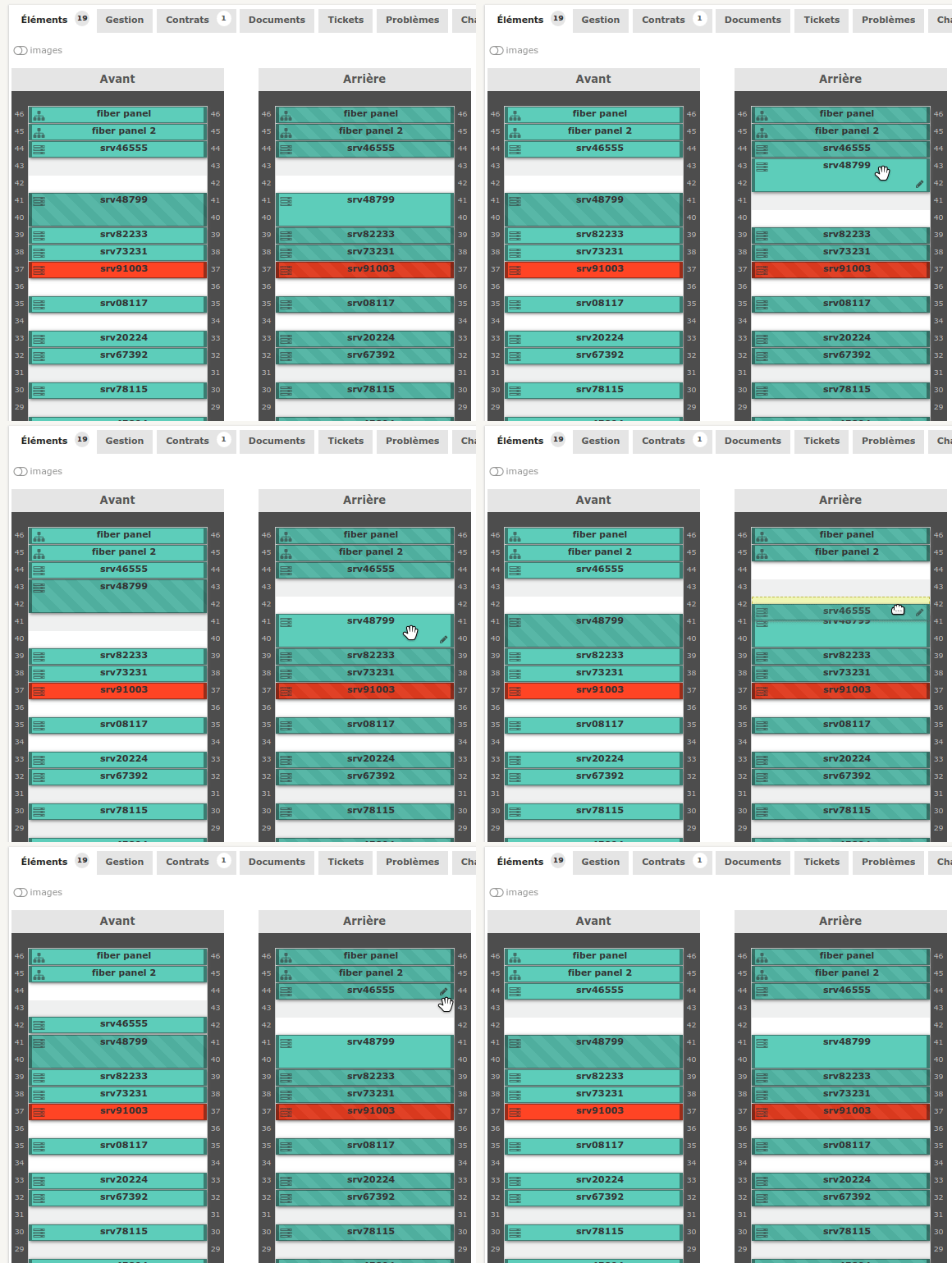
Data Center Infrastructure Management (DCIM): Provides features for managing data center infrastructure, enhancing control over critical assets.
Software and License Management: Includes functionality for managing software and licenses, ensuring compliance and cost control.
Impact Analysis: Supports impact analysis, helping assess the potential consequences of changes or incidents on IT services.
Service Catalog (with SLM): Includes service catalog features, often linked with Service Level Management (SLM), to define and manage available services.
Entity Separation: Offers entity separation features, allowing distinct management of different organizational units or entities.
Project Management: Supports project management, helping organize and track projects and associated tasks.
Intervention Planning: Offers intervention planning capabilities for scheduling and managing on-site interventions.
Moreover, supports many plugins that provide additional features.
Demonstration
Check GLPI features by asking for a free personal demonstration on glpi-network.cloud
License

It is distributed under the GNU GENERAL PUBLIC LICENSE Version 3 - please consult the file called LICENSE for more details.
Some screenshots
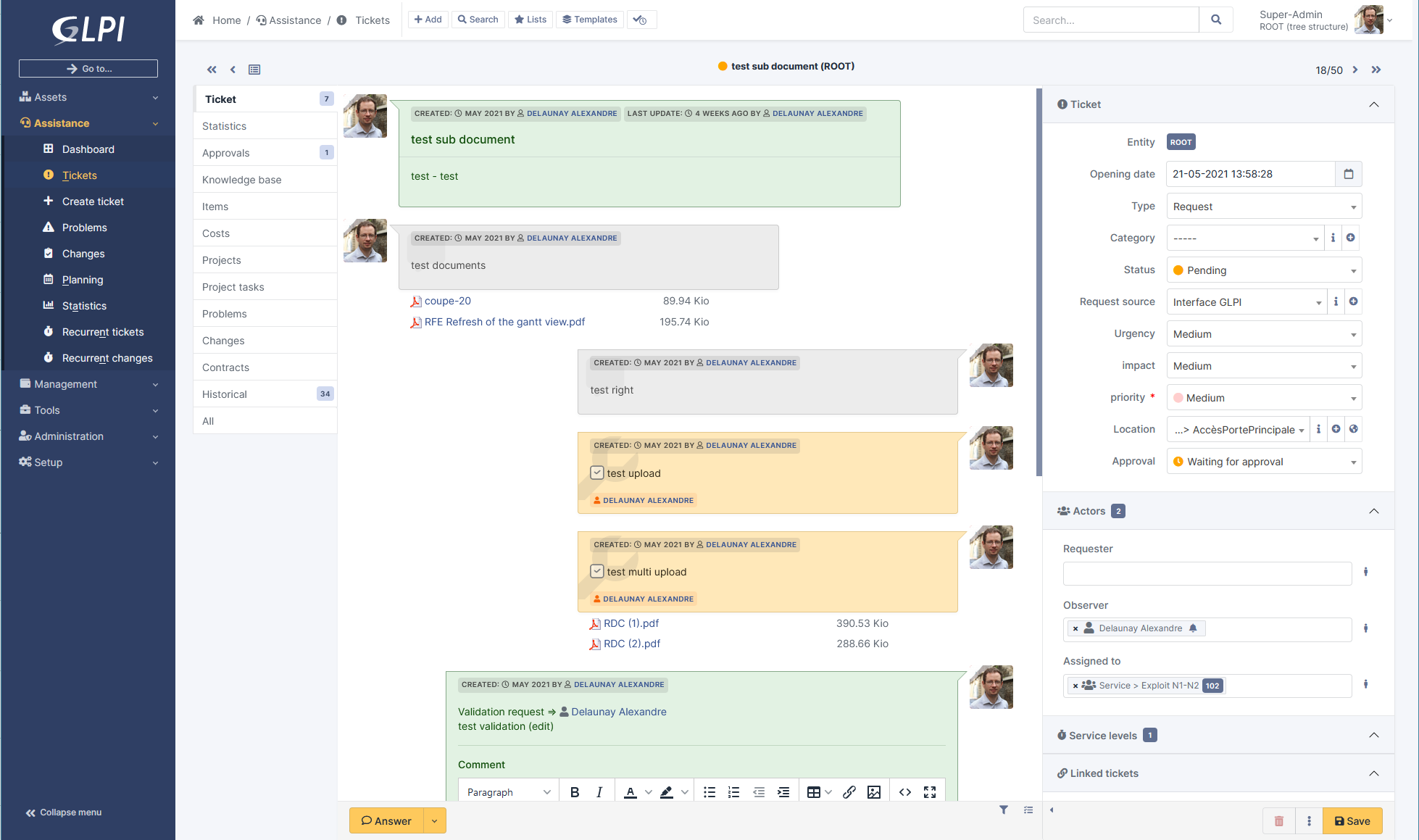
Tickets
DCIM
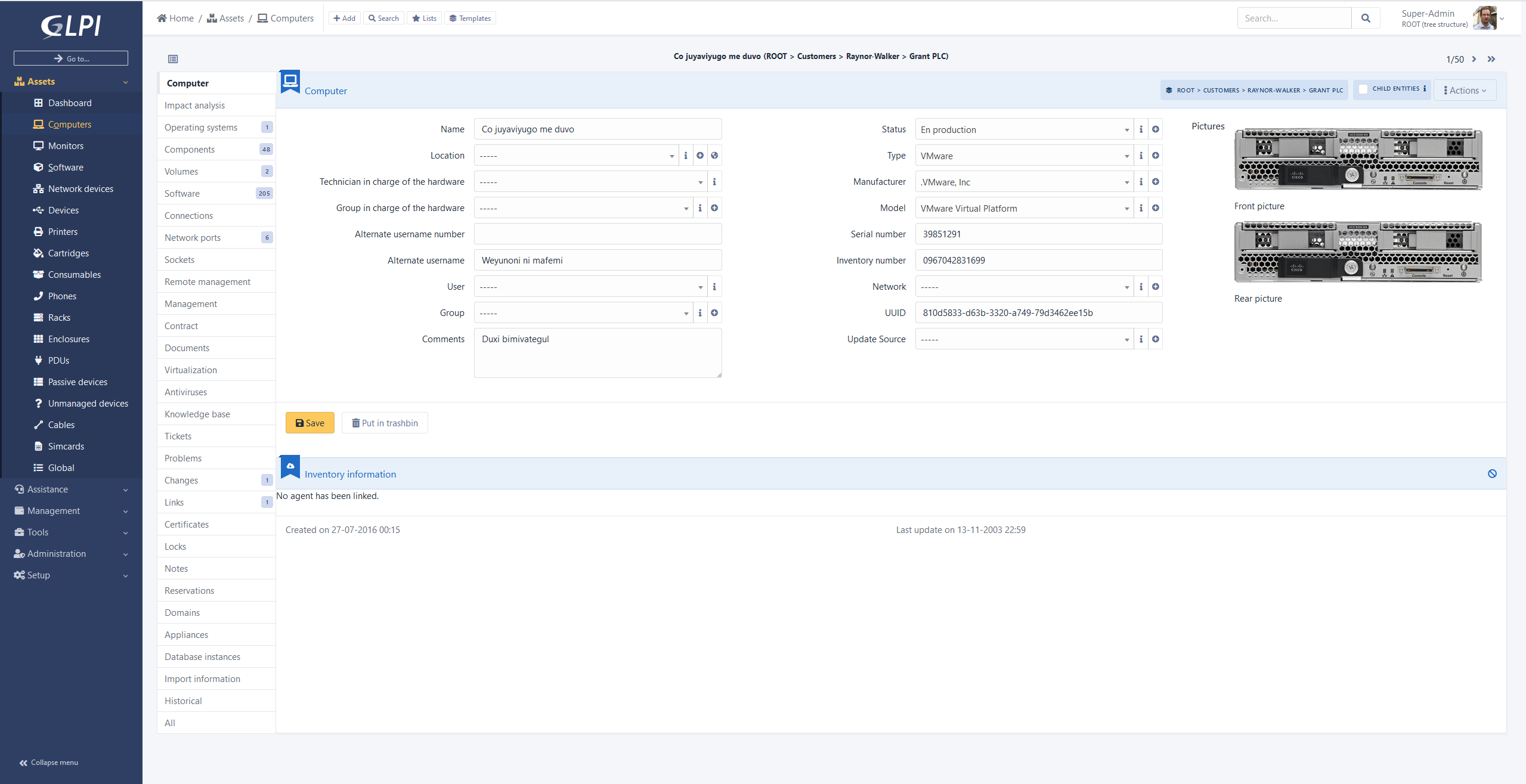
Assets
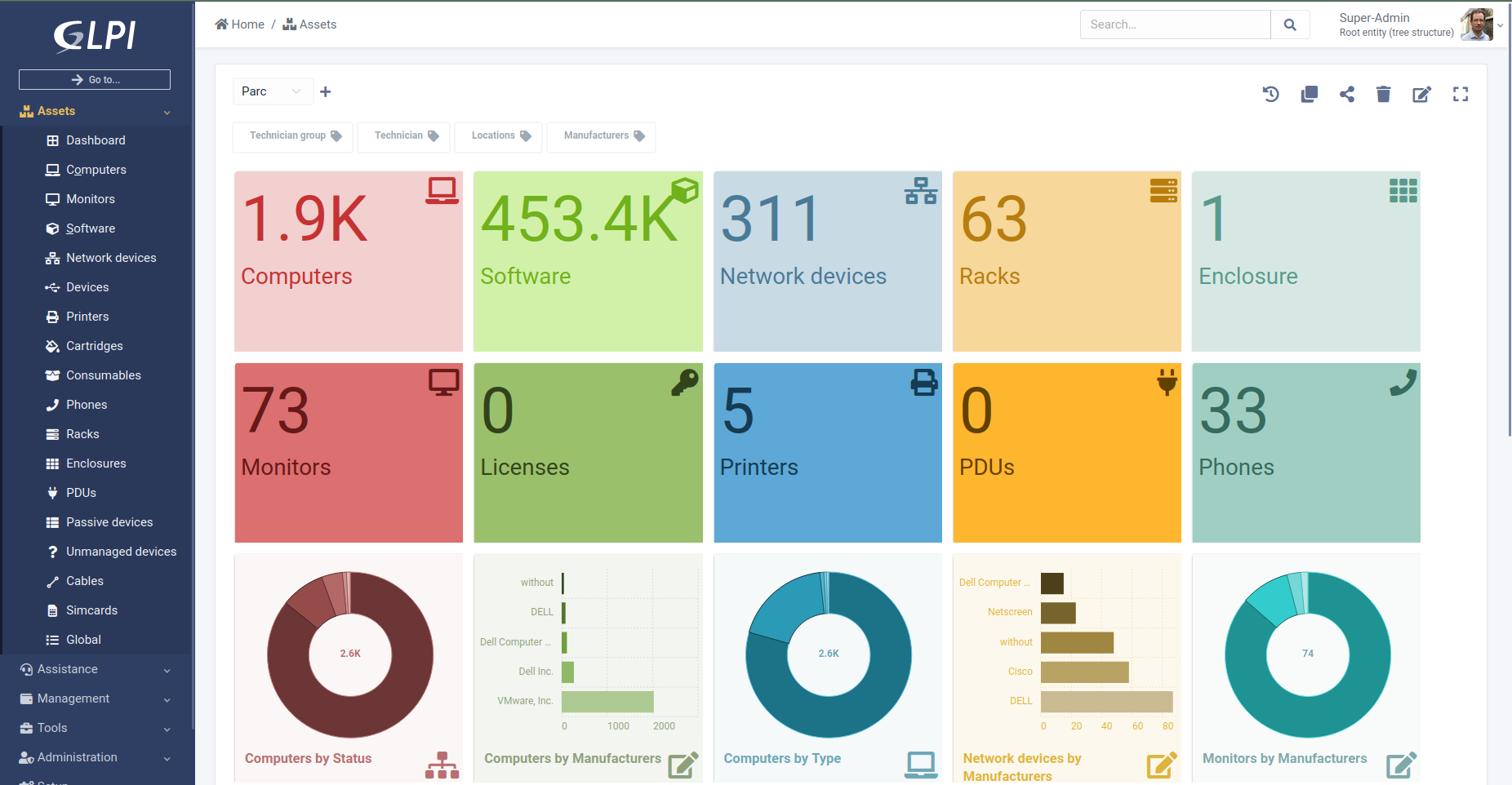
Dashboards
Prerequisites
- A web server (Apache, Nginx, IIS, etc.)
- MariaDB >= 10.6 or MySQL >= 8.0
- PHP >= 8.2
- Mandatory PHP extensions:
- dom, fileinfo, filter, libxml, simplexml, xmlreader, xmlwriter (these are enabled in PHP by default)
- bcmath (QRCode generation)
- curl (access to remote resources, like inventory agents, marketplace API, RSS feeds, ...)
- gd (pictures handling)
- intl (internationalization)
- mbstring (multibyte chars support and charset conversion)
- mysqli (communication with database server)
- openssl (email sending using SSL/TLS, encrypted communication with inventory agents and OAuth 2.0 authentication)
- zlib (handling of compressed communication with inventory agents, installation of gzip packages from marketplace, PDF generation)
- Suggested PHP extensions
- bz2, phar and zip (support of most common packages formats in marketplace)
- exif (security enhancement on images validation)
- ldap (usage of authentication through remote LDAP server)
- Zend OPcache (improve performances)
- Supported browsers:
- Edge
- Firefox (including 2 latest ESR versions)
- Chrome
Please, consider using browsers on editor's supported version
Download
See :
- releases for tarball packages.
Documentation
-
- Install & Update
- Command line tools
- Timezones
- Advanced configuration
- Contribute to this documentation!
-
- First Steps with GLPI
- Overview of all modules
- Configuration & Administration
- Plugins & Marketplace
- GLPI command-line interface
- Contribute to this documentation!
-
- Source Code management
- Coding standards
- Developer API
- Plugins Guidelines
- Packaging
- Contribute to this documentation!
-
- Installation (Windows / Linux / Mac OS / Source)
- Configuration / Settings
- Usage / Execution mode
- Tasks / HTTP Interface / Plugins
- Bug reporting / Man pages
- Contribute to this documentation!
-
- Usage and features for some GLPI plugins
- Contribute to this documentation!
Additional resources
- Official website
- Demo
- Translations on transifex service
- Issues
- Suggestions
- Forum
- Development documentation
- Plugin directory
- Plugin development documentation
Support
GLPI is a living software. Improvements are continuously made, new functionalities are being developed, and issues are being fixed.
To ease support and development, we need your help when encountering issues.