GraphQLite is an MIT-licensed SQLite extension, written in C, that adds graph database capabilities to SQLite through the Cypher query language and built-in graph algorithms, and it is aimed at developers and data teams who want to store and query connected data inside an ordinary SQLite database rather than operating a separate graph server.
What it is
GraphQLite is an extension for SQLite, the single-file embedded relational database. It adds a graph data model and a Cypher query surface on top of a regular SQLite database, so nodes, edges and their properties can be stored and queried next to ordinary relational data. The project is implemented in C and sits in the SQLite extension ecosystem, with bindings for Python and Rust and a raw SQL interface, and it is validated against the official openCypher Technology Compatibility Kit.
The problem it solves is the split between relational storage and graph workloads. Instead of introducing another database process, another deployment unit and another set of credentials, GraphQLite keeps the graph in the same file-based SQLite database the application already uses, with no server required. It replaces the separate graph database that would otherwise be needed to run Cypher traversals and graph algorithms: the README frames it as combining the simplicity of a single-file, zero-config embedded database with Cypher's expressive power for modelling relationships.
Key capabilities
- Cypher query support covering MATCH, CREATE, MERGE, SET, DELETE, WITH, UNWIND and RETURN.
- Built-in graph algorithms including PageRank, Louvain community detection, Dijkstra shortest paths, BFS/DFS and connected components, exposed through calls such as
g.pagerank() and g.dijkstra("alice", "bob").
- A Python graph API built on
Graph(":memory:"), with upsert_node(...), upsert_edge(...) and g.query(...) accepting Cypher strings.
- openCypher TCK validation across 3,876 scenarios at 97.7 percent passing overall, with expressions at 98.0 percent (2,599 scenarios), clauses at 97.2 percent (1,247 scenarios) and use cases at 100 percent.
- Reported 100 percent conformance for booleans, strings, null handling, CREATE/SET/DELETE/REMOVE, UNION and SKIP/LIMIT.
- Zero configuration: the extension works with any SQLite database and requires no server process.
- Multiple bindings for Python, Rust and raw SQL, plus a conformance runner invoked with
angreal test tck.
Who uses it and how
- Python teams building GraphRAG pipelines, following the
examples/llm-graphrag sample that ingests the HotpotQA dataset with ingest.py and answers questions through rag.py.
- Engineers working on knowledge graphs and community detection, where Louvain and PageRank run in-process against data already held in SQLite.
- Rust developers who want Cypher queries and graph analytics from an application that already depends on SQLite, adding the crate with
cargo add graphqlite.
- SQL practitioners who work directly through the
sqlite3 shell, using tutorials such as examples/sql/01_getting_started.sql.
- Embedded and local-first applications that need graph relationships and relational tables to live in one file rather than across two systems.
Getting started
Install the binding that matches the stack — brew install graphqlite on macOS and Linux, pip install graphqlite for Python, or cargo add graphqlite for Rust — and then create a graph over any SQLite database. Full tutorials, how-to guides and API reference are published at https://colliery-io.github.io/graphqlite/.
How it compares
Among the tools named in the facts, GraphQLite carries the neo4j topic alongside the wider graph-database and knowledge-graph topics, which places it squarely in the Cypher ecosystem. Its distinguishing characteristic as described is deployment shape rather than query language: it is an SQLite extension that runs with any SQLite database and requires no server, whereas the comparison implied by those topics is a standalone graph database.
When to use it — and when not to
Choose it when graph queries and graph analytics need to sit next to relational data in a single embedded file, and when an MIT-licensed C extension with Python and Rust bindings fits the stack — a self-hoster operates no extra service, but does own the SQLite database file and its backups. Do not choose it if the workload demands complete openCypher conformance: overall coverage is 97.7 percent, and the remaining gaps concentrate in DST-aware timezone arithmetic, nested existential subqueries and multi-row MERGE, tracked in docs/testing/semantic-coverage-matrix.md. The repository shows 501 stars, 29 forks and 2 open issues with activity as of September 2026, so it is a focused project rather than a large ecosystem, and teams that need the guarantees of a dedicated graph server should look elsewhere.
project readme (upstream, from github) — read inline
GraphQLite
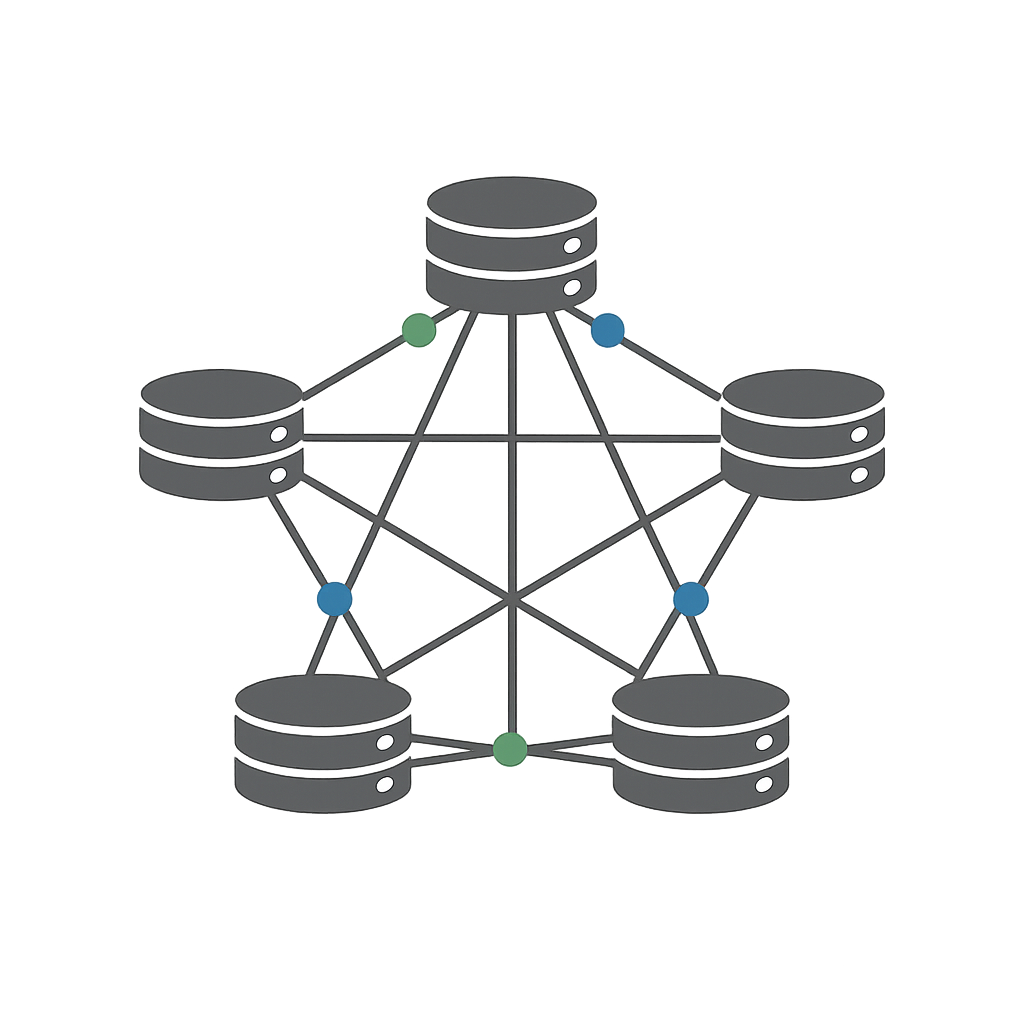
An SQLite extension that adds graph database capabilities using the Cypher query language.
Store and query graph data directly in SQLite—combining the simplicity of a single-file, zero-config embedded database with Cypher's expressive power for modeling relationships.
Installation
brew install graphqlite       # macOS/Linux (Homebrew)
pip install graphqlite        # Python
cargo add graphqlite          # Rust
Quick Start
from graphqlite import Graph

g = Graph(":memory:")
g.upsert_node("alice", {"name": "Alice", "age": 30}, label="Person")
g.upsert_node("bob", {"name": "Bob", "age": 25}, label="Person")
g.upsert_edge("alice", "bob", {"since": 2020}, rel_type="KNOWS")

# Query with Cypher
results = g.query("MATCH (a:Person)-[:KNOWS]->(b) RETURN a.name, b.name")

# Built-in graph algorithms
g.pagerank()
g.louvain()
g.dijkstra("alice", "bob")
Features
- Cypher queries — MATCH, CREATE, MERGE, SET, DELETE, WITH, UNWIND, RETURN
- Graph algorithms — PageRank, Louvain, Dijkstra, BFS/DFS, connected components, and more
- Zero configuration — Works with any SQLite database, no server required
- Multiple bindings — Python, Rust, and raw SQL interfaces
openCypher Conformance
GraphQLite is validated against the official openCypher Technology Compatibility
Kit (TCK) — the canonical conformance
suite for the Cypher query language. Current coverage:
Run it yourself with angreal test tck. The remaining gaps are tracked in
docs/testing/semantic-coverage-matrix.md
and concentrate in a few deep areas (DST-aware timezone arithmetic, nested
existential subqueries, multi-row MERGE). Booleans, strings, null handling,
CREATE/SET/DELETE/REMOVE, UNION, and SKIP/LIMIT are at 100%.
Documentation
Full Documentation — Tutorials, how-to guides, and API reference
Examples
# SQL tutorials
sqlite3 < examples/sql/01_getting_started.sql

# GraphRAG with HotpotQA dataset
cd examples/llm-graphrag
uv sync && uv run python ingest.py
uv run python rag.py "Were Scott Derrickson and Ed Wood of the same nationality?"
License
MIT