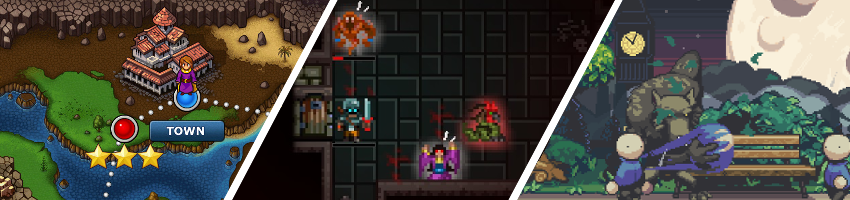
HaxeFlixel, published as the flixel library, is a free, MIT-licensed, cross-platform 2D game engine written in Haxe and built on top of OpenFL, intended for developers who want to build 2D games in Haxe and compile them natively for multiple platforms from a single codebase.
What it is
HaxeFlixel is the core project of an open-source game development ecosystem hosted on GitHub, filed under Miscellaneous / Gaming. The engine itself lives in the flixel repository, written in Haxe under the MIT licence, and is distributed through Haxelib, where it carries version, download and licence badges. Around that core sits a family of sibling repositories: flixel-addons for additional libraries, flixel-ui for user interface components, flixel-tools and flixel-templates for project tooling and starting templates, flixel-demos for example projects, flixel-docs for documentation, and the repository behind the haxeflixel.com website. The project's homepage is haxeflixel.com, which hosts the Getting Started guide, the documentation and the API reference.
The concrete problem it solves is platform fragmentation in 2D game development. Because it is built on top of Haxe and OpenFL, a game is written once in Haxe and can target the supported platforms natively, rather than being reimplemented separately for each one. The engine's lineage is explicit: it has its roots in the original ActionScript 3 version of Flixel created by Adam "Atomic" Saltsman, and it was started in 2011 by Alexander Hohlov as a straightforward Haxe port of that AS3 codebase together with Richard Davey's Flixel Power Tools. For developers moving from ActionScript 3 to Haxe, it replaces that original Flash-era codebase with a maintained equivalent that has since outgrown it.
Key capabilities
- Native cross-platform targeting through Haxe and OpenFL, so a project compiles for the supported platforms rather than being rewritten per platform.
- Distribution as the flixel package on Haxelib, with published version, download and licence information.
- A separate addons repository, flixel-addons, holding additional libraries layered on the core engine.
- A dedicated UI library, flixel-ui, for building game interfaces.
- Project tooling and scaffolding in the flixel-tools and flixel-templates repositories.
- Over 80 demo projects in flixel-demos available as learning material and reference implementations.
- Continuous integration through the GitHub Actions workflow main.yml on the dev branch, plus a Discord community, a Turkish translation of the README at .github/README_TR.md, and a Patreon donation channel.
Who uses it and how
- Haxe developers building 2D games who need one codebase to reach several platforms natively, rather than a separate implementation per target.
- Developers migrating from the ActionScript 3 Flixel lineage, who can carry the same engine concepts into Haxe and OpenFL.
- Teams that want to compose their stack from parts, adding flixel-ui for interfaces and flixel-addons for extra libraries on top of the core engine.
- Newcomers learning the engine through the 80-plus demo projects and the Getting Started documentation before starting their own project.
- Contributors working at open-source scale: a core team plus over 100 contributors, with 2,228 stars and 533 forks on the repository and discussion organised around the Discord community.
Getting started
HaxeFlixel is installed as the flixel library from Haxelib, after which the flixel-templates and flixel-tools repositories provide the starting templates and project tooling. The Getting Started guide, full documentation and API reference are all linked from the README and hosted at haxeflixel.com.
How it compares
The tools the facts name around HaxeFlixel are its lineage and its foundation rather than commercial rivals: it descends from Adam "Atomic" Saltsman's ActionScript 3 Flixel, which it began as a direct Haxe port of, and it runs on Haxe and OpenFL instead of being a self-contained engine with its own compiler and runtime. Against that AS3 predecessor it is the maintained continuation, MIT-licensed and free to use, with a larger ecosystem of addons, a UI library, tooling and demos behind it.
When to use it — and when not
Because HaxeFlixel is a library rather than a hosted service, a team adopting it operates no database, object storage or SMTP infrastructure; the work sits instead in the Haxe and OpenFL toolchain and in the platform targets chosen for a build. It is the wrong choice for teams not working in Haxe, and it is a 2D engine, so projects needing 3D should look elsewhere. The honest caveats are scale and documentation surface: 304 open issues are tracked on the repository, and the README itself is largely a link hub, with the substantive guidance living on haxeflixel.com and in the separate flixel-docs repository rather than in the code repository's front page.