








What is Apache Pinot?
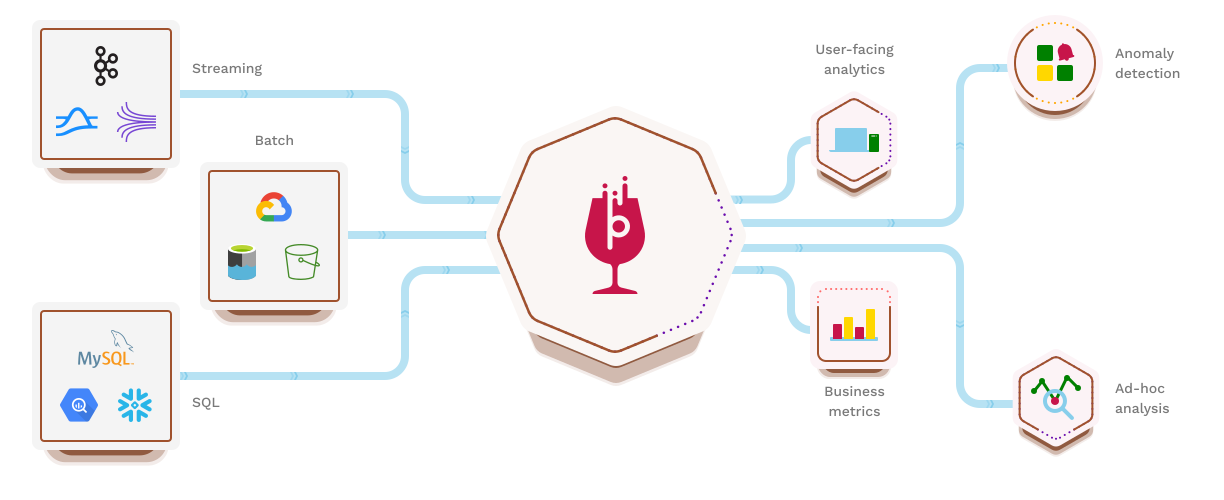
Apache Pinot is a real-time distributed OLAP datastore, built to deliver scalable real-time analytics with low latency. It can ingest from batch data sources (such as Hadoop HDFS, Amazon S3, Azure ADLS, Google Cloud Storage) as well as stream data sources (such as Apache Kafka).
Pinot was built by engineers at LinkedIn and Uber and is designed to scale up and out with no upper bound. Performance always remains constant based on the size of your cluster and an expected query per second (QPS) threshold.
For getting started guides, deployment recipes, tutorials, and more, please visit our project documentation at https://docs.pinot.apache.org.
Features
Pinot was originally built at LinkedIn to power rich interactive real-time analytic applications such as Who Viewed Profile, Company Analytics, Talent Insights, and many more. UberEats Restaurant Manager is another example of a customer facing Analytics App. At LinkedIn, Pinot powers 50+ user-facing products, ingesting millions of events per second and serving 100k+ queries per second at millisecond latency.
Fast Queries: Filter and aggregate petabyte data sets with P90 latencies in the tens of milliseconds—fast enough to return live results interactively in the UI.
High Concurrency: With user-facing applications querying Pinot directly, it can serve hundreds of thousands of concurrent queries per second.
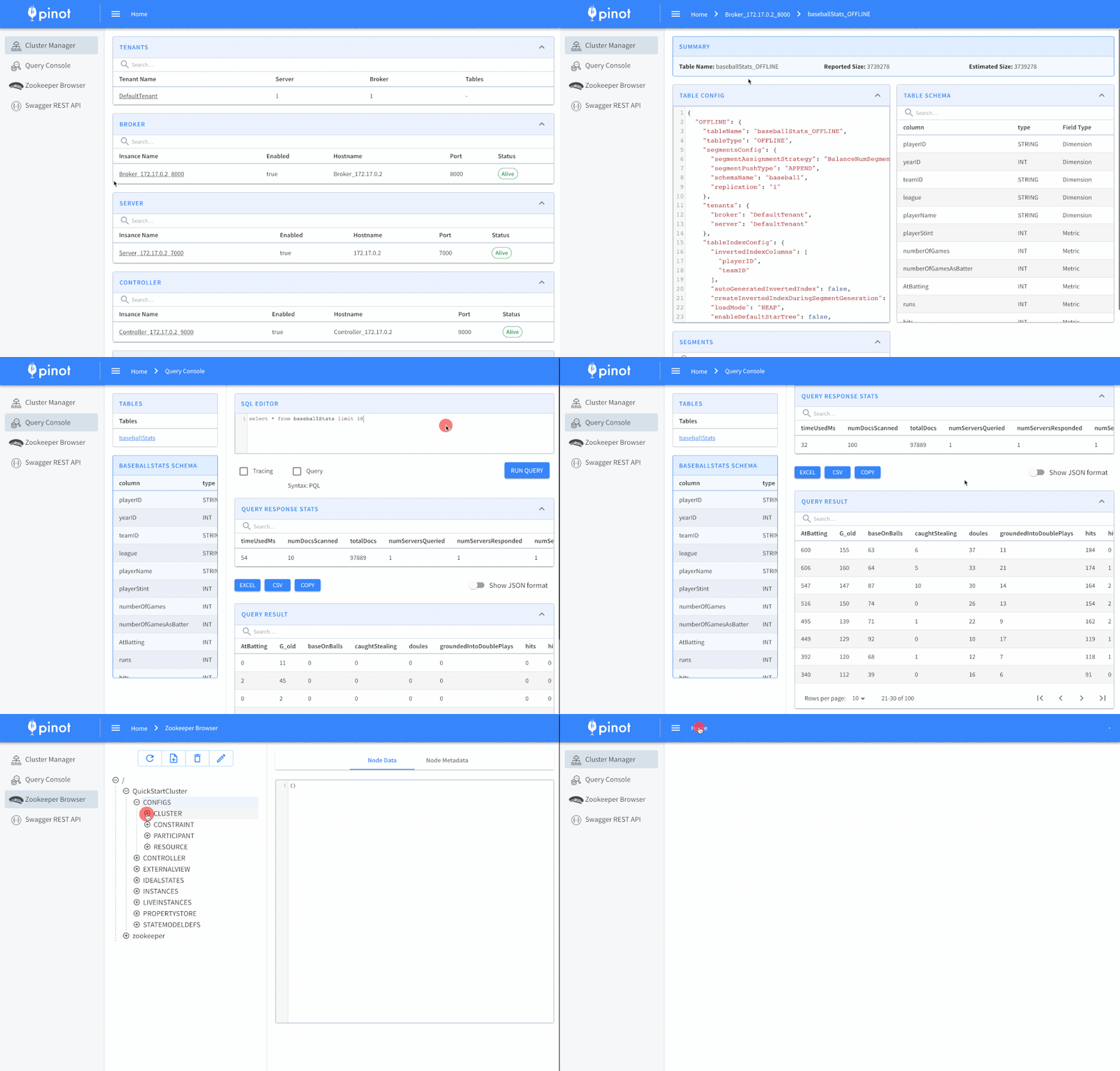
SQL Query Interface: The highly standard SQL query interface is accessible through a built-in query editor and a REST API.
Versatile Joins: Perform arbitrary fact/dimension and fact/fact joins on petabyte data sets.
Column-oriented: a column-oriented database with various compression schemes such as Run Length, Fixed Bit Length.
Pluggable indexing: pluggable indexing technologies including timestamp, inverted, StarTree, Bloom filter, range, text, JSON, and geospatial options.
Stream and batch ingest: Ingest from Apache Kafka, Apache Pulsar, and AWS Kinesis in real time. Batch ingest from Hadoop, Spark, AWS S3, and more. Combine batch and streaming sources into a single table for querying.
Upsert during real-time ingestion: update the data at-scale with consistency
Built-in Multitenancy: Manage and secure data in isolated logical namespaces for cloud-friendly resource management.
Built for Scale: Pinot is horizontally scalable and fault-tolerant, adaptable to workloads across the storage and throughput spectrum.
Cloud-native on Kubernetes: Helm chart provides a horizontally scalable and fault-tolerant clustered deployment that is easy to manage using Kubernetes.
When should I use Pinot?
Pinot is designed to execute real-time OLAP queries with low latency on massive amounts of data and events. In addition to real-time stream ingestion, Pinot also supports batch use cases with the same low latency guarantees. It is suited in contexts where fast analytics, such as aggregations, are needed on immutable data, possibly, with real-time data ingestion. Pinot works very well for querying time series data with lots of dimensions and metrics.
Example query:
SELECT sum(clicks), sum(impressions) FROM AdAnalyticsTable
  WHERE
       ((daysSinceEpoch >= 17849 AND daysSinceEpoch <= 17856)) AND
       accountId IN (123456789)
  GROUP BY
       daysSinceEpoch TOP 100
Contributing to Pinot
Want to contribute to Apache Pinot? 👋🍷
Want to join the ranks of open source committers to Apache Pinot? Then check out the Contribution Guide for how you can get involved in the code.
If you have a bug or an idea for a new feature, browse the open issues to see what we’re already working on before opening a new one.
We also tagged some beginner issues new contributors can tackle.
Apache Pinot YouTube Channel
Share Your Pinot Videos with the Community!
Have a Pinot use case, tutorial, or conference/meetup recording to share? We’d love to feature it on the Pinot OSS YouTube channel! Drop your video or a link to your session in the #pinot-youtube-channel on Pinot Slack, and we’ll showcase it for the community!
Building Pinot
## Clone a repo
$ git clone https://github.com/apache/pinot.git
$ cd pinot

## Pinot services require JDK 25+ to build and run
## Java/JDBC