


filegator is a free, open source file management & sync project written in PHP and released under MIT. It has 3,079 GitHub stars, 452 forks and 222 open issues, and was last pushed 4 days ago. On this registry it ranks #34 of 51 tracked projects in File Management & Sync, with 5 head-to-head comparisons available.

What is filegator?

FileGator is a free, open-source, self-hosted PHP web application that gives teams, schools, and administrators a browser-based multi-user file manager with fine-grained permissions and pluggable storage backends.

What it is

FileGator is a self-hosted web application for managing files and folders, written in PHP and released under the MIT licence. It manages files inside a local repository folder on your server's hard drive or connects to other storage adapters, and it supports multi-user setups in which admins and other users work with different access permissions, roles, and home folders. The front end is a single page built with Vue.js, Bulma, and Buefy, and the project explicitly requires no database.

It solves the concrete problem of giving a group of people controlled access to files without standing up an FTP server or a full file-server stack. Basic file operations are all covered — copy, move, rename, edit, create, delete, preview, zip, unzip, download, and upload — and users who are allowed to can download multiple files or folders at once. Uploads use chunking, so large files can be transferred regardless of server configuration, with drag-and-drop, a progress bar, and pause and resume. In typical use it replaces an FTP or SFTP workflow and can be used to manage S3 or other third-party cloud storage.

Key capabilities

  • Multiple storage adapters: Local, FTP, Amazon S3, Dropbox, DO Spaces, Azure Blob, and many others via Flysystem.
  • Multiple auth adapters with roles and permissions, storing users in a JSON file, in a database, or through WordPress.
  • Multiple session adapters — Native File, Pdo, Redis, MongoDB, Memcached, and others via Symfony's HttpFoundation session storage handlers.
  • Chunked uploads built with Resumable.js, supporting drag-and-drop, a progress bar, and pause and resume.
  • Zip and bulk download support, including zipping and downloading remote files quickly.
  • A single page front end built with Vue.js, Bulma, and Buefy.
  • Highly extensible, decoupled, and tested code, with no database required.

Who uses it and how

  • Teams and individuals share a folder with colleagues, friends, or family for joint file access.
  • Schools and instructors give students access to upload their work.
  • Field workers upload data, documents, and images from the field, with administrators controlling permissions and home folders.
  • Administrators use it as cloud backup and to manage a CDN with multiple people.
  • Operators use it as an FTP/SFTP replacement or to manage S3 and other third-party cloud storage from one interface.

Getting started

The official Docker image is filegator/filegator, runnable with docker run --rm -p 8080:8080 filegator/filegator, after which you visit http://127.0.0.1:8080 and log in as admin/admin123; further installation methods are documented at docs.filegator.io.

How it compares

FileGator stands alone in this registry; no comparable tools are named in the available facts.

When to use it — and when not

A self-hoster operates the web server and the storage backend, choosing session and auth adapters (JSON file, database, Redis, MongoDB, Memcached, WordPress) to match, while still needing no database for the core. It should not be picked when you need symlink support or file ownership (chown), because the underlying Flysystem local adapter does not support symlinks and ownership is unsupported, and performance suffers when too many files sit in the same directory. With 222 open issues at the time of writing, expect some rough edges when troubleshooting.

project readme (upstream, from github) — read inline

Live demo Build Status PHP master Build Status Node master Code Coverage License

FileGator - Powerful Multi-User File Manager

FileGator is a free, open-source, self-hosted web application for managing files and folders.

You can manage files inside your local repository folder (on your server's hard drive) or connect to other storage adapters (see below).

FileGator has multi-user support so you can have admins and other users managing files with different access permissions, roles and home folders.

All basic file operations are supported: copy, move, rename, edit, create, delete, preview, zip, unzip, download, upload.

If allowed, users can download multiple files or folders at once.

File upload supports drag&drop, progress bar, pause and resume. Upload is chunked so you should be able to upload large files regardless of your server configuration.
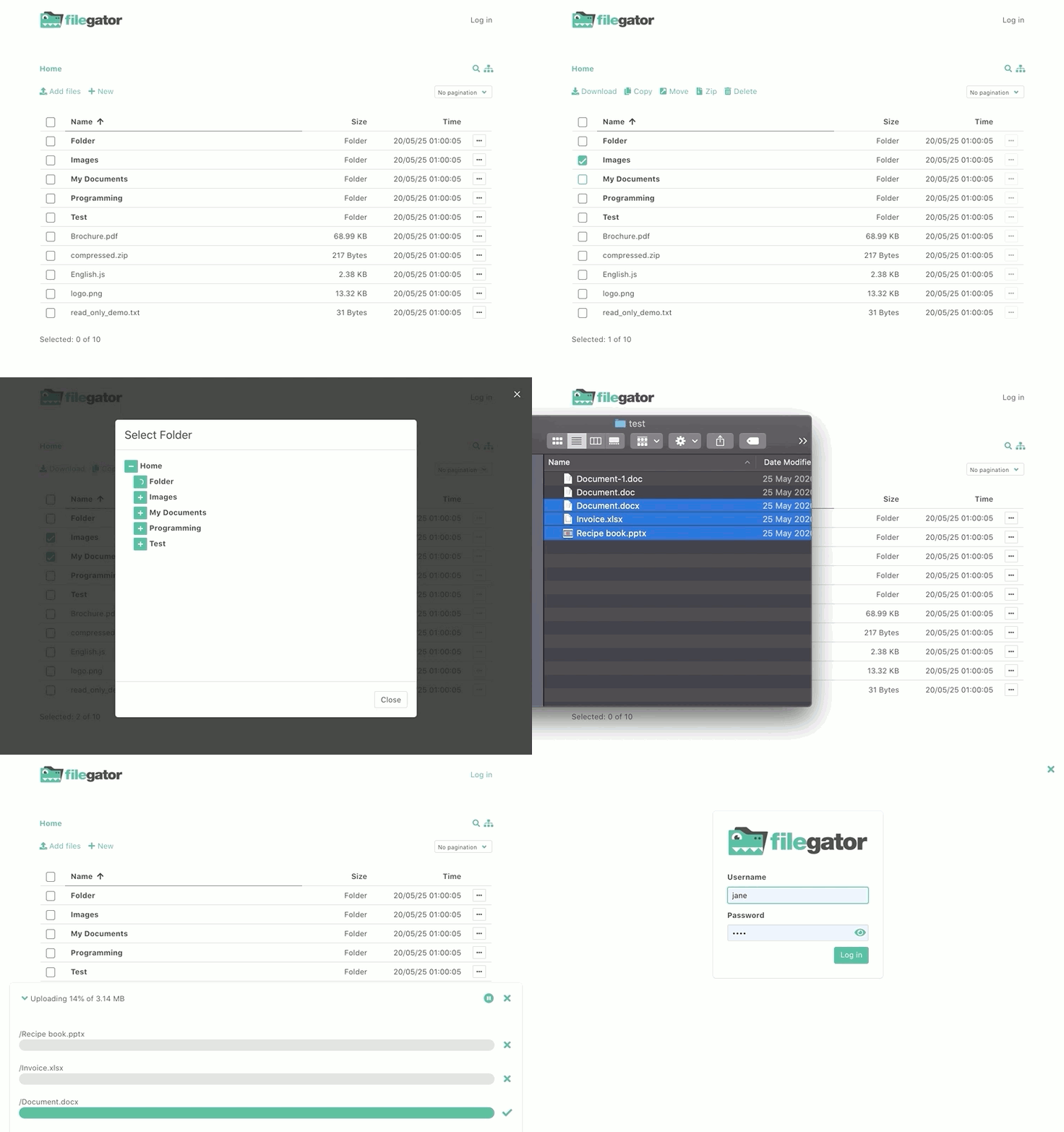
Screenshot

Sponsors & Backers

FileGator is a free, open-source project. It's an independent project with its ongoing development made possible entirely thanks to the support by these awesome backers and sponsors:

Typical use cases

  • share a folder with colleagues, your team, friends or family
  • give students access to upload their work
  • allow workers to upload field data / docs / images
  • use as cloud backup
  • manage cdn with multiple people
  • use as ftp/sftp replacement
  • manage s3 or other 3rd party cloud storage
  • use to quickly zip and download remote files

Documentation

Check out the official documentation on how to download, install and use FileGator.

Features & Goals

  • Multiple storage adapters (Local, FTP, Amazon S3, Dropbox, DO Spaces, Azure Blob and many others via Flysystem)
  • Multiple auth adapters with roles and permissions (Store users in json file, database or use WordPress)
  • Multiple session adapters (Native File, Pdo, Redis, MongoDB, Memcached and others via Symfony)
  • Single page front-end (built with Vuejs, Bulma and Buefy)
  • Chunked uploads (built with Resumable.js)
  • Zip and bulk download support
  • Highly extensible, decoupled and tested code
  • No database required

Limitations

  • Symlinks are not supported by the underlying Flysystem
  • File ownership is not supported (chown)
  • Too many files in the same directory can negatively impact performance

Docker

Check out the official docker image with instructions on how to use it

Docker quick start:

docker run --rm -p 8080:8080 filegator/filegator
visit: http://127.0.0.1:8080 login as admin/admin123

Other installation methods

Sponsored or community-contributed installation methods for various platforms:

Please note that this section may contain affiliate links. We may earn a commission at no extra cost to you, which helps support FileGator and its development.

Show your support

Please ⭐️ this repository if this project helped you!

Security

If you discover a security vulnerability, please report it privately via GitHub Security Advisories instead of using the public issue tracker:

https://github.com/filegator/filegator/security/advisories

License

Copyright (c) 2019 Milos Stojanovic.

This project is MIT licensed.

Frequently asked questions

Is filegator free to use?

filegator is open source under the MIT licence. There is no licence fee and no seat count — you can self-host it or, where the project offers one, pay a vendor for a managed version instead.

What does filegator do?

Powerful Multi-User File Manager

What is filegator written in?

filegator is primarily written in PHP. Its source is publicly available at https://github.com/filegator/filegator, and it has 3,079 GitHub stars.