
disky
Find your biggest diskspace thieves!






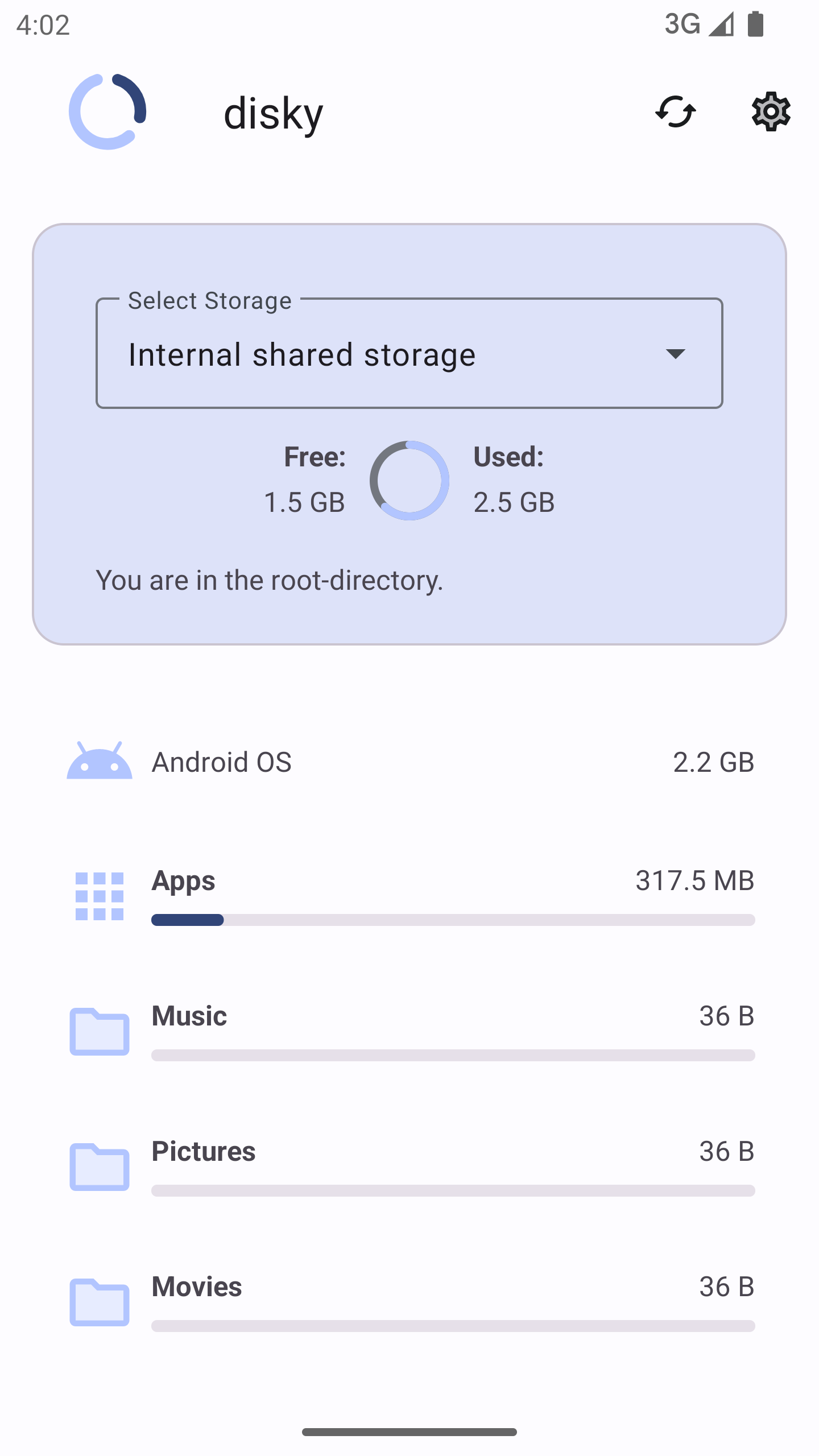
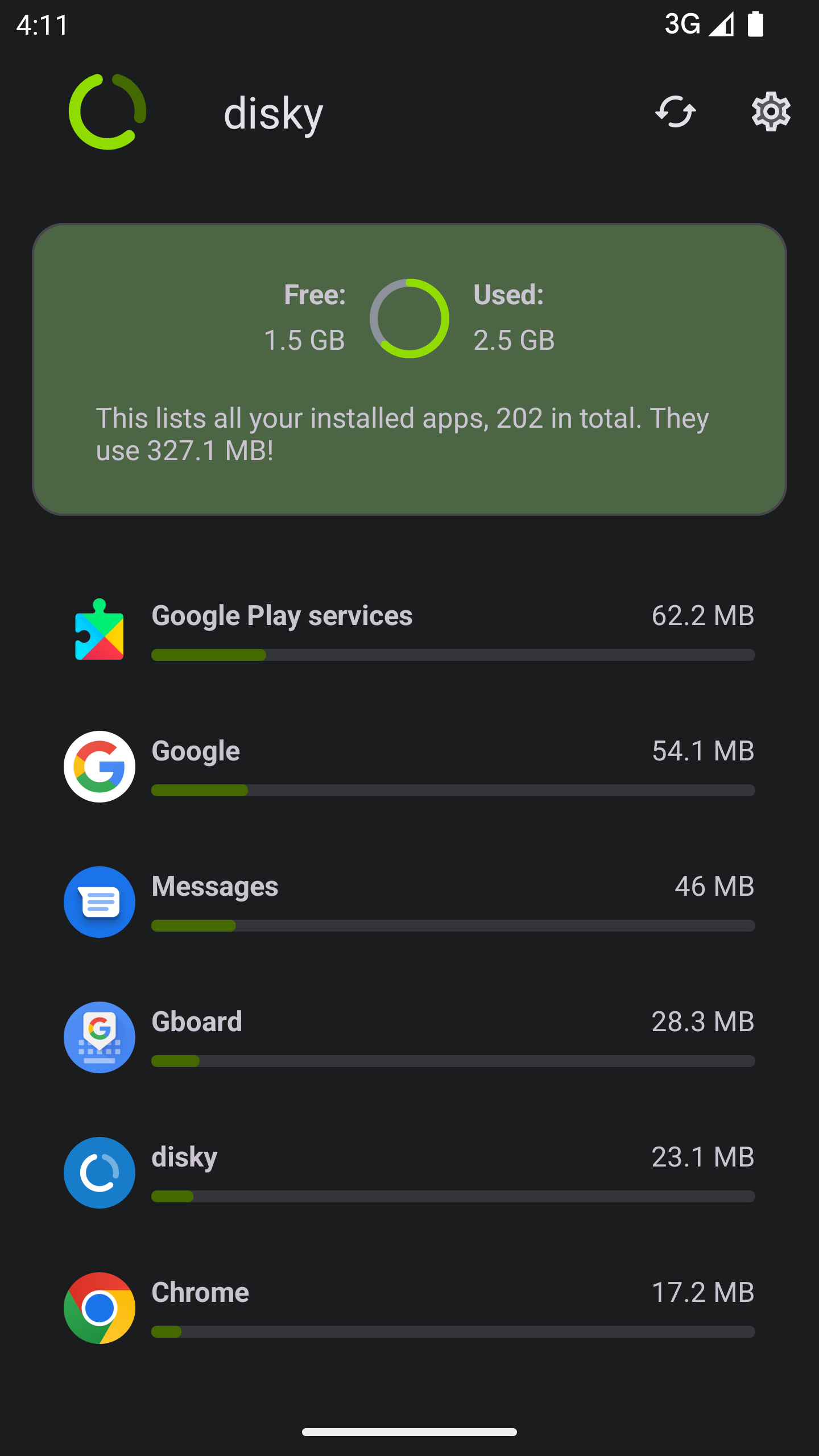
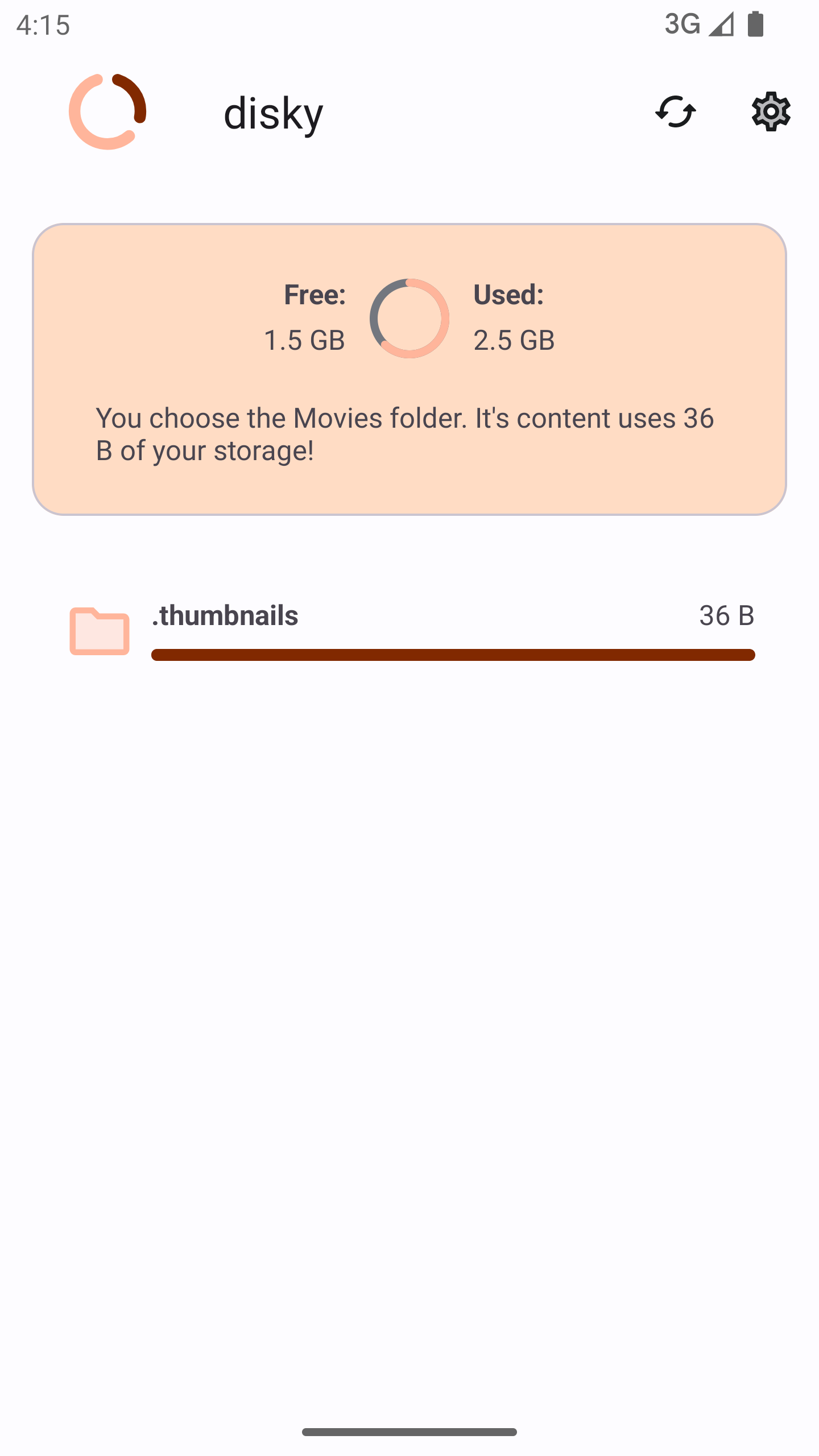
A filesystem analyzer that can show you the usage of your storage!
Screenshots
|
|
|
disky is a free, open source system cleanup & optimization project written in Kotlin and released under GPL-3.0. It has 952 GitHub stars, 39 forks and 11 open issues, and was last pushed 4 months ago. On this registry it ranks #14 of 17 tracked projects in System Cleanup & Optimization, with 5 head-to-head comparisons available.
disky is a free, GPL-3.0-licensed Android filesystem analyzer written in Kotlin that shows you the usage of your storage, built for any Android user who wants to find the biggest space thieves on their device.
disky is an Android application that scans a device's storage and reports how that space is being used. It lives in the Android ecosystem, is written in Kotlin, and is published as a signed APK through GitHub releases and through F-Droid under the package name de.felixnuesse.disky. The project is developed in the open on GitHub, carries the GPL-3.0 licence, and has attracted 952 stars and 39 forks, with 11 open issues at the time of writing. Its stated feature set is deliberately narrow: fast scans, multi storage support, and a Material You interface. It depends on a small set of libraries, with AppIntro handling the introduction flow, Lottie providing animation, and Undraw supplying illustrations, and it runs an Android Lint workflow in CI on the master branch.
The concrete problem it solves is the guesswork of finding out what has filled up a phone. Android's built-in storage screens and general-purpose file managers tell a user very little about which directories or files actually hold the space, and the README frames the goal bluntly as finding the biggest diskspace thieves. disky replaces that manual, directory-by-directory hunt with an analyzer that reads the local filesystems and presents usage directly, so the question of what is eating the storage has a concrete answer rather than an estimate.
Grab the latest signed APK from the GitHub releases page and install it on the phone, or install the F-Droid package de.felixnuesse.disky. To build from source, clone the repository and run ./gradlew assemble or build the project in Android Studio.
The facts provided name no similar or competing tools and no paid products that disky displaces, so it stands alone in this registry. No comparison on licence, self-hosting, data ownership or cost model can be drawn from the material available here.
A self-hoster has nothing to operate, because there is no server, database, storage backend or mail service involved: disky is a client-side Android app that only reads local filesystems. Anyone who needs to analyze remote or cloud storage, or who wants a desktop or cross-platform tool, should not pick it, since the README scopes it to local filesystems on Android. The honest weaknesses are documentation and licence history: the README is sparse, offering no screenshots and little beyond a feature list, and the project notes that some older releases accidentally shipped the wrong licence file, namely MIT, although the repository is GPLv3.
A filesystem analyzer that can show you the usage of your storage!
|
|
|
|
Grab the latest version of the signed APK and install it on your phone.
You should first make sure you have cloned this repository:
git clone https://github.com/newhinton/disky
You can then build the app normally from Android Studio or from CLI by running:
# build
./gradlew assemble
See CONTRIBUTING
Anyone is welcome to contribute and help out. However, hate, discrimination and racism are decidedly unwelcome here. If you feel offended by this, you might belong to the group of people who are not welcome. I will not tolerate hate in any way.
If you like my work, either this app or in general, you are more than welcome to leave a donation. It helps me to dedicate time to further improve my apps!
Paypal | Liberapay | Github Sponsor
This app is released under the terms of the GPLv3 license. There are older releases that accidentially contained the wrong license file, namely MIT. This entire Repository is and was GPLv3, as stated by this Readme in this section, and the pill below the title on top of this document. It was also stated in the app itself.
Thanks to all of them!
disky is open source under the GPL-3.0 licence. There is no licence fee and no seat count — you can self-host it or, where the project offers one, pay a vendor for a managed version instead.
An android filesystem analyzer that can show you the usage of your storage!
disky is primarily written in Kotlin. Its source is publicly available at https://github.com/newhinton/disky, and it has 952 GitHub stars.