ChronoFrame




Languages: English | 中文
A smooth photo display and management application, supporting multiple image formats and large-size image rendering.
✨ Features
🖼️ Powerful Photo Management
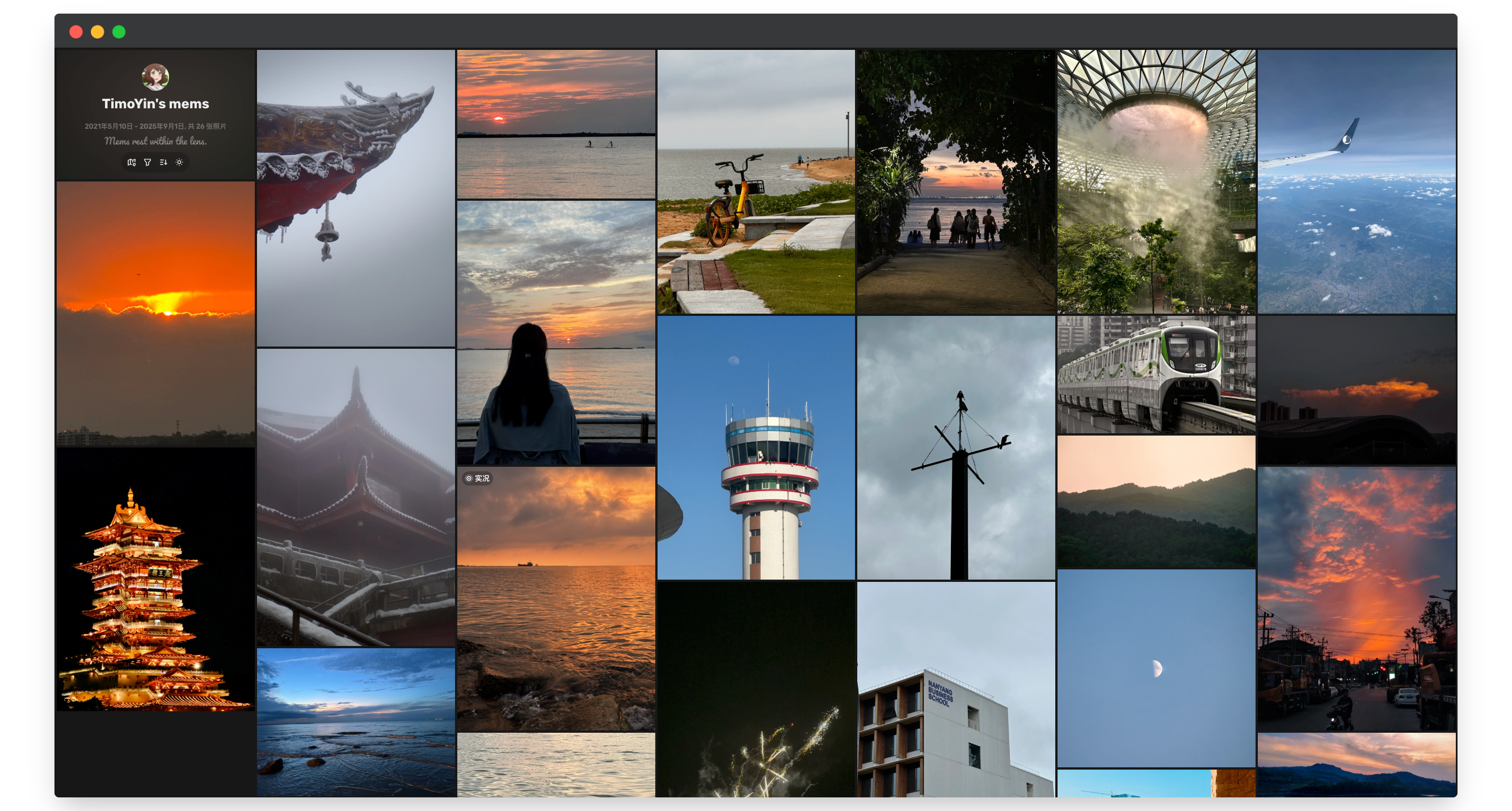
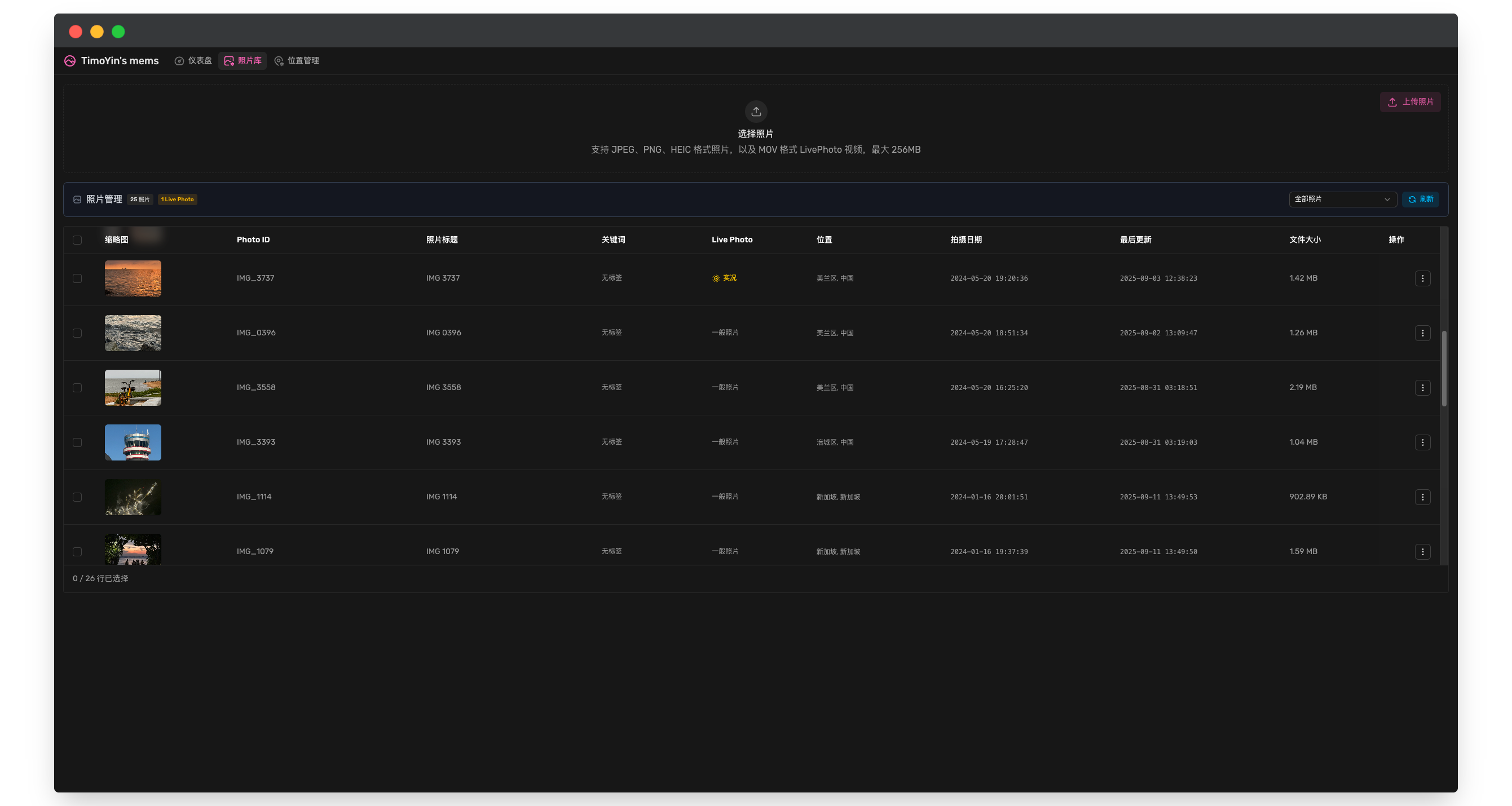
- Manage photos online - Easily manage and browse photos via the web interface
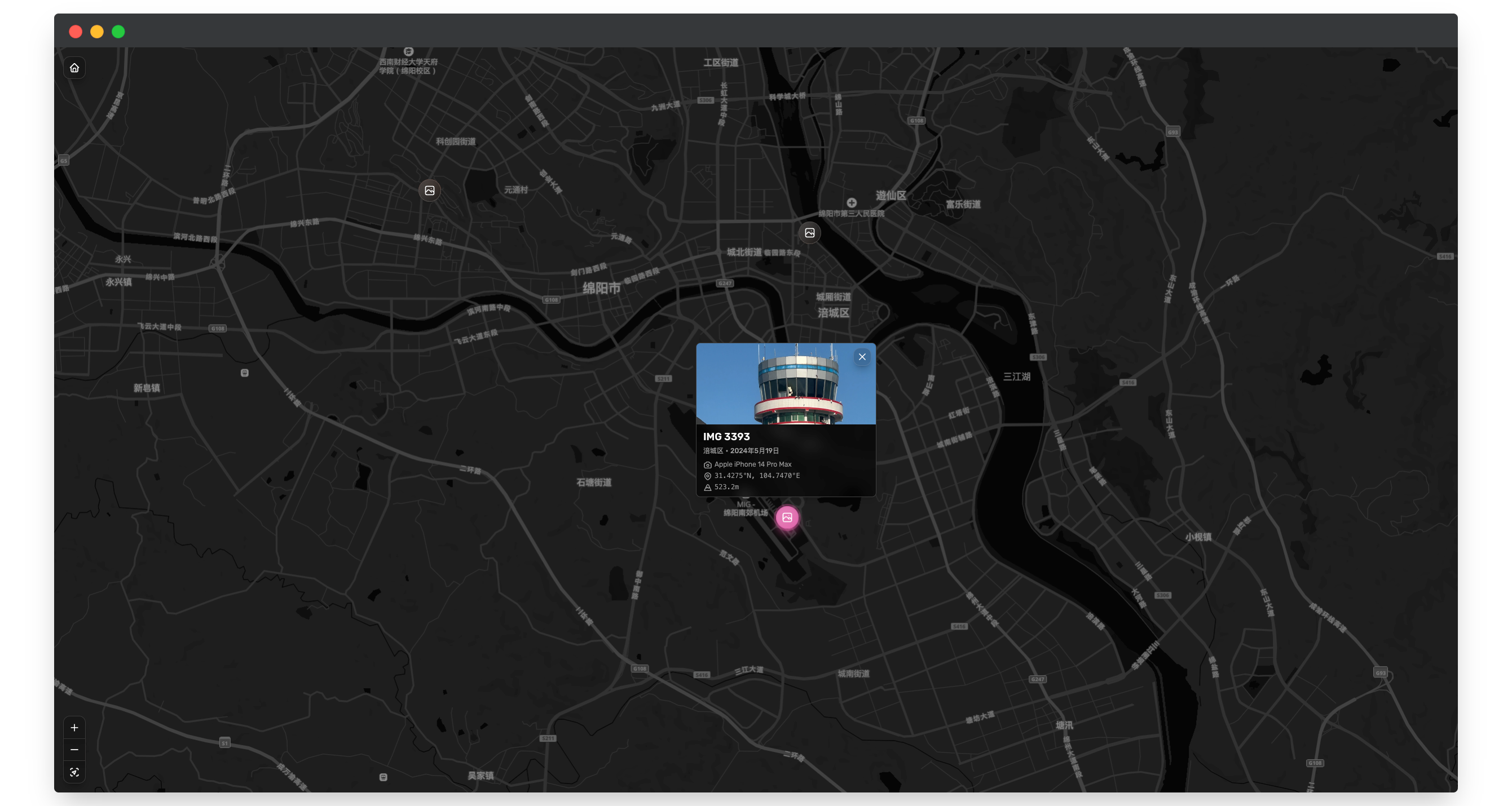
- Explore map - Browse photo locations on a map
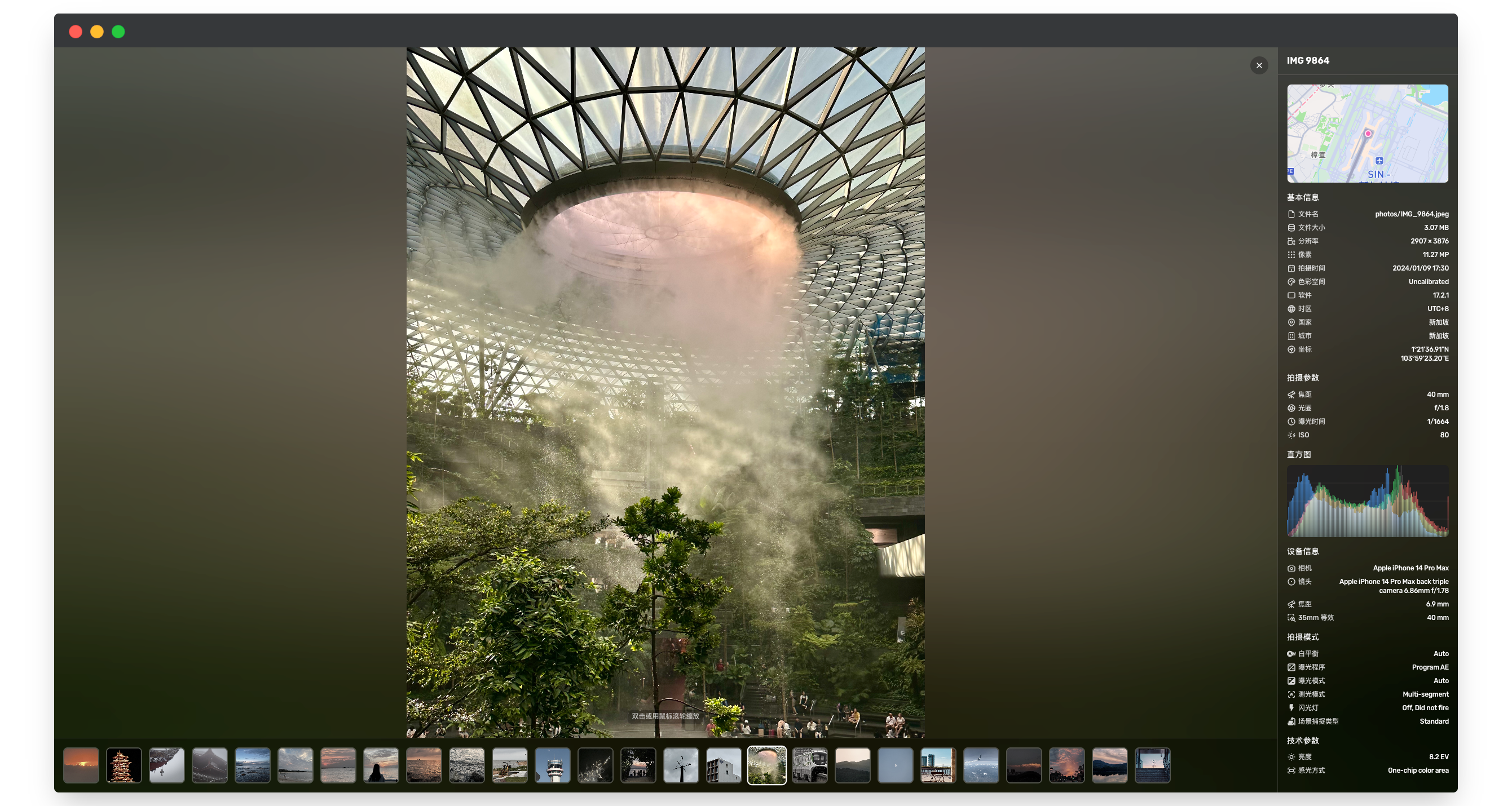
- Smart EXIF parsing - Automatically extracts metadata such as capture time, geolocation, and camera parameters
- Reverse geocoding - Automatically identifies photo shooting locations
- Multi-format support - Supports mainstream formats including JPEG, PNG, HEIC/HEIF
- Smart thumbnails - Efficient thumbnail generation using ThumbHash
🔧 Modern Tech Stack
- Nuxt 4 - Built on the latest Nuxt framework with SSR/SSG support
- TypeScript - Full type safety
- TailwindCSS - Modern CSS framework
- Drizzle ORM - Type-safe database ORM
☁️ Flexible Storage Solutions
- Multiple storage backends - Supports S3-compatible storage, local filesystem
- CDN acceleration - Configurable CDN URL for faster photo delivery
🐳 Deployment
We recommend deploying with the prebuilt Docker image. View the image on ghcr
Create a .env file and configure environment variables.
Below is a minimal configuration example. For complete configuration options, see Configuration Guide:
# Admin email (required)
CFRAME_ADMIN_EMAIL=
# Admin username (optional, default Chronoframe)
CFRAME_ADMIN_NAME=
# Admin password (optional, default CF1234@!)
CFRAME_ADMIN_PASSWORD=

# Site metadata (all optional)
NUXT_PUBLIC_APP_TITLE=
NUXT_PUBLIC_APP_SLOGAN=
NUXT_PUBLIC_APP_AUTHOR=
NUXT_PUBLIC_APP_AVATAR_URL=

# Map provider (maplibre/mapbox)
NUXT_PUBLIC_MAP_PROVIDER=maplibre
# MapTiler access token for MapLibre
NUXT_PUBLIC_MAP_MAPLIBRE_TOKEN=
# Mapbox access token for Mapbox
NUXT_PUBLIC_MAPBOX_ACCESS_TOKEN=

# Mapbox unrestricted token (optional, reverse geocoding)
NUXT_MAPBOX_ACCESS_TOKEN=

# Storage provider (local, s3 or openlist)
NUXT_STORAGE_PROVIDER=local
NUXT_PROVIDER_LOCAL_PATH=/app/data/storage

# Session password (32‑char random string, required)
NUXT_SESSION_PASSWORD=
# Secret key for stable signing og images
# Use: npx nuxt-og-image generate-secret
NUXT_OG_IMAGE_SECRET=
Pull Image
Use the published image on GitHub Container Registry and Docker Hub. Choose the source that works best for your network:
GitHub Container Registry (GHCR)
docker pull ghcr.io/hoshinosuzumi/chronoframe:latest
Docker Hub
docker pull hoshinosuzumi/chronoframe:latest
Docker
Run with customized environment variables:
docker run -d --name chronoframe -p 3000:3000 -v $(pwd)/data:/app/data --env-file .env ghcr.io/hoshinosuzumi/chronoframe:latest
Docker Compose
Create docker-compose.yml:
services:
  chronoframe:
    image: ghcr.io/hoshinosuzumi/chronoframe:latest
    container_name: chronoframe
    restart: unless-stopped
    ports:
      - '3000:3000'
    volumes:
      - ./data:/app/data
    env_file:
      - .env
Start:
docker compose up -d
📖 User Guide
If
CFRAME_ADMIN_EMAILandCFRAME_ADMIN_PASSWORDare not set, the default admin account is:
- Email:
[email protected]- Password:
CF1234@!
Logging into the Dashboard
- Click avatar to sign in with GitHub OAuth or use email/password login
Uploading Photos
- Go to the dashboard at /dashboard
- On the Photos page, select and upload images (supports batch & drag-and-drop)
- System will automatically parse EXIF data, generate thumbnails, and perform reverse geocoding
📸 Screenshots
🛠️ Development
Requirements
- Node.js 18+
- pnpm 9.0+
Install dependencies
# With pnpm (recommended)
pnpm install

# Or with other package managers
npm install
yarn install
Configure environment variables
cp .env.example .env
Initialize database
# 2. Generate migration files (optional)
pnpm db:generate

# 3. Run database migrations
pnpm db:migrate
Start development server
pnpm dev
App will start at http://localhost:3000.
Project Structure
chronoframe/
├── app/                    # Nuxt app
│   ├── components/         # Components
│   ├── pages/              # Page routes
│   ├── composables/        # Composables
│   └── stores/             # Pinia stores
├── packages/
│   └── webgl-image/        # WebGL image viewer
├── server/
│   ├── api/                # API routes
│   ├── database/           # DB schema & migrations
│   └── services/           # Business logic services
└── shared/                 # Shared types & utils
Build commands
# Development (with dependencies build)
pnpm dev

# Build only dependencies
pnpm build:deps

# Production build
pnpm build

# Database operations
pnpm db:generate    # Generate migration files
pnpm db:migrate     # Run migrations

# Preview production build
pnpm preview
🤝 Contributing
Contributions are welcome! Please:
- Fork the repo
- Create a feature branch (git checkout -b feature/amazing-feature)
- Commit changes (git commit -m 'Add some amazing feature')
- Push to branch (git push origin feature/amazing-feature)
- Open a Pull Request
Coding Guidelines
- Use TypeScript for type safety
- Follow ESLint and Prettier conventions
- Update documentation accordingly
📄 License
This project is licensed under the MIT License.
👤 Author
Timothy Yin
- Email: [email protected]
- GitHub: @HoshinoSuzumi
- Website: bh8.ga
- Gallery: lens.bh8.ga
❓ FAQ
How is the admin user created?
On first startup, an admin user is created based on CFRAME_ADMIN_EMAIL, CFRAME_ADMIN_NAME, and CFRAME_ADMIN_PASSWORD. The email must match your GitHub account email used for login.
Which image formats are supported?
Supported formats: JPEG, PNG, HEIC/HEIF, MOV (for Live Photos).
Why can’t I use GitHub/Local storage?
Currently only S3-compatible storage is supported. GitHub and local storage support is planned.
Why is a map service required and how to configure it?
The map is used to browse photo locations and render mini-maps in photo details. Currently Mapbox is used. After registering, get an access token and set it to the MAPBOX_TOKEN variable.
Why wasn’t my MOV file recognized as a Live Photo?
Ensure the image (.heic) and video (.mov) share the same filename (e.g., IMG_1234.heic and IMG_1234.mov). Upload order does not matter. If not recognized, you can trigger pairing manually from the dashboard.
How do I import existing photos from storage?
Direct import of existing photos is not yet supported. A directory scanning import feature is planned.
🙏 Acknowledgements
This project was inspired by Afilmory, another excellent personal gallery project.
Thanks to the following open-source projects and libraries: