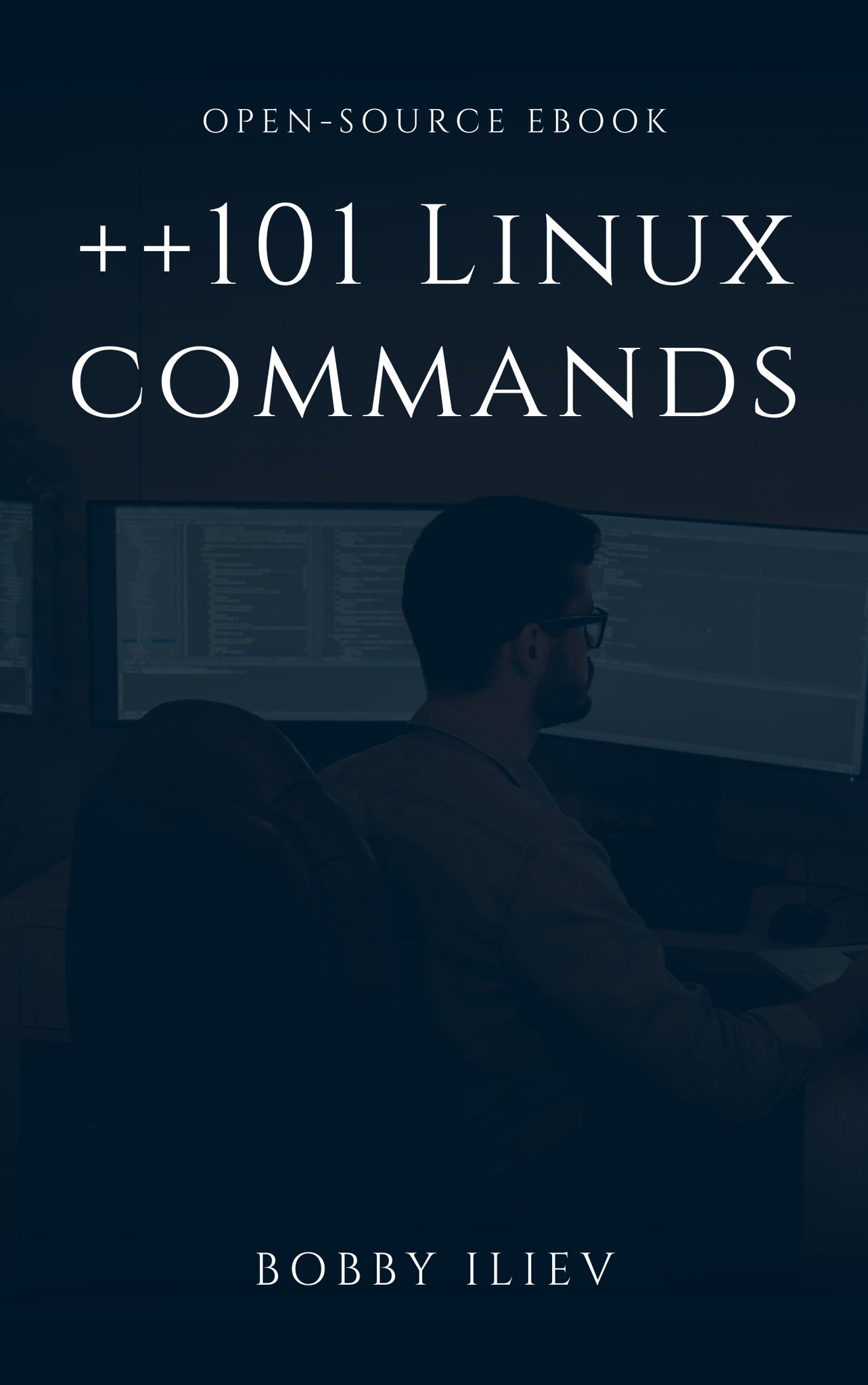






101-linux-commands is a free, open source publishing project written in HTML and released under MIT. It has 1,130 GitHub stars, 141 forks and 3 open issues, and was last pushed 6 months ago. On this registry it ranks #32 of 46 tracked projects in Publishing, with 5 head-to-head comparisons available.

What is 101-linux-commands?

101 Linux commands is an open-source, MIT-licensed eBook that teaches the 101 Linux commands everyone should know, written for DevOps and SysOps engineers, developers, and Linux enthusiasts who will have to use the terminal at some point in their careers.

What it is

The project is a book of 101 Linux commands, published as open-source content out of a GitHub repository and distributed as downloadable release artefacts, with an online copy served from GitHub Pages. Its repository description and tagline also call it a CLI tool, and it lives in the Linux and DevOps documentation space alongside the author's other Leanpub titles. The content itself is written in HTML, and the repository is primarily a publishing pipeline rather than a program.

The concrete problem it solves is that terminal commands are normally learned one at a time, usually at the moment someone needs one, from man pages or scattered notes. This project collects the commands into a single curated reference, organised by category and by chapter, and hands it over in a format the reader chooses. It replaces the piecemeal scavenging of command syntax with one maintained document that can be read cover to cover or consulted by topic, and it does so at no cost under the MIT licence rather than through a paid channel — the paid titles linked from the repository are the author's separate Leanpub eBooks, not this one.

Key capabilities

  • Downloads published in four formats per release: 101-linux-commands-light.pdf for printing and desktop reading, 101-linux-commands-dark.pdf for dark-mode readers, 101-linux-commands.epub for e-readers, tablets, and mobile devices, and 101-linux-commands.html as a single-page web version.
  • An online copy is served from bobbyiliev.github.io/101-linux-commands/, so no download is required to read it.
  • Commands are indexed by category, covering Directory Navigation, File Commands, File and Directory Manipulation, package archive and compression tools, System commands, Networking Commands, Package Management, User Information commands, Session commands, Getting Help, and Applications.
  • A chapter index adds Disk and File System Management, General Disk Manipulation (non-LVM), Globs (Wildcards), Regex, stream redirection, Text Readers and Editors, Less, VI, User and Group Management, File System Permissions, SSH, and Cronjobs.
  • Package management is broken out by ecosystem, with dedicated RPM and YUM sections rather than one generic chapter.
  • The Basics chapter documents the File Hierarchy Standard as a table, mapping /bin, /boot, /etc, /lib, /sbin, /var, /usr, /proc, /sys, /mnt, /media, /home, and /run to their contents.

Who uses it and how

  • DevOps and SysOps engineers, developers, and Linux enthusiasts, which the README names directly as the intended audience.
  • Readers who need a working Linux machine to try commands on; the README points to a DigitalOcean referral link offering credit for a test virtual machine.
  • Mobile and e-reader readers who take the EPUB, dark-mode readers who take the dark PDF, and readers who want a single browseable page and take the HTML build.
  • Contributors, particularly during Hacktoberfest — the repository carries the hacktoberfest topic and a Contributing section.
  • Beginners who want more groundwork before the command list, directed by the README to the companion Introduction to Linux eBook on Leanpub.

Getting started

There is no install command, package, or container image; the README only offers download links. Take the latest PDF, EPUB, or HTML from the Releases page, or read the online copy directly in a browser.

How it compares

The facts provided name no competing tools and no list of paid products this project replaces, so it stands alone in this registry on that axis. The only adjacent titles mentioned are the author's own Leanpub eBooks, which are companions rather than substitutes.

When to use it — and when not to

There is nothing to operate: no database, object storage, mail server, or application runtime is involved, and the artefacts are static files, so a self-hoster's only real work is hosting a copy of the published output. Anyone expecting an interactive CLI tool should look elsewhere, because the README documents no installable binary, command name, or invocation, despite the repository description and tagline describing one. The scope is also deliberately introductory — 101 commands for terminal users — so it will not serve as a deep reference for advanced administration.

project readme (upstream, from github) — read inline

💻 ++101 Linux commands Open-source eBook

This is an open-source eBook with 101 Linux commands that everyone should know. No matter if you are a DevOps/SysOps engineer, developer, or just a Linux enthusiast, you will most likely have to use the terminal at some point in your career.

Make sure to star the repository

If you need a Linux virtual machine to test these commands on, use the following referral link to get a free $200 Credit For DigitalOcean!

Introduction to Linux eBook

If you are looking for a comprehensive guide for beginners, check out this eBook: Introduction to Linux eBook

📙 Online eBook

An online copy :zap:🌐 of this ebook is available here 📙.

🔽 Download links

📚 Multiple Formats Available

This eBook is now available in multiple formats to suit different reading preferences:

  • 📄 PDF (Light Theme): Download PDF - Perfect for printing and desktop reading
  • 🌙 PDF (Dark Theme): Download PDF - Ideal for dark mode readers
  • 📱 EPUB: Download EPUB - Compatible with e-readers, tablets, and mobile devices
  • 🌐 HTML: Download HTML - Single-page web version

🔄 Latest Releases

Visit our Releases page to download the latest versions or browse previous releases.

Star History

Star History Chart


Content


Basics

File Hierarchy Standard (FHS)

Path Content
/bin Binaries (User)
/boot Static boot loader files
/etc Host specific configs
/lib Shared libraries and kernel modules
/sbin Binaries (System/root)
/var Varying files (e.g. Logs)
/usr 3rd party software
/proc Pseudo file system
/sys Pseudo file system
/mnt Mountpoint for internal drives
/media Mountpoint for external drives
/home User homes
/run PID files of running processes

Commands

File System Commands

Command Options Description
cd - Navigate to last dir
~ Navigate to home
~username Navigate to home of specified user
pwd Print working dir
ls Print dir content
-l Format as list
-a Show hidden items (-A without . and ..)
-r Invert order
-R Recurse
-S Sort by size
-t Sort by date modified
mkdir -p Create dir with parents
cp -r Copy dir
rmdir -p Remove dir and empty parents
rm -rf Remove dir recursively, -f without confirmation
mv Move recursively
[find](https://github.com/bobbyiliev/101-linux-commands/blob/main/ebook/en/content/102-the-find-command

readme truncated — read the full docs on github

Frequently asked questions

Is 101-linux-commands free to use?

101-linux-commands is open source under the MIT licence. There is no licence fee and no seat count — you can self-host it or, where the project offers one, pay a vendor for a managed version instead.

What does 101-linux-commands do?

101 Linux commands Open-source eBook and CLI tool

What is 101-linux-commands written in?

101-linux-commands is primarily written in HTML. Its source is publicly available at https://github.com/bobbyiliev/101-linux-commands, and it has 1,130 GitHub stars.