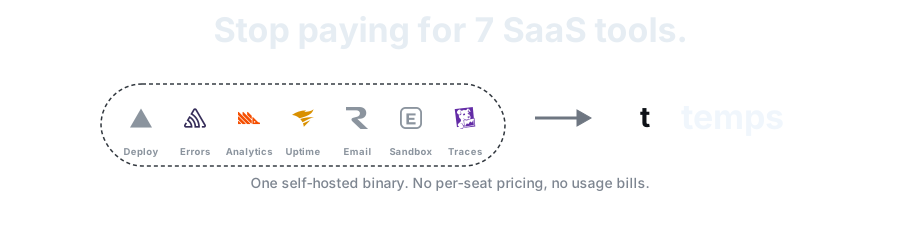
Website · Docs · Discussions
curl -fsSL https://temps.sh/deploy.sh | bash
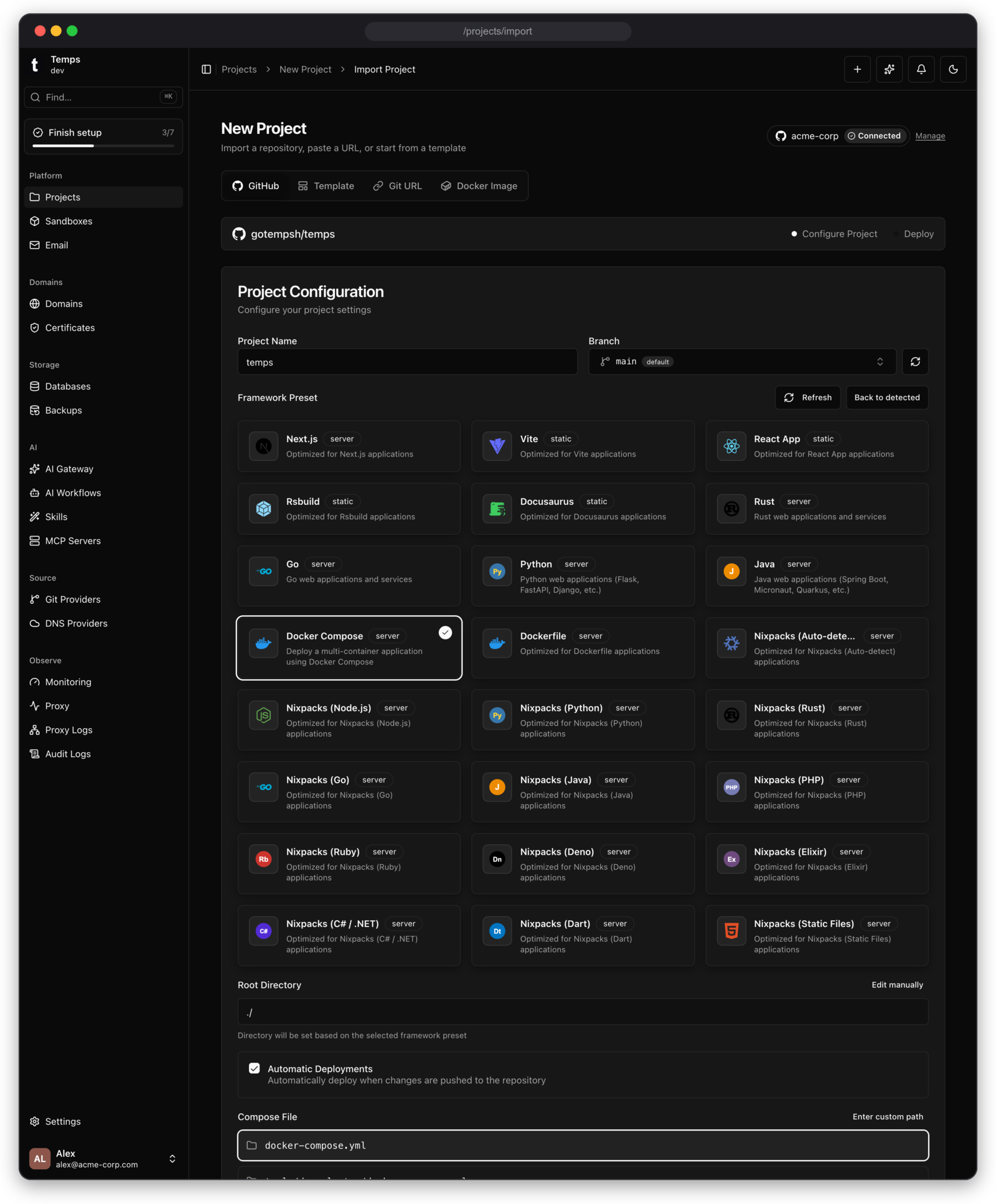
Features
AI-native — 440+ operations any agent can drive
Every operation in the dashboard is also a CLI command — 440+ of them across 69 groups — and Temps ships the skills that teach an agent how to use them. Drop them into Claude Code, Codex, OpenCode, or any harness that reads .claude/skills/, and your agent can deploy, inspect traces, run migrations, or add a domain without you writing the glue.
bunx @temps-sdk/cli projects list
bunx @temps-sdk/cli deploy my-app --environment production
bunx @temps-sdk/cli analytics ai-agents -p my-app --period 7d
Temps runs those agents for you too: workflow sandboxes execute Claude Code, Codex, or OpenCode against your repository, with platform-wide skills and MCP servers injected automatically.
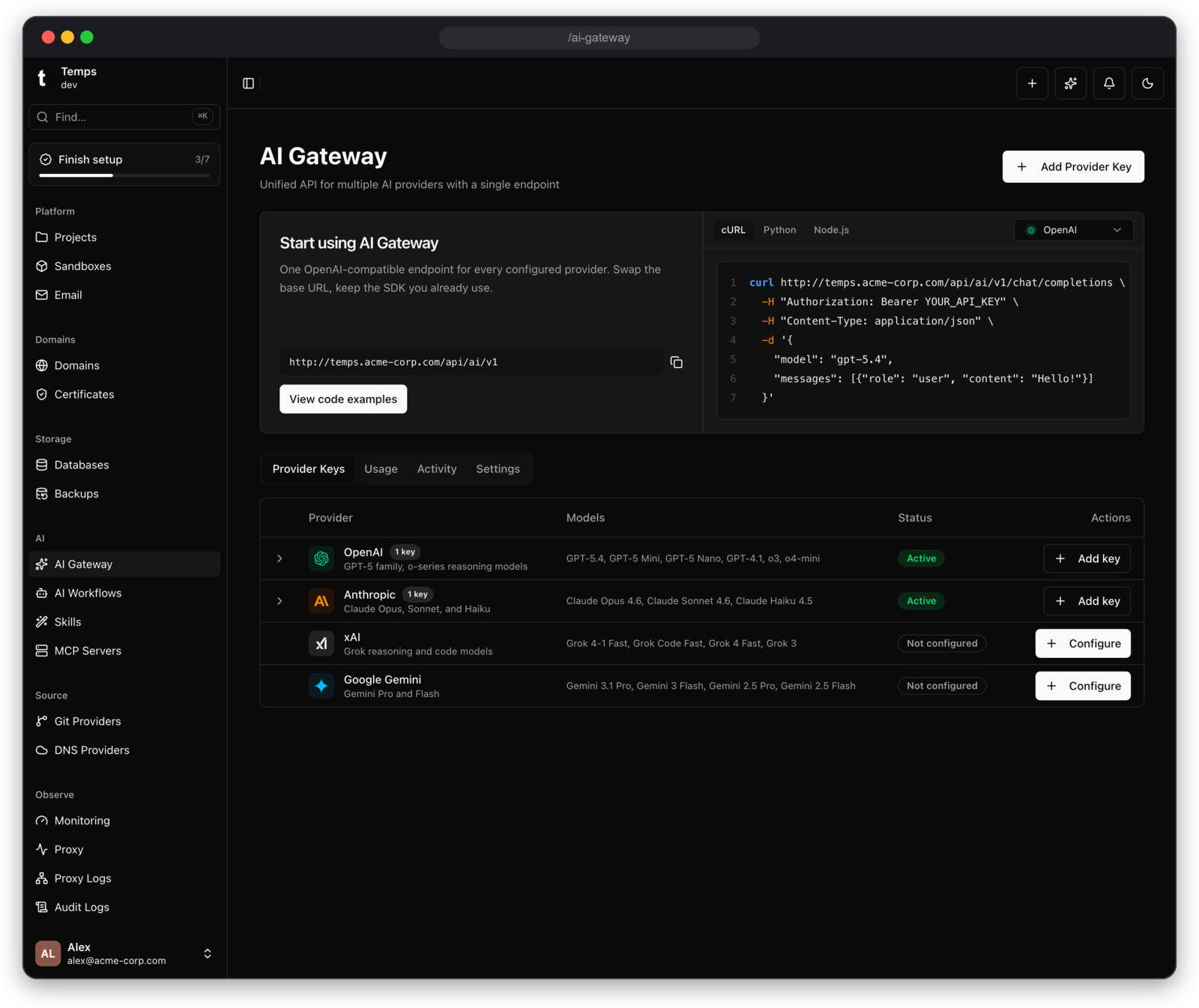
AI Chat — grounded in your own telemetry
Ask about your project and the answer comes from your data — traces, metrics, alarms, deployments, and revenue — not from a generic model guess. It is read-only by default: write actions are opt-in, and even then the assistant proposes the change and waits for you to confirm.
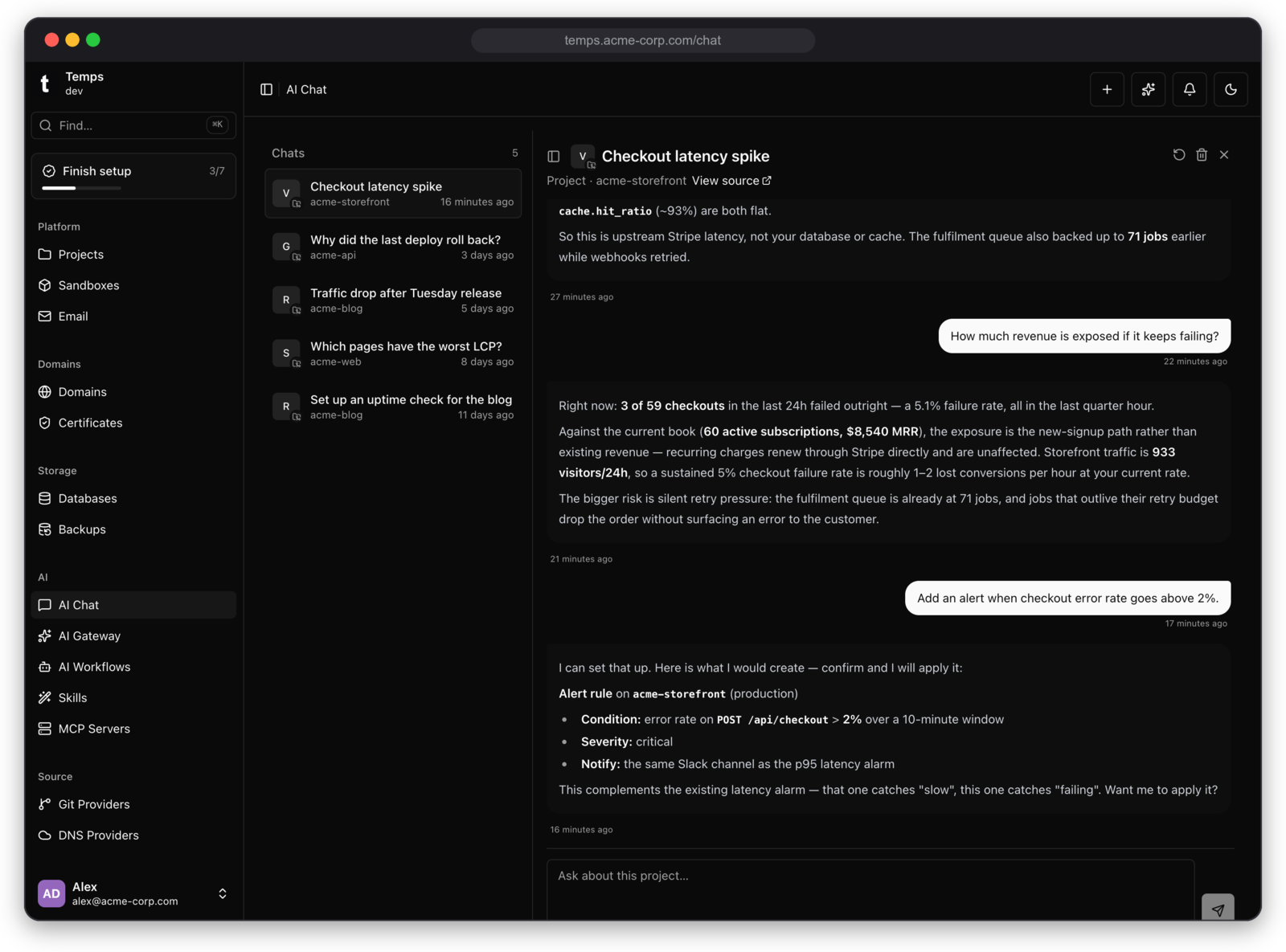
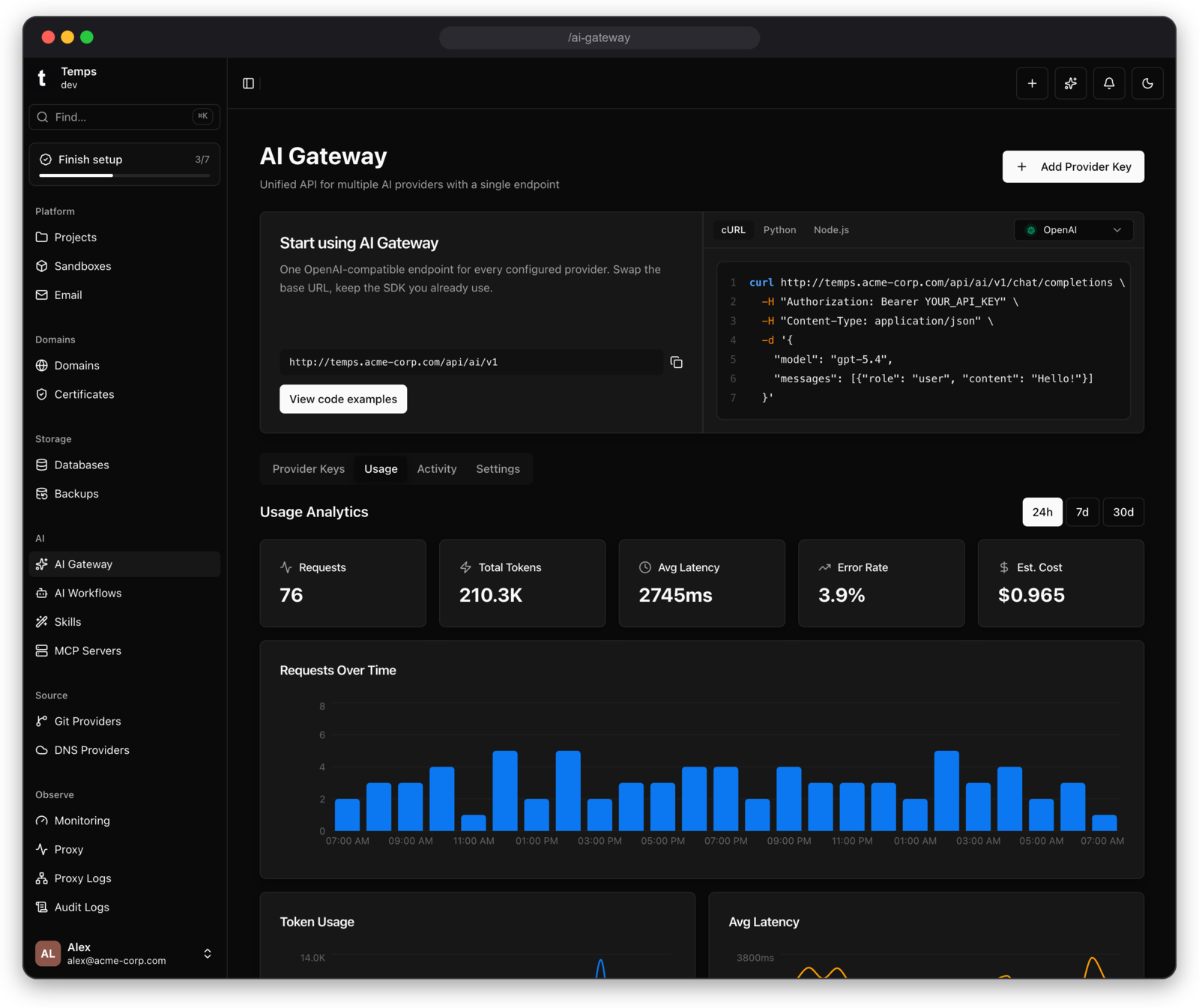
AI Gateway — one endpoint, your own keys
Bring your own provider keys (OpenAI, Anthropic, xAI, Google Gemini) and call them all through one OpenAI-compatible endpoint — swap the base URL, keep the SDK you already use. Keys stay encrypted on your server, and every request is attributed: tokens, latency, error rate, and estimated cost per model.
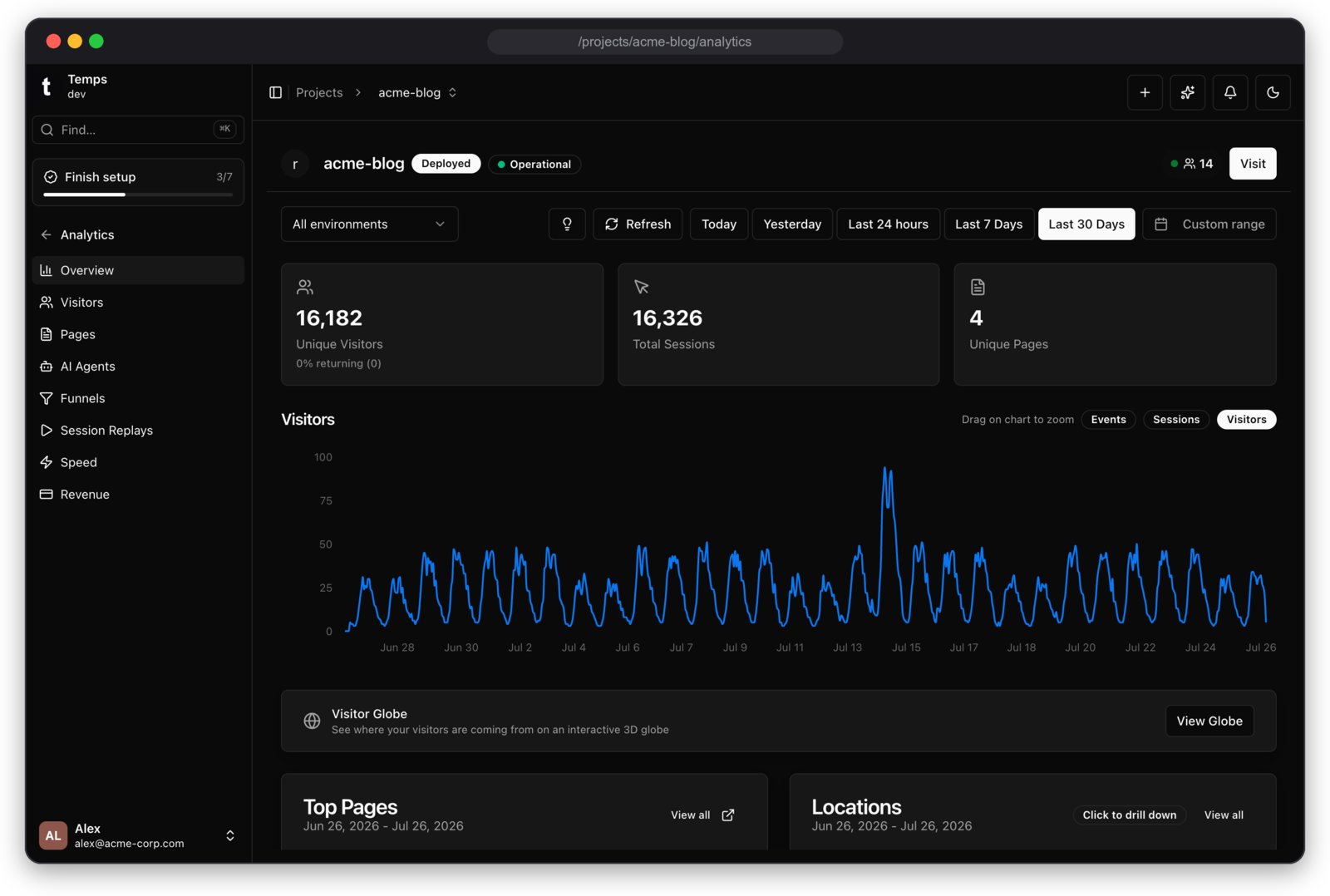
Web Analytics & Session Replay
Web analytics with funnels, visitor tracking, and session replay (rrweb) built in — no external services, no data leaving your servers. This is what no other self-hosted PaaS has.
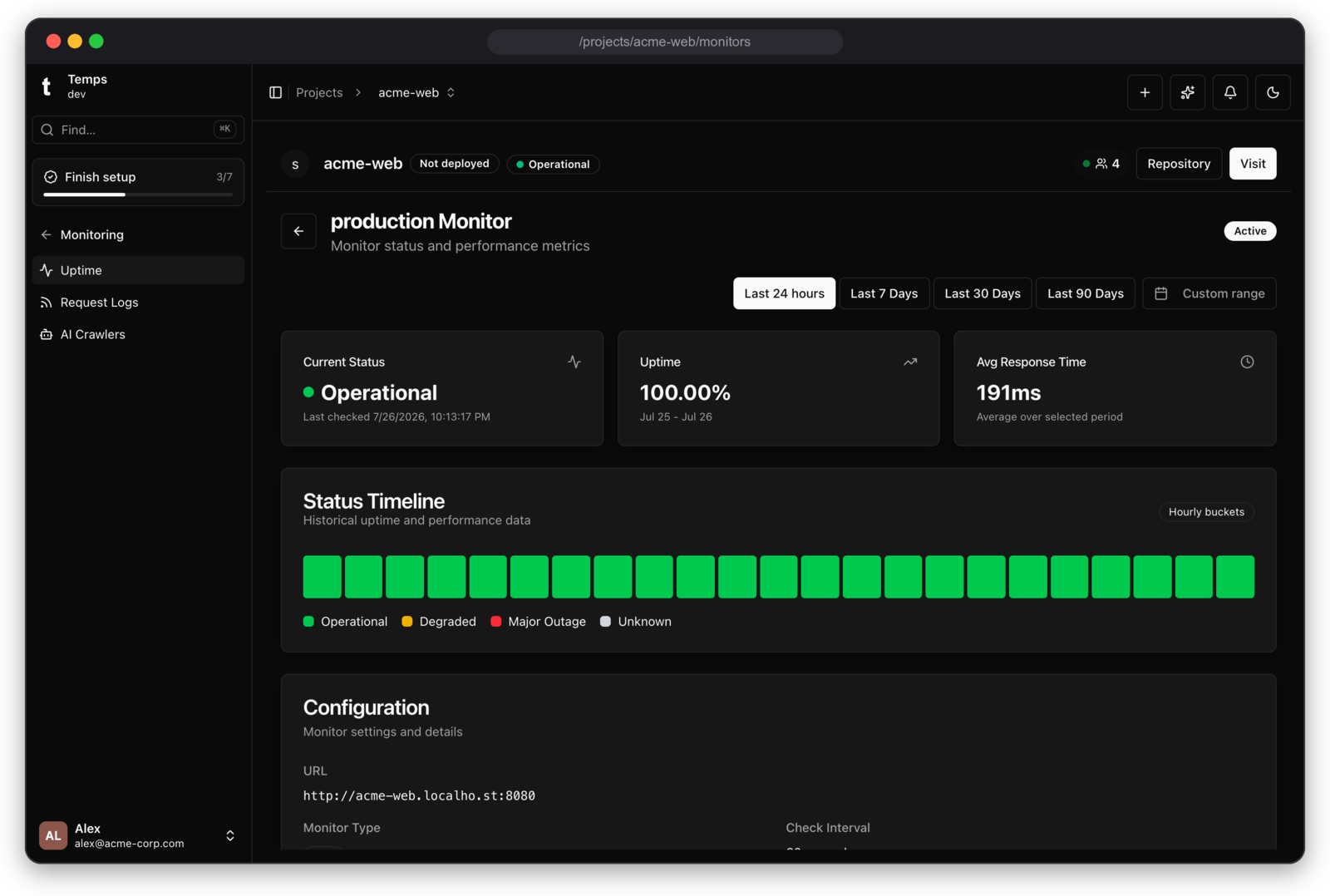
Uptime Monitoring & Alerts
Uptime monitors with status timelines, plus alerts for deploy failures, runtime crashes, certificate expiry, and backup health. Get notified before problems reach users.
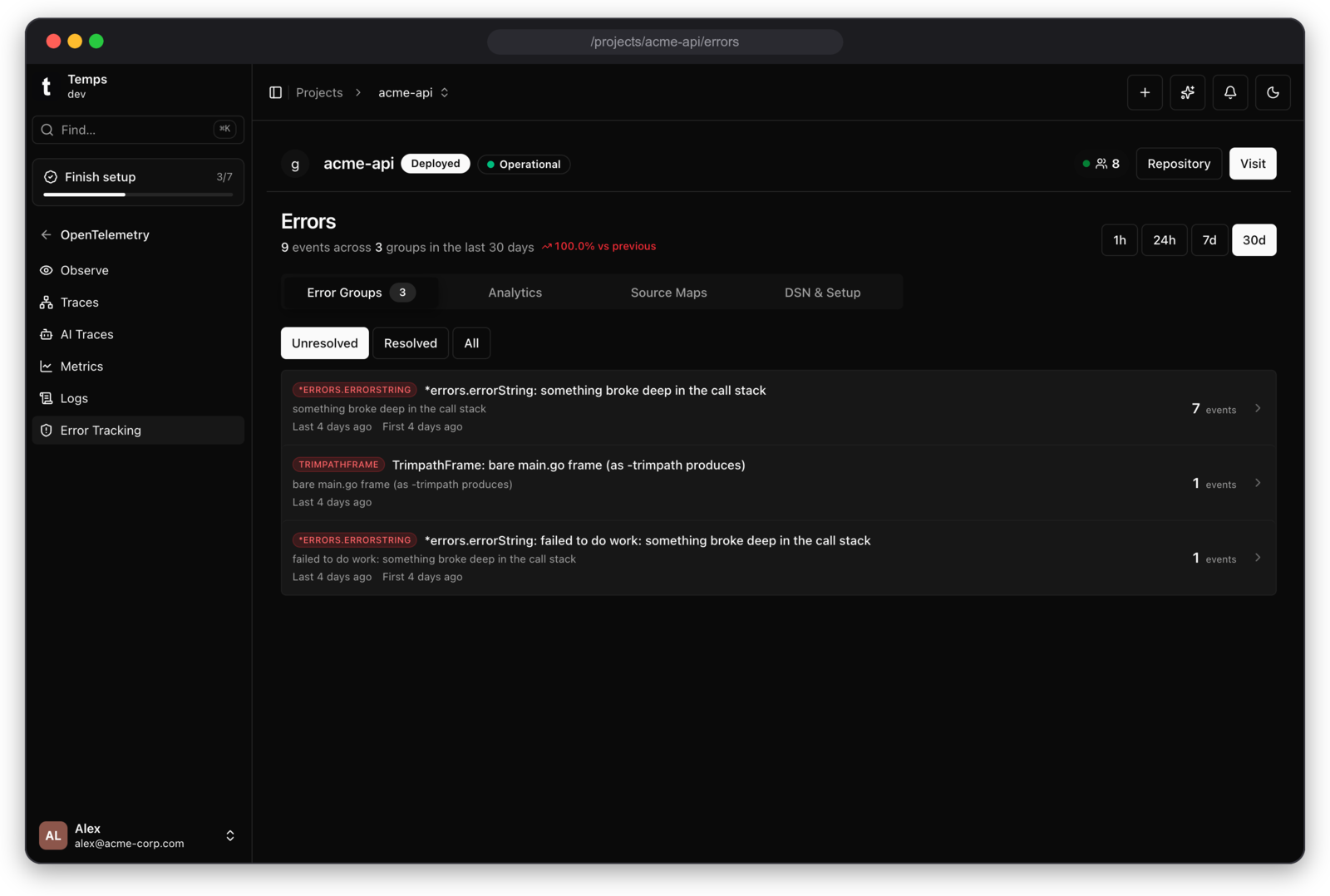
Error Tracking — Sentry-compatible
Drop-in Sentry replacement: point the official Sentry SDK at your Temps DSN and get error groups, stack traces with source context, and alerts. No per-event pricing.
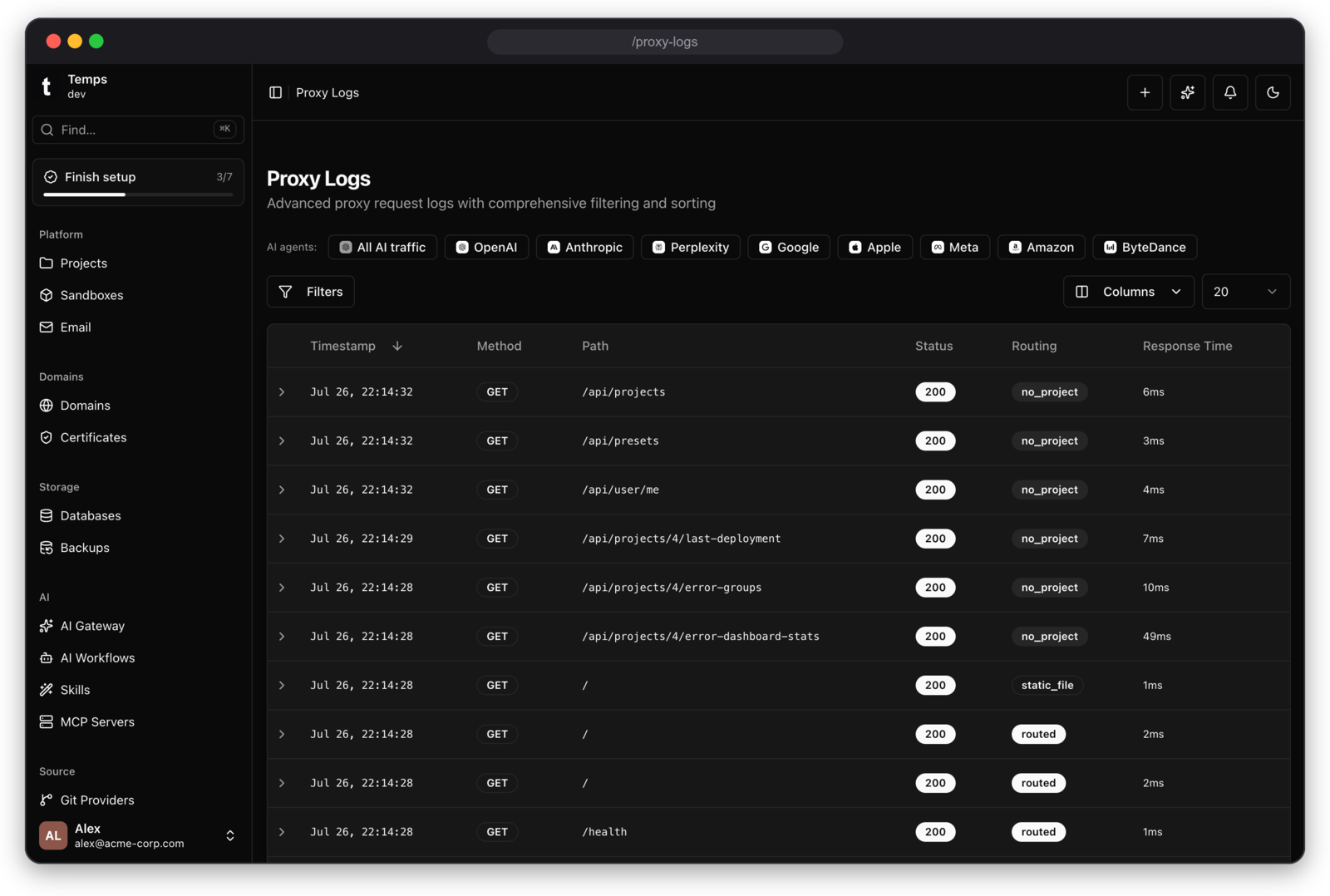
Request Logs & Proxy Visibility
Every HTTP request logged with method, path, status, response time, and routing metadata — including per-AI-crawler traffic (OpenAI, Anthropic, Perplexity, Google…). Runs on Cloudflare's Pingora engine with auto TLS via Let's Encrypt (HTTP-01 & DNS-01).
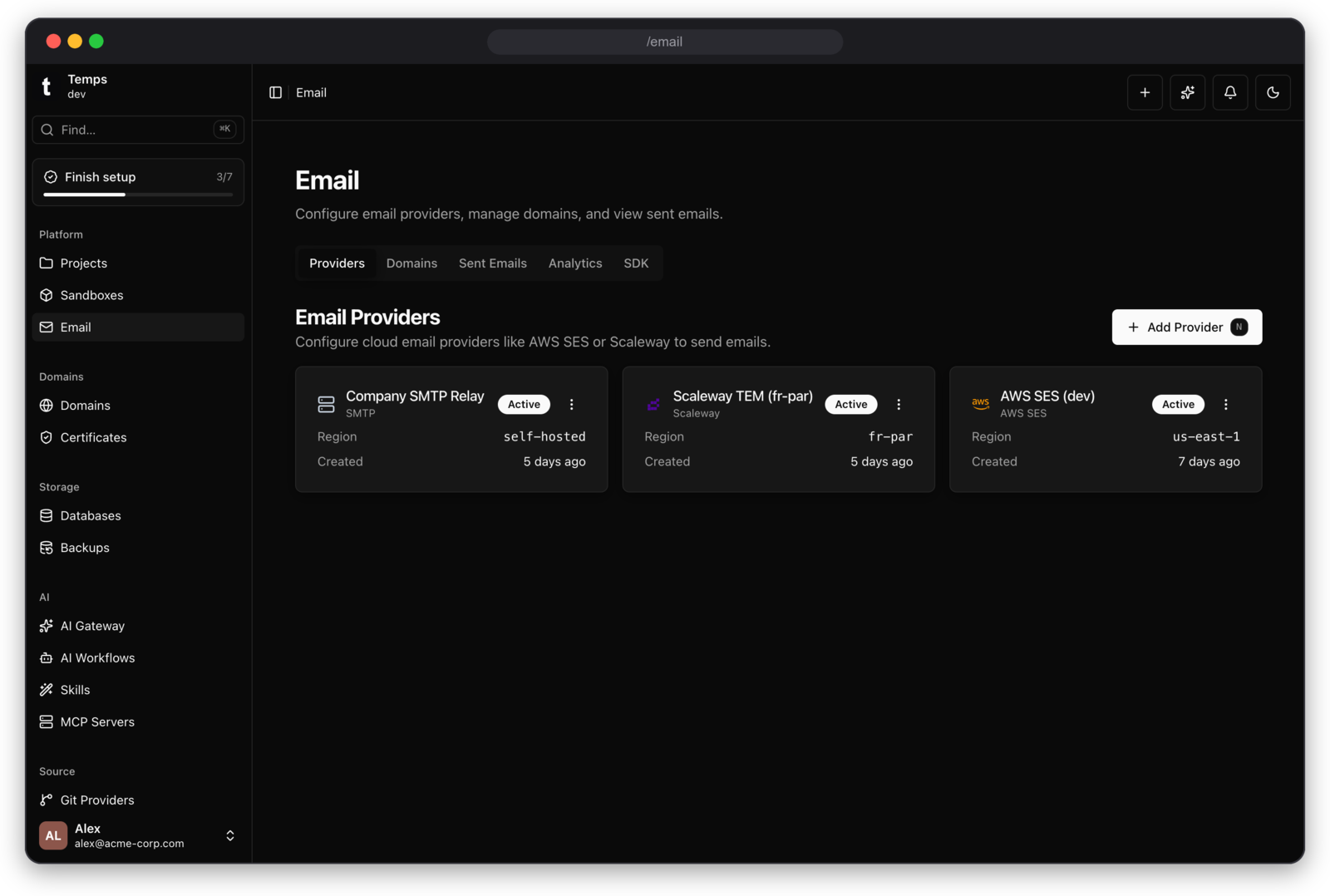
Transactional Email
Add sender domains with DKIM records through the UI and send via @temps-sdk/node-sdk — or plug in AWS SES, Scaleway, or any SMTP relay.
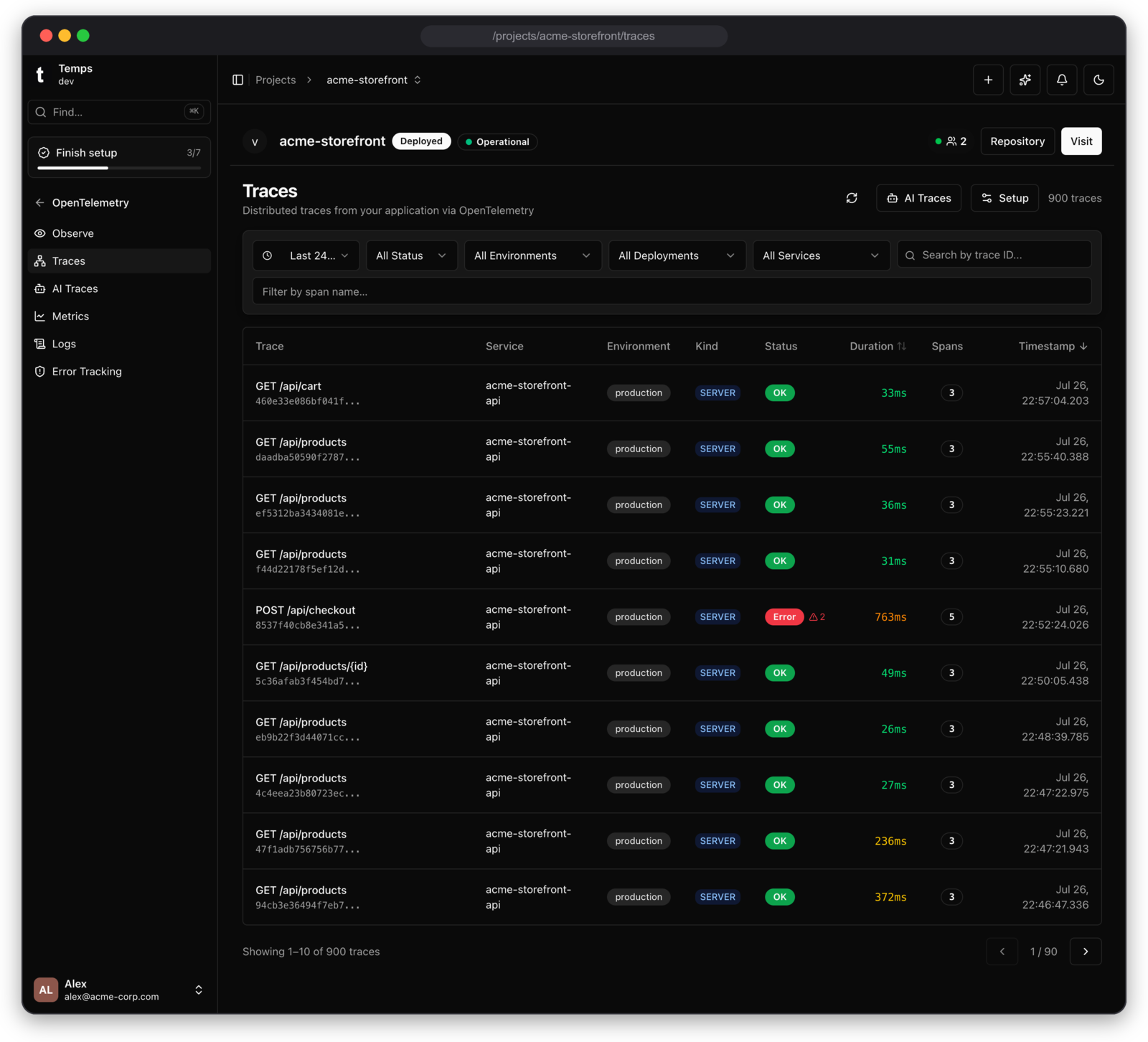
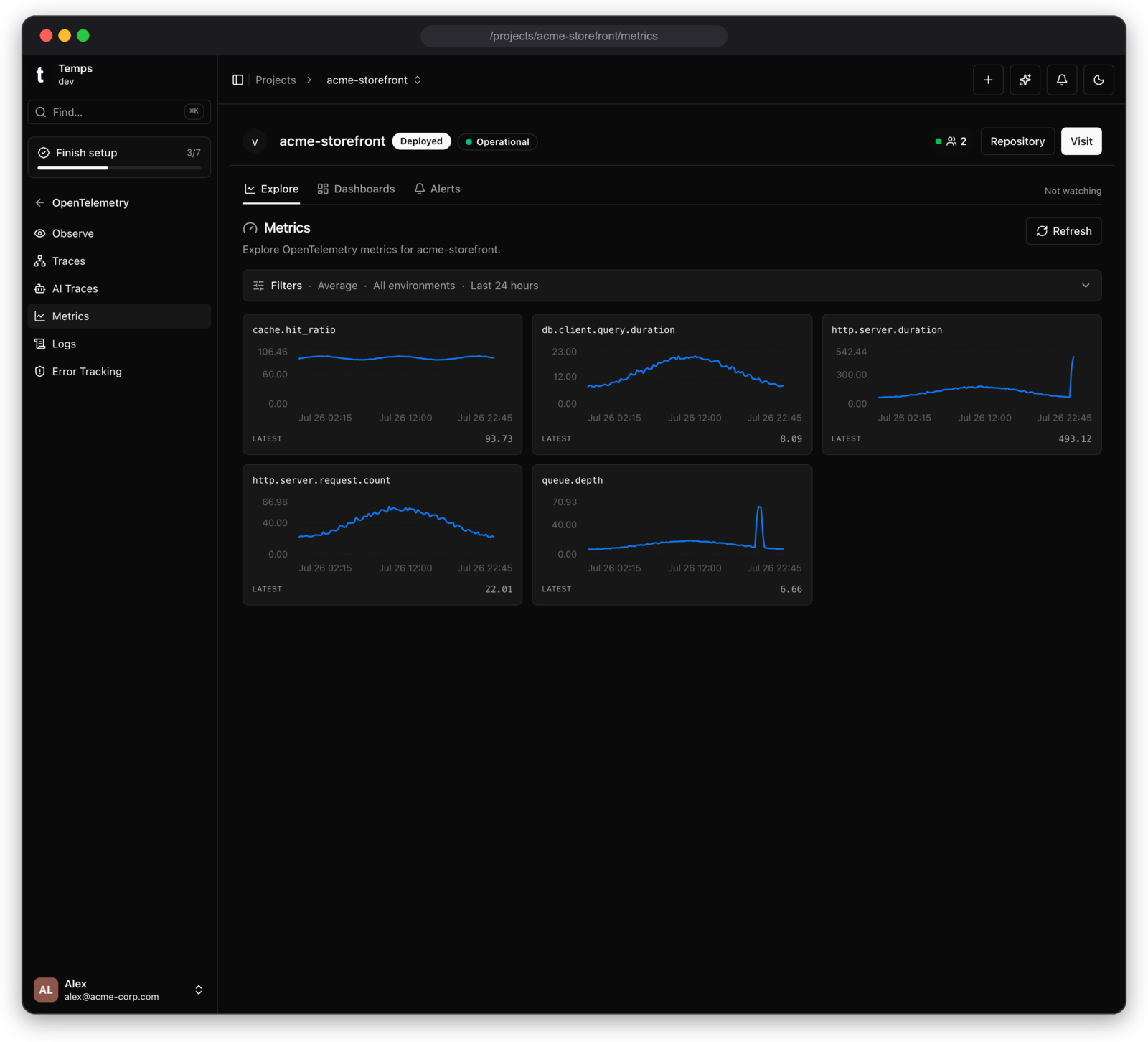
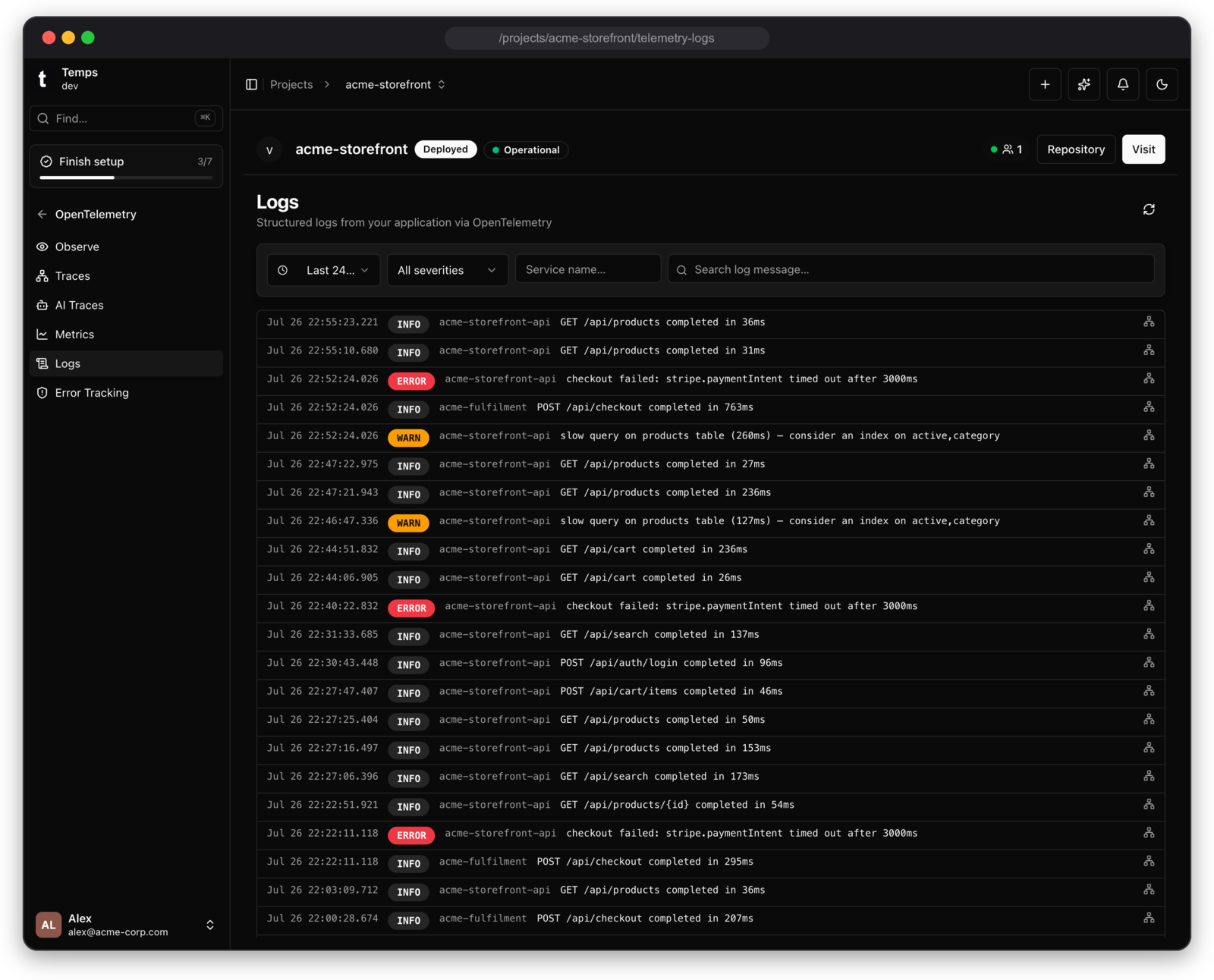
OpenTelemetry — traces, metrics, logs & alerts
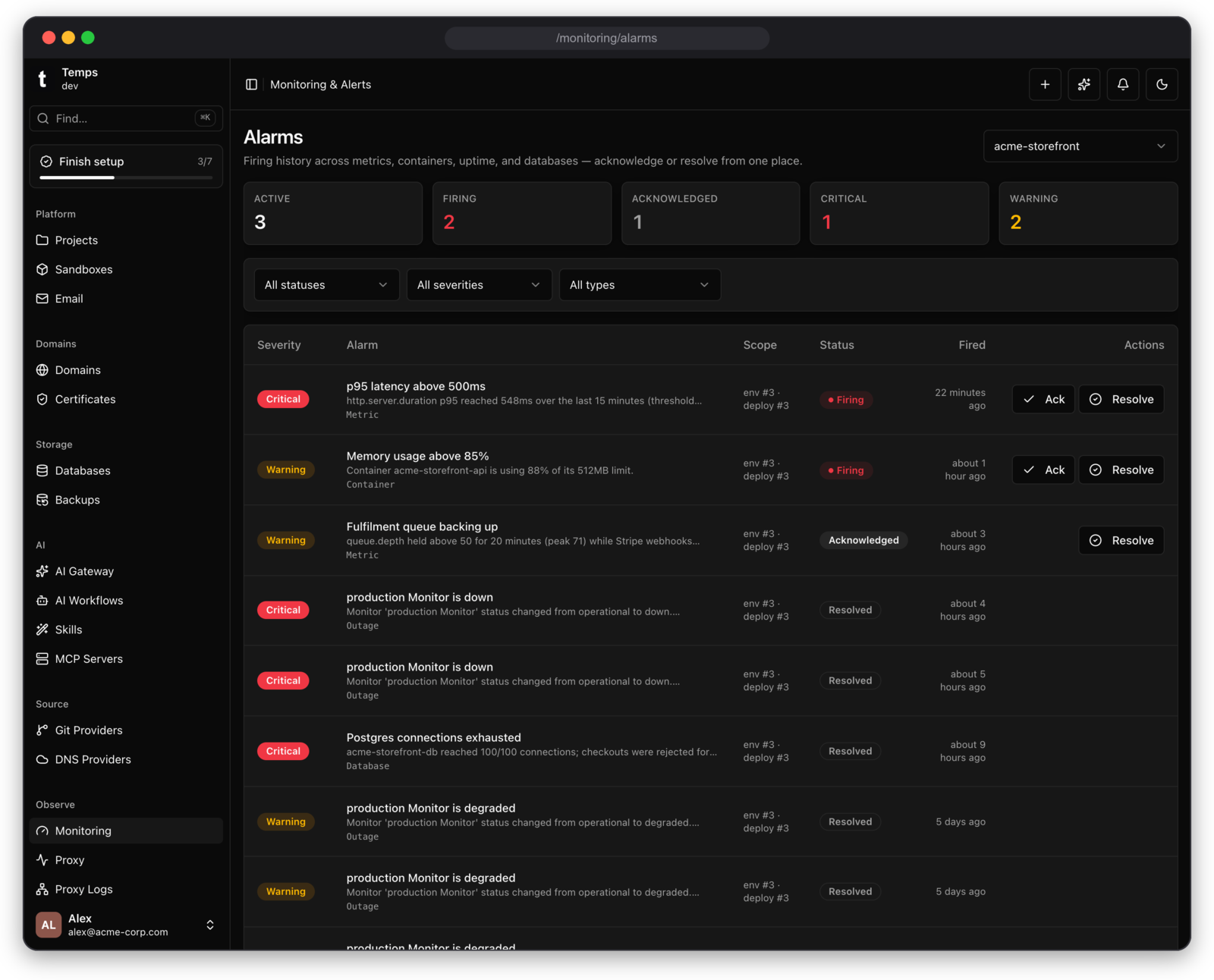
Point any OTLP exporter at Temps and get distributed traces, metrics, and structured logs in the same place as everything else. Traces show per-span latency and errors across services; metrics keep your golden signals; alerts fire off those metrics and land in one queue you can acknowledge or resolve. No Grafana, Prometheus, Jaeger, or Loki to run.
AI Sandboxes — Firecracker microVMs, self-hosted
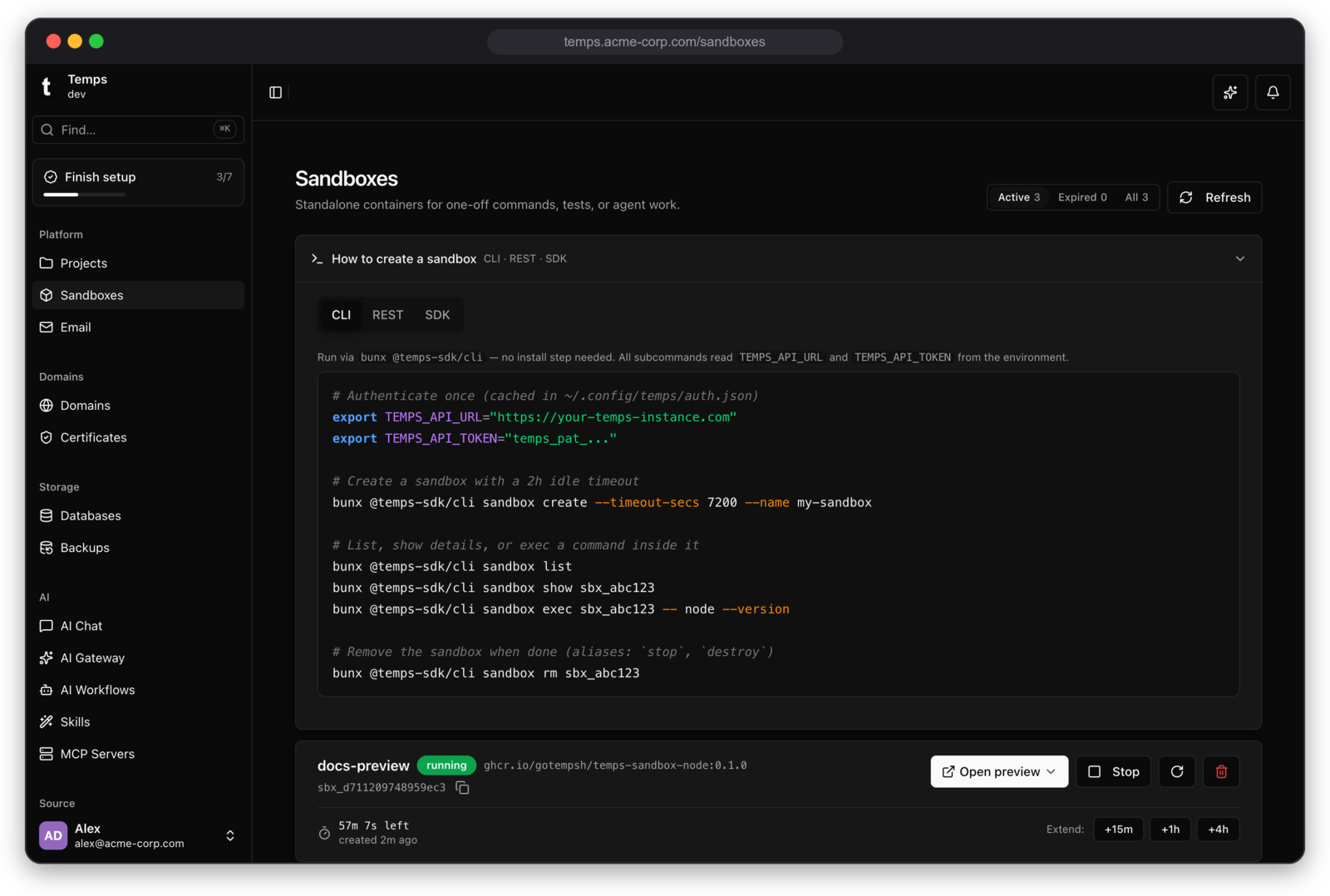
Real hardware-level isolation, not just containers. Sandboxes run on Firecracker microVMs — the same tech behind AWS Lambda — with a Docker backend as the default. Run temps firecracker setup and Temps routes sandboxes to microVMs automatically; each one gets its own kernel, so untrusted agent-generated code never shares a kernel with your host.
A drop-in SDK. @temps-sdk/sandbox is compatible with the @vercel/sandbox shape — switch providers by changing the import and base URL:
import { Sandbox } from '@temps-sdk/sandbox'

const sandbox = await Sandbox.create({
  source: { type: 'git', url: 'https://github.com/example/repo.git', revision: 'main' },
})

const { stdout } = await sandbox.exec(['npm', 'test'])
const url = sandbox.domain(3000) // live preview of a dev server inside the VM
Password-protected previews. Every sandbox port can be exposed on a public preview URL and locked behind a generated password:
bunx @temps-sdk/cli sandbox password sbx_abc123 --rotate --length 32
bunx @temps-sdk/cli sandbox password sbx_abc123 --clear   # open it back up
Share a running branch without shipping it to the world.
Also available via CLI and REST API. What you'd otherwise pay E2B, Daytona, or Vercel Sandbox for.
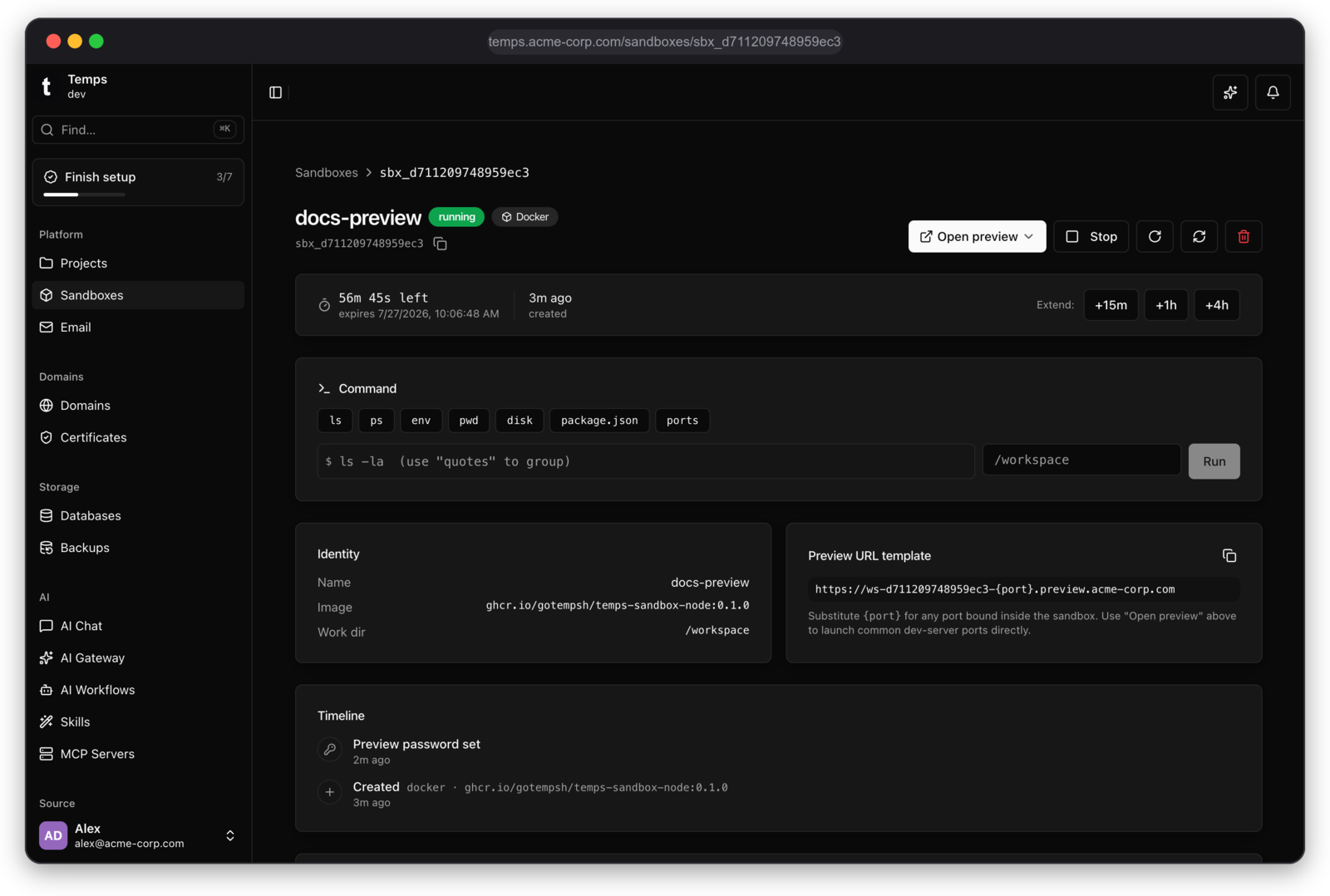
Each sandbox gets a shell, a preview URL template for any port it binds, and a timeline of everything that happened to it:
Everything in One Dashboard
Visitors, errors, deployment status, and monitoring health per project —