Scanopy is a Rust-based, AGPL-3.0 network documentation tool for platform and DevOps teams, network engineers, IT operations, MSPs, and home labs that scans infrastructure on a schedule and produces network diagrams that update themselves.
What it is
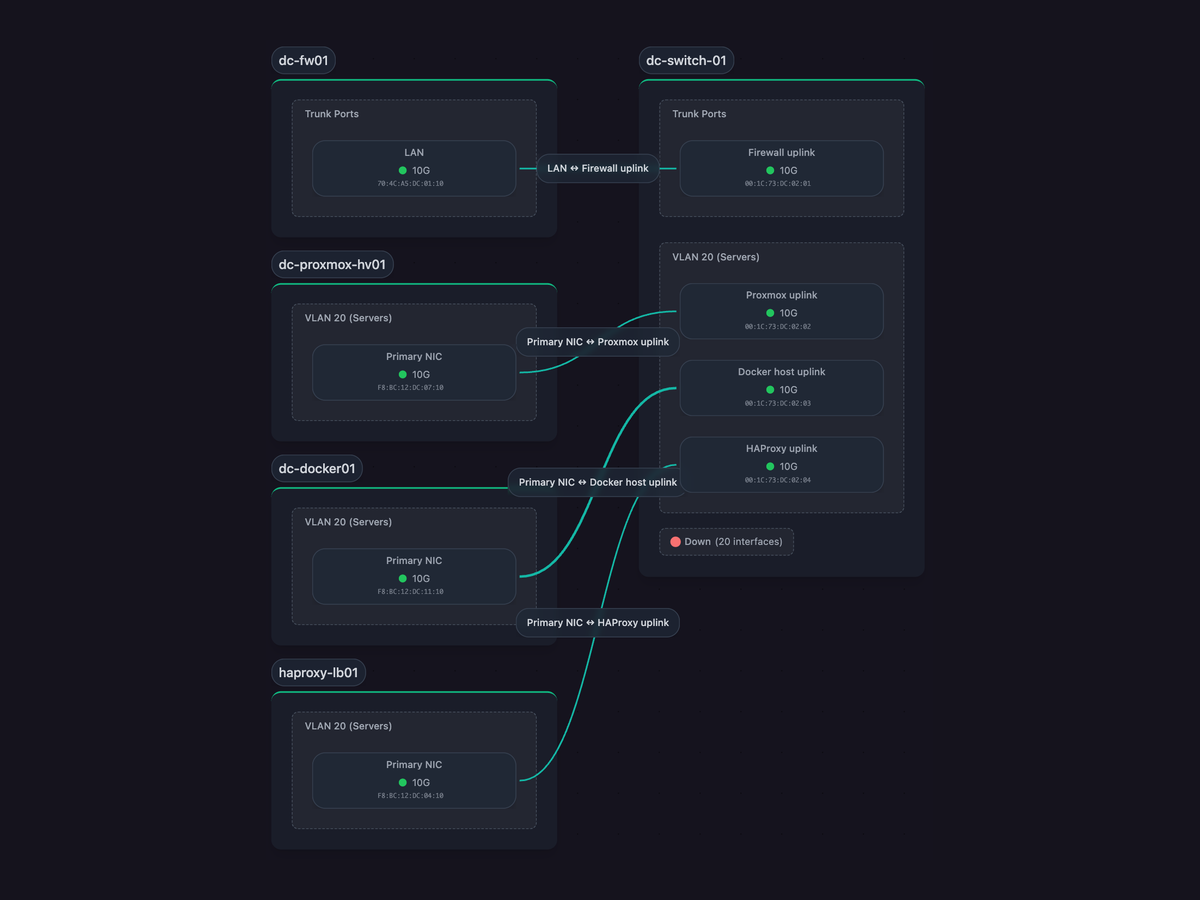
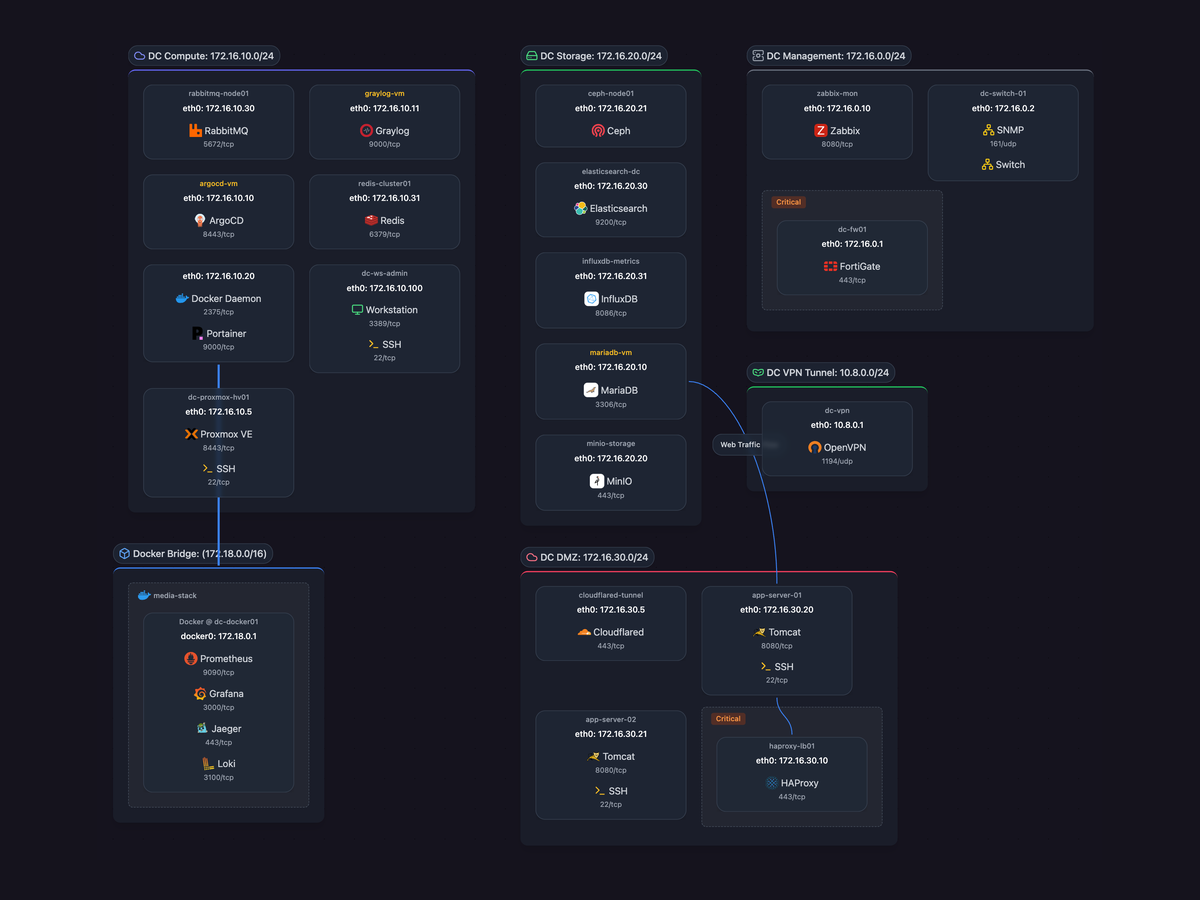
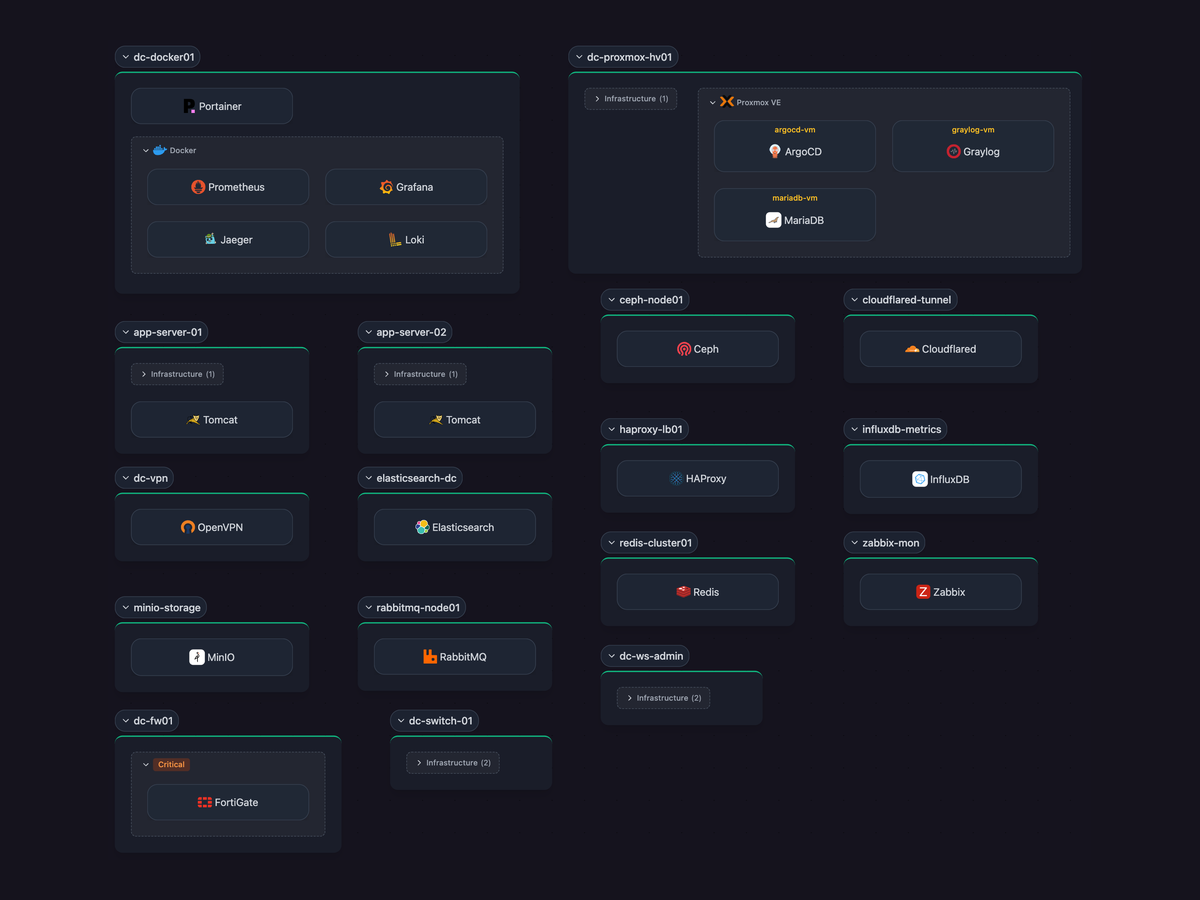
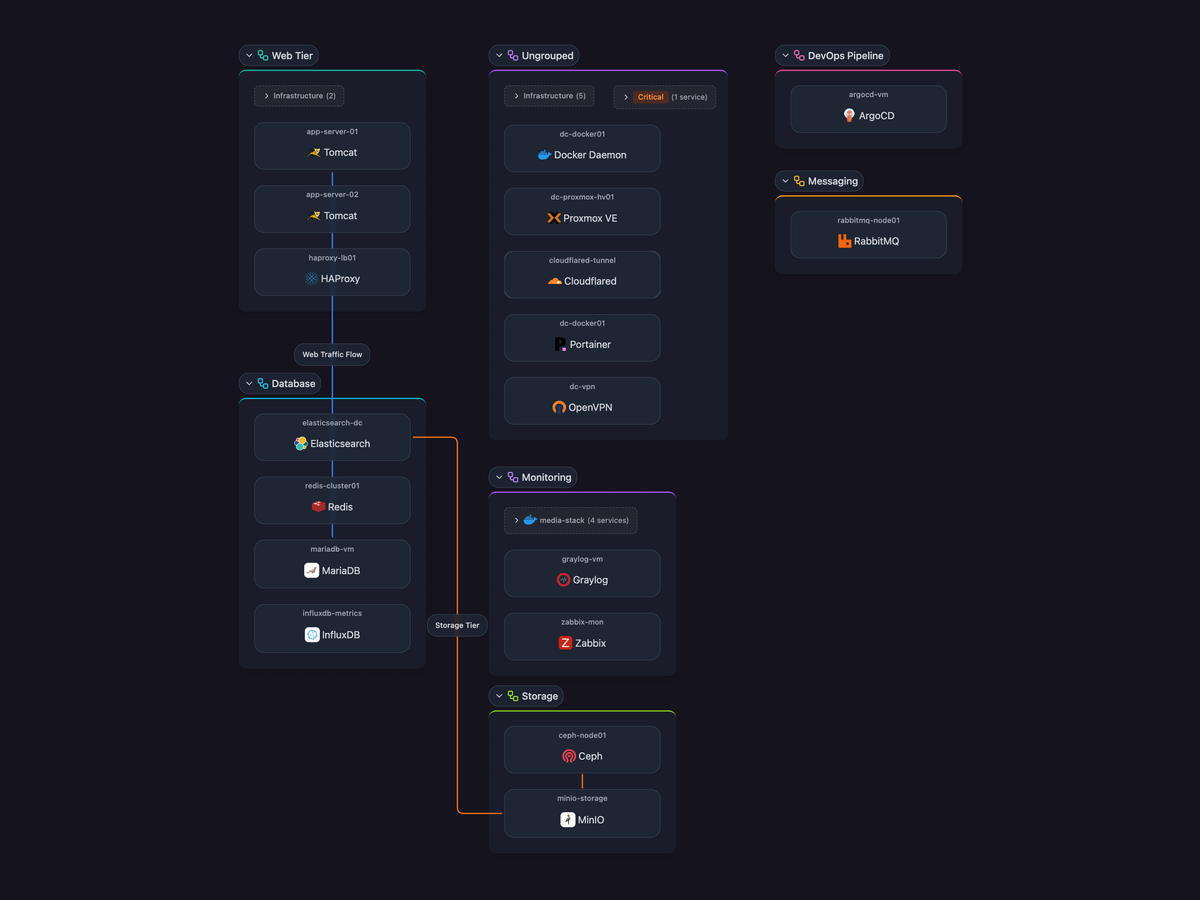
Scanopy replaces manual network diagrams with a continuously maintained model of what is actually running. A single daemon scans on a schedule, and each scan produces four views: L2 (physical), covering every switch, port, and link; L3 (logical), covering subnets and how hosts connect across them; workloads, spanning bare metal to hypervisors to containers; and applications, covering services and their dependencies grouped by application. The project is written in Rust, published under AGPL-3.0, and can be self-hosted or consumed through the hosted Scanopy Cloud subscription.
The concrete problem it solves is staleness and blind spots in existing documentation practice. Diagrams drawn in draw.io go stale the week they are saved, and IaC state misses drift and resources provisioned outside the pipeline. Scanopy reflects the current state of the infrastructure instead, and the resulting model can be exported as SVG, Mermaid, or Confluence, embedded as live maps, or fed into an existing source of truth.
Key capabilities
- Automatic discovery of hosts and services by scanning the network, using one scanner with no per-device agents.
- 230+ service definitions that auto-detect databases, web servers, containers, network infrastructure, and enterprise applications.
- Four views from one scan: L2 (physical), L3 (logical), workloads, and application dependencies.
- Distributed scanning, deploying daemons across segments to map multi-site and multi-VLAN topologies.
- Native Docker and SNMP integration for containerized services and network hardware discovery.
- Scheduled rescans that keep documentation current as infrastructure changes.
- Multi-user support with RBAC, organization management, role-based access, and shareable live views for teammates or external stakeholders.
- Export to SVG, Mermaid, or Confluence, with live maps that can be embedded.
Who uses it and how
- Platform and DevOps teams trace service dependencies without an APM, mapping containers, VMs, and hardware in one model.
- Network engineers build multi-VLAN, multi-site topology diagrams derived from SNMP, LLDP, and ARP, with no manual drawing.
- IT operations keep inventory, topology, and dependency records current across teams and sites.
- MSPs maintain per-client documentation and hand out shareable live views.
- Home labs document infrastructure without opening draw.io.
Getting started
Self-hosting starts with Docker Compose: fetch the compose file from the repository raw URL and run the mayanayza/scanopy-server and mayanayza/scanopy-daemon images. A hosted option, Scanopy Cloud, is available as a subscription for those who prefer zero infrastructure management.
How it compares
The facts name no paid products this project is positioned to replace, but the README contrasts it directly with manually drawn diagrams in draw.io, which go stale shortly after they are saved, and with IaC state, which misses drift and resources provisioned outside the pipeline. Scanopy sits alongside those tools rather than displacing a commercial category, feeding its model into an existing source of truth where one already exists. The hosted Scanopy Cloud subscription contrasts with self-hosting on the axis of operational burden, since it requires no infrastructure management.
When to use it — and when not to
A self-hoster must operate both a server and at least one scanning daemon, and the AGPL-3.0 licence requires source disclosure for network services plus copyleft compliance. Teams that cannot meet those terms need the separately available commercial licence, and anyone who wants no infrastructure management at all should use the hosted Scanopy Cloud subscription instead. The README excerpt also truncates mid-command in its quick-start section, so the full compose configuration should be checked in the repository before deployment.
project readme (upstream, from github) — read inline
Scanopy

Network documentation, without the drawing.
Scanopy replaces manual network diagrams with a continuously maintained model of what's actually running. A single daemon scans on a schedule and produces four views from each scan: L2 (physical), L3 (logical), workloads, and applications. Unlike diagrams drawn in draw.io that go stale the week they're saved, or IaC state that misses drift and resources provisioned outside the pipeline, Scanopy reflects the current state of your infrastructure. Export as SVG, Mermaid, or Confluence; embed live maps; or feed the model into your existing source of truth.











💡 Prefer not to self-host? Get a free trial of Scanopy Cloud
✨ Features
- Automatic discovery: Maps hosts and services by scanning the network. One scanner, no per-device agents.
- 230+ service definitions: Auto-detects databases, web servers, containers, network infrastructure, and enterprise applications.
- Four views from one scan: L2 (physical), L3 (logical), workloads, and application dependencies.
- Distributed scanning: Deploy daemons across segments to map multi-site and multi-VLAN topologies.
- Docker & SNMP integration: Native discovery for containerized services and network hardware.
- Scheduled rescans: Documentation stays current as infrastructure changes.
- Multi-user + RBAC: Organization management, role-based access, and shareable live views for teammates or external stakeholders.
🎯 Perfect For
- Platform & DevOps teams: Trace service dependencies without APM. Map containers, VMs, and hardware in one model.
- Network engineers: Multi-VLAN, multi-site topology diagrams derived from SNMP, LLDP, and ARP. No manual drawing.
- IT operations: Keep inventory, topology, and dependencies current across teams and sites.
- MSPs: Per-client documentation with shareable live views.
- Home labs: Document your infrastructure without opening draw.io.
📋 Licensing
Self-hosted (AGPL-3.0): Free for all use. Requires source disclosure for network services and copyleft compliance.
Self-hosted (Commercial license): For those who cannot comply with AGPL-3.0 terms. Contact [email protected]
Hosted Solution: Scanopy Cloud subscription for zero infrastructure management
🚀 Quick Start for Self Hosting
Docker Compose
curl -O https://raw.githubusercontent.com/scanopy/scanopy/refs/heads/main/docker-compose.yml
docker compose up -d
Proxmox
Use this helper script to create a Scanopy LXC.
Unraid
Available as an Unraid community app.
💡 Prefer not to self-host? Get a free trial of Scanopy Cloud
Access the UI at http://:60072, create your account, and wait for the first discovery to complete.
For detailed setup options and configuration, see the Installation Guide.
📚 Documentation + API
scanopy.net/docs
🚀 Demo
demo.scanopy.net. Hosted demo app with a sample dataset. Try the full UI without installing anything.
🤝 Contributing
We welcome contributions! See our contributing guide for details.
Great first contributions:
💬 Community & Support
Translations powered by Weblate
Built with ❤️ in NYC