s&box is a modern game engine built on Valve's Source 2 and the latest .NET technology, offering a modern intuitive editor for creating games, and it is aimed at game creators who want to build and play games inside an engine that runs live, alongside the contributors who compile the engine itself from source.
What it is
s&box is a game engine and editor written in C#, built on top of Valve's Source 2 and current .NET technology. It sits in two ecosystems at once: the Source 2 engine lineage and the .NET toolchain, which together supply the rendering and platform foundations as well as the C# authoring layer that developers work in. The project spans a public repository holding the engine source, a website at sbox.game, developer documentation, forums, and a Steam distribution channel, with the topic tags gamedev, sbox and source2 marking its position.
The concrete problem it solves is access. Getting at Source 2 technology normally means going through Valve's own tooling and titles, while this repository publishes the engine source so that anyone willing to build it can compile the engine and editor from the public tree rather than obtaining the toolchain exclusively as a finished binary. For game creators, the practical replacement is the getting started guide and Steam download; for contributors, the repository itself replaces the closed state of the engine by shipping the files needed to produce working game and editor binaries locally. Bugs and feature requests have their own tracker in the sbox-issues repository, separate from the source tree.
Key capabilities
- A modern editor for creating games, available both through Steam as app 590830 and through the project at sbox.game.
- The complete engine source, cloneable from https://github.com/Facepunch/sbox-public.git and built by running
Bootstrap.bat, which downloads dependencies and builds the engine.
- Build prerequisites of Git, Visual Studio 2026 and the .NET 10 SDK, indicating a Windows-oriented C# development workflow.
- Runnable game and editor binaries produced under the
game folder once the build completes.
- Documentation covering tutorials and API references at sbox.game/dev, with a first-steps getting started guide.
- Contributing process described in
CONTRIBUTING.md, with issue reporting routed to sbox-issues.
- A layered licence structure: MIT for the engine source, the s&box EULA for native binaries in
game/bin, and third-party components enumerated in game/thirdpartylegalnotices.
Who uses it and how
- Game creators start with the getting started guide at sbox.game/dev/doc/about/getting-started/first-steps/ and install the editor through Steam, which is the supported path for making games rather than building the engine.
- Engine contributors clone the repository, install Visual Studio 2026, Git and the .NET 10 SDK, then run
Bootstrap.bat to compile and test the editor locally, following the contributing guide.
- Bug reporters and feature requesters use the sbox-issues repository, which carries a large open backlog, so triage rather than instant turnaround should be expected.
- Community members gather on the forums at sbox.game/f/ and the main site for news, with documentation serving as the reference layer for API work.
Getting started
Install the s&box editor directly from Steam, or compile the engine from source by cloning https://github.com/Facepunch/sbox-public.git and running Bootstrap.bat with Git, Visual Studio 2026 and the .NET 10 SDK present.
How it compares
This registry entry does not name any paid products that s&box replaces, so no licence, self-hosting or cost comparison against commercial alternatives is made here. Among similar tools, the only engine the facts name is Valve's Source 2, which is the foundation s&box is built upon rather than a competitor. On the evidence provided, s&box stands alone in this registry.
When to use it — and when not to
A self-hoster or contributor must operate a Windows build environment with Visual Studio 2026 and the .NET 10 SDK, and must accept that the compiled result mixes MIT-licensed source with binaries governed by the s&box EULA and separately licensed third-party components. Anyone who simply wants to make a game should take the Steam route and skip the source build entirely, since the repository is explicitly intended for engine development rather than game authoring. The project also carries a substantial open issue count, and its licence metadata is recorded as NOASSERTION, so users wanting a single uncomplicated licence should read LICENSE.md and the third-party notices carefully before committing.
project readme (upstream, from github) — read inline

Website | Getting Started | Forums | Documentation | Contributing
s&box
s&box is a modern game engine, built on Valve's Source 2 and the latest .NET technology, it provides a modern intuitive editor for creating games.
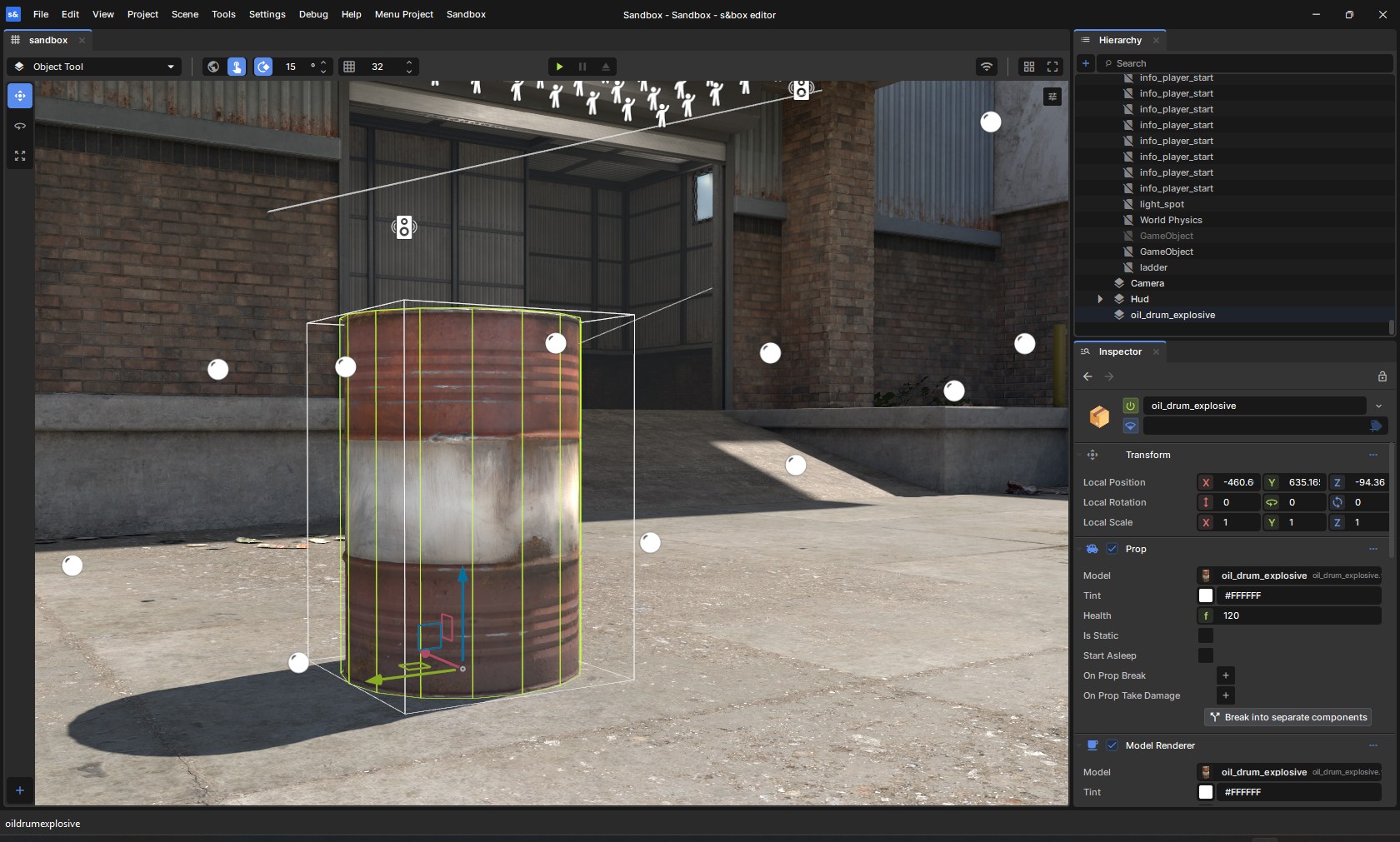
If your goal is to create games using s&box, please start with the getting started guide.
This repository is for building the engine from source for those who want to contribute to the development of the engine.
Getting the Engine
Steam
You can download and install the s&box editor directly from Steam.
Compiling from Source
If you want to build from source, this repository includes all the necessary files to compile the engine yourself.
Prerequisites
Building
# Clone the repo
git clone https://github.com/Facepunch/sbox-public.git
Once you've cloned the repo simply run Bootstrap.bat which will download dependencies and build the engine.
The game and editor can be run from the binaries in the game folder.
Contributing
If you would like to contribute to the engine, please see the contributing guide.
If you want to report bugs or request new features, see sbox-issues.
Documentation
Full documentation, tutorials, and API references are available at sbox.game/dev/.
License
The s&box engine source code is licensed under the MIT License.
Certain native binaries in game/bin are not covered by the MIT license. These binaries are distributed under the s&box EULA. You must agree to the terms of the EULA to use them.
This project includes third-party components that are separately licensed.
Those components are not covered by the MIT license above and remain subject
to their original licenses as indicated in game/thirdpartylegalnotices.