
Free Offline-first Password Manager for MacOS, Windows and Linux.





❤️ it? Then ⭐️ it on GitHub or Tweet about it.
Features
- Store Login/Password credentials
- Credit card Information
- Secure notes to store sensitive information
- One-click Strong Password Generation
- Time-based One Time Passwords support (TOTP)
- Google Drive Sync (optional)
- No data is leaving your computer:
- Your vault is a locally stored, encrypted SQLite database (SQLCipher); each entry's secrets are sealed in an extra application-level AEAD layer
- Secrets stay encrypted at rest and in memory, decrypted only when you reveal or copy them
- Ability to migrate from one computer to another using backup file or GDrive sync
- There's more to come...
Screenshots
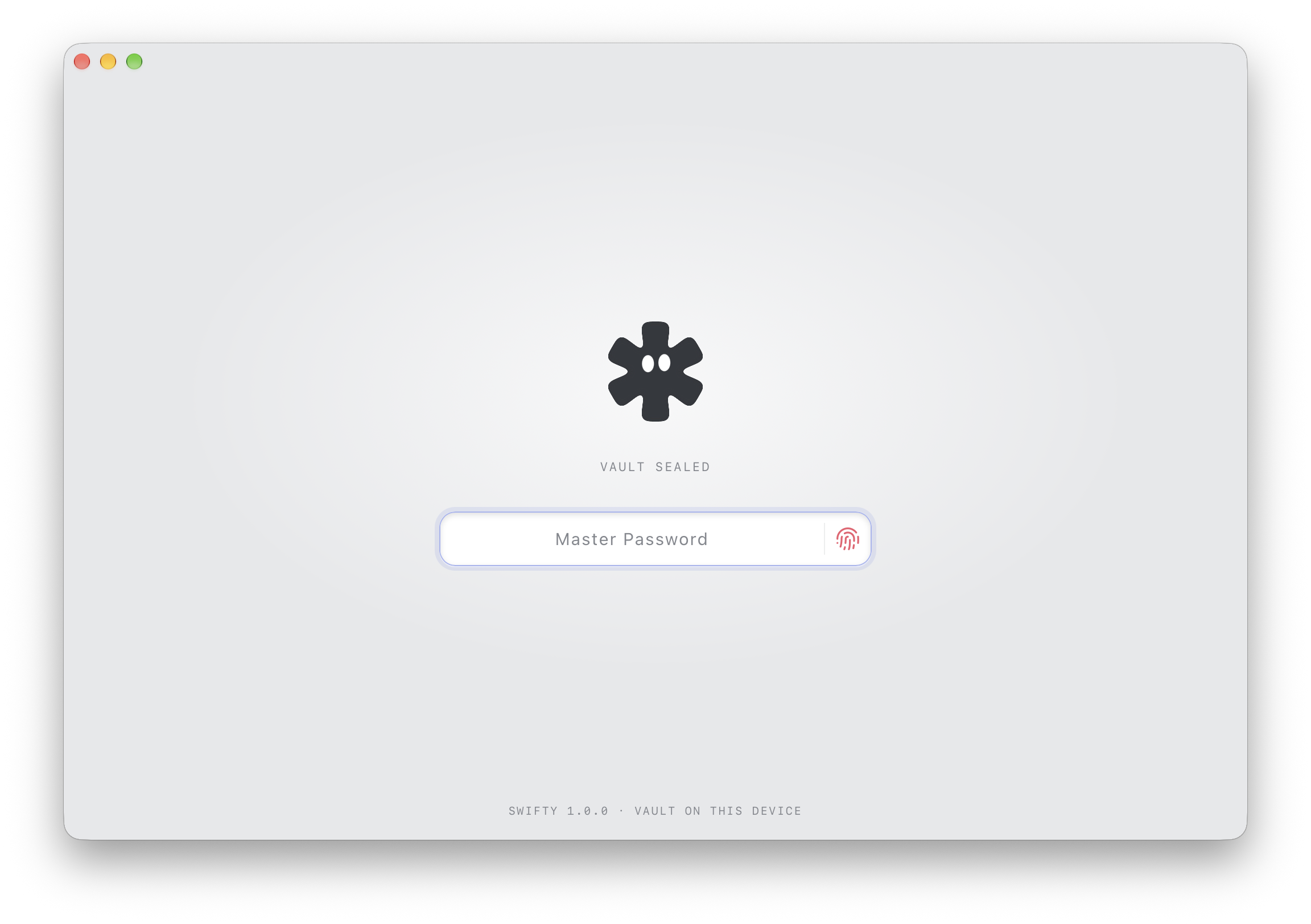
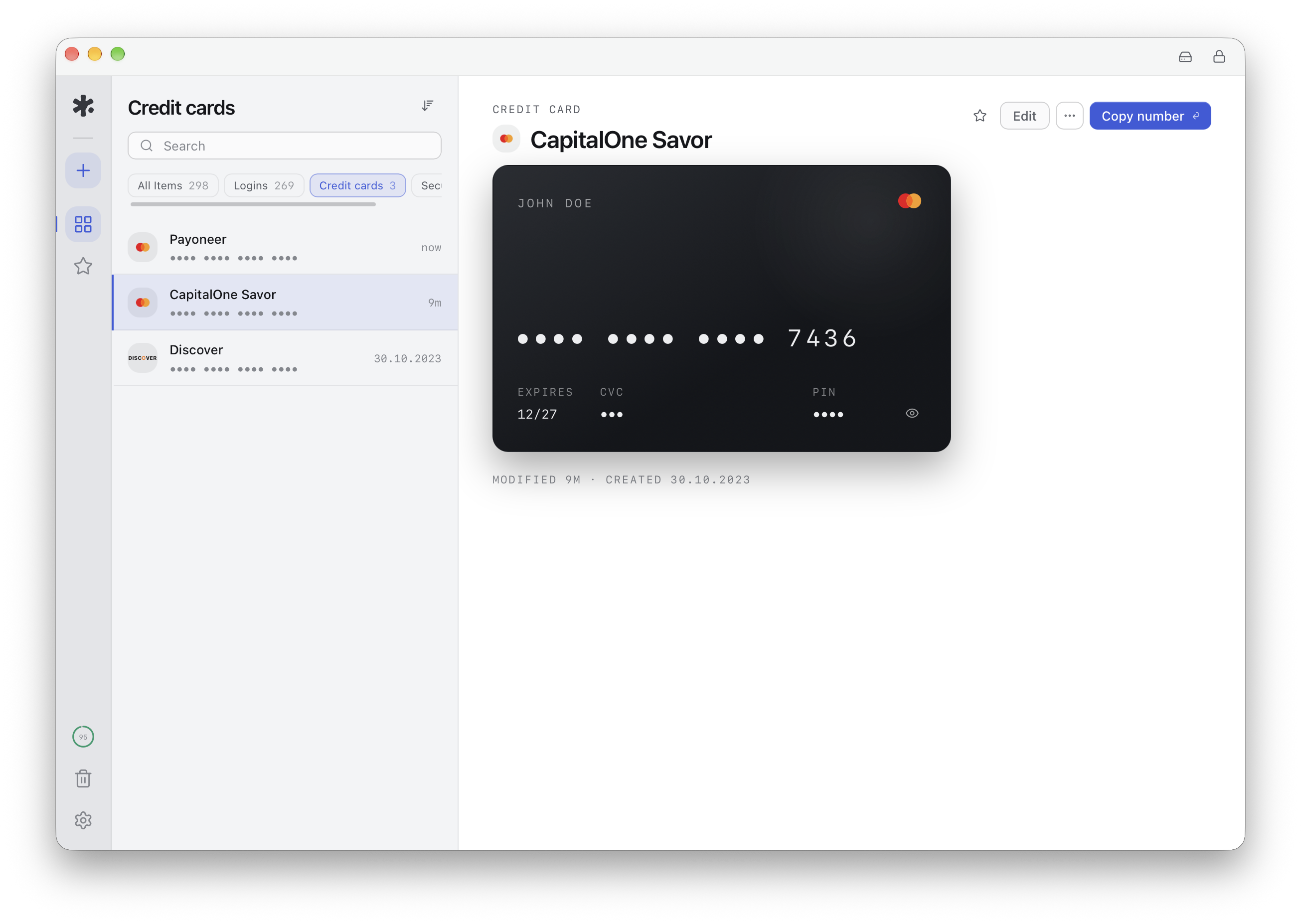
Install
Check the Latest Releases page for the most recent packaged app for MacOS, Windows or Linux.
Verifying a release
Every release is built in GitHub Actions and ships with supply-chain evidence:
SLSA build provenance — each installer is attested with
actions/attest-build-provenance(keyless OIDC signing). You can prove an installer was built by this repo's workflow, from this source, with the GitHub CLI:gh attestation verify ./Rowel_1.0.0_amd64.AppImage --repo fwdai/rowel(works for the
.dmg,.msi,-setup.exe,.deb,.rpmand.AppImageassets — point it at whichever you downloaded).Releases up to and including
v1.0.0-alpha.6were built before the project moved fromswiftyapp/swiftytofwdai/rowel, so their provenance names the old repository. Verify those with--repo swiftyapp/swiftyinstead.CycloneDX SBOM — every release attaches
rowel-rust.cdx.json(the full Rust dependency graph) and, when available,rowel-js.cdx.json(the frontend). Feed them to any CycloneDX-aware scanner (e.g.grype sbom:./rowel-rust.cdx.json) to audit the exact dependencies a build shipped.Update signature — the auto-updater only installs updates signed with the project's minisign key (public key in
src-tauri/tauri.conf.json); the matching private key never leaves CI.
The Rust toolchain (rust-toolchain.toml) and the bun version are both pinned,
so builds are reproducible from a fixed toolchain.
Development
Rowel is built with Tauri 2 (Rust backend + TypeScript/React/Vite frontend).
Prerequisites
- Bun 1.3.3 or newer (what CI pins) — the package manager and
script runner for this repo;
bun.lockis the committed lockfile - Node.js 22 (what
.nvmrcand CI pin) — only the E2E suite needs it, since WebdriverIO runs under Node - Rust (stable toolchain)
- Platform build dependencies for Tauri — see the
Tauri prerequisites guide
(on Linux:
libwebkit2gtk-4.1-dev libappindicator3-dev librsvg2-dev patchelf libgtk-3-dev)
Commands
git clone [email protected]:fwdai/rowel.git
cd rowel
bun install

bun run tauri:dev     # run the app in development
bun run tauri:build   # produce a signed, packaged build for the current OS

bun run tauri:dev:fresh   # same, against a throwaway data dir (first-run flows)

bun run build         # build the frontend only (tsc + vite)
bun run test          # frontend unit tests (Vitest)
cd src-tauri && cargo test   # backend tests
Run the scripts with bun run , not bun : bare bun test starts
Bun's own test runner instead of the Vitest suite this repo is written against.
tauri:dev:fresh points ROWEL_DB_DIR at a new temp directory each run, so
the app finds no vault there and starts at the setup/restore screen every time.
Your real dev vault is left untouched — bun run tauri:dev goes back to it.
Setting ROWEL_DB_DIR yourself overrides that and keeps the same directory
across runs, which is how you set a throwaway vault up once and then relaunch
into its unlock screen. Nothing here ever deletes a data directory; to start
that one over, remove it yourself. Debug builds only: a release build ignores
the variable and always uses the OS app-data directory.
Configuration
Google Drive sync (optional)
Drive sync uses your own Google OAuth client — no credentials are bundled with the app. Desktop and iOS need one client each, because Google will not let a Desktop client redirect to a mobile app.
Desktop
In the Google Cloud Console create an OAuth 2.0 Client ID of type Desktop app.
Enable the Google Drive API for the project.
The app requests the
https://www.googleapis.com/auth/drive.filescope and listens on the loopback redirect URIhttp://127.0.0.1:4567/auth/callback.Provide the credentials as environment/build variables when running or building:
export GOOGLE_OAUTH_CLIENT_ID=your-desktop-client-id.apps.googleusercontent.com
export GOOGLE_OAUTH_CLIENT_SECRET=your-desktop-client-secret   # optional
They are read at runtime (
std::env::var) and, if absent, fall back to the value baked in at compile time (option_env!). The build succeeds without them — sync simply reports "Google OAuth client not configured" until a client id is supplied.
iOS
An iOS client is a public client: it has no secret, PKCE is mandatory, and its redirect URI is its own client id reversed. So the one thing to configure is that URL scheme, and the client id is derived from it.
In the same project create a second OAuth 2.0 Client ID, of type iOS, with the iOS bundle id from
src-tauri/tauri.ios.conf.json(app.rowel.mobile— not the desktop one intauri.conf.json).Take the client id it gives you —
123456-abcdef.apps.googleusercontent.com— and reverse it into a scheme:com.googleusercontent.apps.123456-abcdef. (Google shows this as the "iOS URL scheme" on the credential page.)Add the scheme to
src-tauri/tauri.ios.conf.json(there is nopluginsblock there until you do — a placeholder scheme is not a legal URL scheme and App Store Connect rejects the upload over it, so the file ships without one):"plugins": { "deep-link": { "mobile": [{ "scheme": ["com.googleusercontent.apps.123456-abcdef"] }] } }This is the committed source of truth for iOS, and it is safe to commit — an iOS client id is public by design. The Tauri CLI registers the scheme as
CFBundleURLTypesin the generatedInfo.plistduringtauri ios build(viatauri-plugin-deep-link's build script), and the app derives both the client id and the redirect URIcom.googleusercontent.apps.:/oauth2redirectfrom it at runtime. Re-runbun run tauri ios initif the Xcode project is out of date.Add the redirect URI
com.googleusercontent.apps.123456-abcdef:/oauth2redirectto the client in the console.
Release builds do not need the block committed: bun run release:ios and the
Release iOS workflow derive the scheme from GOOGLE_OAUTH_IOS_CLIENT_ID (in
.env / the repository secret) and pass it through tauri ios build --config,
which replaces a committed one. That is the only way in — exporting
GOOGLE_OAUTH_CLIENT_ID does nothing on iOS, because tauri ios build compiles
inside xcodebuild with a replaced environment that carries only the CLI's own
TAURI_* variables, so option_env! never sees it. GOOGLE_OAUTH_CLIENT_SECRET
is ignored on iOS and must never be shipped in a mobile binary.
Auto-update signing
Release builds are signed for tauri-plugin-updater. The public key lives in
src-tauri/tauri.conf.json; the matching private key is never committed and
is provided to CI via the TAURI_SIGNING_PRIVATE_KEY (and
TAURI_SIGNING_PRIVATE_KEY_PASSWORD) secrets. Generate a keypair with
bun run tauri signer generate -w ~/.rowel/updater.key.
Security
Rowel is offline-first: your vault is an encrypted SQLite database (SQLCipher)
on your own device, with each entry's secrets sealed in an additional
application-level AEAD layer, and there is no backend that holds your secrets.
See SECURITY.md for
how to report a vulnerability, and docs/threat-model.md
for what Rowel does and does not defend against.
Contributors
Code Contributors
This project exists thanks to all the people who contribute. [Contribute].

Financial Contributors
Become a financial contributor and help us sustain our community. [Contribute]
Individuals

Organizations
Support this project with your organization. Your logo will show up here with a link to your website. [Contribute]


License
GNU/GPL Version 3