

Sometimes, neatness counts
If you are trying to puzzle out a stack trace, pick a critical line of text out of a long stream of console output, or compare two streams of binary data, a little bit of formatting can go a long way.
That's what org.clj-commons/pretty is for. It adds support for pretty output where it counts:
- Readable output for exceptions
- General ANSI font and background color support
- Readable output for binary sequences
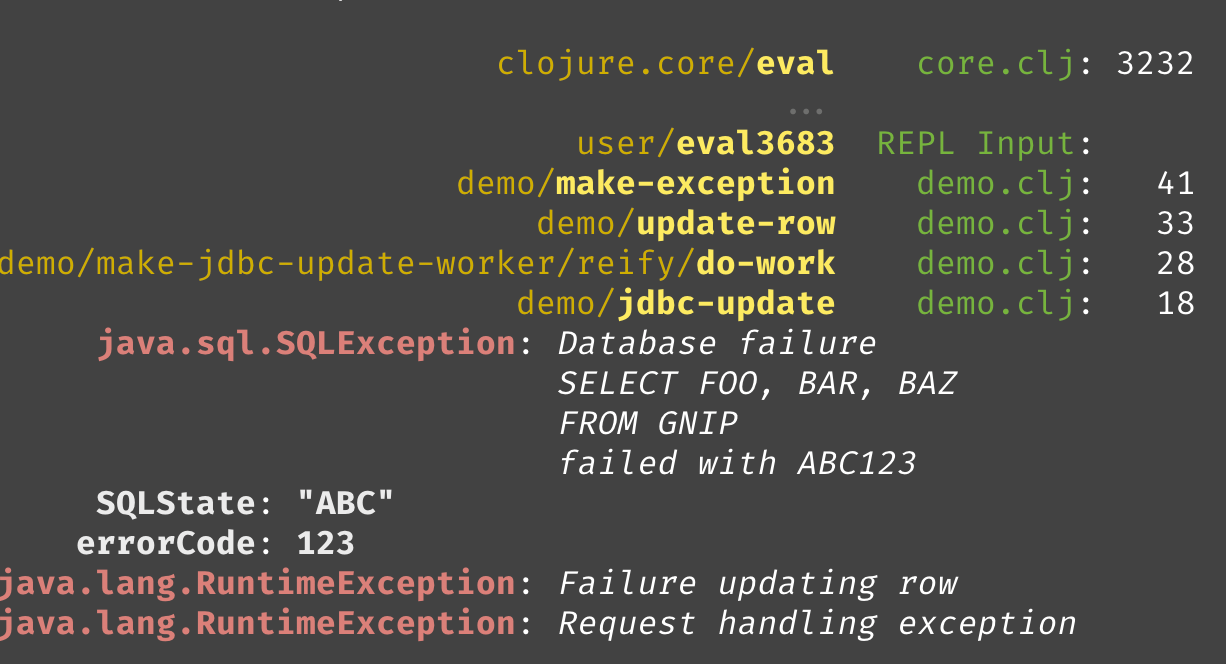
Or, compare an example from Pedestal's test suite:
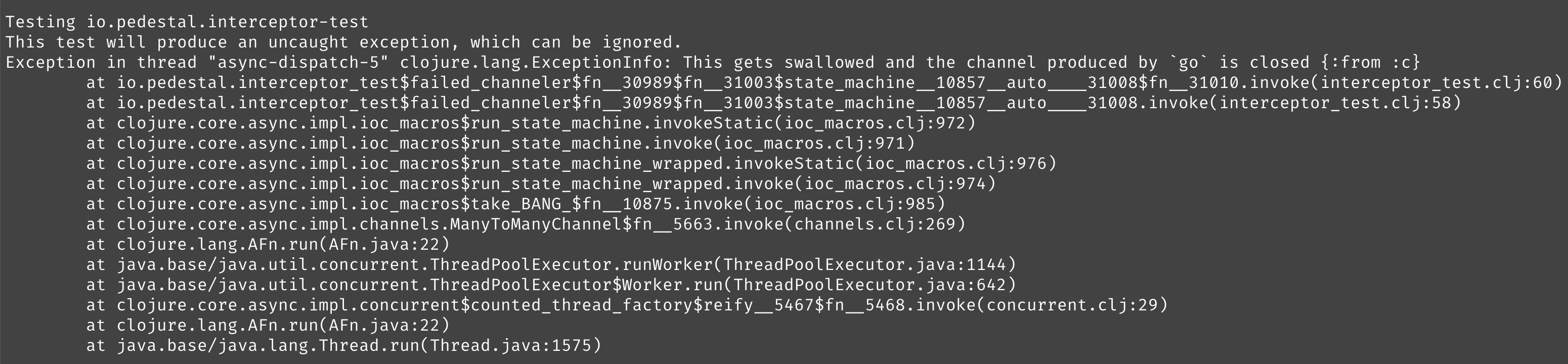
Or, same thing, but with Pretty enabled:
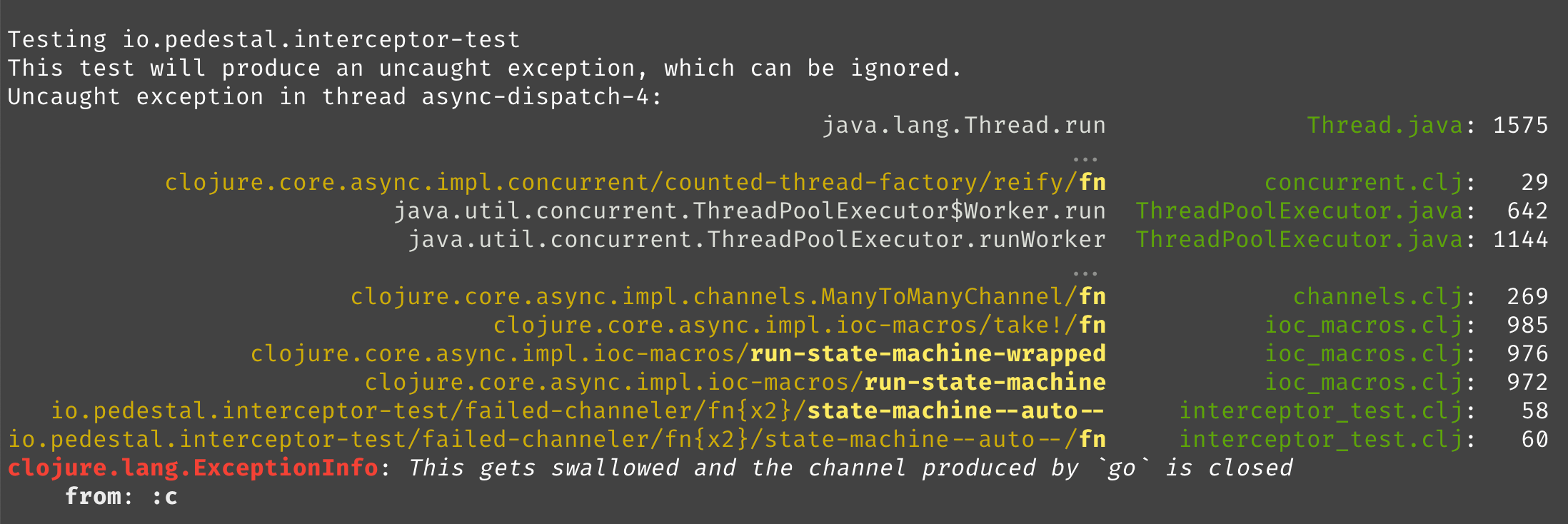
The point is, you can scan down to see things in chronological order; the important parts are highlighted, the names are the same (or closer) to your source code, unnecessary details are omitted, and it's much easier to pick out other essential parts easily, such as file names and line numbers.
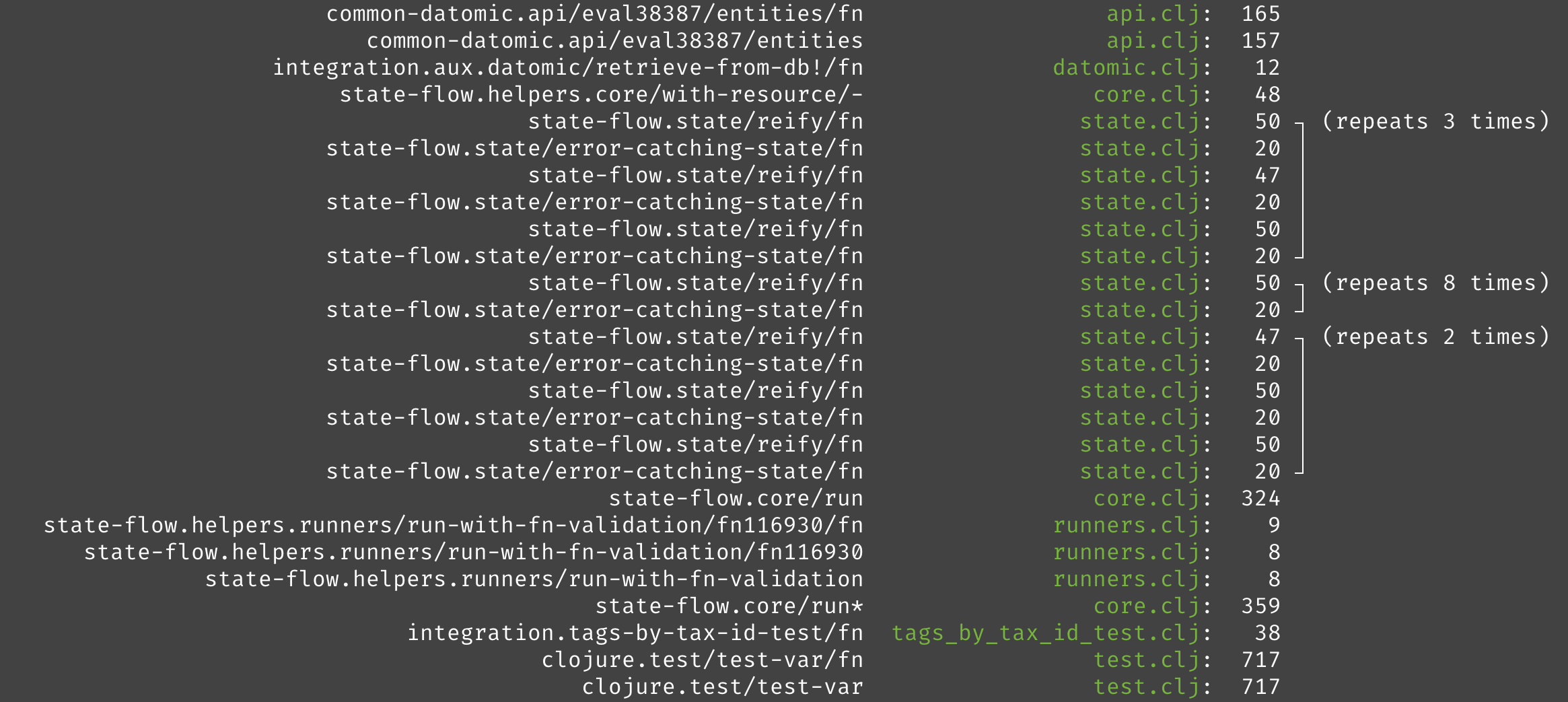
Pretty can even identify the parts of your stack traces that repeat (so common with Clojure code), and omit the repetition:
Enabling Pretty
Pretty exceptions are enabled by invoking the function clj-commons.pretty.repl/install-pretty-exceptions. This
redefines a number of Vars to replace the default implementations with prettier ones. This is something you could
set up in your user.clj namespace.
Pretty with Leiningen
In shared projects, many people have different ideas about what's best when it comes to error reporting. If you want to be able to use Pretty but have your project's dependencies be "clean", you can use a Leiningen profile for this purpose.
For example, create a file ~/.lein/profiles.d/debug.clj:
{:dependencies
 [[org.clj-commons/pretty "3.5.0"]]
 :injections
 [(require '[clj-commons.pretty.repl :as repl])
  (repl/install-pretty-exceptions)]}
You can then run your REPL as lein with-profiles +debug and have your pretty
exceptions without adding pretty-specific code or dependencies to your project.
TIP: I also set up other tools I depend on, such as clj-reload, in the same profile.
Pretty with clj
{:aliases
 { :debug
  {:extra-deps {org.clj-commons/pretty {:mvn/version "3.5.0"}}
   :main-opts ["--main" "clj-commons.pretty-repl"]}}}
Executing clj -M:debug will execute the function clj-commons.pretty-repl/-main which will set up
pretty exceptions before passing any remaining command line argments to clojure.main/main.
Alternately, for use with the -X option:
{:aliases
 {:debug
  {:extra-deps {org.clj-commons/pretty {:mvn/version "3.5.0"}}
   :exec-fn clj-commons.pretty.repl/main}

  :test
  {:extra-paths ["test"]
   :extra-deps {io.github.cognitect-labs/test-runner
                {:git/tag "v0.5.1" :git/sha "dfb30dd"}}
   :exec-fn cognitect.test-runner.api/test
   :exec-args {:fn cognitect.test-runner.api/test}}}}
This allows testing with pretty as clj -X:test:debug.
clj -X:test is normal execution, and the clj tool will directly invoke the cognitect.test-runner.api/test function.
clj -X:test:debug will overwrite the :exec-fn to invoke the clj-commons.pretty.repl/main function, which will
set up pretty exceptions before delegating to the function specified with the :fn option.
The value for :fn must be a fully qualified function name.
Both of these approaches are doable but clumsy, so a solution involving nREPL directly will likely be better.
Pretty with nREPL
nREPL is the framework that allows an IDE such as Emacs or Cursive, or even a CLI such as Leiningen, to interoperate with a running REPL in a subprocess.
Pretty includes an nREPL middleware function, clj-commons.pretty.nrepl/wrap-pretty, that will install pretty exception reporting into the REPL.
The nREPL documentation describes how to enable such middleware inside project.clj or deps.edn or in .nrepl/nrepl.edn (for instance, when developing with Cursive)
Beyond Exceptions
Pretty can print out a sequence of bytes; it includes color-coding inspired by hexyl:
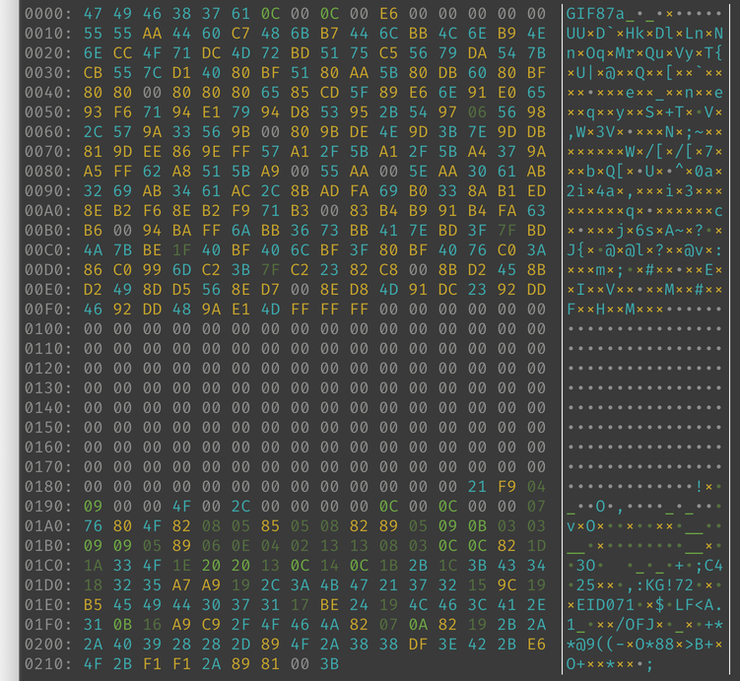
Pretty can also print out a delta of two byte sequences, using background color to indicate where the two sequences differ.

Pretty can output pretty tabular data:
(def routes
  [{:method     :get
    :path       "/"
    :route-name :root-page}
   {:method     :post
    :path       "/reset"
    :route-name :reset}
   {:method     :get
    :path       "/status"
    :route-name :status}])

(print-table
  [:method
   :path
   {:key :route-name :title "Name" :title-align :left}]
  routes)
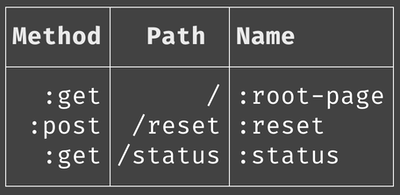
The print-table function has many options to easily adjust the output to your needs, including fonts, text alignment, and line annotations. It also supplies several different table styles:
(print-table
    {:columns [:method
               :path
               {:key :route-name :title "Name" :title-align :left}]
     :style   table/skinny-style}
    routes)
Method |   Path  | Name
-------+---------+-----------
  :get |       / | :root-page
 :post |  /reset | :reset
  :get | /status | :status
=> nil
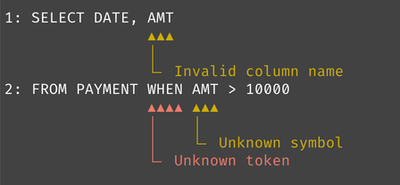
Pretty can also format text with annotations, useful when reporting errors while parsing arbitrary text:
Compatibility
Pretty is compatible with Clojure 1.10 and above.
Parts of Pretty can be used with Babashka, such as the clj-commons.ansi
namespace; however, Babashka runs in an interpreter and its approach to exceptions is
incompatible with JVM exceptions.
License
The majority of this code is available under the terms of the Apache Software License 1.0; some portions are available under the terms of the Eclipse Public Licence 1.0.