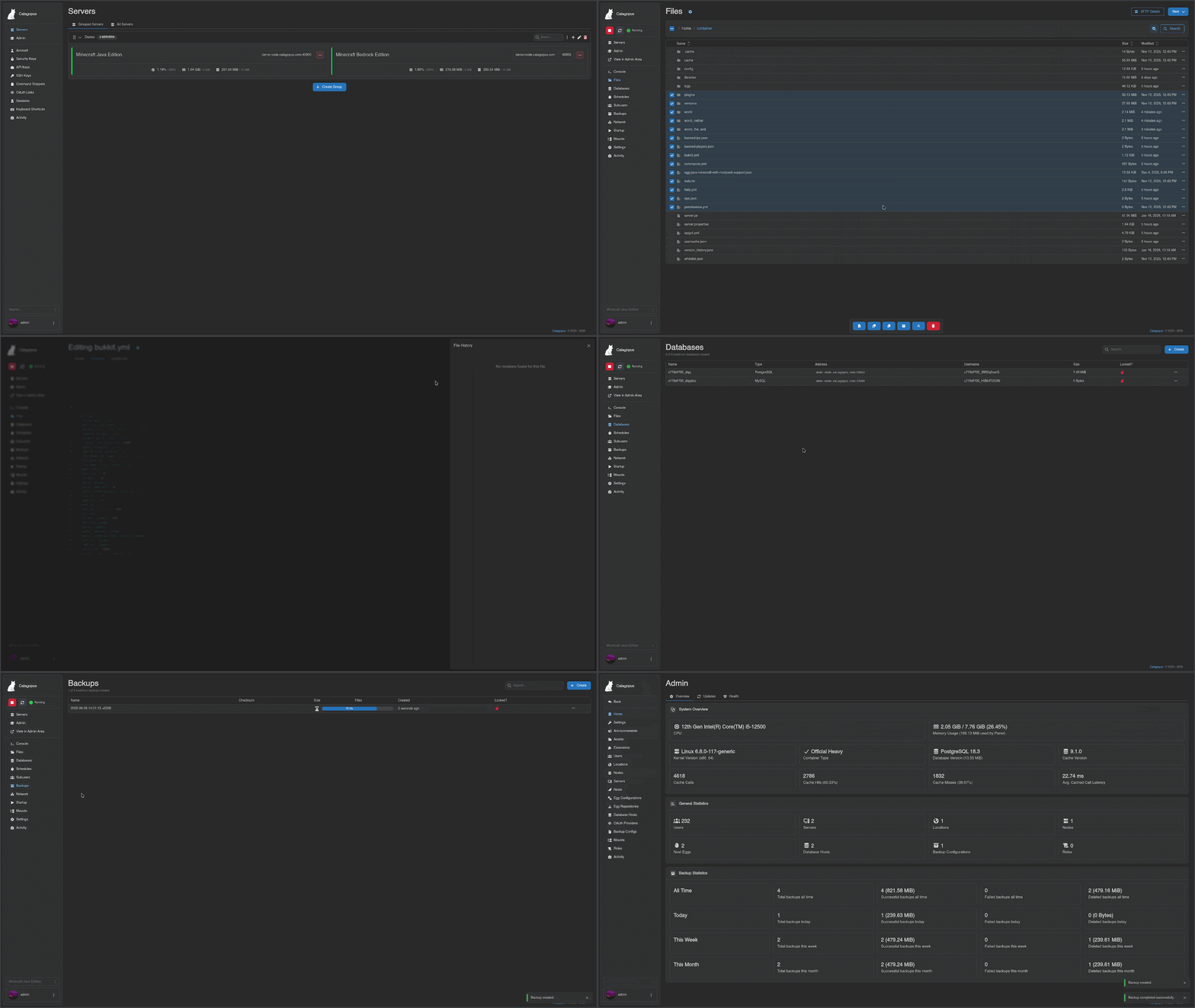
Calagopus Panel is a self-hosted game server management panel for Minecraft, Rust, and similar titles, rewritten from the ground up in Rust as a modern alternative to Pterodactyl and Pelican.
What it is
Calagopus Panel is a container-based game server management panel whose backend is built on Rust with Tokio and Axum, paired with a frontend built from React, Mantine, and Tailwind. The repository is organised into frontend/, backend/, database/, database-migrator/, shared/, wings-api/, and several extension trees, and it is released under the MIT licence. Development is tracked publicly through separate frontend and backend roadmaps, and community support runs through a Discord server and Crowdin translation project.
The concrete problem it addresses is that operators of Pterodactyl or Pelican installations are tied to an older stack they wish to replace without abandoning their existing configuration. Calagopus reuses Pterodactyl-style eggs — including a Rust port of Laravel's validation rules in the rule-validator/ crate — so existing server definitions carry over, and it provides a supported migration path for importing a setup from Pterodactyl or Pelican. It aims to deliver the same secure, container-based server management with better performance, a refreshed interface, and a cleaner extension model on both the frontend and backend.
Key capabilities
- Backend built on Tokio and Axum in Rust, with an auto-generated Rust API client for the Wings API produced by a TypeScript generator in
wings-api/generator-src/.
- Frontend composed of React, Mantine, and Tailwind, with a responsive dashboard interface.
- Extension systems on both sides: frontend extensions live in
frontend/extensions/ (themes and plugins), backend extensions in backend-extensions/ (auth providers and database drivers), described as real plugin APIs rather than patched overrides.
- Compatibility with Pterodactyl-style eggs, supported by
rule-validator/, a semi-port of Laravel's validation rules written in Rust.
- Documented import paths for existing Pterodactyl and Pelican installations.
- Database schema management through Drizzle migrations in
database/, with a separate Rust and SQLx tool in database-migrator/ to run them.
- A schema extension system with a core library in
schema-extension/core/ and a proc macro for deriving schema extensions in schema-extension/derive/.
Who uses it and how
- Self-hosting operators running Docker-based game servers, as indicated by the project's self-hosting and docker topics.
- Existing Pterodactyl or Pelican administrators who migrate an established installation rather than starting from scratch.
- Hosts of Minecraft and Rust game servers, the two titles explicitly called out by the project's topics and description.
- Developers building themes, plugins, auth providers, or database drivers as frontend and backend extensions.
- Contributors working across a Rust backend, a TypeScript-adjacent frontend toolchain, and a public roadmap, following the guidelines in
CONTRIBUTING.md.
Getting started
Full installation instructions live in the documentation at calagopus.com/docs/panel/installation, which is the canonical reference for standing the panel up; the README itself does not publish a package name or compose file.
How it compares
Among the tools named in its own documentation — Pterodactyl Panel and Pelican Panel — Calagopus positions itself as the Rust reimplementation of Pterodactyl's container-based model, retaining egg compatibility and offering explicit migration routes from both projects while supplying its own extension APIs. It is MIT-licensed and self-hosted, so operators keep their servers and data on their own infrastructure rather than on a hosted service.
When to use it — and when not
A self-hoster must operate Docker, a database with migrations managed through Drizzle and the database-migrator/ tool, and the Wings daemon that the panel communicates with via its generated API client. It is a good fit for operators already in the Pterodactyl or Pelican ecosystem who want a Rust backend and are comfortable following externally hosted documentation and roadmaps; it is a poor fit for anyone wanting a turnkey paid host or a panel whose full design lives in the repository itself, since key detail here is deferred to calagopus.com and third-party notes. As a ground-up rewrite, the project is still working toward its stated aims rather than promising them, with 12 open issues at the time of listing.