Paca
AI-native. Free. Lightweight. Open-source.
The fully customizable alternative to Jira, Trello, ClickUp, and Monday.




✨ Sponsored by




Getting Started · MCP Server · Paca Skills · Architecture · Contributing · Roadmap
What is Paca?
Paca is a self-hosted project management platform where AI agents and humans collaborate as equal teammates inside a Scrum team — not as chatbots bolted on the side.
Jira gives you a backlog. ClickUp gives you automations. Monday gives you dashboards. Paca gives your AI agents a seat at the table. They join sprint planning, pick up tasks from the board, write BDD specs, and adapt alongside humans in real time.
Everything about Paca — its workflow, its data model, its UI — is configurable and extendable via plugins.
Why Paca?
| Jira / Trello / ClickUp / Monday | Paca | |
|---|---|---|
| AI integration | Chatbot add-ons, peripheral automation | AI agents as first-class Scrum teammates |
| Collaboration model | Human-only by default | Human + AI, side by side on the same board |
| Hosting | Vendor cloud (your data, their servers) | Self-hosted, you own everything |
| Cost | $8–$20+ per seat/month | Free forever |
| Customization | Limited; locked behind enterprise tiers | Fully open: configuration + plugins |
| Weight | Bloated feature sprawl | Lightweight core; extend only what you need |
| Source | Closed / proprietary | 100% open-source (Apache 2.0) |
Core Idea: Humans and AI Agents, One Scrum Team
The central insight behind Paca is that AI agents should participate in the Scrum process, not just generate output in isolation.
In Paca, AI agents:
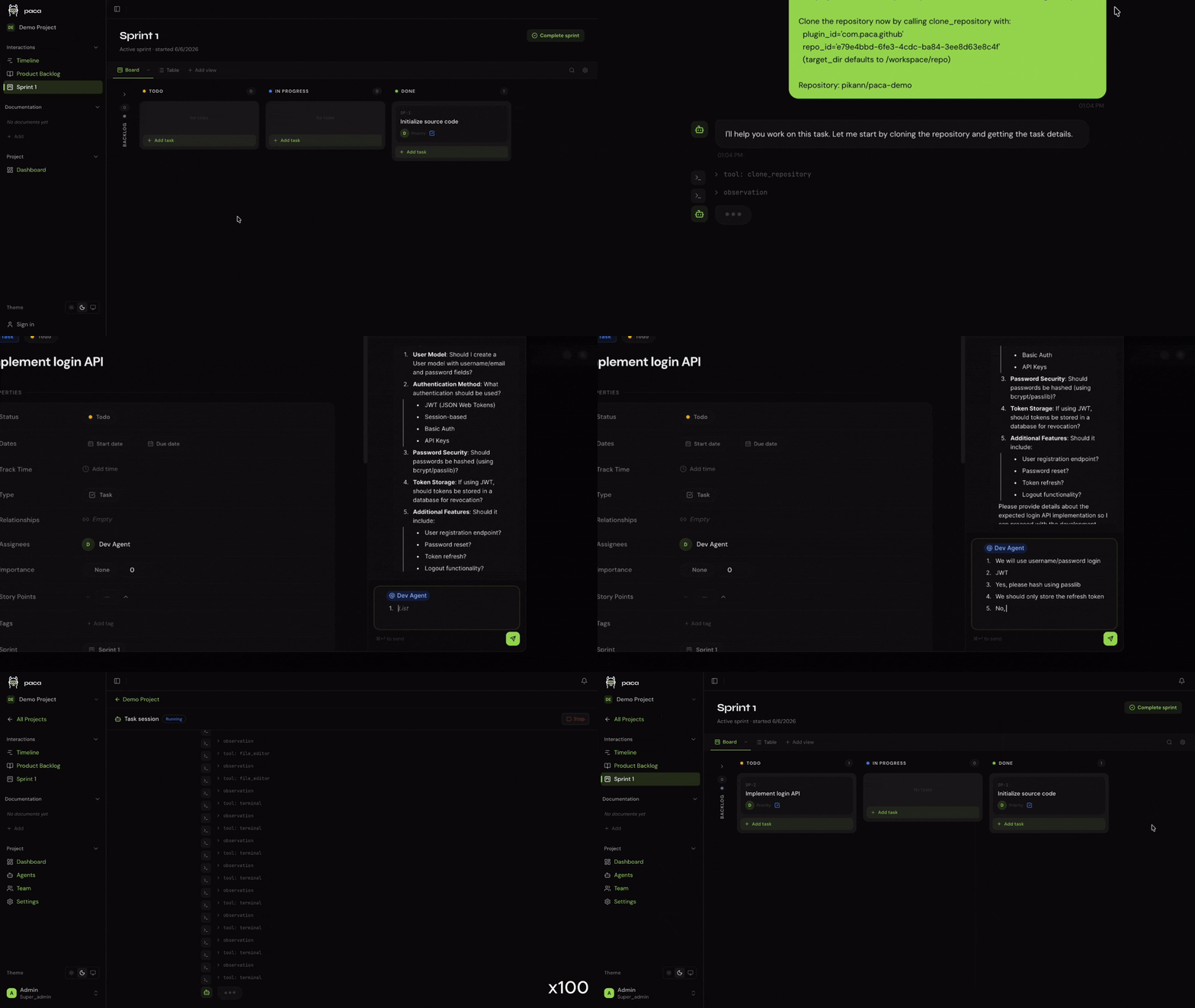
- Are assigned to sprints and appear on the Scrumban board alongside human teammates
- Pick up tasks from the backlog and update their status in real time
- Collaborate on BDD specs — helping Product Owners and BAs write Gherkin scenarios
- Contribute to System Design Documents — keeping the architecture visible to the whole team
- Probe, sense, and respond to emerging complexity, just like a human would
This is not automation. It is genuine collaboration — rooted in the Cynefin / Stacey framework's recognition that complex domains require teams, not pipelines.
Fully Customizable — Configuration and Plugins
Paca ships as a small, focused core. Everything else is optional.
Configuration-driven: workflows, statuses, field definitions, board layouts, sprint rules, and agent behavior are all driven by project-level configuration files. No code needed to adapt Paca to your team's process.
Plugin system: extend or replace any part of Paca via plugins. Plugins are compiled to WebAssembly (WASM) for the backend (write in Go, Rust, AssemblyScript — anything with a WASM target) and standard module bundles for the frontend. Plugins run in a sandboxed environment with a capability-based permission model; they declare exactly what host functions they need, and nothing more.
plugins/
├── backend/        # WASM modules — add custom routes, logic, data models
└── frontend/       # UI modules — add custom pages, board views, widgets
Browse and install community plugins directly from the Plugin Marketplace inside the Paca UI — no command line required. Go to Settings → Plugins → Marketplace, find a plugin, and click Install.
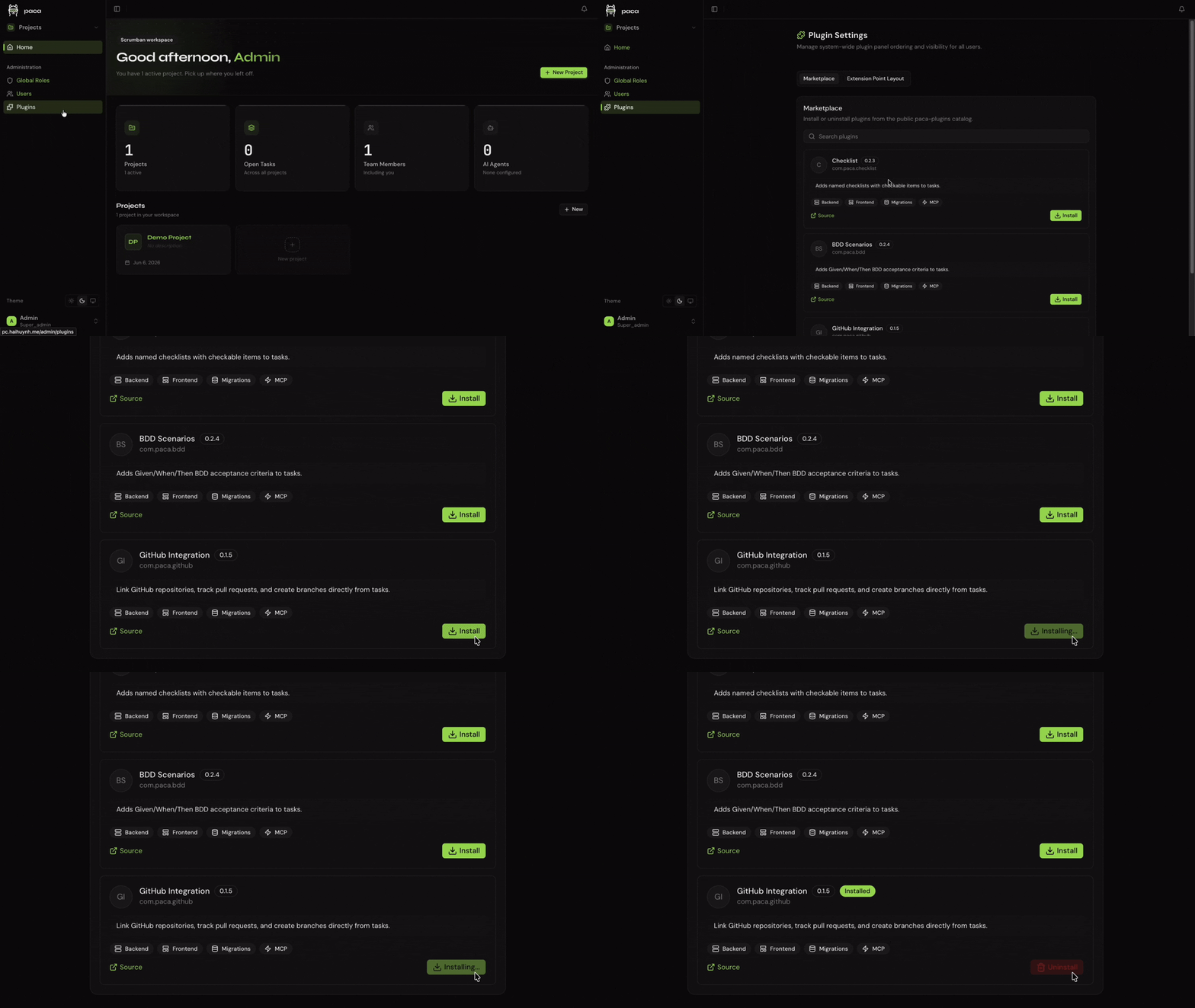
For local development or custom plugins, you can also install from the filesystem:
./scripts/install-local-plugin.sh ./my-plugin --api-key <your-api-key>
The P-A-C-A Cycle
Paca structures team collaboration around four phases that mirror both Scrum and the scientific method:
Plan  →  Act  →  Check  →  Adapt
  ↑                             |
  └─────────────────────────────┘
| Phase | What happens |
|---|---|
| Plan | POs, BAs, and AI agents collaboratively refine the backlog. BDD scenarios and SDD designs are written together. |
| Act | Sprint is live. Humans and AI agents pull tasks from the board, execute, and post updates. |
| Check | QA agents run automated verification. Humans review AI output. The board reflects reality. |
| Adapt | Data from the sprint informs the next cycle. The team — human and AI — retrospects together. |
What's New in v0.15.0
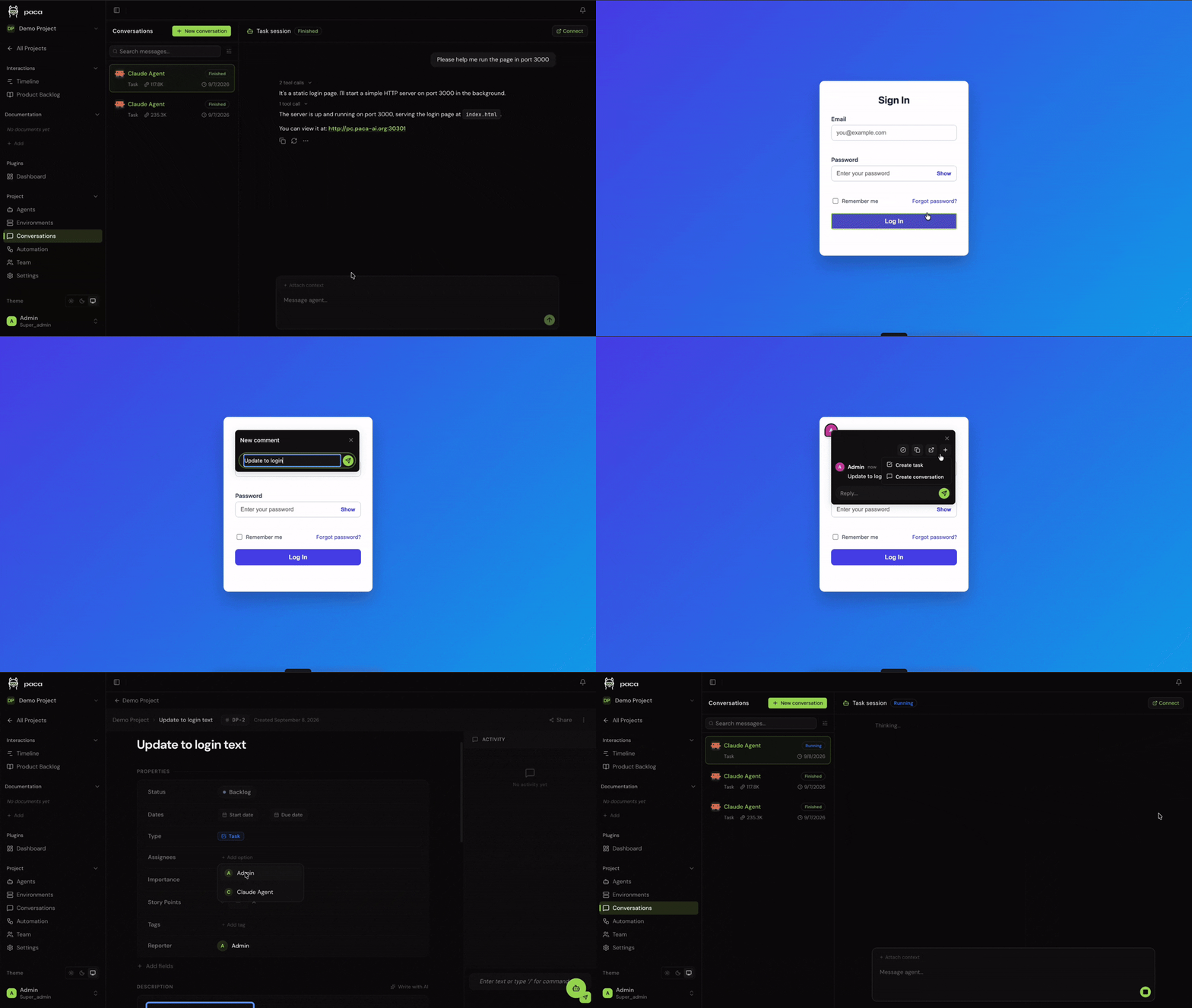
- Browser extension for page annotations — comment directly on an element of a running environment's preview page, right on the page itself, and turn any comment into a real Paca task in one click. It authenticates through your existing Paca session — no separate login — via the same-hostname cookie trick documented in apps/extension/README.md. Install the pre-built zip from each release, or build it from source.
provider_cliagent type — run an agent on a CLI you're already logged into — Claude Code, Codex, Gemini CLI, or Cursor CLI — inside one of its own static environments. Log into the CLI once from the environment's terminal (a static environment, because the CLI's own login has to persist across conversations), and Paca drives that CLI directly for every conversation afterward, syncing your configured MCP servers into its config along the way.
What's New in v0.14.0
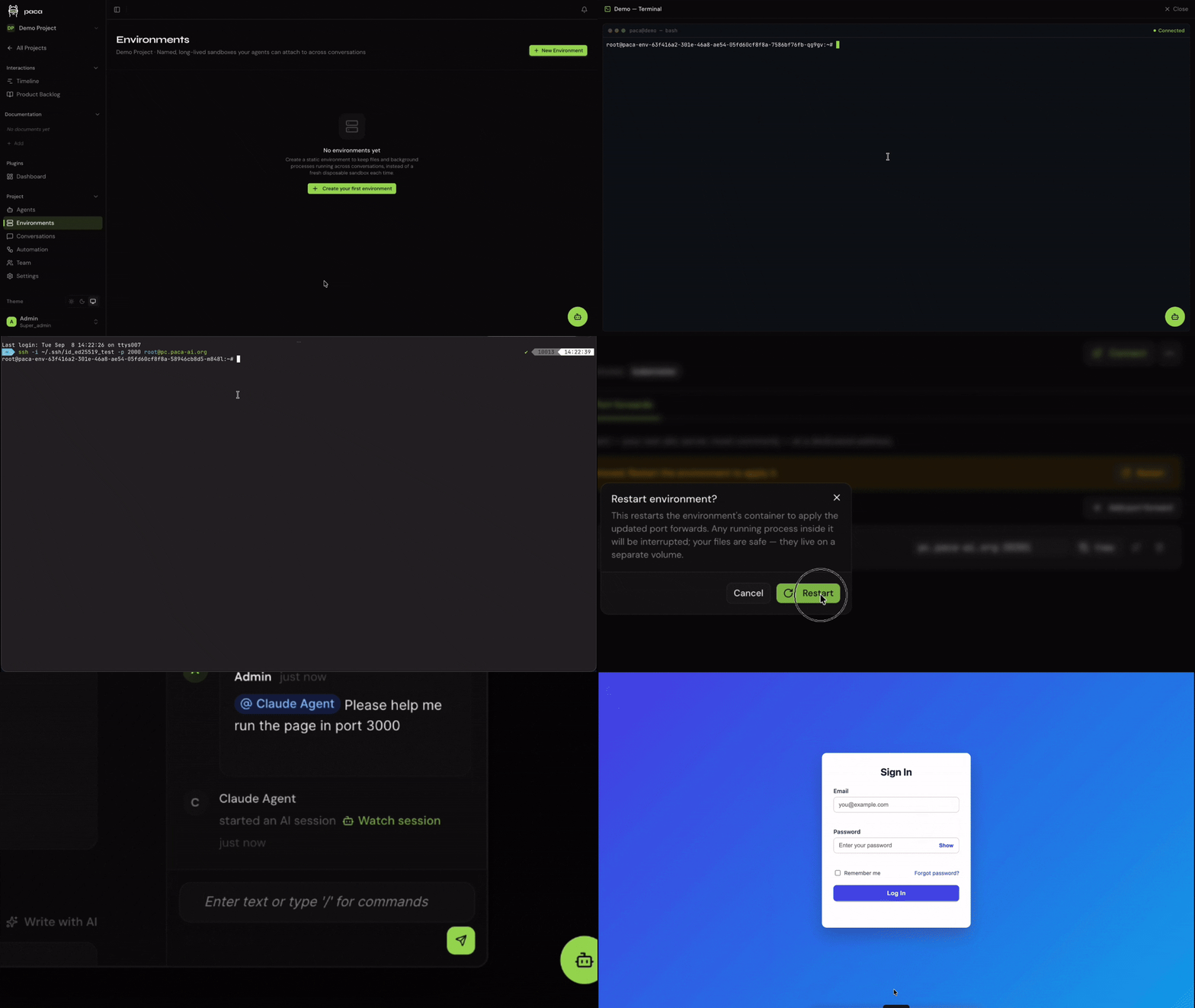
- Static environments — create a named, long-lived container that persists independently of any single conversation: agents attach to it instead of spinning up a fresh disposable sandbox, so files on disk and background processes survive across chats. Reach a running environment through an in-browser terminal, real SSH with per-environment authorized keys, or user-managed port forwards to preview a live dev server — on both self-hosted Docker Compose and Kubernetes/Helm. See docs/ai-agent/environment-management.md for the full design.
What's New in v0.12.0
- Workspace branding — customize your workspace's logo, favicon, and primary accent color from Settings → Workspace Branding. Upload a logo and favicon (PNG, JPEG, WEBP, or GIF, up to 5 MB) and pick from a curated set of accent colors, each with matching light- and dark-mode variants applied automatically across buttons, highlights, the sidebar, and the login screen.
What's New in v0.11.0
- Event-driven automation engine — a complete redesign of the automation system into a visual, n