ORG-2
The system of record for how agents build software.
Run your coding agents — replay any session, review as a team, and trace every line back to the decision behind it.
macOS Apple Silicon · Windows installer · Windows MSI · Linux AppImage · Linux DEB · All latest release assets
English · Français · 简体中文 · 繁體中文 · Español · हिन्दी · Русский · Português · Deutsch · 日本語 · 한국어 · Türkçe · Tiếng Việt · Bahasa Indonesia · Polski
Built with Rust and Tauri for local-first execution under 100MB on disk. Supports agent trajectory livestream and replay. Easy to follow and review.
Answering why a piece of code exists — and whether it worked — has always meant stitching systems together by hand. Jira sees only tickets. Codex sees only its own sessions. GitHub sees only committed lines. Amplitude sees only metrics. That was survivable when humans wrote the code. At agent speed it isn't: code written on Monday is legacy by Friday.
ORG-2 is where your team runs its coding agents — a native Rust harness plus launchers for 20+ agent CLIs — and it builds that record automatically. Every session becomes a trajectory teammates replay like a video, reviewing how the work was actually built rather than just the diff and commenting in context. Sessions run in other tools are ingested and backfilled from their history, so the record covers work that never touched the app. The record links what the human asked for, what the agent understood, and what it actually did, so any shipped line traces back to the session that wrote it.
It is not just another AI coding tool; it is an experiment in human/agent organizations and org-level alignment. ORG2 treats agents as persistent, observable colleagues inside a structured organization — replayable execution, cross-session memory, AI blame, and a local-first Rust runtime so humans, agents, and teams can collaborate around shared context and aligned goals.
Features
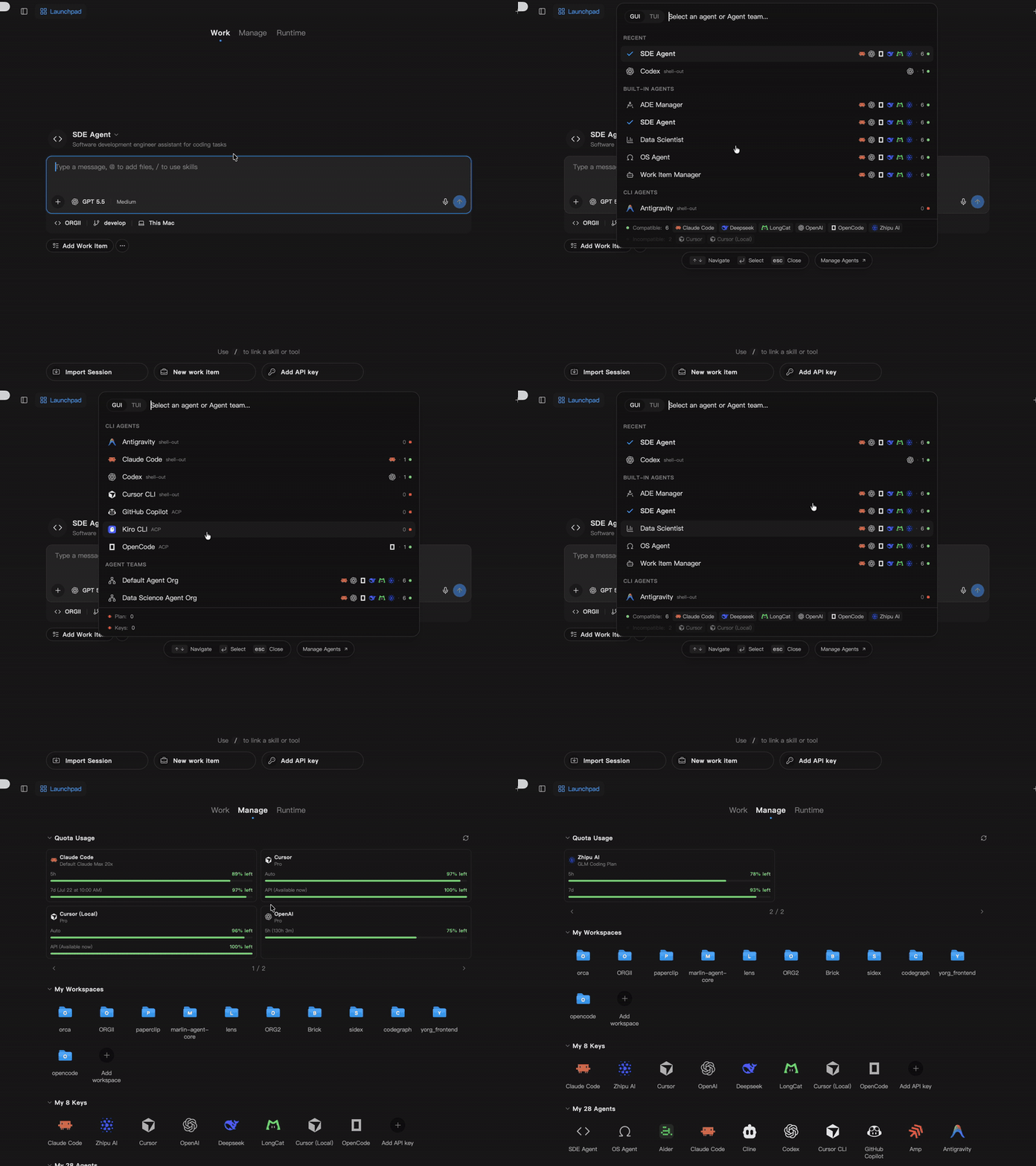
Built-in Rust harnessRun fast, token-saving, customizable native agents with your existing API keys and agent subscriptions. |
|
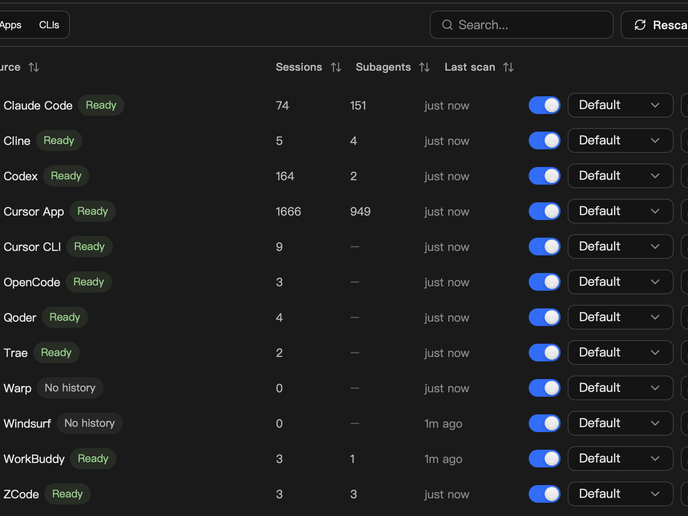
Manage sessions across 10+ apps & CLIsLoad and manage agent sessions from all your tools in one place. Scan history, inspect subagents, and control each source without switching apps. |
|
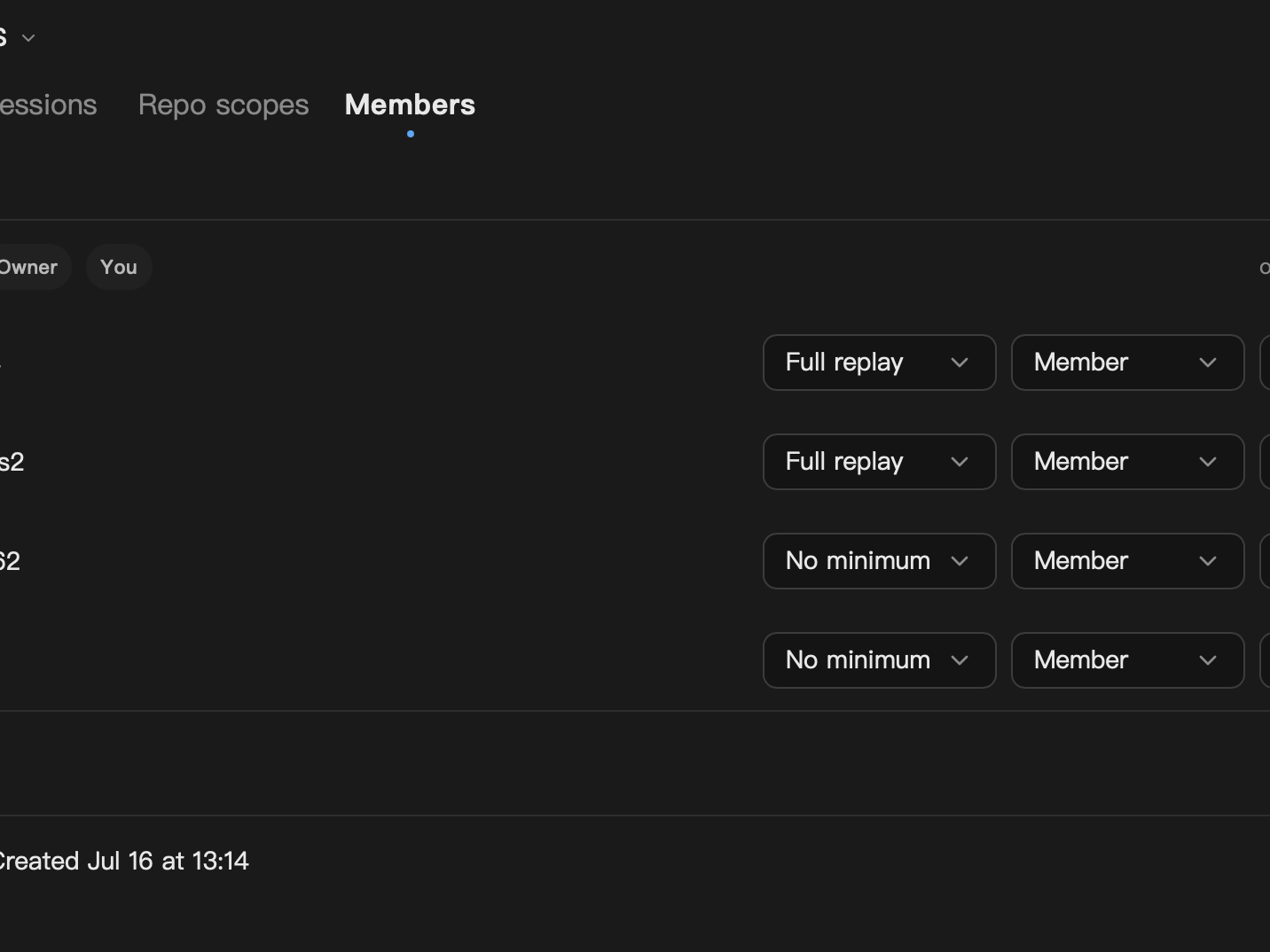
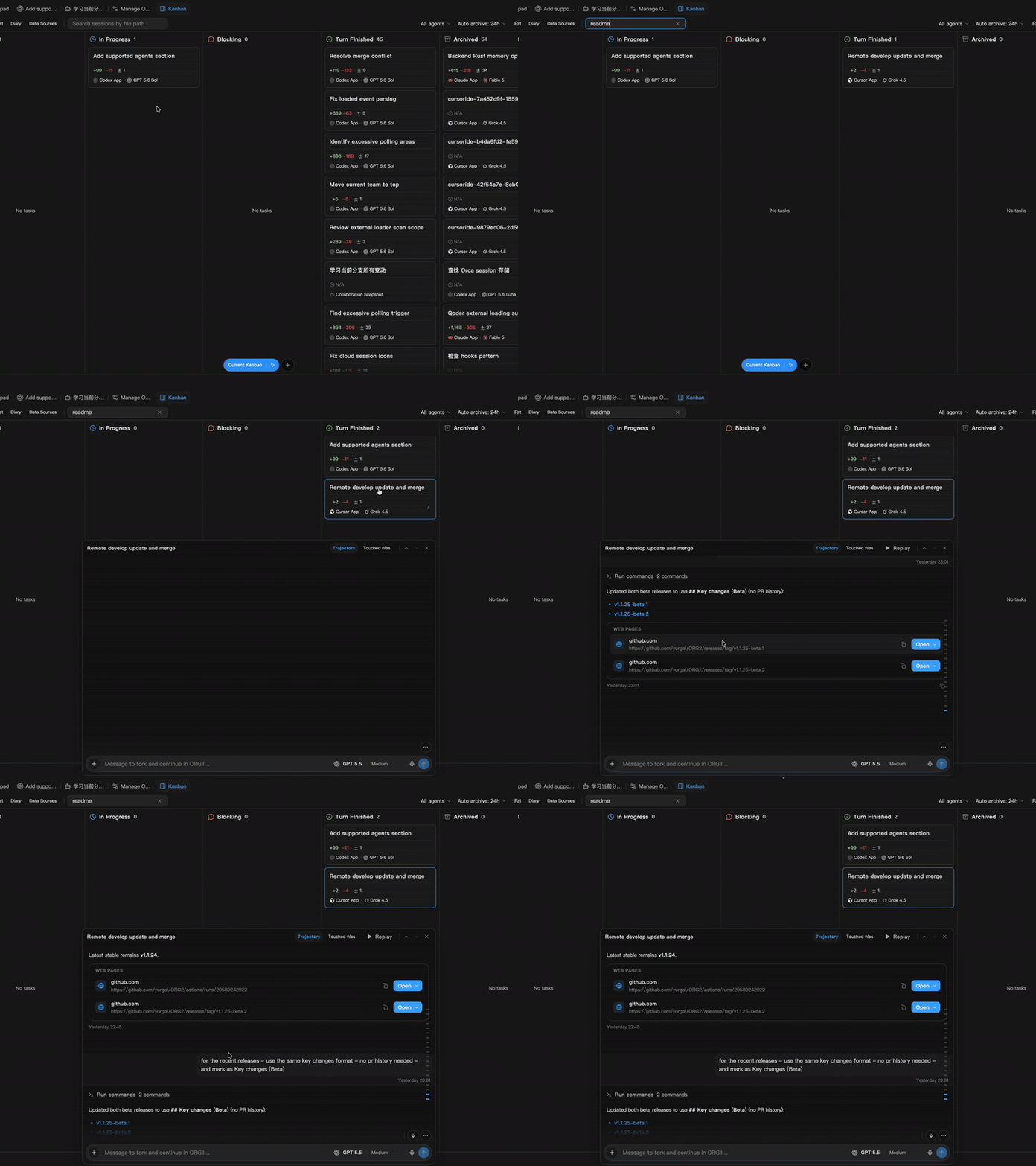
Team up and review trajectories, not just PRsForm your team and share sessions across devices and teammates. Review the full agent trajectory, not only the resulting diff, and leave comments in context. |
|
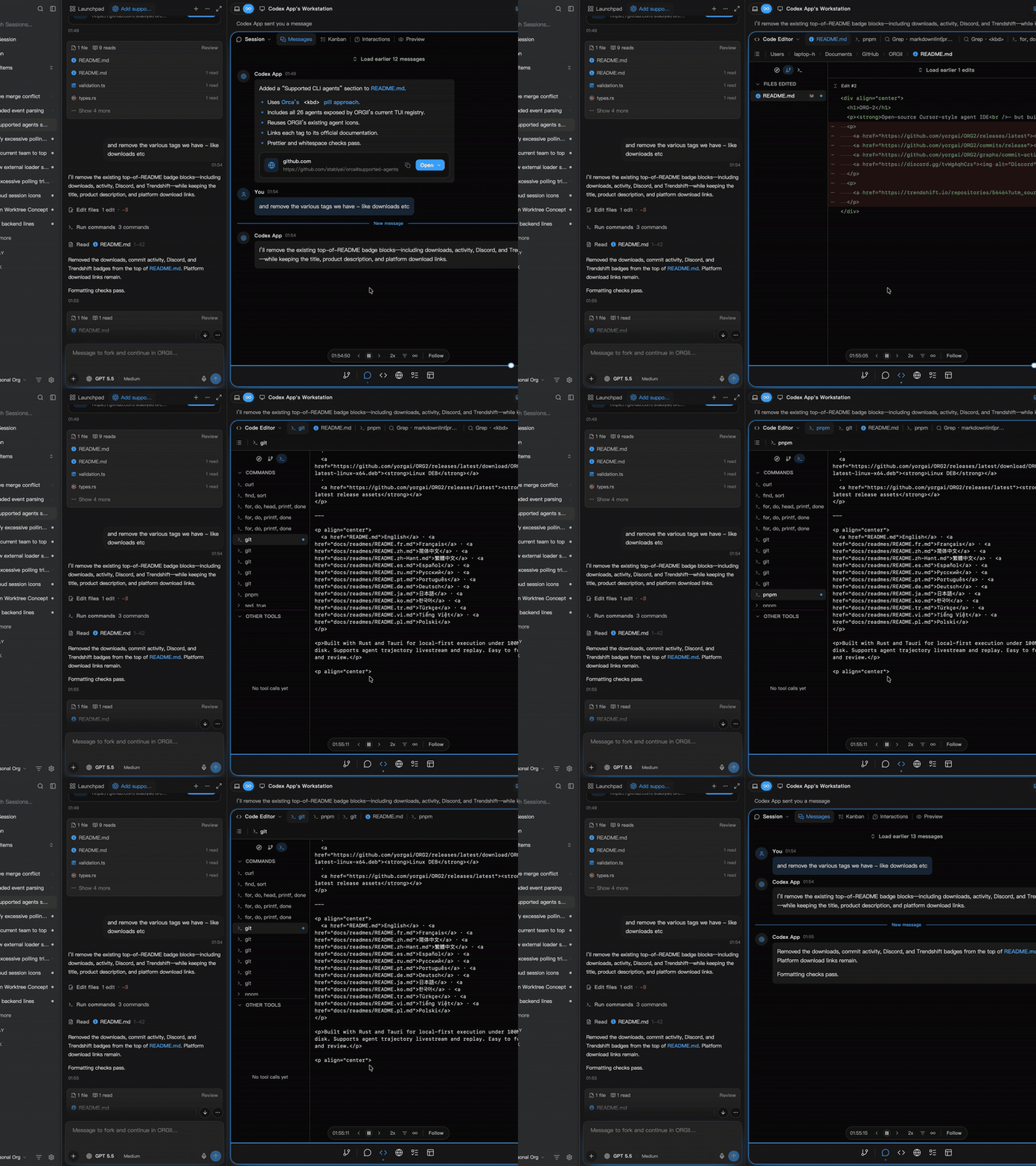
Tool calls, now as videosReplay work from the native Rust harness and 15+ CLI agents. Messages, tool calls, file edits, and command output stay synchronized in one reviewable timeline. |
|
AI blame, not just Git blameDo not stop at who changed a line. Trace it back to the agent sessions, tool calls, and decisions that drove the change. |
|
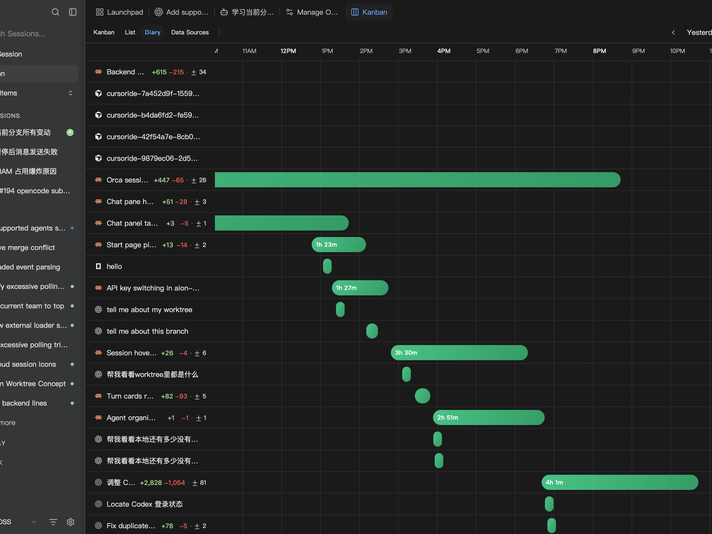
Stay on trackSee how your time is spent across tasks and agent sessions. A daily activity timeline keeps duration, code changes, and priorities visible. |
|
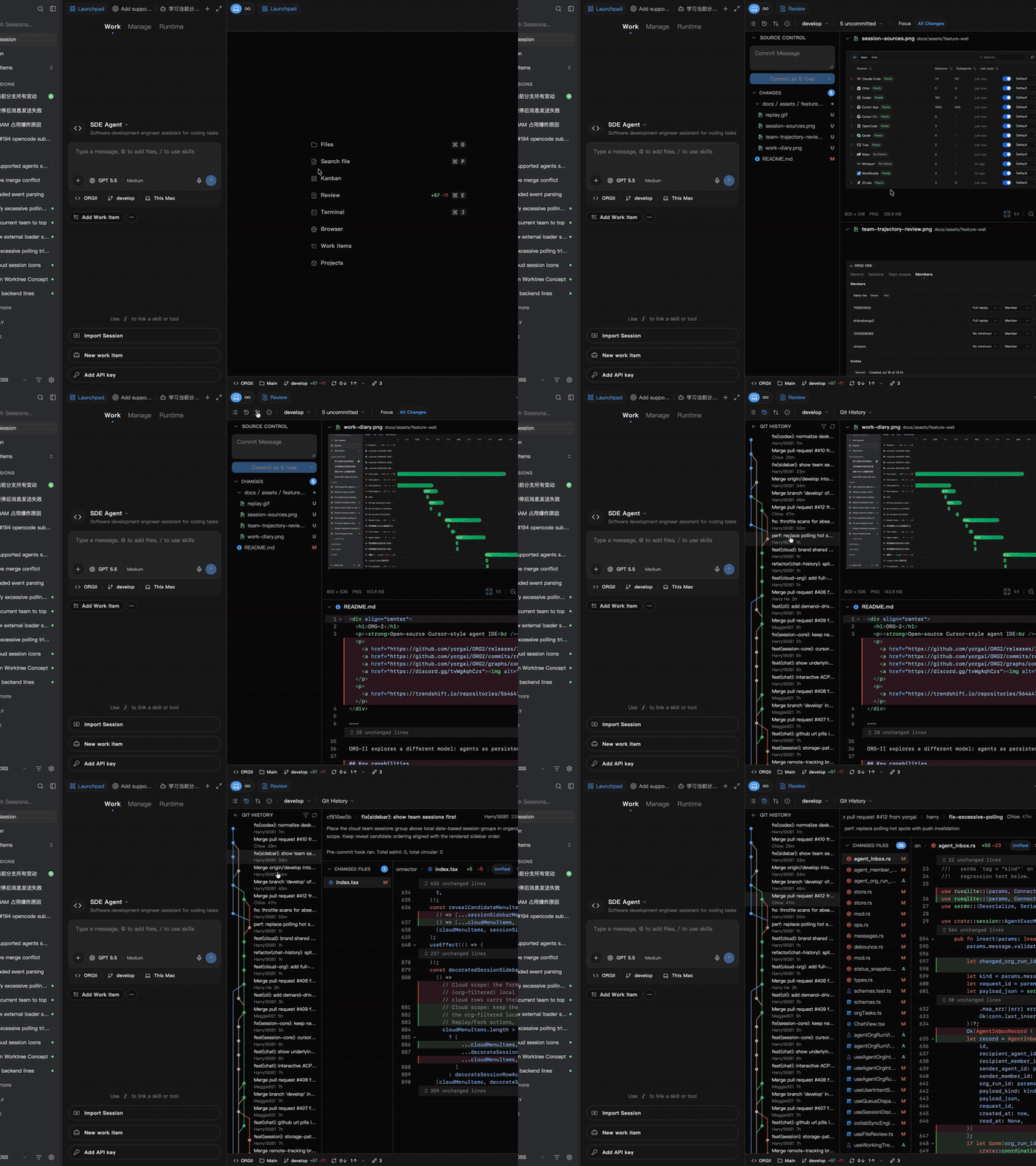
Full dev workspaceUse the terminal, manage source control, trace Git history, and review pull requests without leaving your agent workspace. |
|
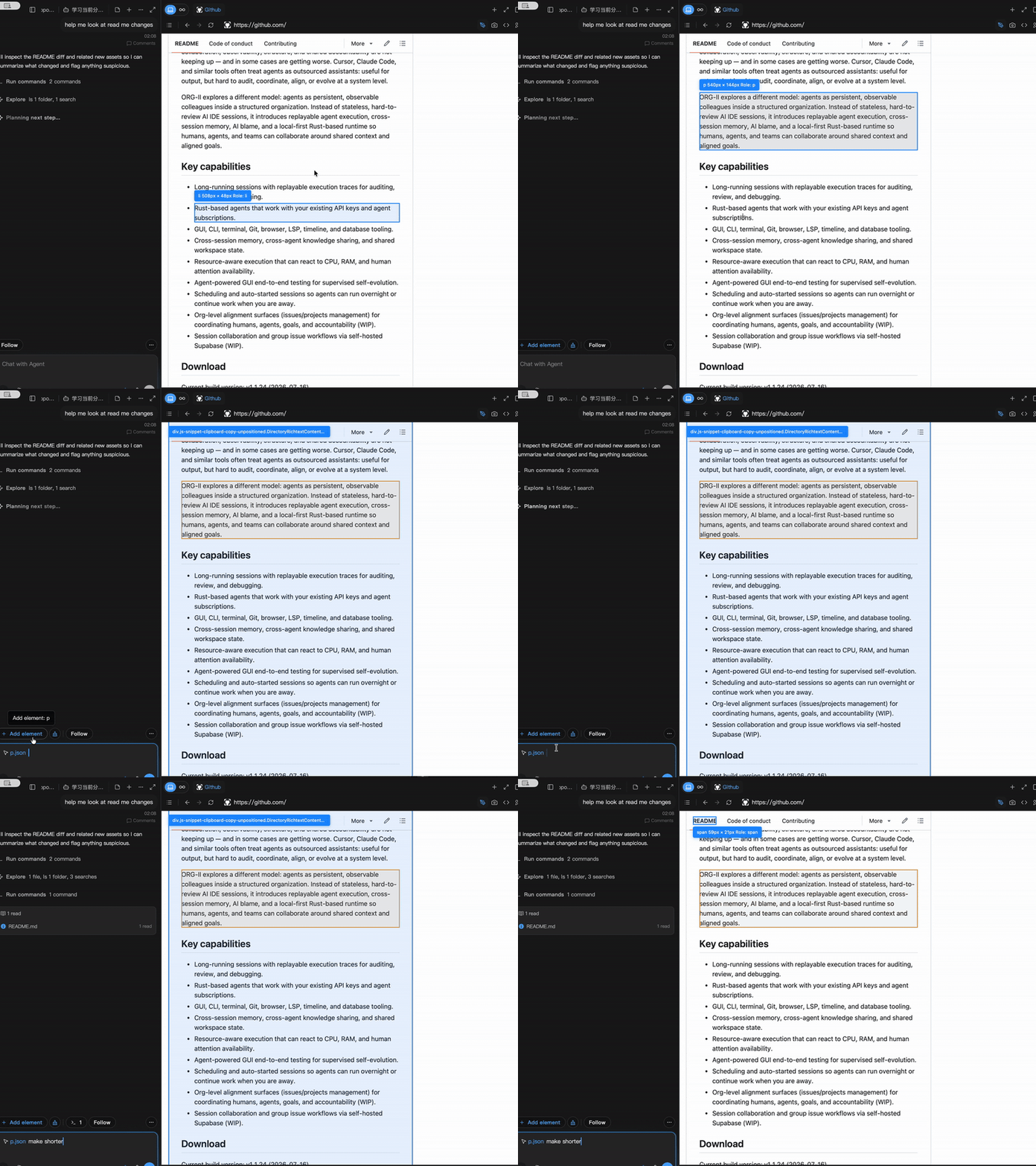
Design ModeInspect live pages in the native WebKit browser. Select an element and send its exact page context straight to the agent for a straightforward fix. |
|
More capabilities
- GUI, CLI, terminal, Git, browser, LSP, timeline, and database tooling.
- Cross-session memory, cross-agent knowledge sharing, and shared workspace state.
- Resource-aware execution that can react to CPU, RAM, and human attention availability.
- Agent-powered GUI end-to-end testing for supervised self-evolution.
- Scheduling and auto-started sessions so agents can run overnight or continue work when you are away.
- Org-level alignment surfaces (issues/projects management) for coordinating humans, agents, goals, and accountability (WIP).
- Session collaboration and group issue workflows via self-hosted Supabase (WIP).
Supported Agents
Use ORG2's built-in Rust harness or launch these supported coding-agent CLIs from the desktop app.
GUI + TUI
 ORG-2
ORG-2
 Cursor CLI
 Claude Code
 Codex
Codex
 Kiro CLI
 GitHub Copilot
 OpenCode
 DeepSeek Harness
 Antigravity
TUI
 Kimi Code CLI
 Aider
Aider
 Goose
Goose
 Amp
Amp
 Cline
Cline
 Kilo Code
 Grok CLI
 Devin
Devin
 Hermes
 OpenClaw
 Codebuff
 Qwen Code
 Mimo Code
 Continue
 Droid
Droid
 Mistral Vibe
 Autohand
 OMP
OMP
 Pi
Pi
Download
Current build version: v2.0.8 (2026-09-23)
Download the latest ORG2 desktop app with one click:
- macOS Apple Silicon
- Windows x64 installer
- Windows x64 MSI
- Linux x64 AppImage
- Linux x64 DEB
- All latest release assets
The direct download links always resolve through GitHub's latest release pointer.
Develop from source
To build or contribute from source:
pnpm install
pnpm run download:sidecars
pnpm run tauri:dev
For more contribution details, see CONTRIBUTING.md. We ask everyone to be respectful and empathetic; see CODE_OF_CONDUCT.md.
Optional native sidecars
Browser Use and Computer Use features rely on optional native helpers for browser automation and macOS screen automation:
agent-browseris downloaded fromvercel-labs/agent-browserreleases for the current OS/CPU.peekaboois downloaded fromsteipete/peekabooreleases on macOS.
Computer Use is currently available on macOS only. Browser Use can use agent-browser on supported platforms.
If a sidecar is missing, the Rust build creates a small placeholder resource so development builds can continue. The related capability may fall back to PATH or remain unavailable until you run pnpm run download:sidecars.
Community
Have questions, feedback, or want to follow along as ORG-2 evolves? Join us on Discord:
👉 Discord: discord.gg/tvWgAqhCzs 👉 WeChat: [https://github.com/org2AI/ORG2/issues/128]
- #how-to-use-org2 and #faq — get up and running
- #announcement — release news and updates
- #lets-chat — share what you're building and meet the community
- #feedback — ideas, feature requests, and bug reports
License
ORG2 is licensed under the GNU Affero General Public License v3.0 or later (AGPL-3.0-or-later). See LICENSE for the full license text.