OpenStatus is a free, open source monitoring & observability project written in TypeScript and released under AGPL-3.0. It has 9,123 GitHub stars, 770 forks and 75 open issues, and was last pushed 4 hours ago. On this registry it ranks #49 of 97 tracked projects in Monitoring & Observability, with 5 head-to-head comparisons available. It gained 16 stars over the last 6 tracked days.

What is OpenStatus?

What it is

OpenStatus is an open-source status page and uptime monitoring platform for teams that need availability checks and incident communication in one place. It lives in the Infrastructure & Operations / Monitoring & Observability category, and it is written in TypeScript under the AGPL-3.0 license.

The concrete problem it solves is the split between monitoring tools and status pages. Teams often operate separate uptime checkers, notification channels, and public status pages. OpenStatus combines those functions so a monitor can drive a status page, notify subscribers, and alert operators through Slack, Discord, PagerDuty, email, RSS, or webhooks. It is available as a managed service or self-hosted stack.

Key capabilities

  • The platform monitors servers, websites, and APIs from 28 global regions across three cloud providers, with checks running in parallel.
  • Status pages support custom domains, password protection, maintenance windows, and subscriber notifications through email and RSS.
  • Monitoring as code is supported through YAML configuration, a command-line interface, GitHub Actions, and Terraform resources for monitors, notifications, and status pages.
  • The API is typed JSON-over-HTTP using ConnectRPC, with a Node SDK, and the same operations are reachable from the dashboard, terminal, infrastructure code, and MCP clients.
  • Private locations run in a single 8.5MB Docker image, while pre-built images cover the server, dashboard, workflows, status page, and checker.

Who uses it and how

  • Site reliability engineers and on-call operators use it to monitor services and route downtime or slow checks to Slack, Discord, PagerDuty, or email.
  • Product and support teams use it to publish public status pages, communicate maintenance windows, and keep subscribers informed during incidents.
  • Platform teams use it as code by defining monitors, notifications, and status pages in YAML or Terraform, then applying changes through GitHub Actions or the command-line interface.

Getting started

The recommended self-hosting path is Docker Compose: copy .env.docker.example to .env.docker, run docker compose up -d, and open the dashboard at http://localhost:3002 and status pages at http://localhost:3003. Pre-built ghcr.io/openstatushq images are also available for Coolify, and a Railway template can deploy the full stack.

When to use it — and when not to

OpenStatus is a good fit when a team wants an open-source, self-hostable alternative that combines uptime monitoring, status pages, and incident communication without per-seat or per-subscriber pricing. Self-hosting requires operating Docker services, a Turso or libSQL database, Tinybird analytics, and checker or private-location containers, so it is more work than using the managed service. The repository metadata shows a very young project with zero listed contributors and 75 open issues, so teams needing strong commercial support or a long maintenance history should review those signals before adopting it.

project readme (upstream, from github) — read inline

openstatus

The open-source status page and uptime monitoring platform.
Learn more »

Documentation · Website · Discord

openstatus status

License GitHub stars Discord

About openstatus

openstatus is an open-source platform that combines status pages and uptime monitoring in a single tool. Keep your users informed and your services reliable. Available as a managed service or self-hosted.
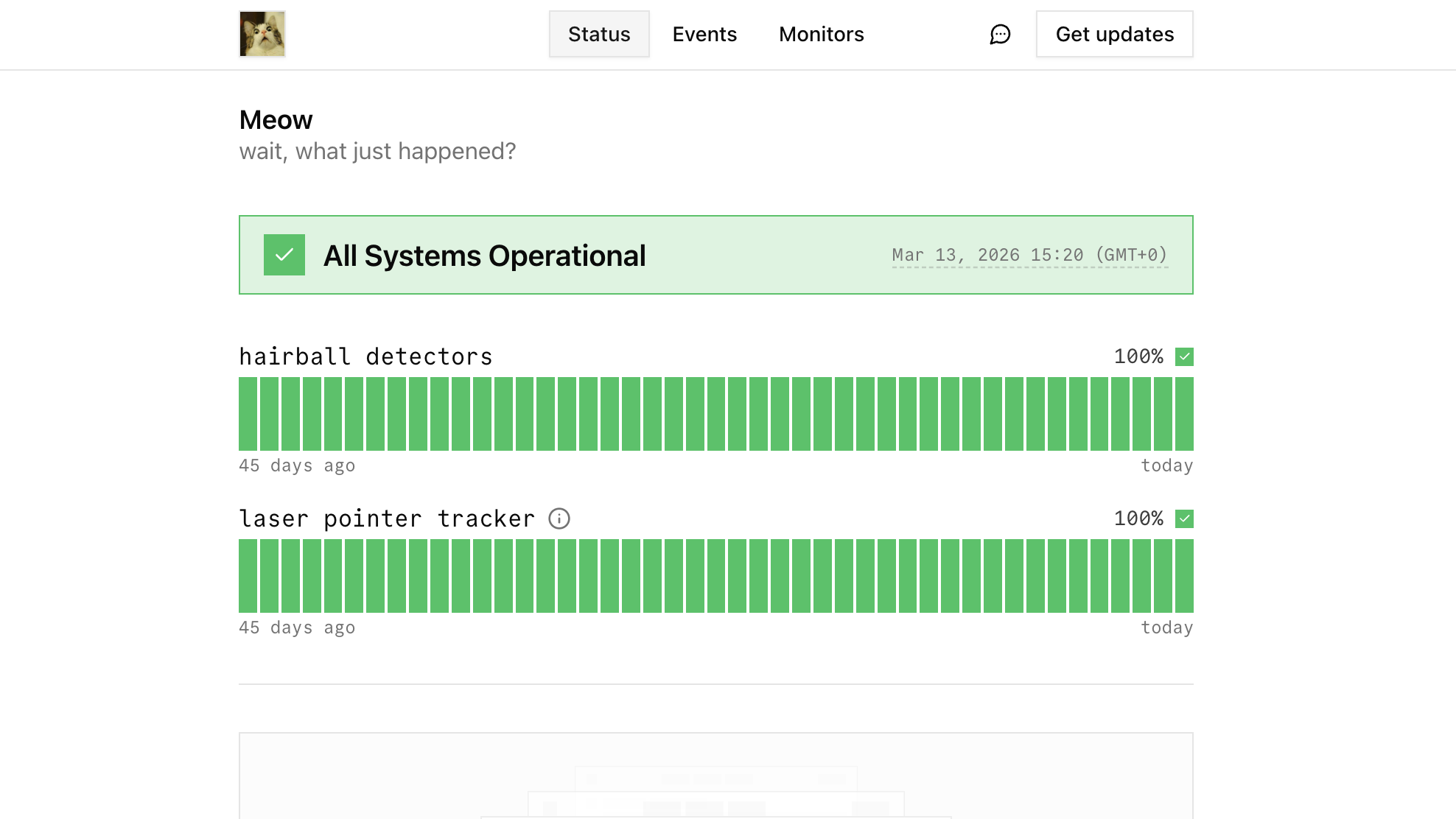
openstatus status page

Why openstatus?

  • Status pages + monitoring in one tool — no need to wire up a separate monitoring service
  • 28 global regions checking in parallel across 3 cloud providers
  • Flat pricing, unlimited members — no per-seat or per-subscriber charges
  • Open source & self-hostable — AGPL-3.0, private-locations run in a single 8.5MB Docker image
  • Monitoring as code — YAML config, CLI, GitHub Actions, Terraform
  • Incident communication — subscriber notifications via email, RSS, and webhooks

Status pages

Beautiful, customizable status pages with custom domains, password protection, maintenance windows, and subscriber notifications via email and RSS. Build trust and keep your users informed during incidents.

Uptime Monitoring

Monitor your servers, websites and APIs from 28 regions across multiple cloud providers globally. Get notified via Slack, Discord, PagerDuty, email, and more when your services are down or slow.

Recognitions

openstatus | Trendshift Featured on Hacker News openstatus - #2 Product of the Day on Product Hunt

Tooling

Everything the dashboard does is reachable from your terminal, your infrastructure code, and your AI assistant — all sharing a single API key.

  • API — typed JSON-over-HTTP (ConnectRPC) with a Node SDK
  • CLI — interactive for humans, --json for agents, YAML monitoring as code
  • Terraform — monitors, notifications, and status pages as HCL
  • MCP server — connect Claude, ChatGPT, Cursor, or any MCP client to your workspace

Getting Started

With Docker (Recommended)

The fastest way to get started for both development and self-hosting:

# 1. Copy environment file
cp .env.docker.example .env.docker

# 2. Start all services
docker compose up -d

# 3. Access the application
open http://localhost:3002  # Dashboard
open http://localhost:3003  # Status Pages

Full guide: DOCKER.md

Self-Hosting with Coolify

We provide pre-built Docker images for easy deployment:

ghcr.io/openstatushq/openstatus-server:latest
ghcr.io/openstatushq/openstatus-dashboard:latest
ghcr.io/openstatushq/openstatus-workflows:latest
ghcr.io/openstatushq/openstatus-private-location:latest
ghcr.io/openstatushq/openstatus-status-page:latest
ghcr.io/openstatushq/openstatus-checker:latest

Complete Coolify Deployment Guide

Self-Hosting with Railway

Deploy the full stack (dashboard, status pages, API, workflows, probes, libSQL, and Tinybird Local) to one Railway project with one click:

Deploy on Railway

The template source and the setup instructions are in ephraimduncan/openstatus-railway.

Manual Setup

Requirements
Dashboard

See apps/dashboard/README.md for full steps (env, db, login, troubleshooting).

Status page
  1. Install dependencies

pnpm install

  1. Run the server

pnpm -w dev:status-page.

Web (marketing site)
  1. Install dependencies

pnpm install

  1. Run the server

pnpm -w dev:web.

Tech Stack

Contributing

If you want to help us build the best status page and monitoring platform, check our contributing guidelines.
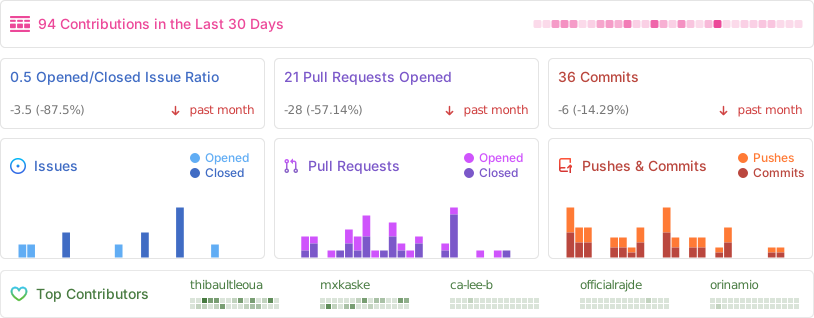
openstatus repository activity

Contact

Interested in our enterprise plan or need special features? Email us at [email protected] or book a call.

Book us with Cal.com

License

Distributed under the AGPL-3.0 License.

Frequently asked questions

Is OpenStatus free to use?

OpenStatus is open source under the AGPL-3.0 licence. There is no licence fee and no seat count — you can self-host it or, where the project offers one, pay a vendor for a managed version instead.

What does OpenStatus do?

Status page and uptime monitoring for growing teams

What is OpenStatus written in?

OpenStatus is primarily written in TypeScript. Its source is publicly available at https://github.com/openstatushq/openstatus, and it has 9,123 GitHub stars.