mirotalk is a free, open source collaboration & communication project written in JavaScript and released under AGPL-3.0. It has 4,739 GitHub stars, 773 forks and 0 open issues, and was last pushed 31 hours ago. On this registry it ranks #22 of 41 tracked projects in Collaboration & Communication, with 5 head-to-head comparisons available. It gained 2 stars over the last 3 tracked days.

What is mirotalk?

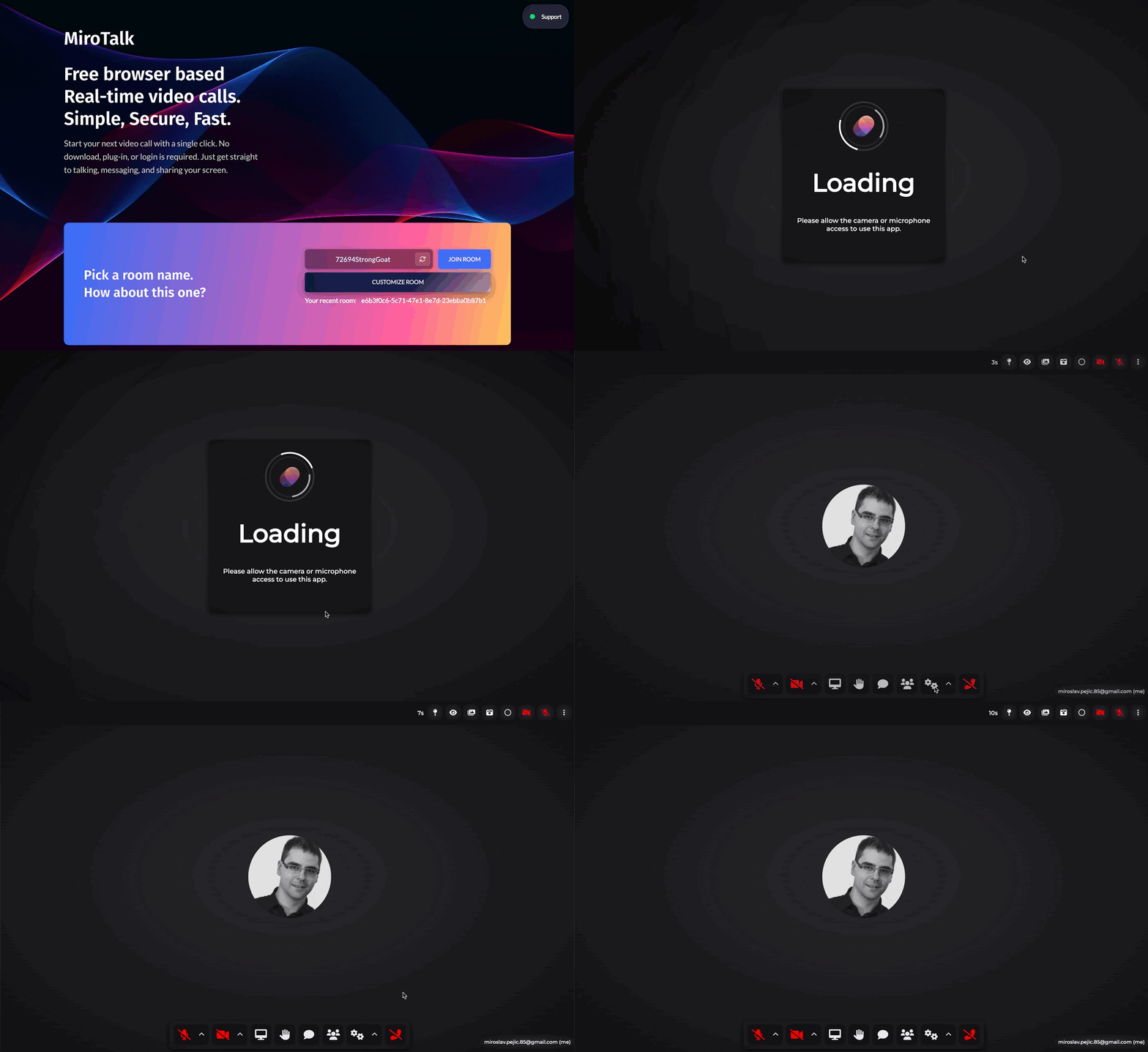
MiroTalk P2P is a free, open-source, self-hosted video conferencing platform that connects participants through direct peer-to-peer WebRTC links, aimed at teams and organisations that want browser-based meeting rooms running on their own infrastructure.

What it is

MiroTalk P2P is a JavaScript application that turns a server you control into a WebRTC meeting service. Rooms are created and joined from a browser, with no downloads and no time limits, and media travels peer-to-peer between participants rather than through a central conferencing cloud. It is distributed under the AGPL-3.0 licence and is published on the public web at https://p2p.mirotalk.com as a live demonstration of the same codebase that ships in the repository.

The concrete problem it solves is dependence on hosted conferencing SaaS. The project's own comparison table positions it against cloud-only alternatives on cost, self-hosting, privacy, time limits, concurrent rooms, resolution, language coverage, API access, AI features, rebranding and deployment method. Where those services meter meeting length on free tiers, cap room counts, restrict branding, or process data on third-party infrastructure, MiroTalk P2P replaces that arrangement with software the operator runs, holds and can modify. It lives in the WebRTC and peer-to-peer ecosystem, alongside the Docker and Node.js tooling used to deploy it.

Key capabilities

  • Video calls support resolutions up to 8K at 60fps, alongside screen sharing, recording and picture-in-picture.
  • In-meeting collaboration covers chat with Markdown and emoji, a collaborative whiteboard and file sharing.
  • A full REST API is included rather than sold as an add-on, with JWT credentials, OIDC authentication, room passwords, host protection and peer-to-peer encryption for access control.
  • ChatGPT (OpenAI) integration and speech recognition are built in, while the comparison table lists AI features as paid add-ons elsewhere.
  • The interface is translated into 133 languages.
  • Rooms can be embedded through an iframe or widget, and Slack and Mattermost integrations are provided.
  • Deployment paths include a Docker image published as mirotalk/p2p and a straight Node.js install.

Who uses it and how

  • Operators who need unlimited concurrent rooms can run the Compose stack from docker-compose.template.yml and scale meeting count without per-room licensing.
  • Teams running the mirotalk/p2p image from Docker Hub, or a plain Node.js install, keep meeting traffic and configuration on their own server.
  • Organisations with an existing identity provider can gate access through OIDC authentication and per-room passwords instead of issuing separate accounts.
  • Product teams can embed rooms into their own applications via iframe or widget, or rebuild the front end for white-label use since the full source is provided.
  • Chat-centric teams already working in Slack or Mattermost can surface meeting links through the provided integrations.

Getting started

The README gives two routes: clone the repository, copy .env.template to .env and app/src/config.template.js to app/src/config.js, then run npm install and npm start; or copy docker-compose.template.yml to docker-compose.yml and run docker-compose up, optionally pulling the official mirotalk/p2p image first. Both serve the application at http://localhost:3000, and the README directs operators to edit app/src/config.js, .env and docker-compose.yml to customise the setup.

How it compares

The registry facts name no direct open-source competitors, so MiroTalk P2P stands alone here rather than sitting beside a set of peer tools. Its README contrasts the project with unnamed cloud-only solutions: those typically carry paid plans, third-party data processing, 40-60 minute limits on free tiers, limited concurrent rooms and resolution capped around 1080p, while MiroTalk P2P is AGPL-3.0, self-hosted, unlimited in room count and duration, and reaches 8K at 60fps. An alternative one-time fee licence is offered commercially for buyers who cannot work within AGPL-3.0 terms.

When to use it β€” and when not to

Adopting it means operating the server yourself: a Node.js runtime or Docker Engine with Docker Compose, plus the configuration files named above, so a team with no appetite for running infrastructure will find a hosted service simpler. Shops that require a vendor support contract, or that cannot accept AGPL-3.0 copyleft obligations, should look elsewhere or buy the commercial licence. The registry entry also reflects an unusually quiet maintenance signal, with zero open issues and a README excerpt that is cut off mid-sentence, so evaluate the current repository state directly before committing.

project readme (upstream, from github) β€” read inline

MiroTalk P2P - Open Source Self-Hosted WebRTC P2P Video Conferencing

Open Source Peer-to-Peer Video Conferencing You Can Self-Host in Minutes

Free, Secure, Fast Real-Time Communication - up to 8K, 60fps. Works in All Browsers and Platforms.



GitHub Stars GitHub Forks

License: AGPLv3 Docker Pulls Last Commit Discord Author


MiroTalk P2P is a self-hosted, open-source video conferencing platform using direct peer-to-peer WebRTC connections for fast, secure, real-time communication. Deploy on your own server in minutes. Enjoy unlimited rooms, no time limits, end-to-end privacy, and a rich feature set - all under your control.

Try Live Demo Β· Privacy Β· Documentation Β· Discord Β· Sponsor


Proudly sponsored by

Recall.ai - API for meeting recording

An API for recording Zoom, Google Meet, Microsoft Teams, and in-person meetings.


✨ Why MiroTalk P2P?
MiroTalk P2P Other Solutions
πŸ’° Cost Free & Open Source (AGPLv3). One-time fee licenses available Paid plans
🏠 Self-hosted βœ… Full control over your data ❌ Cloud only
πŸ”’ Privacy Your server, your rules Third-party data processing
⏱️ Time limits Unlimited 40-60 min on free tiers
🏒 Rooms Unlimited concurrent rooms Limited
πŸŽ₯ Resolution Up to 8K @ 60fps Up to 1080p
🌍 Languages 133 languages ~30-80
πŸ”Œ API Full REST API included Paid add-on
πŸ€– AI Features ChatGPT (OpenAI) integration Paid AI add-ons
🧩 Rebrand Full source code, white-label ready Limited branding options
πŸ“¦ Deploy Docker, Node.js, one-click install N/A (SaaS only)
πŸš€ Features
  • πŸŽ₯ Video up to 8K @ 60fps Β· Screen sharing Β· Recording Β· Picture-in-Picture
  • πŸ’¬ Chat with Markdown & emoji Β· Collaborative whiteboard Β· File sharing
  • πŸ€– ChatGPT (OpenAI) integration Β· Speech recognition
  • πŸ”’ OIDC auth Β· Host protection Β· JWT credentials Β· Room passwords Β· Peer-to-peer encryption
  • πŸ”Œ REST API Β· Slack & Mattermost Β· Embeddable iframe & widget Β· 133 languages

See all features β†’

⚑ Quick start

Start in 6 commands:

git clone https://github.com/miroslavpejic85/mirotalk.git
cd mirotalk
cp .env.template .env
cp app/src/config.template.js app/src/config.js
npm install
npm start

Open http://localhost:3000 - done!

🐳 Docker

docker

Prerequisites: Install Docker Engine and Docker Compose - Image available on Docker Hub

git clone https://github.com/miroslavpejic85/mirotalk.git
cd mirotalk
cp .env.template .env
cp app/src/config.template.js app/src/config.js
cp docker-compose.template.yml docker-compose.yml
docker-compose pull    # optional: pull official image
docker-compose up      # add -d to run in background

Open http://localhost:3000 - done!

Note: Edit app/src/config.js, .env, and docker-compose.yml to customize your setup.

πŸ“š Documentation

For detailed guides and references, visit the official documentation:

☁️ Recommended Hosting Providers
Provider Description Link

readme truncated β€” read the full docs on github

Frequently asked questions

Is mirotalk free to use?

mirotalk is open source under the AGPL-3.0 licence. There is no licence fee and no seat count β€” you can self-host it or, where the project offers one, pay a vendor for a managed version instead.

What does mirotalk do?

πŸš€ Open-source, self-hosted P2P WebRTC video conferencing for fast, private real-time communication. Create browser-based meeting rooms with no downloads or tim

What is mirotalk written in?

mirotalk is primarily written in JavaScript. Its source is publicly available at https://github.com/miroslavpejic85/mirotalk, and it has 4,739 GitHub stars.