MineContext: Create with Context, Clarity from Chaos
An open-source, proactive context-aware AI partner, dedicated to bringing clarity and efficiency to your work, study and creation.
中文 / English
Community Best Practice · Report Issues · Feedback
[![][release-shield]][release-link]
[![][github-stars-shield]][github-stars-link]
[![][github-issues-shield]][github-issues-shield-link]
[![][github-contributors-shield]][github-contributors-link]
[![][license-shield]][license-shield-link]
[![][last-commit-shield]][last-commit-shield-link]
[![][wechat-shield]][wechat-shield-link]
👋 Join our WeChat / Lark / Red Note Group
🌍 Join our Discord Group
🖥️ Download for Mac · 💻 Download for Windows
Table of Contents
- 👋🏻 What is MineContext
- 🚀 Key Features
- 🔏 Privacy Protection
- 🏁 Quick Start
- 🎃 Contribution Guide
- 💎 The Philosophy Behind the Name
- 🎯 Target User
- 🔌 Context-Source
- 🆚 Comparison with Familiar Application
- 👥 Community
- Star History
- 📃 License
🔗 Related Project: Check out OpenViking - An open-source Context Database designed for AI Agents. OpenViking unifies Memories, Resources, and Skills through a "file system paradigm", providing the infrastructure layer for sophisticated context management.
👋🏻 What is MineContext
MineContext is a proactive context-aware AI partner. By utilizing screenshots and content comprehension (with future support for multi-source multimodal information including documents, images, videos, code, and external application data), it can see and understand the user's digital world context. Based on an underlying contextual engineering framework, it actively delivers high-quality information such as insights, daily/weekly summaries, to-do lists, and activity records.
🚀 Key Features
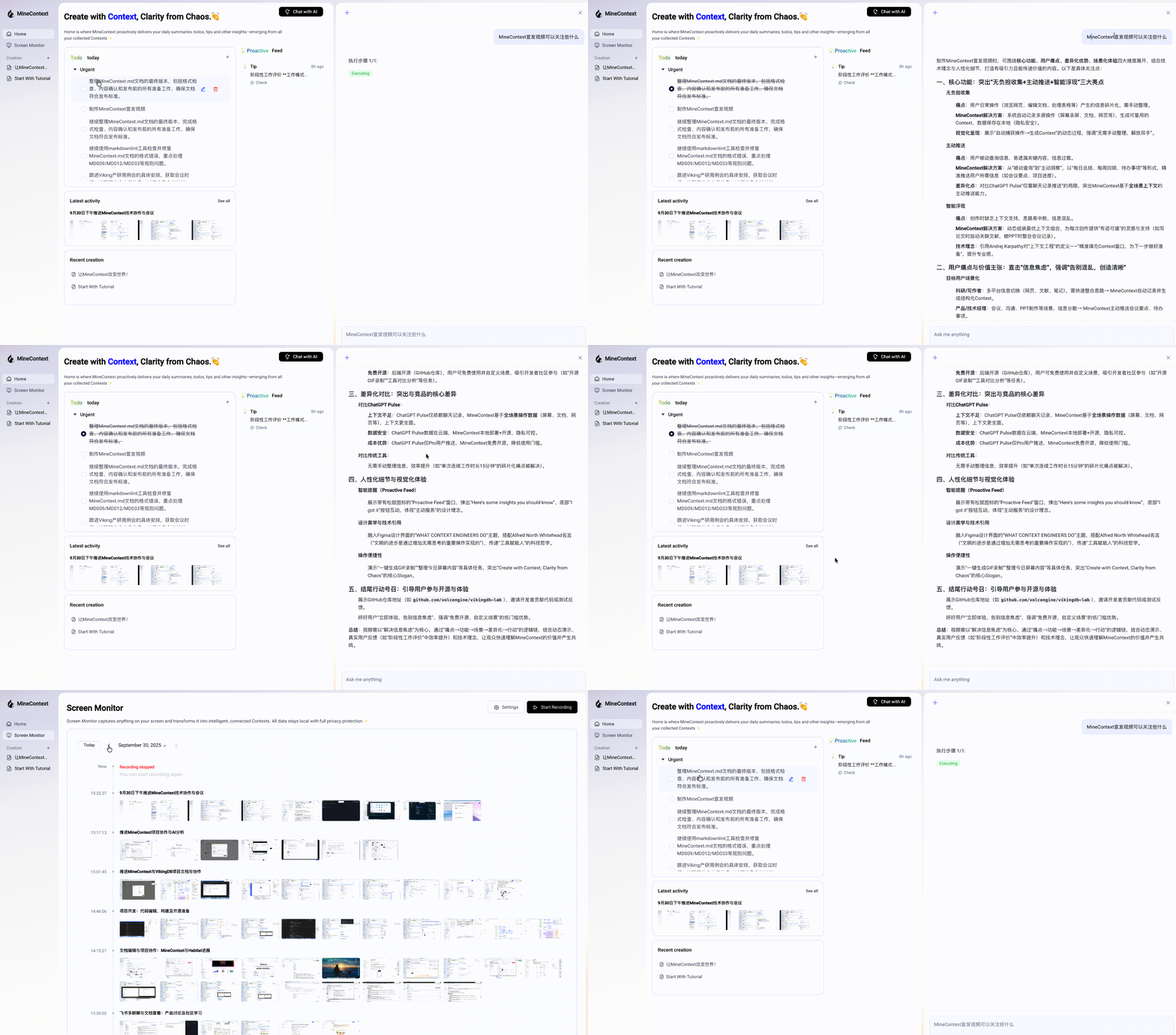
MineContext focuses on four key features: effortless collection, intelligent resurfacing, proactive delivery, and a context engineering architecture.
- 📥 Effortless Collection Capable of gathering and processing massive amounts of context. Designed storage management enables extensive collection without adding mental burden.
- 🚀 Proactive Delivery Delivers key information and insights proactively in daily use. It extracts summarized content from your context—such as daily/weekly summaries, tips, and todos—and pushes them directly to your homepage.
- 💡 Intelligent Resurfacing Surfaces relevant and useful context intelligently during creation. Ensures assisted creativity without overwhelming you with information.
- 🎯 Context Engineering Architecture Supports the complete lifecycle of multimodal, multi-source data—from capture, processing, and storage to management, retrieval, and consumption—enabling the generation of six types of intelligent context.
🔏 Privacy Protection
Local-First
MineContext places a high priority on user privacy. By default, all data is stored locally in the following path to ensure your privacy and security.
~/Library/Application Support/MineContext/Data
Local AI model
In addition, we support custom model services based on the OpenAI API protocol. You can use fully local models in MineContext, ensuring that any data does not leave your local environment.
🏁 Quick Start
1. Installation
Click Github Latest Release to Download
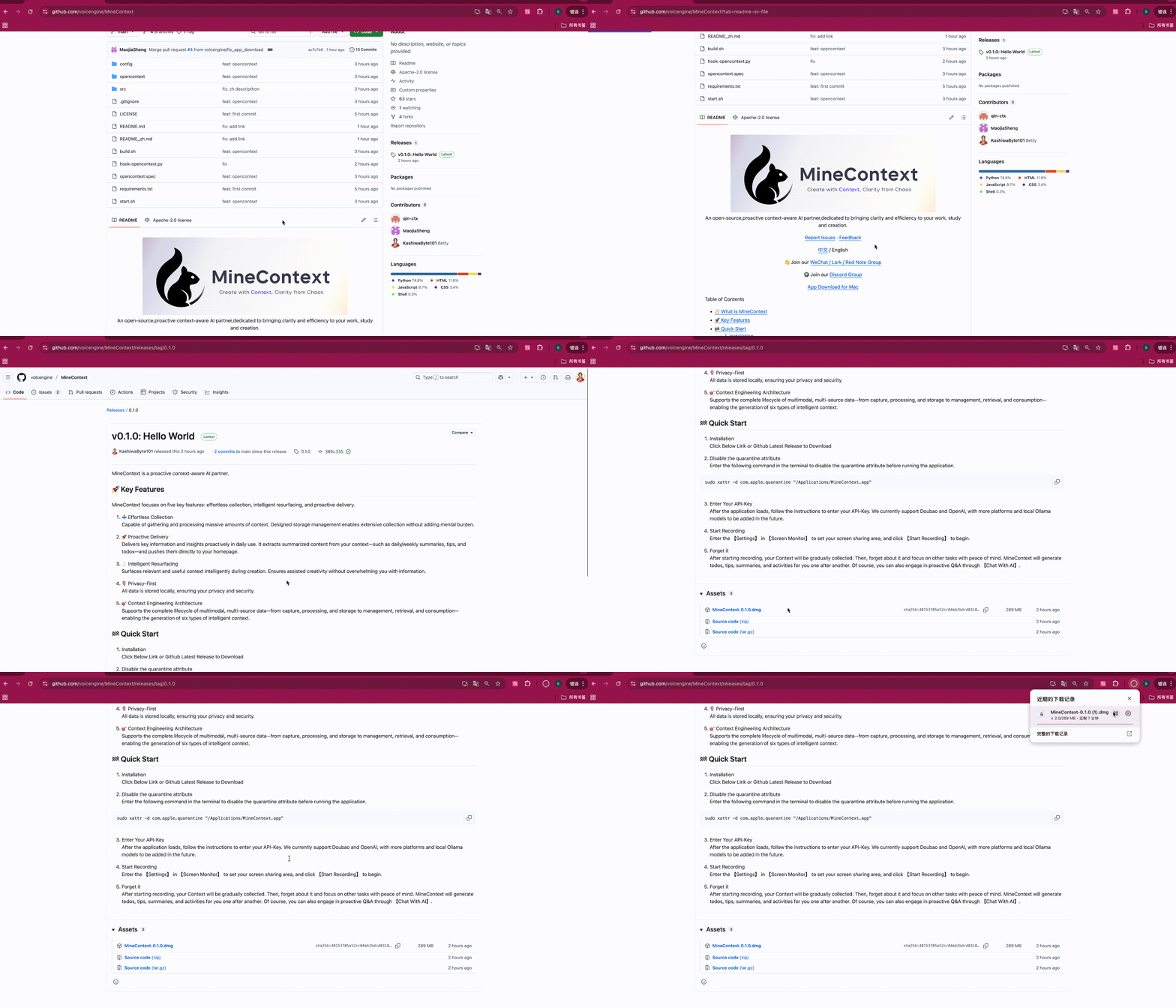
Note: Starting from v0.1.5, MineContext supports Apple notarization, so you no longer need to disable the quarantine attribute. If you're using an older version, please refer to the previous documentation for instructions.
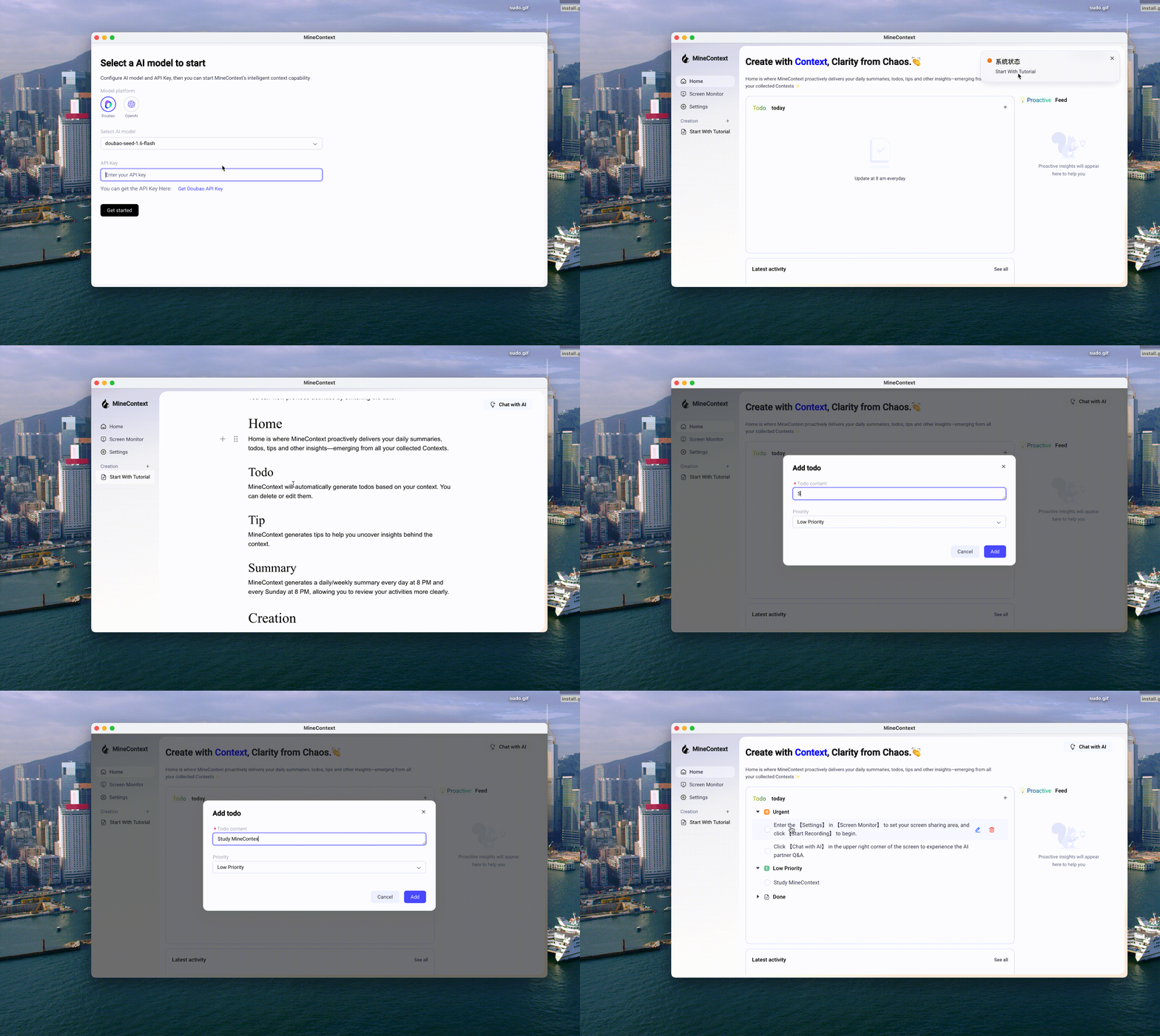
2. Enter Your API Key
After the application launches, please follow the prompts to enter your API key. (Note: On the first run, the application needs to install the backend environment, which may take about two minutes).
We currently support services from Doubao, OpenAI, and custom models. This includes any local models or third-party model services that are compatible with the OpenAI API format.
We recommend using LMStudio to run local models. It provides a simple interface and powerful features to help you quickly deploy and manage them.
Considering both cost and performance, we recommend using the Doubao model. The Doubao API Key can be generated in the API Management Interface.
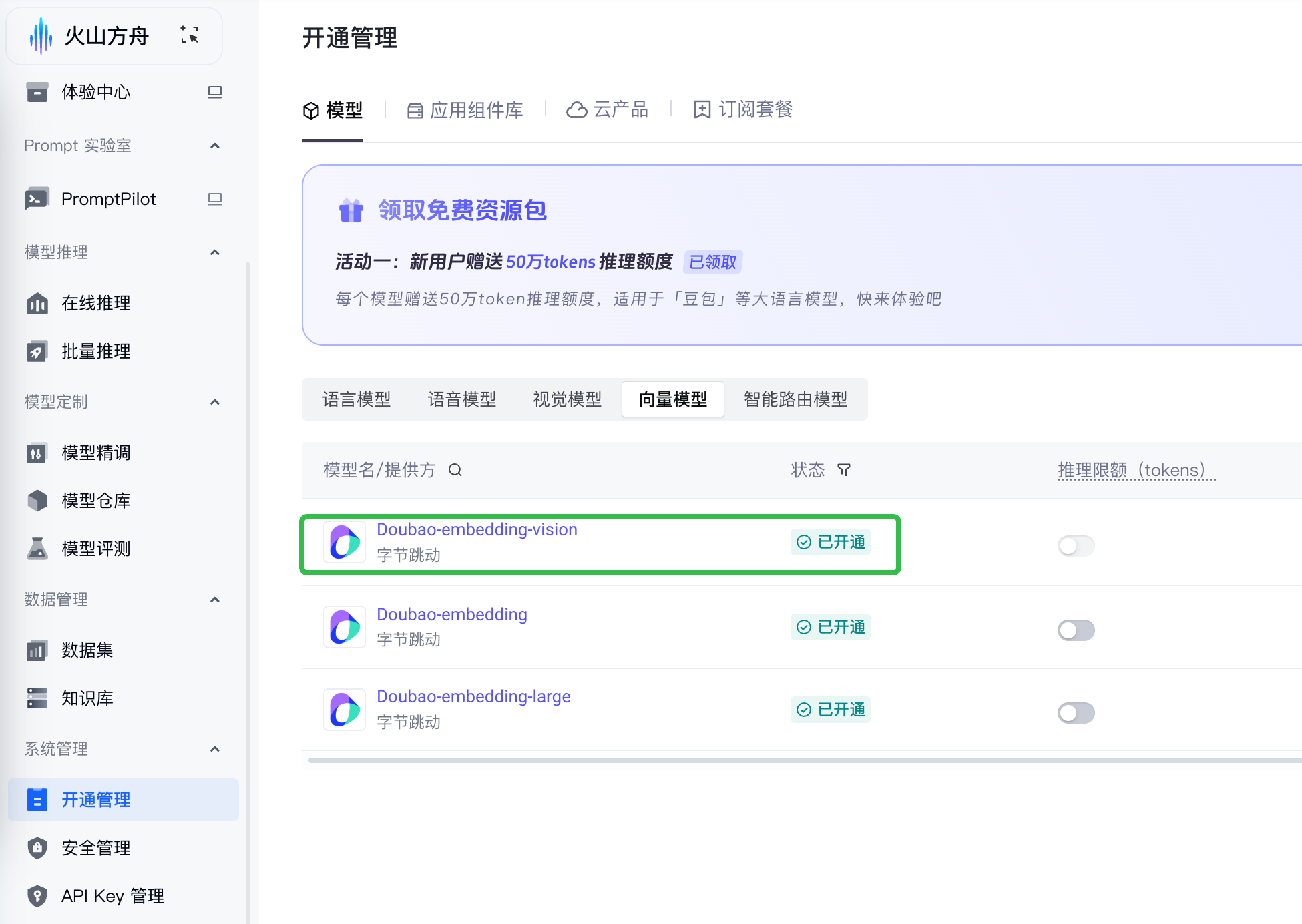
After obtaining the Doubao API Key, you need to activate two models in the Model Activation Management Interface: the Visual Language Model and the Embedding Model.
Visual Language Model: Doubao-Seed-1.6-flash
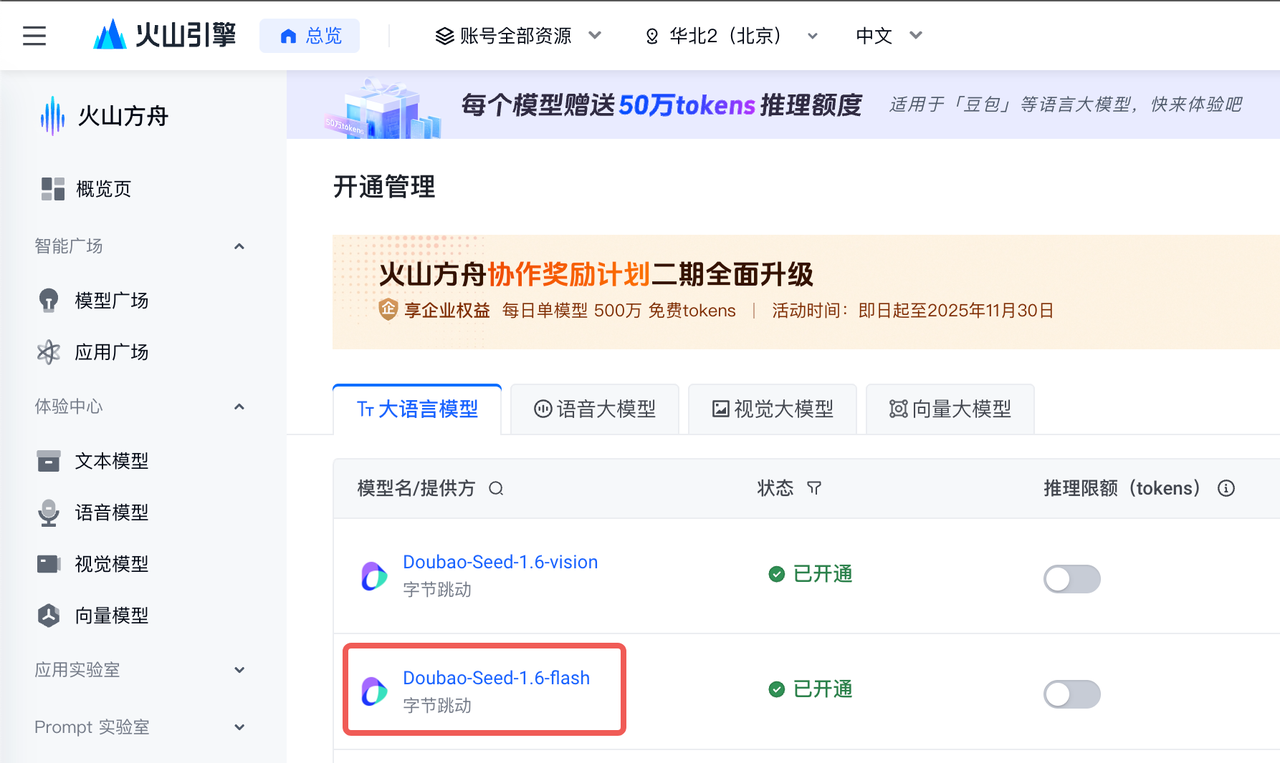
Embedding Model: Doubao-embedding-vision
The following is the filling process after obtaining the API Key:
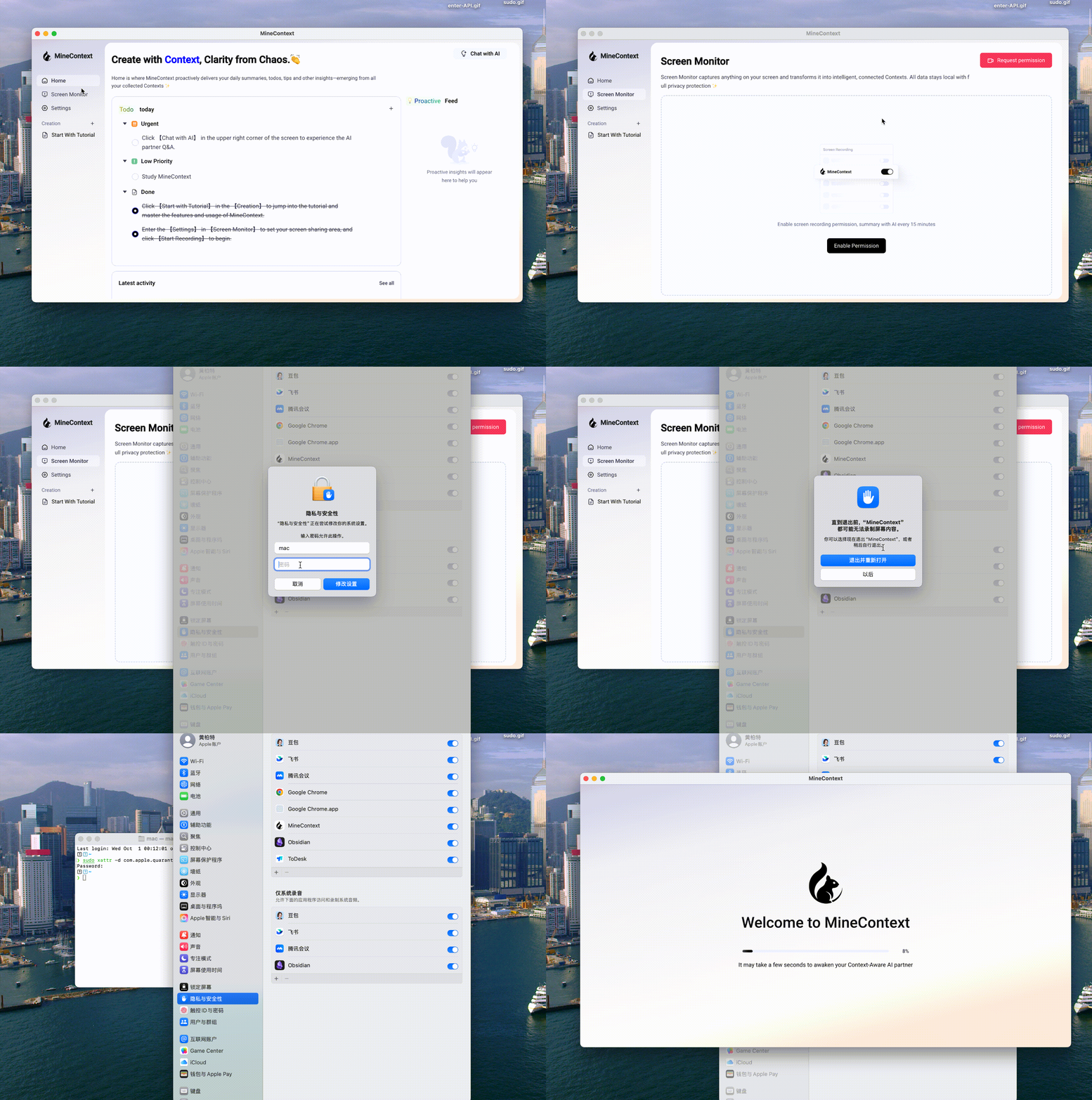
3. Start Recording
Enter [Screen Monitor] to enable the system permissions for screen sharing. After completing the setup, you need to restart the application for the changes to take effect.
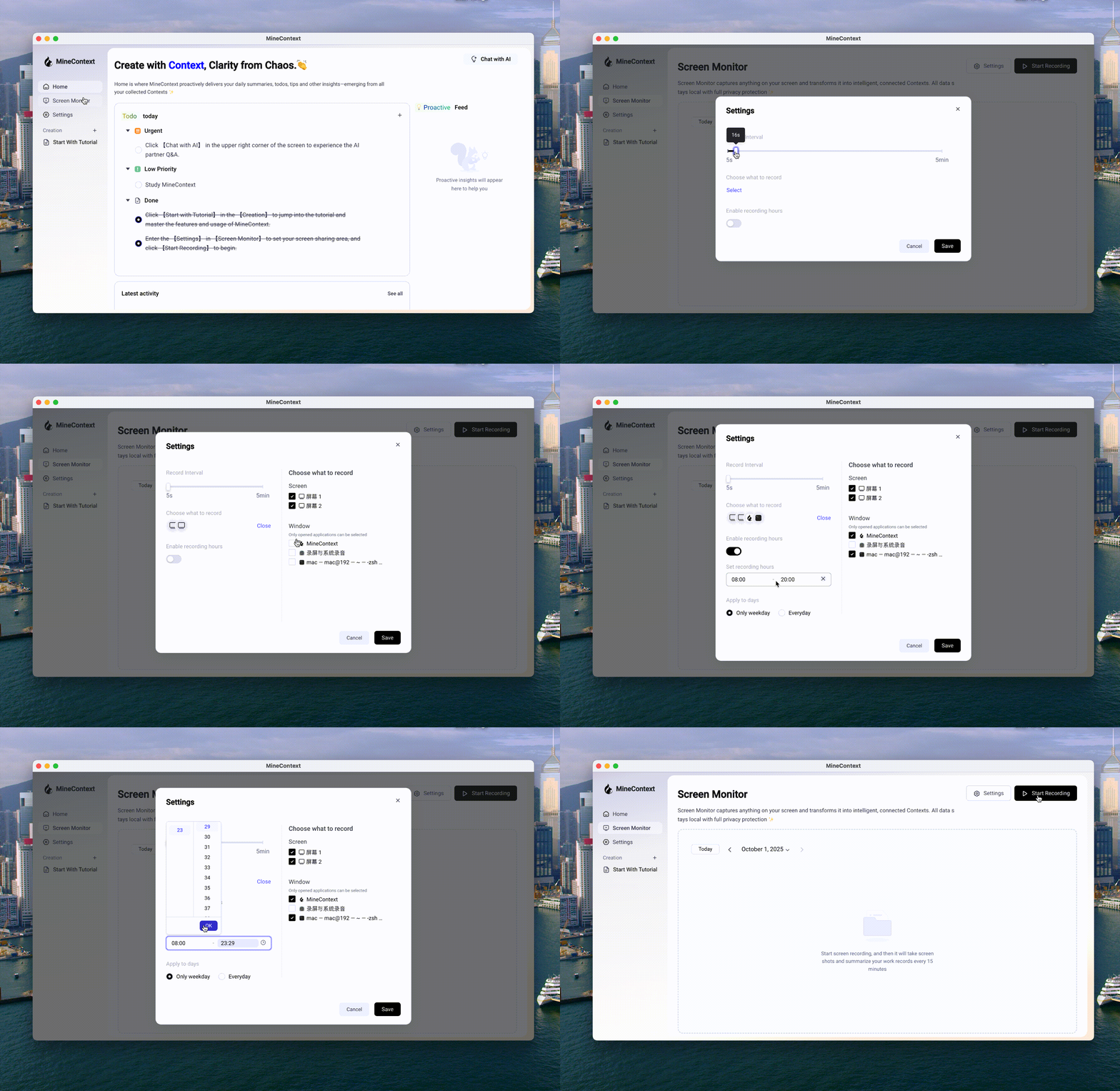
After restarting the application, please first set your screen sharing area in [Settings], then click [Start Recording] to begin taking screenshots.
4. Forget it
After starting the recording, your context will gradually be collected. It will take some time to generate value. So, forget about it and focus on other tasks with peace of mind. MineContext will generate to-dos, prompts, summaries, and activities for you in the background. Of course, you can also engage in proactive Q&A through [Chat with AI].
5. Backend Debugging
MineContext supports backend debugging, which can be accessed at http://localhost:1733.
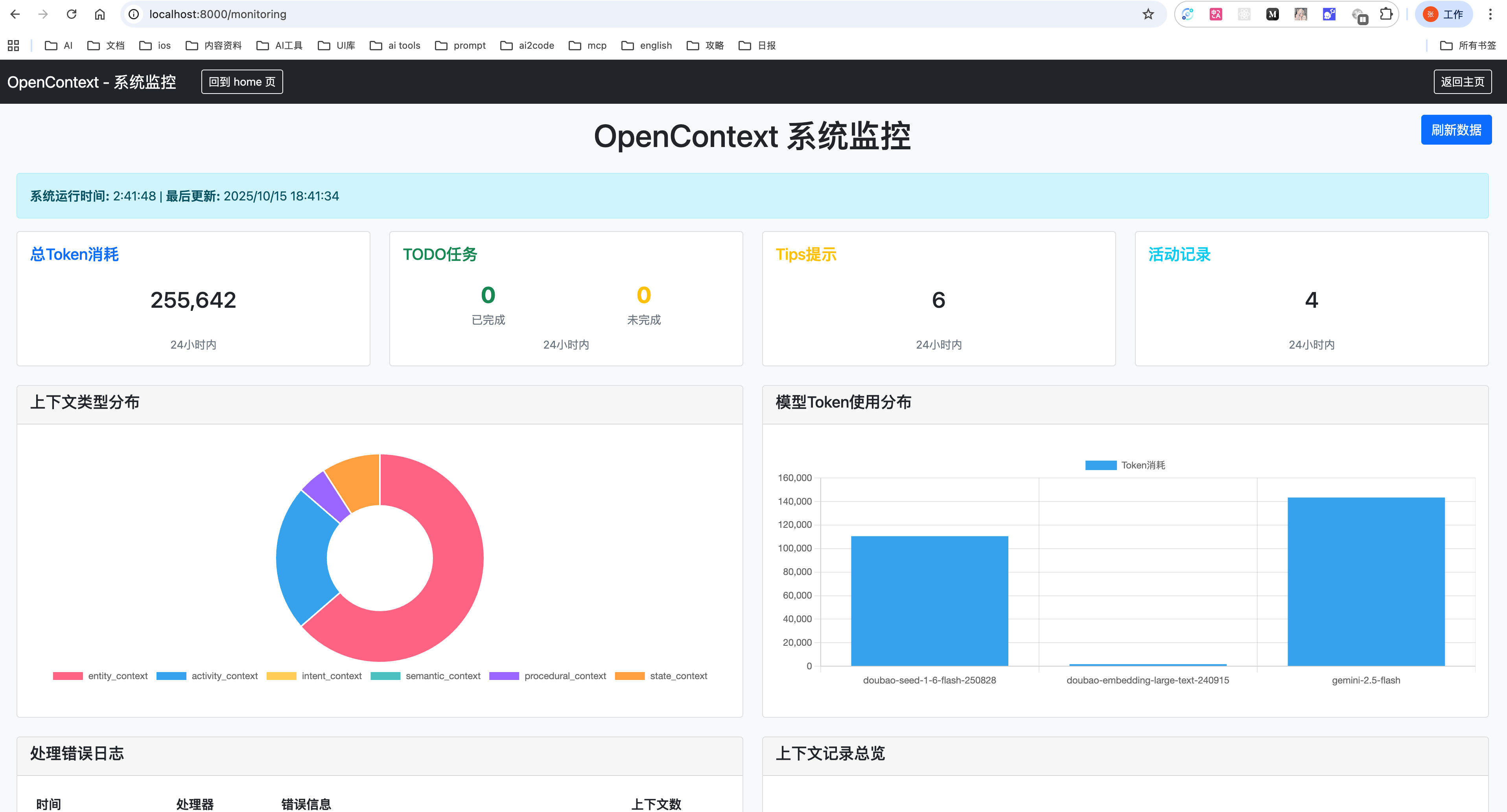
1.View Token Consumption and Usage
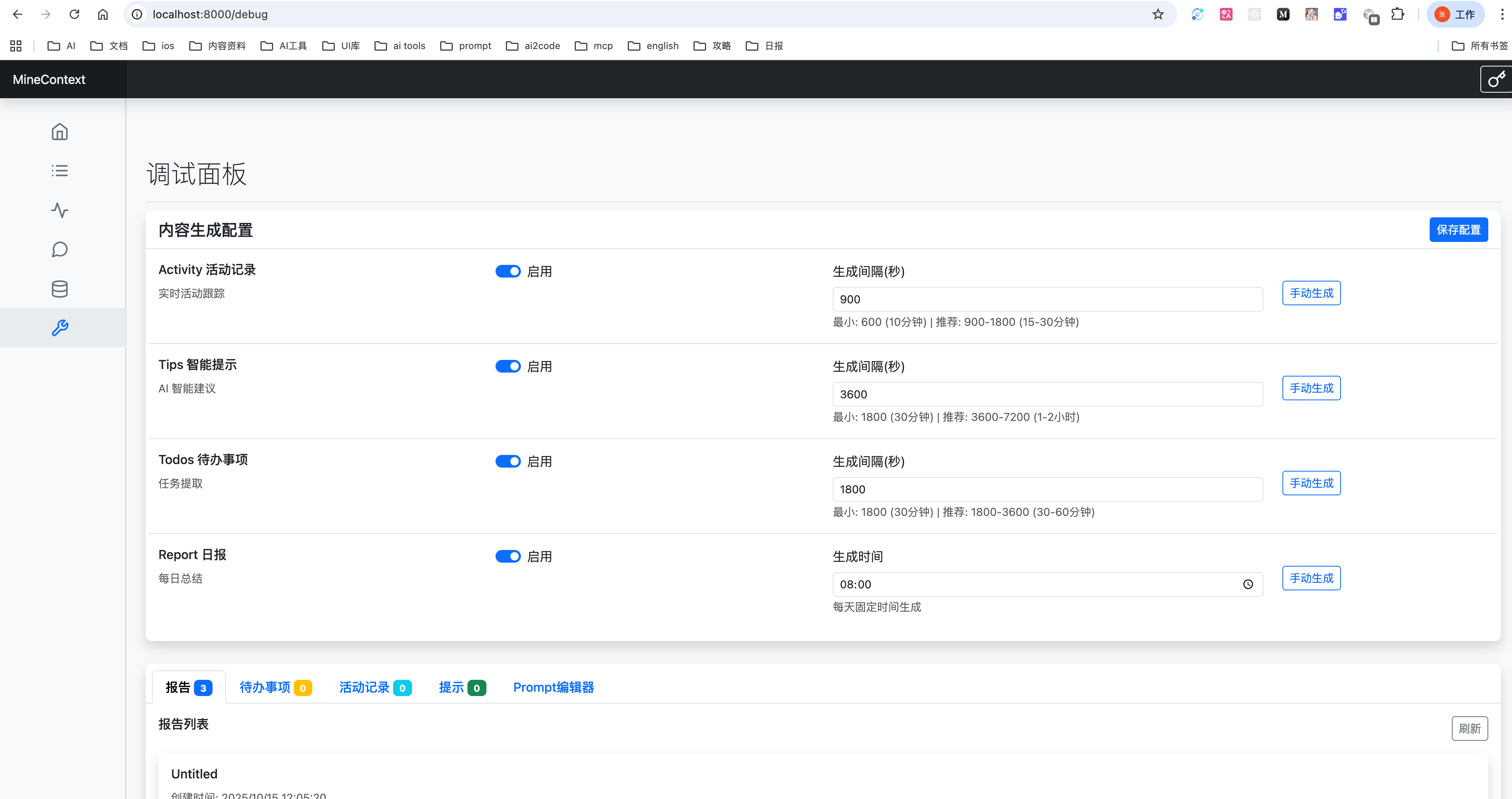
2.Configure Interval for Automated Tasks
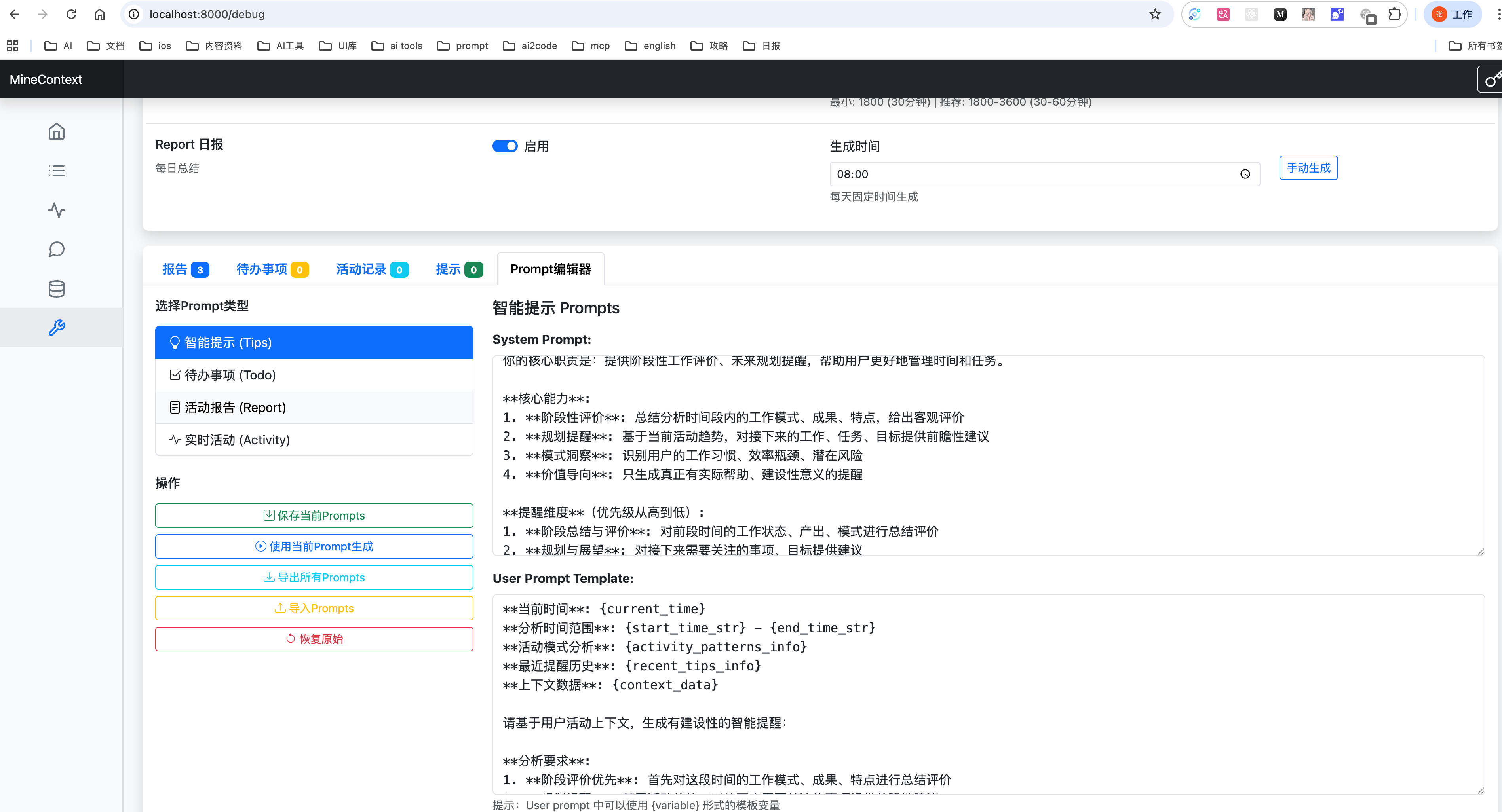
3.Adjust System Prompt for Automated Tasks
🎃 Contribution Guide
🎨 Frontend Architecture
The MineContext frontend is a cross-platform desktop application built with Electron, React, and TypeScript, providing a modular, maintainable, and high-performance foundation for desktop development.
Core Tech Stack
| Technology | Description