
Memgraph is a free, open source databases project written in C++ and released under a custom open-source licence. It has 4,566 GitHub stars, 283 forks and 813 open issues, and was last pushed 5 hours ago. On this registry it ranks #62 of 81 tracked projects in Databases, with 5 head-to-head comparisons available. It gained 7 stars over the last 6 tracked days.

What is Memgraph?

What it is

Memgraph is an open-source, in-memory graph database written in C and C++ for real-time graph analytics, GraphRAG, AI memory, and agentic workflows. It is ACID-compliant and highly available. It lives in the graph database and AI infrastructure ecosystem and uses a Cypher-compatible query layer familiar from Neo4j environments.

It solves the problem of splitting connected-data retrieval across search, vector, and graph systems. Memgraph combines text, vector, and geospatial indexes with graph traversal in one query layer, and it supports operational workloads such as fraud detection, network analysis, and infrastructure monitoring.

Key capabilities

  • Built-in vector, text, and geospatial indexes support hybrid retrieval, combining similarity search with graph traversal in a single Cypher query.
  • MAGE provides 40+ graph algorithms in C++, Python, and CUDA, including PageRank, community detection, GNN-based link prediction, temporal graph networks, embeddings, and native machine learning.
  • Atomic GraphRAG expresses pivot search, graph expansion, ranking, and prompt assembly as one query, reducing application-side orchestration.
  • Streaming ingestion from Kafka, Pulsar, and RedPanda, plus native Parquet and JSONL loading from local disk, S3, or HTTP endpoints, supports real-time and bulk data pipelines.
  • Parallel query execution handles concurrent queries for high-throughput workloads, while deep-path traversals use accumulators and path filtering without extra application logic.
  • Enterprise controls include Raft-based high availability, multi-tenancy, fine-grained access control, SSO, user impersonation, encryption in transit, monitoring, and backup and restore.
  • Query modules written in Python, Rust, and C or C++ extend the engine, while SHOW SCHEMA INFO supports Text2Cypher and AI agent integration.

Who uses it and how

  • AI teams use it for GraphRAG and agent memory, combining vector search, graph expansion, and prompt assembly in Cypher queries.
  • Developers use it for fraud detection, network analysis, and infrastructure monitoring, where sub-millisecond multi-hop traversals and deep-path filtering matter.
  • Data engineers use it to ingest streaming events from Kafka, Pulsar, or RedPanda and run dynamic algorithms as the graph changes.
  • Platform teams use it to consolidate text, vector, and graph retrieval into one query layer instead of separate search and graph stores.

Getting started

Memgraph can be tried in the hosted Memgraph Playground, and the README lists Docker-based installation for Windows, macOS, and Linux, plus WSL and lima paths. For deployment, users follow platform-specific Docker or Linux installation documentation rather than a single package manager command.

When to use it — and when not to

Use Memgraph when a Cypher-compatible, in-memory graph database must combine traversal, vector or text search, streaming ingestion, and algorithm execution in one system, especially for GraphRAG, AI memory, and real-time analytics. It is less suitable when a disk-first persistent store is required, because the README describes Memgraph as in-memory, or when a clearly asserted license is required, because the registry lists its license as NOASSERTION. Self-hosters must still operate backup and restore, monitoring, authentication, and high-availability coordination.

project readme (upstream, from github) — read inline

memgraph-repo-banner


license license license

Discord

:clipboard: Description

Memgraph is a high-performance, in-memory graph database that powers real-time AI context and graph analytics. Built in C/C++, it serves as the graph engine for GraphRAG pipelines, AI memory systems, and agentic workflows — delivering sub-millisecond multi-hop traversals for any system that needs structured, connected context alongside semantic vector or text search.

Memgraph provides both in a single query layer: built-in text and vector indexes for similarity search combined with full graph traversal, so retrieval pipelines can run as a single atomic database operation instead of being scattered across multiple systems.

The same architecture drives real-time graph analytics for fraud detection, network analysis, infrastructure monitoring, and other operational workloads where performance matters. Memgraph is fully compatible with Neo4j’s Cypher query language, ACID-compliant, and highly available.

:zap: Features

AI & Graph Intelligence
  • Indexes - Built-in vector indexes power hybrid graph retrieval with similarity search in a single query, alongside text and geospatial indexes for keyword and location-aware queries.
  • MAGE algorithm library - 40+ graph algorithms in C++, Python, and CUDA including PageRank, community detection, GNN-based link prediction, temporal graph networks, embeddings, and native ML.
  • Atomic GraphRAG - Pivot search, graph expansion, ranking, and prompt assembly expressed as a single Cypher query.
  • LLM utility module - Graph-aware context formatting for large language models.
  • AI Toolkit - Integrations with popular agentic frameworks, MCP server, and ready-made components for building GraphRAG, AI memory, and agent workflows on top of Memgraph.
  • Real-time schema introspection - SHOW SCHEMA INFO returns the full graph ontology for Text2Cypher and AI agent integration.
Performance & Query Power
  • In-memory C/C++ engine - Sub-millisecond traversals with benchmarked performance.
  • Deep-path traversals - Accumulators and path filtering without additional application logic.
  • Custom query modules - Extend with Python, Rust, and C/C++ code natively.
  • Parallel query execution - Concurrent query processing for high-throughput workloads.
  • Native Parquet & JSONL loading - Load data directly from Parquet and JSONL files on local disk, S3, or HTTP endpoints.
  • Streaming support - Ingest from Kafka, Pulsar, and RedPanda with dynamic graph algorithms that react to changes in real time.
Enterprise
  • High availability - Raft-based coordination with automatic failover.
  • Multi-tenancy - Isolated databases with per-tenant role assignments.
  • Fine-grained access control - Role-based and label-based permissions at the node and edge level.
  • Authentication & authorization - SSO integration, user impersonation, and 30+ granular permissions.
  • Encryption in transit, monitoring, backup & restore.

:video_game: Memgraph Playground

You don't need to install anything to try out Memgraph. Check out our Memgraph Playground sandboxes in your browser.
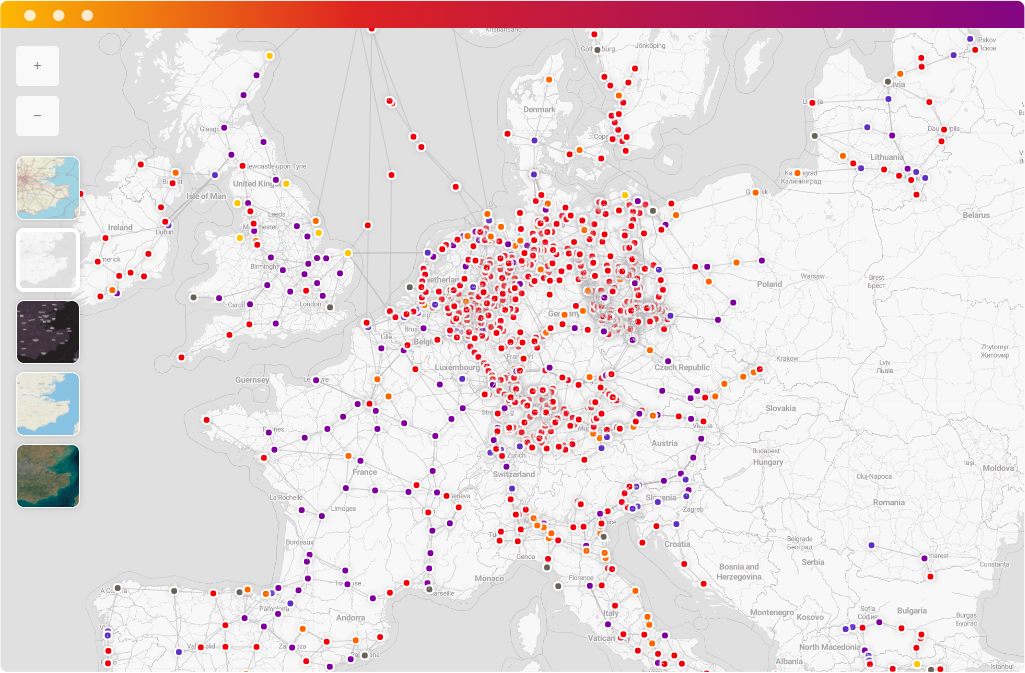
Memgraph Playground

:floppy_disk: Download & Install

Windows

Windows Windows

macOS

macOS macOS

Linux

Linux Debian Ubuntu Cent OS Fedora RedHat

Kubernetes

Helm

Deploy Memgraph on Kubernetes using the official Helm charts, including charts for standalone and high-availability deployments:

helm repo add memgraph https://memgraph.github.io/helm-charts
helm install my-memgraph memgraph/memgraph

You can find the binaries and Docker images on the Download Hub and the installation instructions in the official documentation.

:rocket: Daily Builds

Stay on the cutting edge with the latest features and improvements by using Memgraph Daily Builds. Daily builds are updated frequently and allow you to test new capabilities before they reach stable releases.

Daily Builds

:cloud: Memgraph Cloud

Check out Memgraph Cloud - a cloud service fully managed on AWS and available in 6 geographic regions around the world. Memgraph Cloud allows you to create projects with Enterprise instances of MemgraphDB from your browser.

Memgraph Cloud

:link: Connect to Memgraph

Connect to the database using Memgraph Lab, mgconsole, various drivers (Python, C/C++ and others) and WebSocket.

:microscope: Memgraph Lab

Visualize graphs and play with queries to understand your data. Memgraph Lab is a user interface that helps you explore and manipulate the data stored in Memgraph. Visualize graphs, execute ad hoc queries, and optimize their performance.

Memgraph Cloud

:file_folder: Import data

[Import data](https://memgraph.co

readme truncated — read the full docs on github

Frequently asked questions

Is Memgraph free to use?

Memgraph is open source. There is no licence fee and no seat count — you can self-host it or, where the project offers one, pay a vendor for a managed version instead.

What does Memgraph do?

High-performance graph computing for scalable data analysis

What is Memgraph written in?

Memgraph is primarily written in C++. Its source is publicly available at https://github.com/memgraph/memgraph, and it has 4,566 GitHub stars.