
Intuitive spreadsheet-like interface that lets users of all technical skill levels view, edit, query, and collaborate on Postgres data directly—self hosted, with native Postgres access control.



Website • Docs • Mathesar Cloud • Matrix (chat) • Discord • Contributor Wiki • Roadmap
Mathesar
Mathesar is a web application that makes working with PostgreSQL databases both simple and powerful. It empowers users of all technical skill levels to view, edit, query, and collaborate on data with a familiar spreadsheet-like interface, with no code needed. It’s self hosted, can be deployed in minutes, and works directly with PostgreSQL databases, schemas, and tables without extra abstractions. The project is 100% open source and maintained by Mathesar Foundation, a 501(c)(3) nonprofit.
Mathesar is as scalable as Postgres and supports any size or complexity of data, making it ideal for workflows involving production databases. It requires minimal setup, and integrates into your existing infrastructure. Because Mathesar is self-hosted, your data never leaves your servers, and access control based on Postgres roles and privileges keeps your database secure without adding unnecessary risk.
Table of Contents
- Status
- Install Mathesar
- Join our community
- Features
- Screenshots
- Connecting a database
- Adding collaborators
- Viewing a Postgres schema
- Working with tables
- Finding a nested record
- Linking two tables together
- Managing table permissions
- Viewing a single record with related records
- Building a form
- Filling out a form
- Viewing an Exploration (query result)
- Building an Exploration (query)
- Disconnecting a database
- Mathesar in action
- Our motivation
- Bugs and troubleshooting
- License
Status
- Public Alpha: You can install and deploy Mathesar on your server. Go easy on us!
- Public Beta: Stable and feature-rich enough to implement in production
- Public: Widely used in production environments
We are currently in the public beta stage.
Install Mathesar
Please see our documentation for instructions on installing Mathesar on your own server.
Want to use Mathesar without installing it? Mathesar Cloud is in now early beta and has a free plan.
Join our community
The Mathesar team is on Matrix (chat service). We also have mailing lists and the core team discusses day-to-day work on our developer mailing list.
Contribute to Mathesar
We actively encourage contribution! Get started by reading our Contributor Guide.
Features
- Built on Postgres: Connect to an existing Postgres database or set one up from scratch.
- Install in minutes: Install using Docker in minutes, integrate into any existing infrastructure.
- Postgres-based access control: Use existing Postgres roles within Mathesar's UI, or set up your own.
- Interoperable with other tools: Mathesar works harmoniously alongside your database and thousands of other tools in the Postgres ecosystem.
- Set up your data models: Easily create and update Postgres schemas and tables.
- Data entry: Use our spreadsheet-like interface to view, create, update, and delete table records.
- Filter, sort, and group: Quickly slice your data in different ways.
- Query builder: Use our Data Explorer to build queries without knowing anything about SQL or joins.
- Forms: Build and share forms to collect data from anyone via a unique link, with submissions automatically saved as new records.
- Import and export data: Import and export data into Mathesar easily to work with your data elsewhere.
- Schema migrations: Transfer columns between tables in two clicks.
- Uses Postgres features: Mathesar uses and manipulates Postgres schemas, primary keys, foreign keys, constraints and data types. e.g. "Relationships" in the UI are foreign keys in the database.
- Custom data types: Custom data types for emails and URLs, validated at the database level.
Screenshots
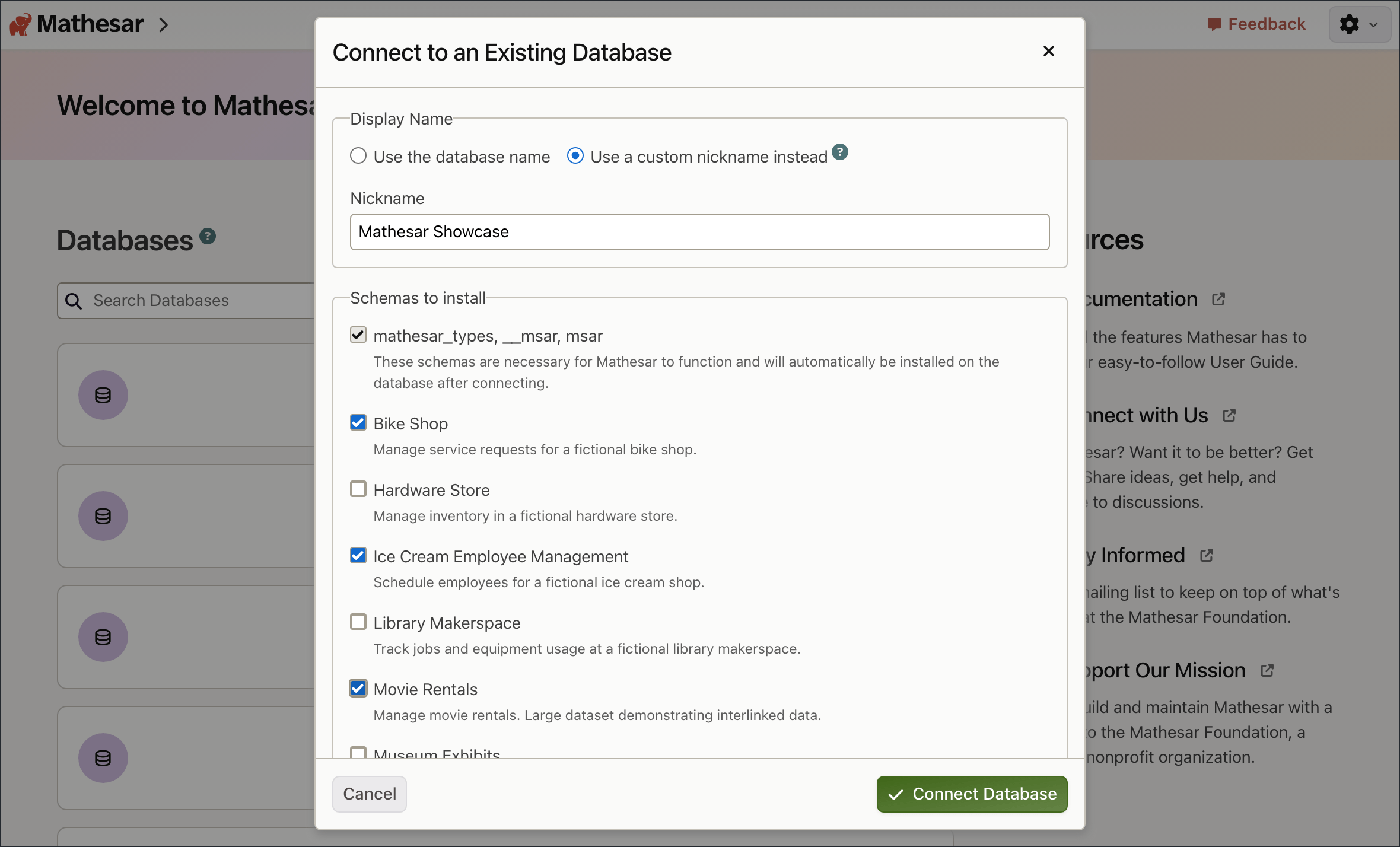
Connecting a database
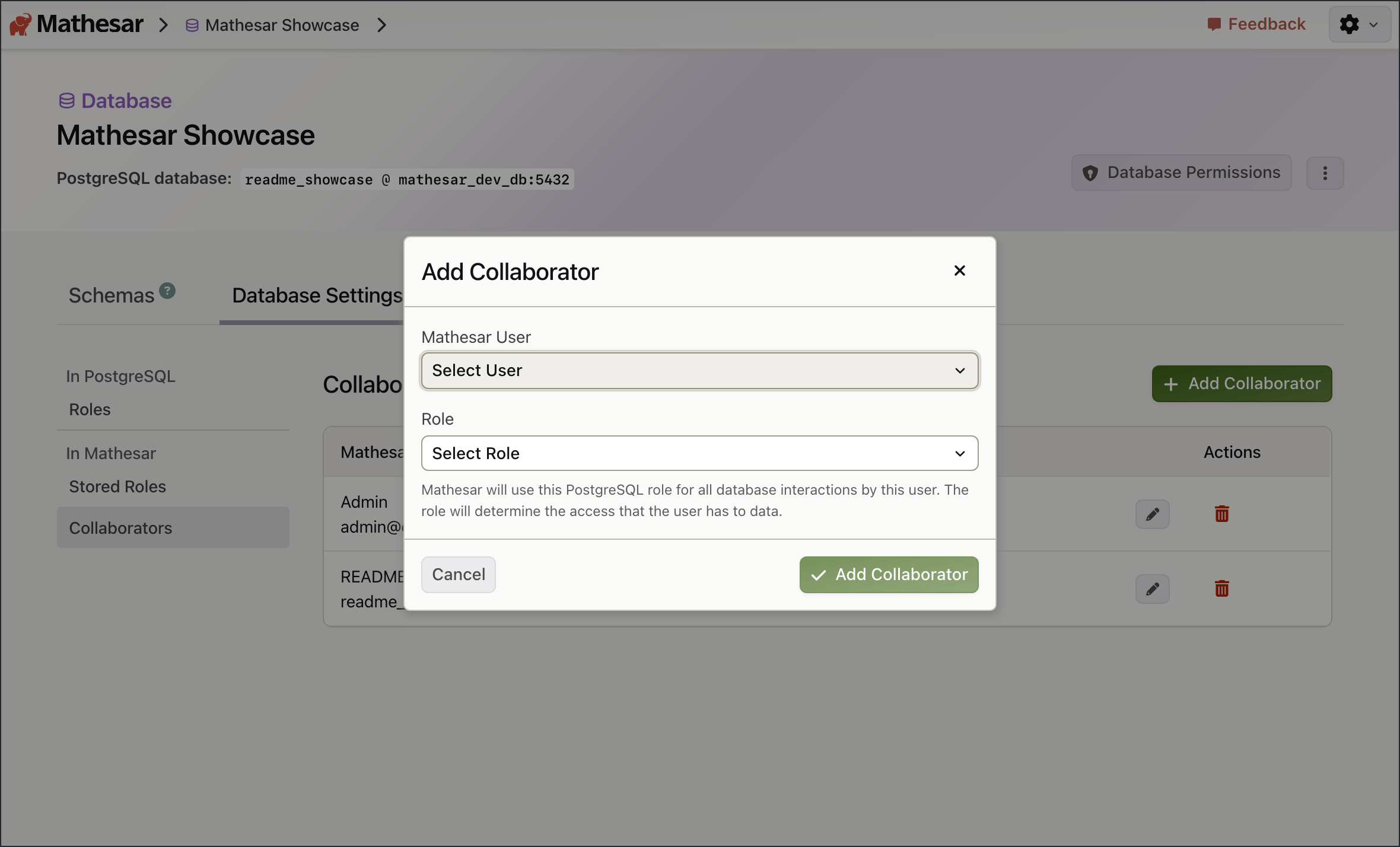
Adding collaborators
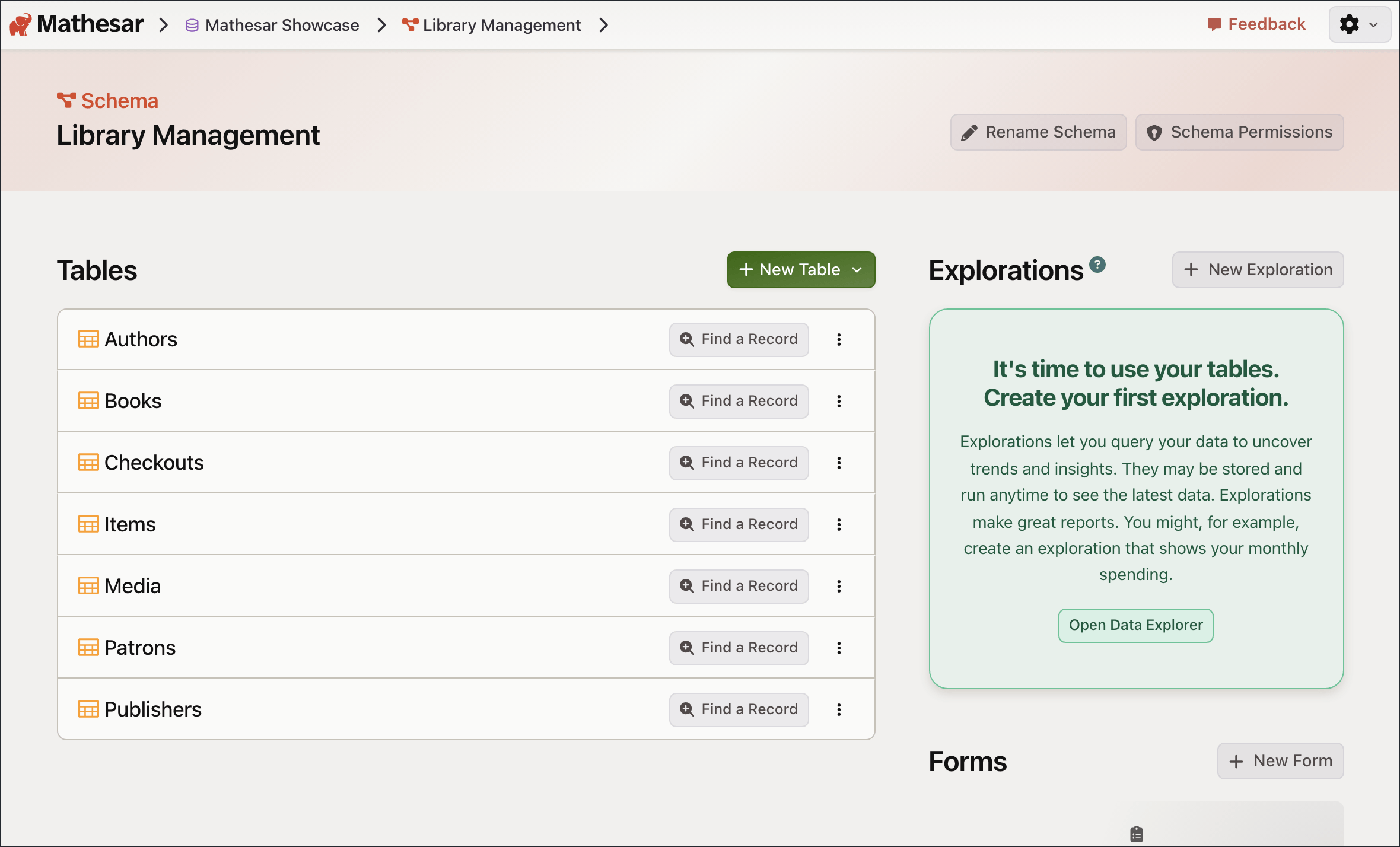
Viewing a Postgres schema
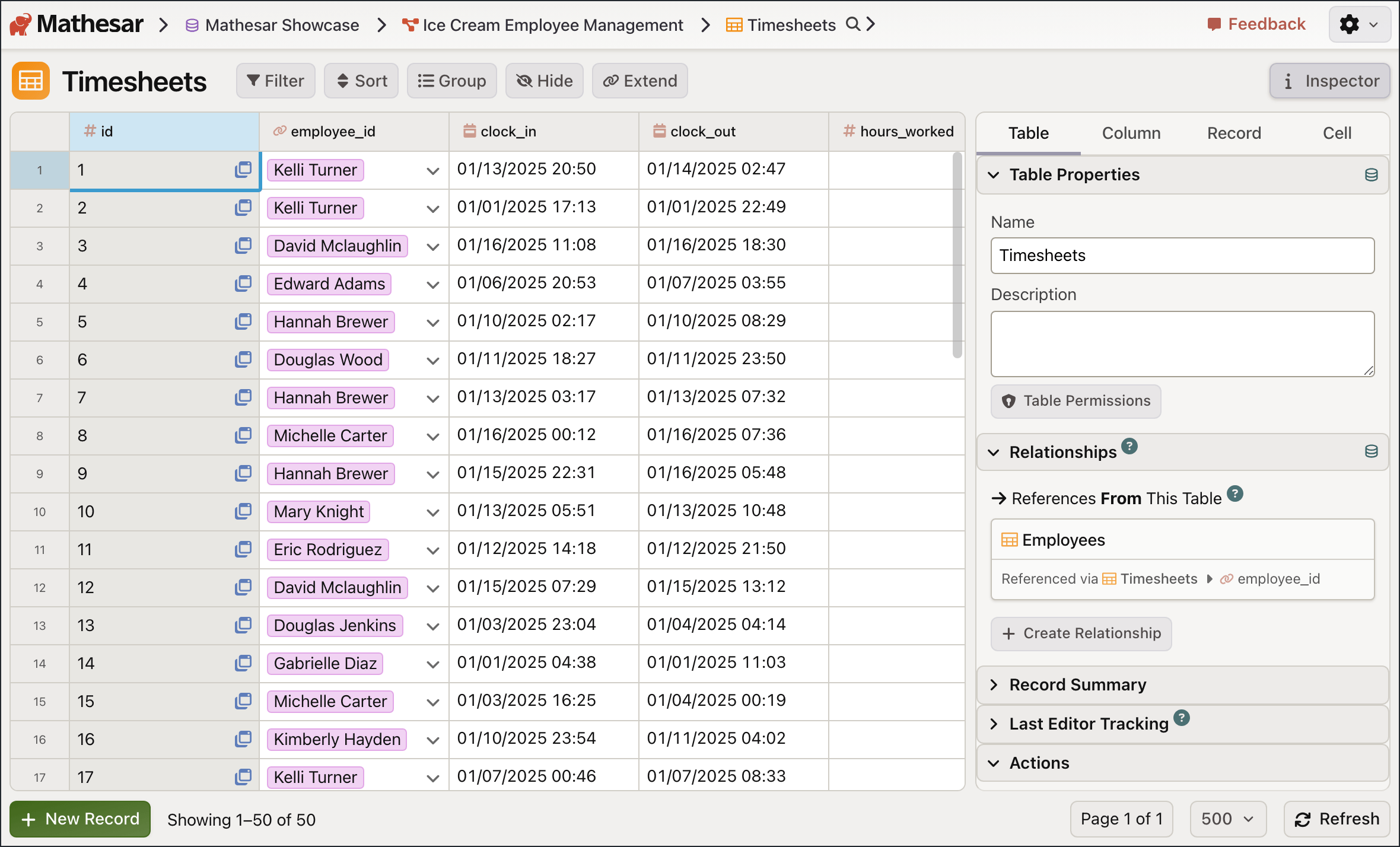
Working with tables
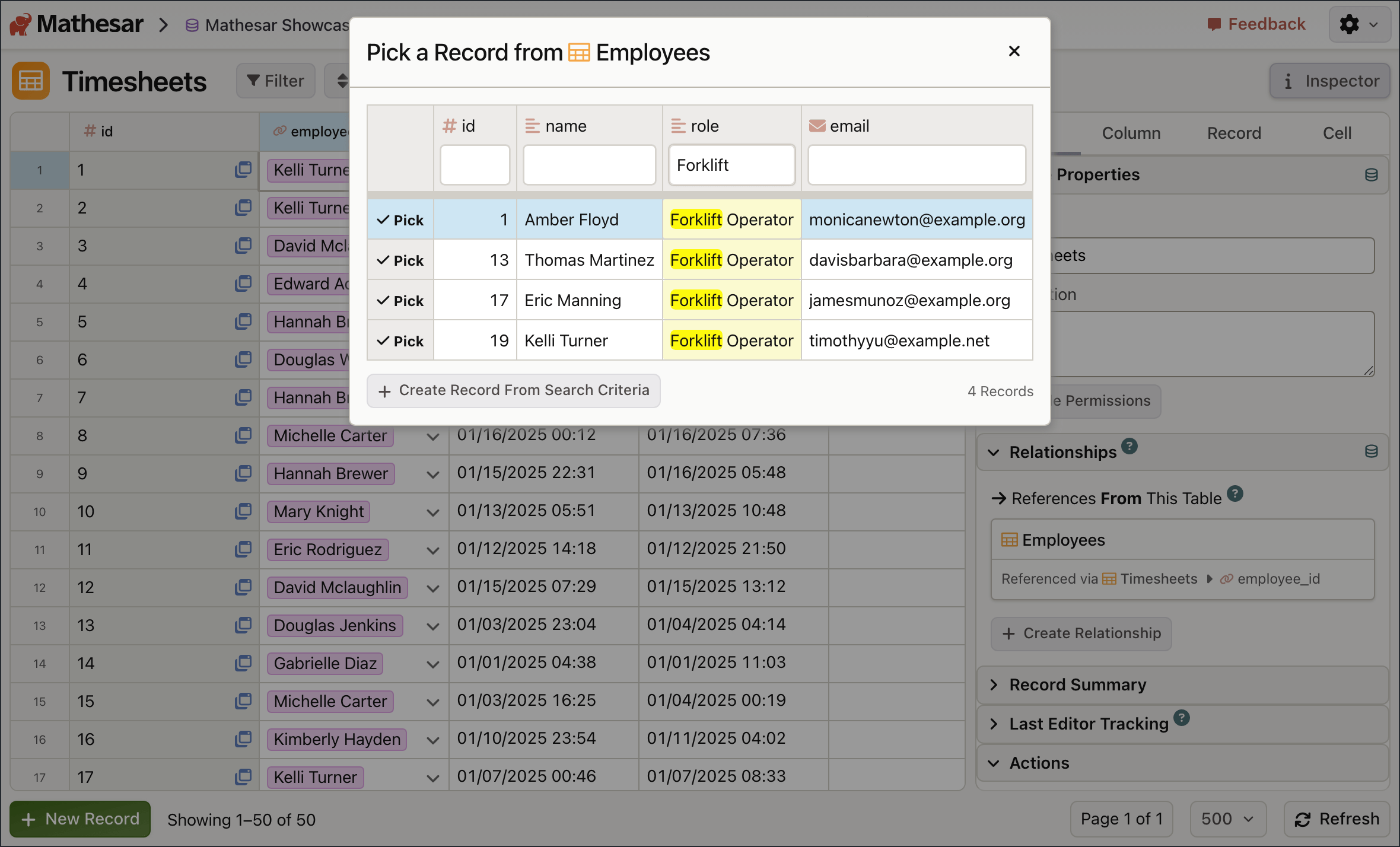
Finding a nested record
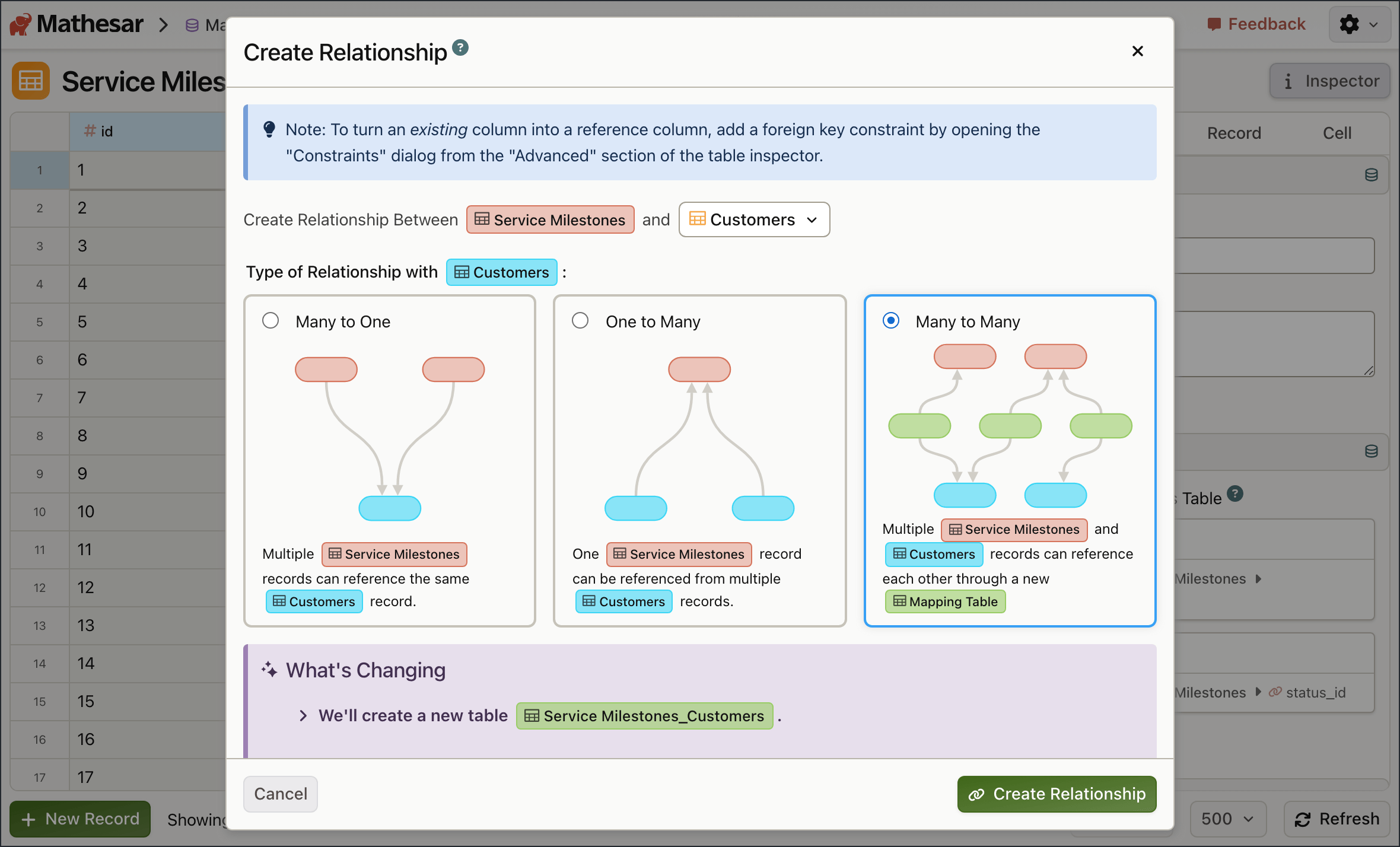
Linking two tables together
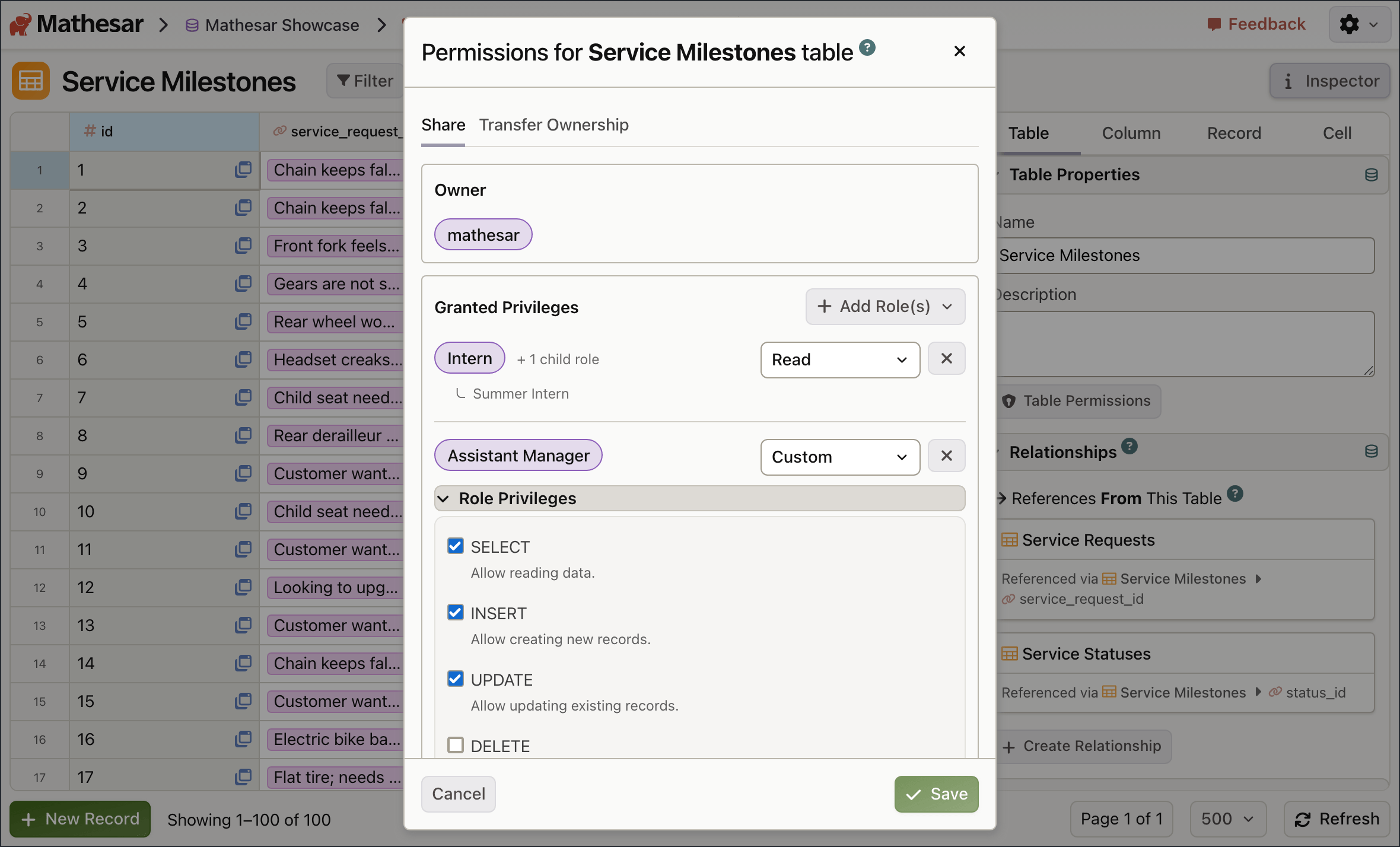
Managing table permissions
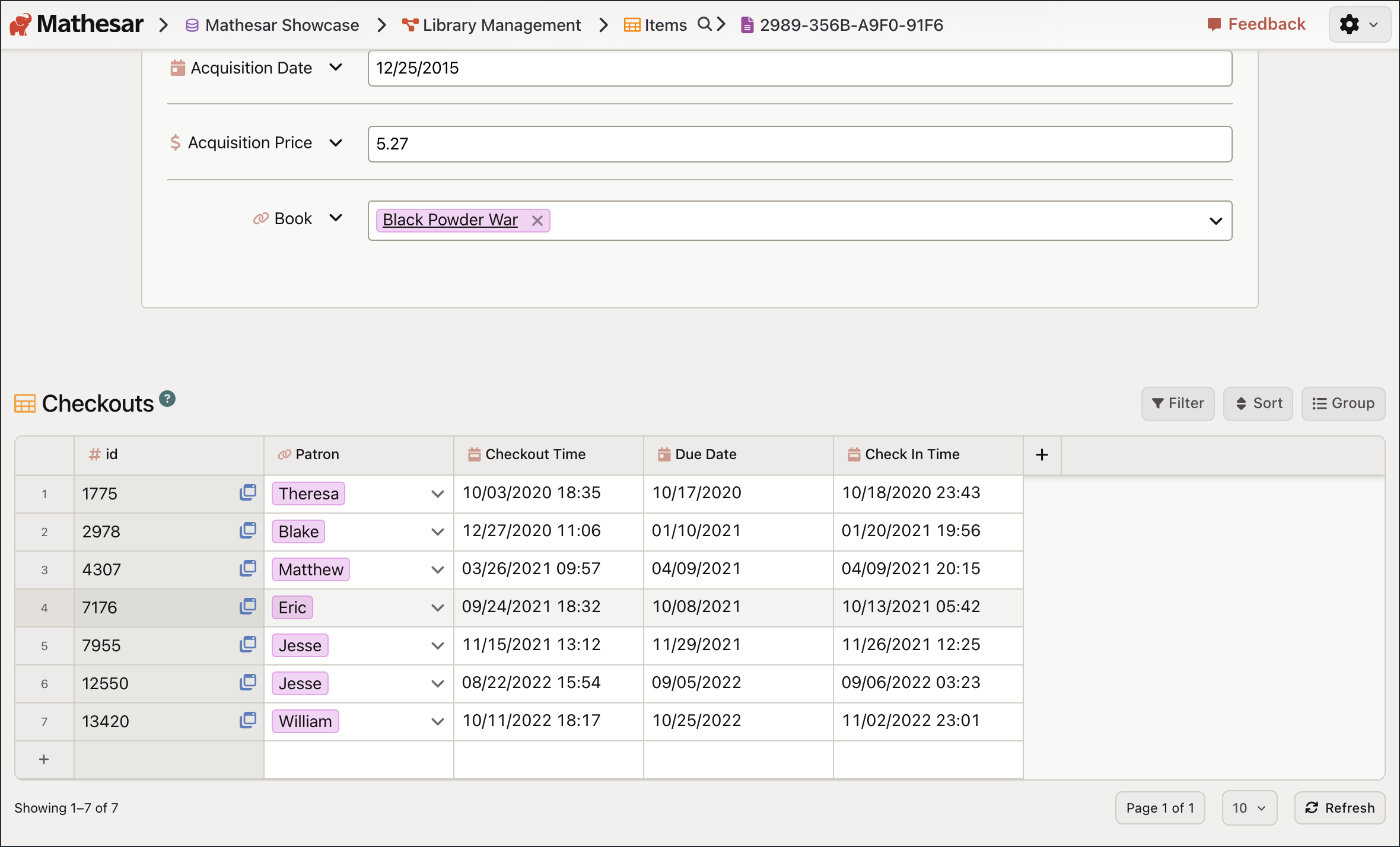
Viewing a single record with related records
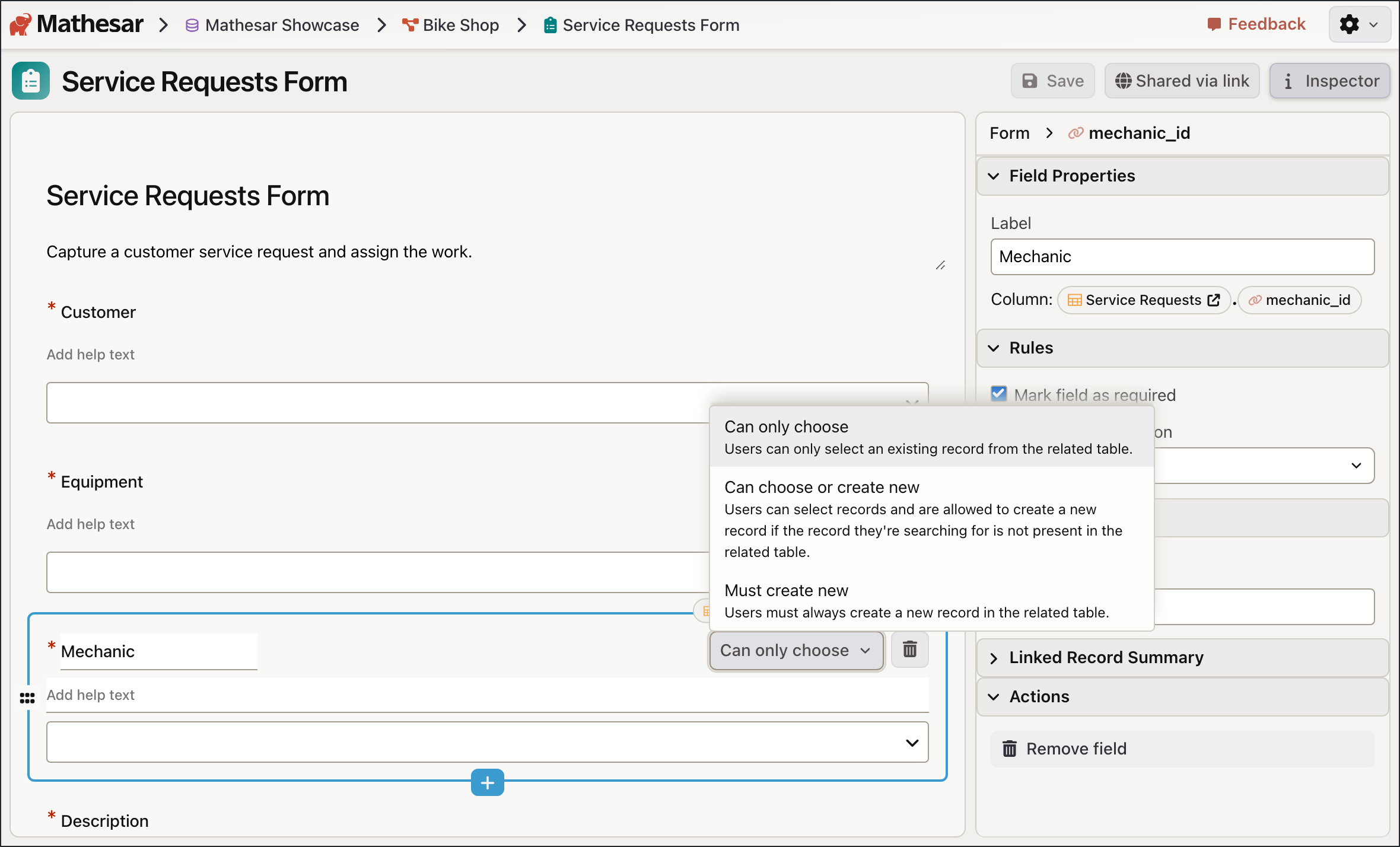
Building a form
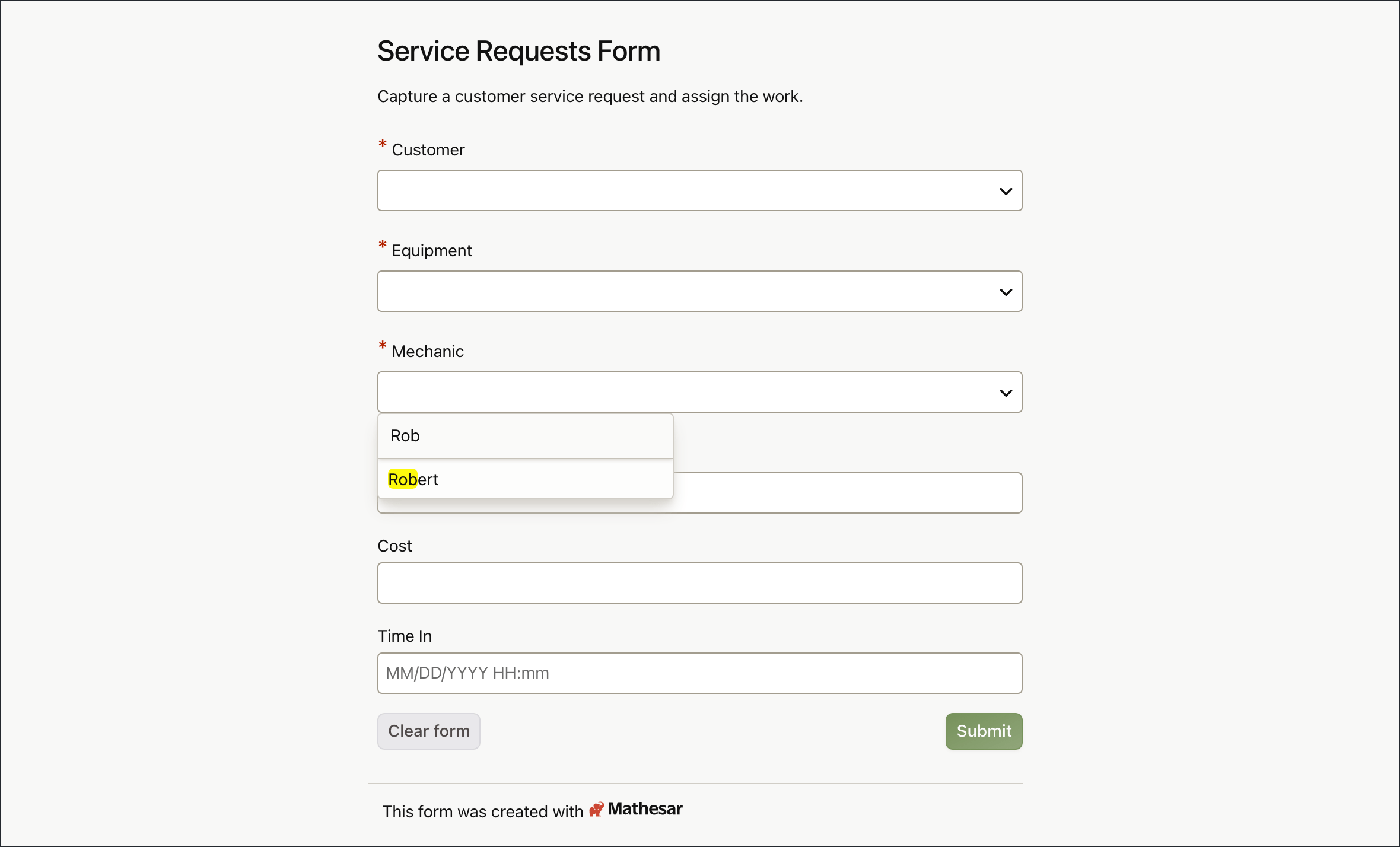
Filling out a form
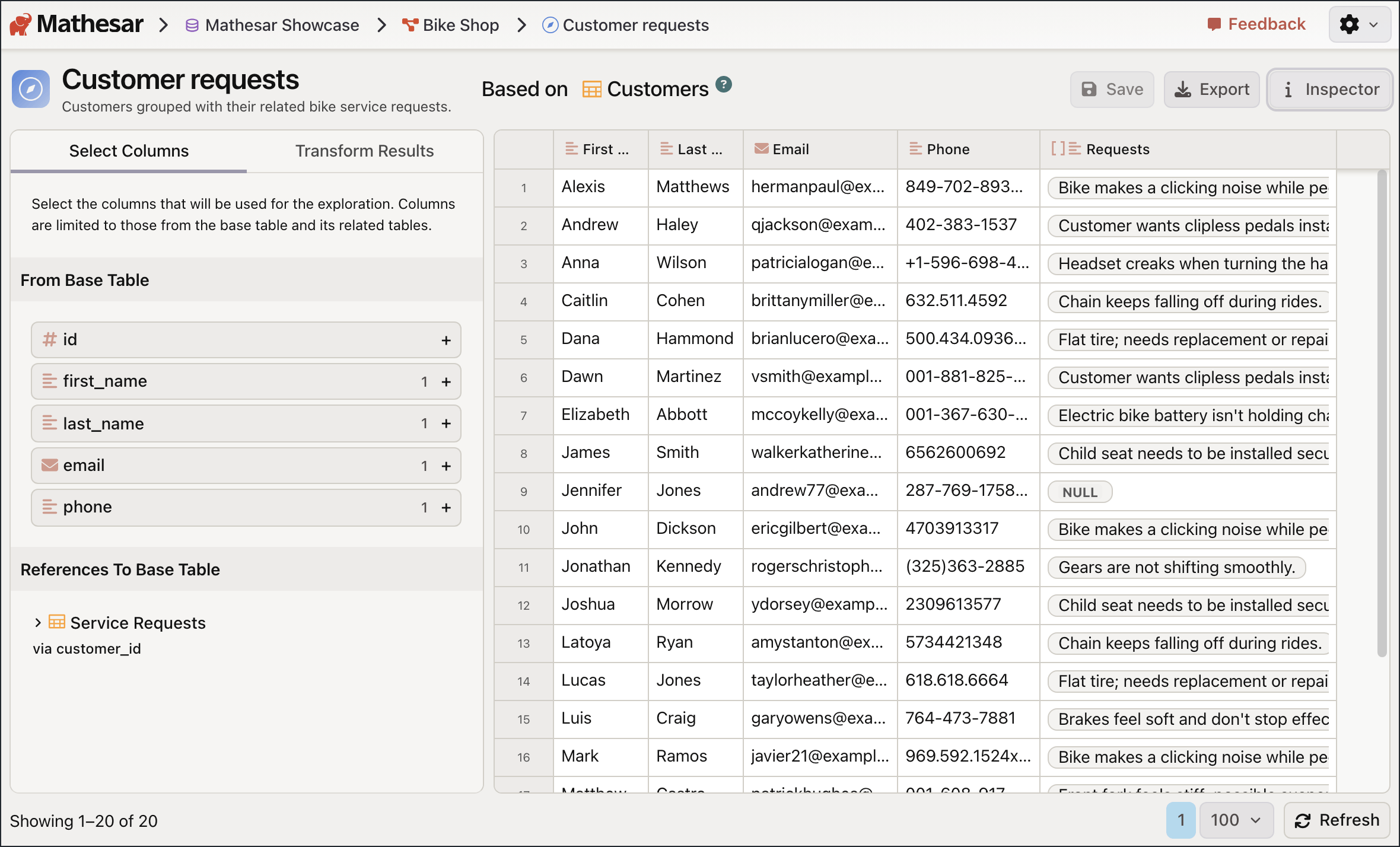
Viewing an Exploration (query result)
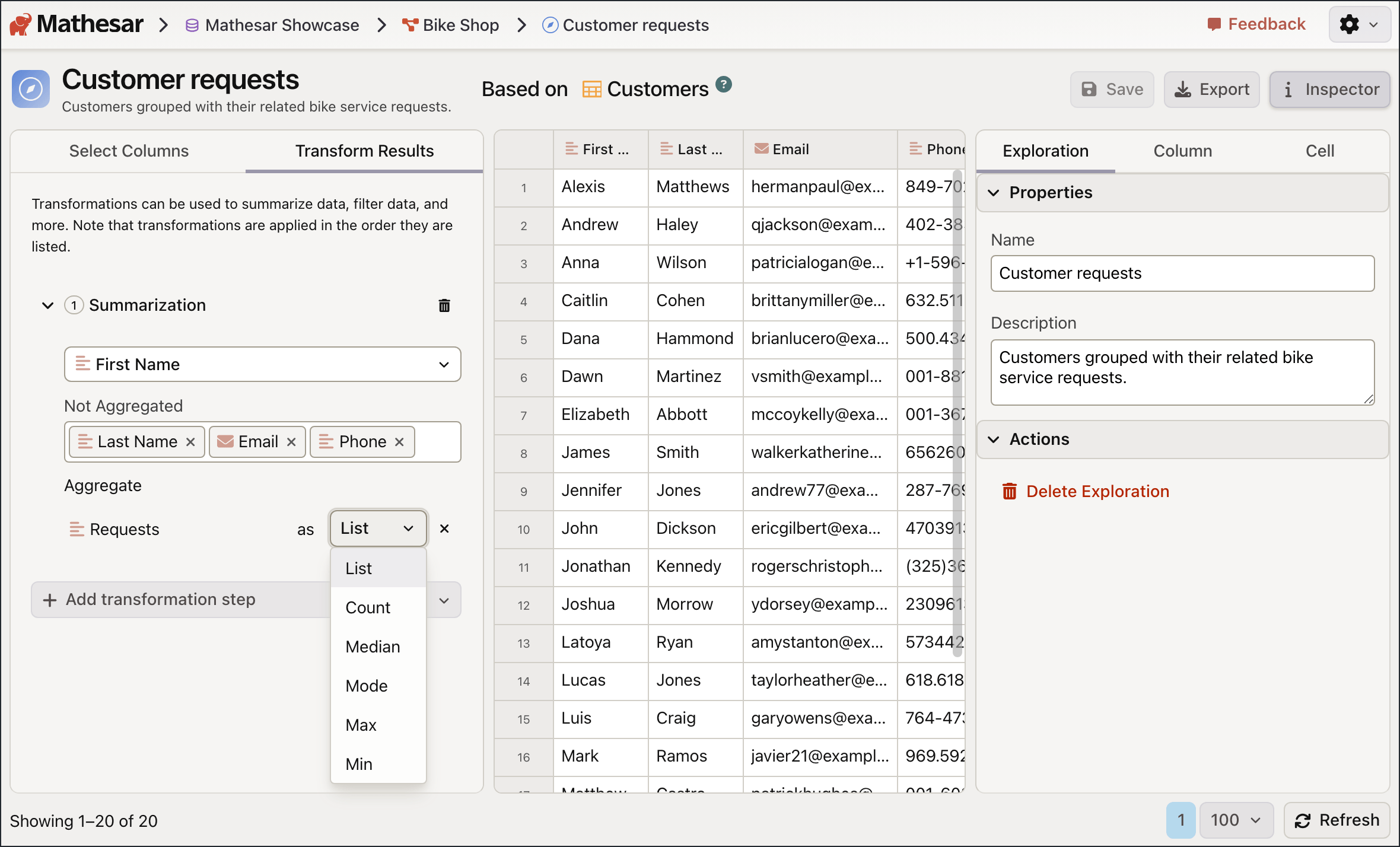
Building an Exploration (query)
Disconnecting a database
 readme truncated — read the full docs on github