Instatic
Own your site. Love building it.
A self-hosted CMS where the visual editor, content engine, and publisher all live in one Bun server — and the pages it ships are clean enough to read in view-source.



One-Click Deploy · Quick Start · Docs · Plugins · Roadmap
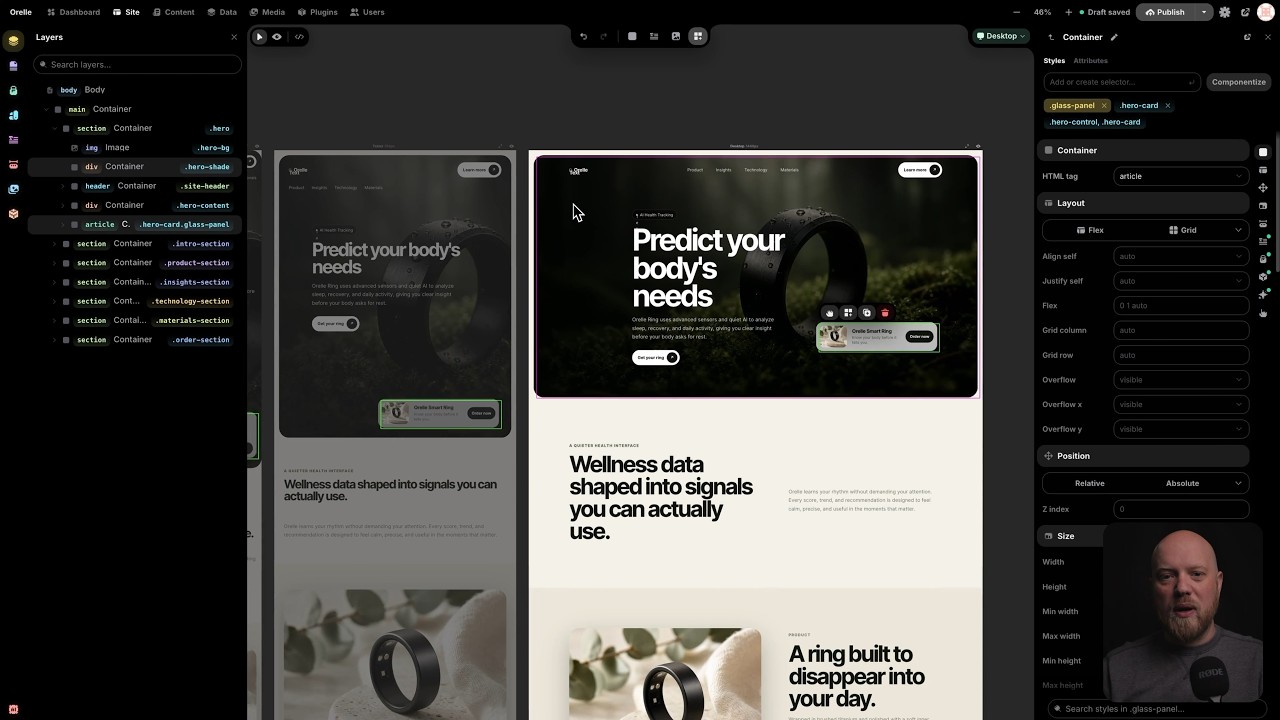
Watch the introductory video about Instatic on YouTube.
A modern website usually means assembling a stack: a headless CMS, a framework, a host, a form service, an analytics vendor, an image CDN — each with its own bill, dashboard, and 2 a.m. outage. Instatic is the opposite bet. One Bun server holds the whole thing — the canvas editor, the content engine, media, auth, forms, plugins, and the publisher — and you run it wherever you like, backed by SQLite or Postgres.
What comes out the other end is the part most builders quietly compromise on: plain semantic HTML and compact CSS, with none of the editor's machinery left behind in the page. No framework runtime, no builder attributes, no div soup. The site loads like a static file because, most of the time, it is one.
MIT. Self-hosted. Yours.
Deploy in one click
Railway is the fastest way to get Instatic live. Pick a template, hit the button, wait about two minutes. That's it. It generates the secret keys, attaches the storage volume, and sets up the health checks on its own. You never open a terminal.
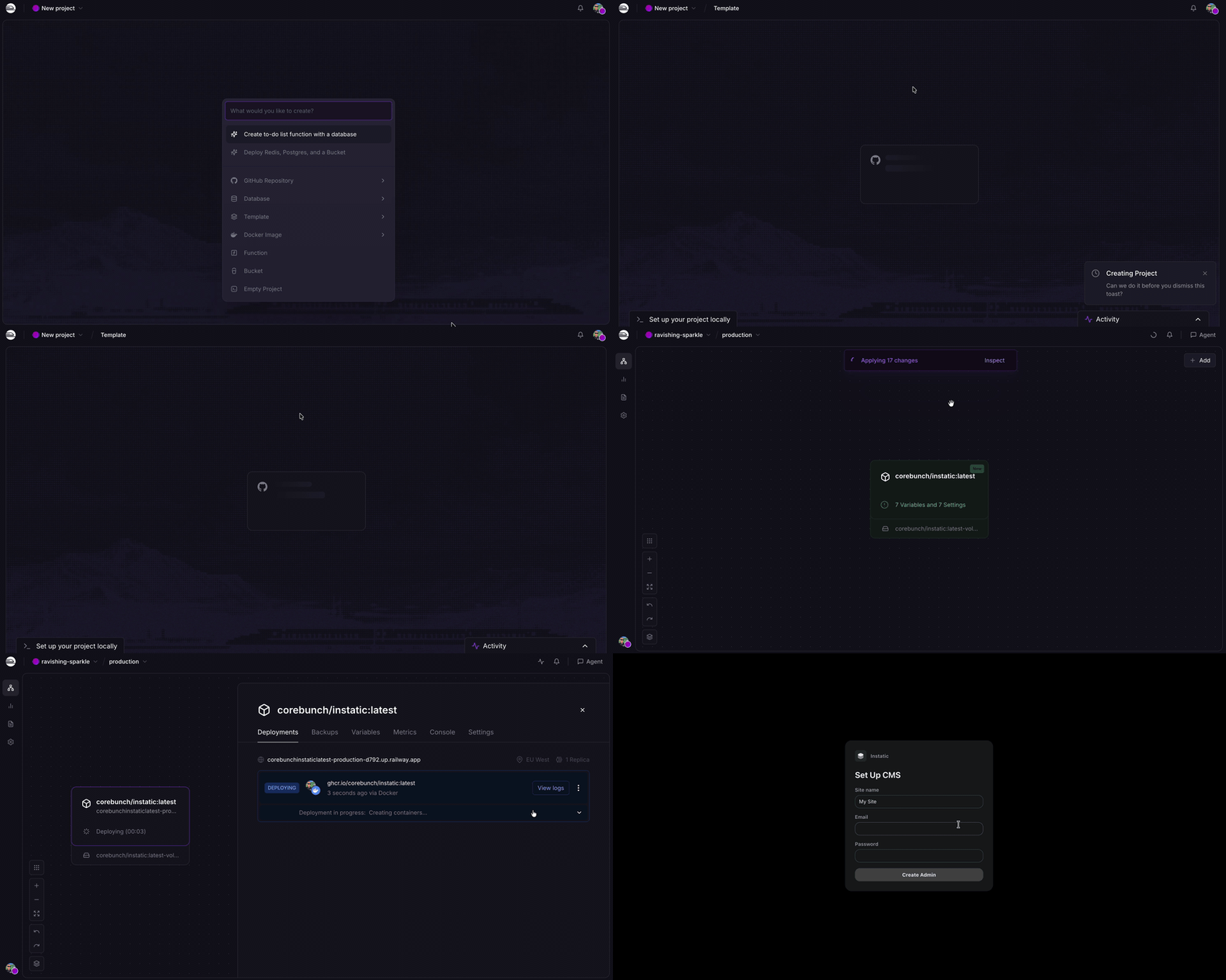
One minute to live. Unedited.
| Provider | Database | Best for | Deploy |
|---|---|---|---|
| Railway · Recommended | SQLite | A single site — blog, portfolio, small business | Deploy → |
| Railway | Postgres | Multiple authors, managed backups, room to grow | Deploy → |
| Render | SQLite or Postgres | Teams that prefer Render services, disks, and managed Postgres | Guide → |
| Docker / VPS | SQLite or Postgres | Bring-your-own server, Caddy TLS, custom backup policy | Guide → |
SQLite is the right default for most sites. Reach for Postgres when you've got a team of authors or want managed database backups.
Updating is just a redeploy
When a new Instatic version is available, update by redeploying the latest image. Your database and uploads stay on the attached storage, so the app container can be replaced without rebuilding the site from scratch.
Prefer your own hardware? Instatic is a single Docker image:
INSTATIC_IMAGE=ghcr.io/corebunch/instatic:latest docker compose -f compose.prod.yml -f compose.sqlite.yml up -d
Full guides for VPS, Postgres, HTTPS with Caddy, Render, and backups are in docs/deployment.
One tool, the whole life of a site
Most tools do one job and hand you off for the rest. You design in one place, build in another, keep content somewhere else, then bolt analytics on from a fourth. Instatic does all of it. Here's what's actually in the box.
🎨 Design
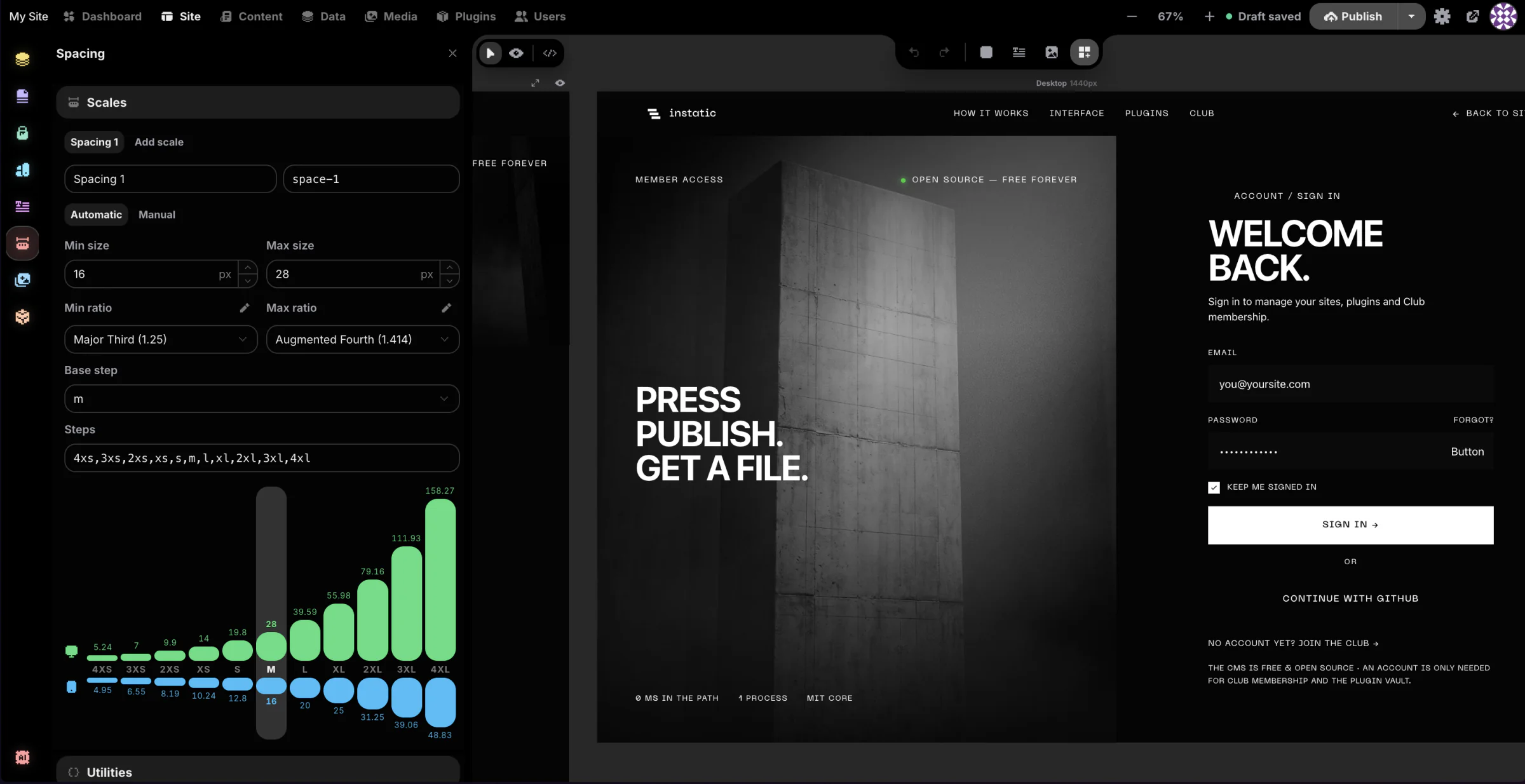
The editor is a real canvas, not a form with a preview pane stapled to it. You put several breakpoint frames side by side and edit them together. Change the desktop and the mobile frame reacts in the same view. When you'd rather work on the real thing, flip to live mode and edit a single full-size page in place.
The part nobody else has: Core Framework is built in. It's the design-token engine thousands of WordPress pros already use every day, and here it's a core system, not a plugin you install and pray over.
- Color tokens that generate their own shade scale. Define one brand color, get the full set of tuned tints and shades automatically.
- Type scales that are fluid and mathematical. One ramp that scales with the viewport, instead of forty hand-picked font sizes you have to keep in sync.
- Spacing scales so every page and every breakpoint keeps the same rhythm.
- A utility-class generator that emits locked, generated classes into one small
framework.css. No bloat, no duplicate rules, nothing you didn't ask for.
Your whole design system lives as data. Change one token and every page that uses it updates.
🧱 Build
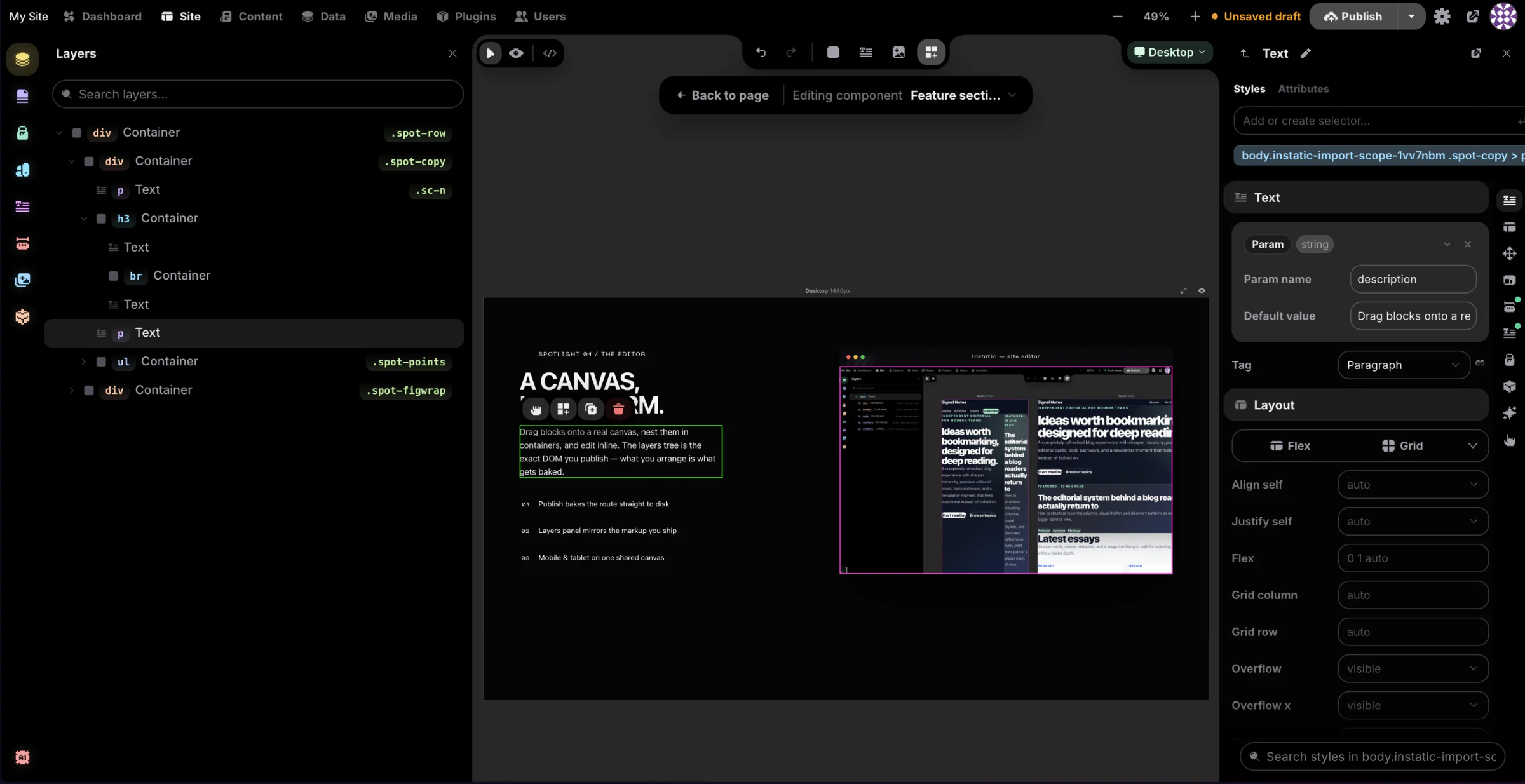
- Modules are the building blocks: containers, text, images, buttons, video, lists, links, SVG, forms. Drag them onto the canvas and nest them however you want.
- Visual Components are reusable pieces with typed parameters and named slots. A parameter can be a string, number, boolean, color, image, URL, rich text, an enum, or a whole slot of content. Edit the component once and every instance on the site updates. Components that would reference themselves are blocked before they happen, so nothing eats its own tail.
- Templates handle the shared chrome. One layout for the whole site, separate layouts per post type, and a real 404 page you design yourself. Content flows into an outlet, so a header and footer get written once and wrap everything.
- Loops repeat a layout over a collection: your posts, your pages, your media, or anything a plugin exposes as a source. Give a loop a couple of variants and it alternates between them as it goes. Good for post lists, product grids, galleries.
- Forms that belong to your CMS. Build a form out of semantic fields and the submissions land in your own data tables. Instatic can read the fields you placed and create the matching table for you. No third-party form service, no embed, no monthly fee for a contact form.
- An AI agent that actually edits the page. Describe what you want and it builds it on the canvas as real, editable nodes, not a screenshot or a wall of code. It writes semantic HTML for structure and CSS for style, through the same import pipeline you use when you paste markup. A 35-tool Site scope builds pages; a 15-tool Content scope edits entries. Bring your own model: Claude, OpenAI, OpenRouter, or local Ollama. Your key, your model, your bill.
- Imports that hold up. Paste raw HTML and get editable nodes. Or drop a whole static site — HTML, CSS, images, fonts — and Super Import turns it into pages, style rules, design tokens, and media. Every conflict is shown to you before anything is written, and the entire import is a single undo.
🗂 Manage
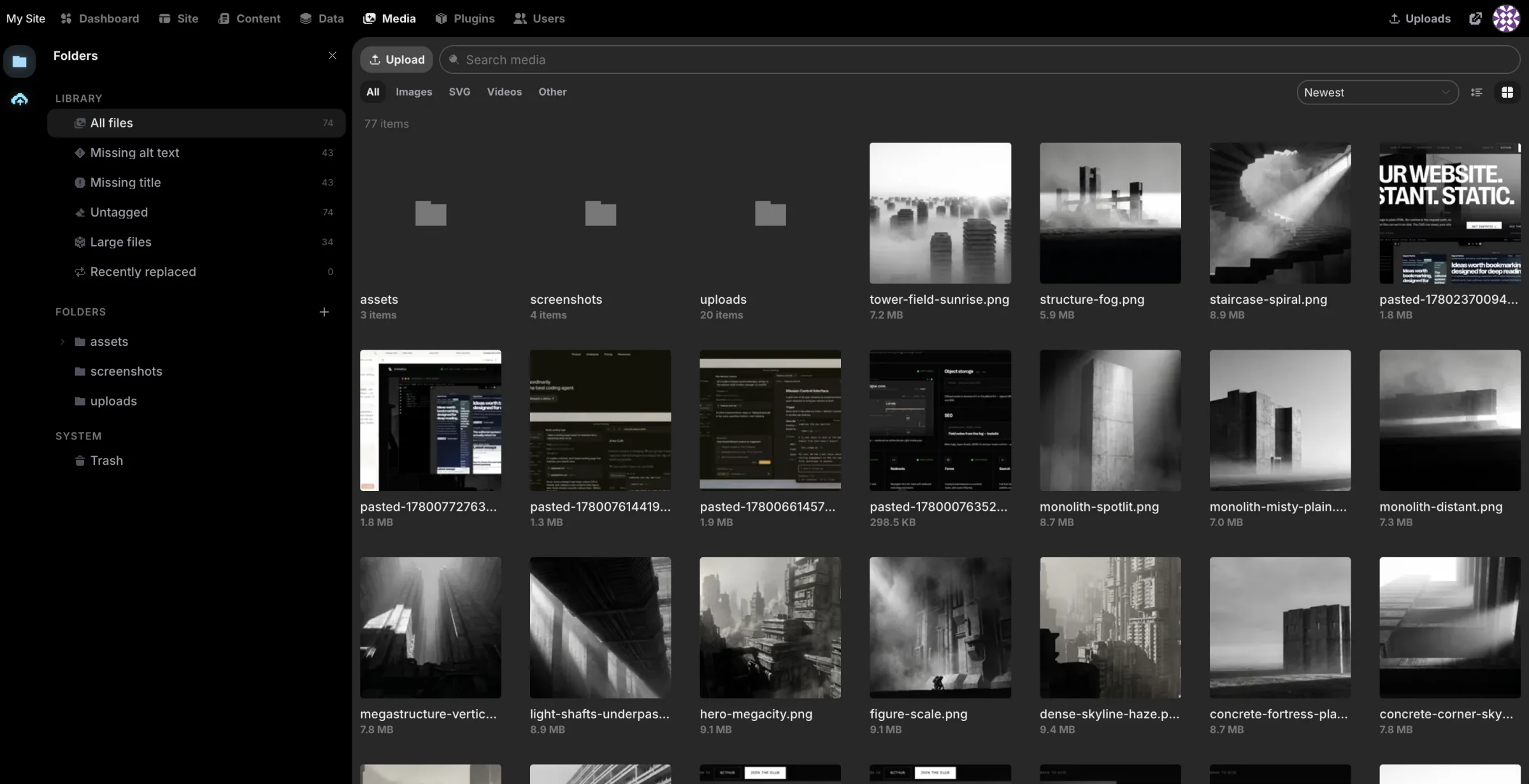
- One content model under everything. Pages, posts, components, custom collections, and any structured table you invent all live in the same store:
data_tablesanddata_rows. There's no special-cased "pages" table hiding in a corner. Schemas, raw rows, imports, exports, and form submissions all sit in one consistent place. - A Data workspace where you design your own collections. At
/admin/datayou create custom post types and custom data tables with their own fields, then work the rows in a s