



Fully-replicated DNS, DHCP and TFTP Server backed by etcd.
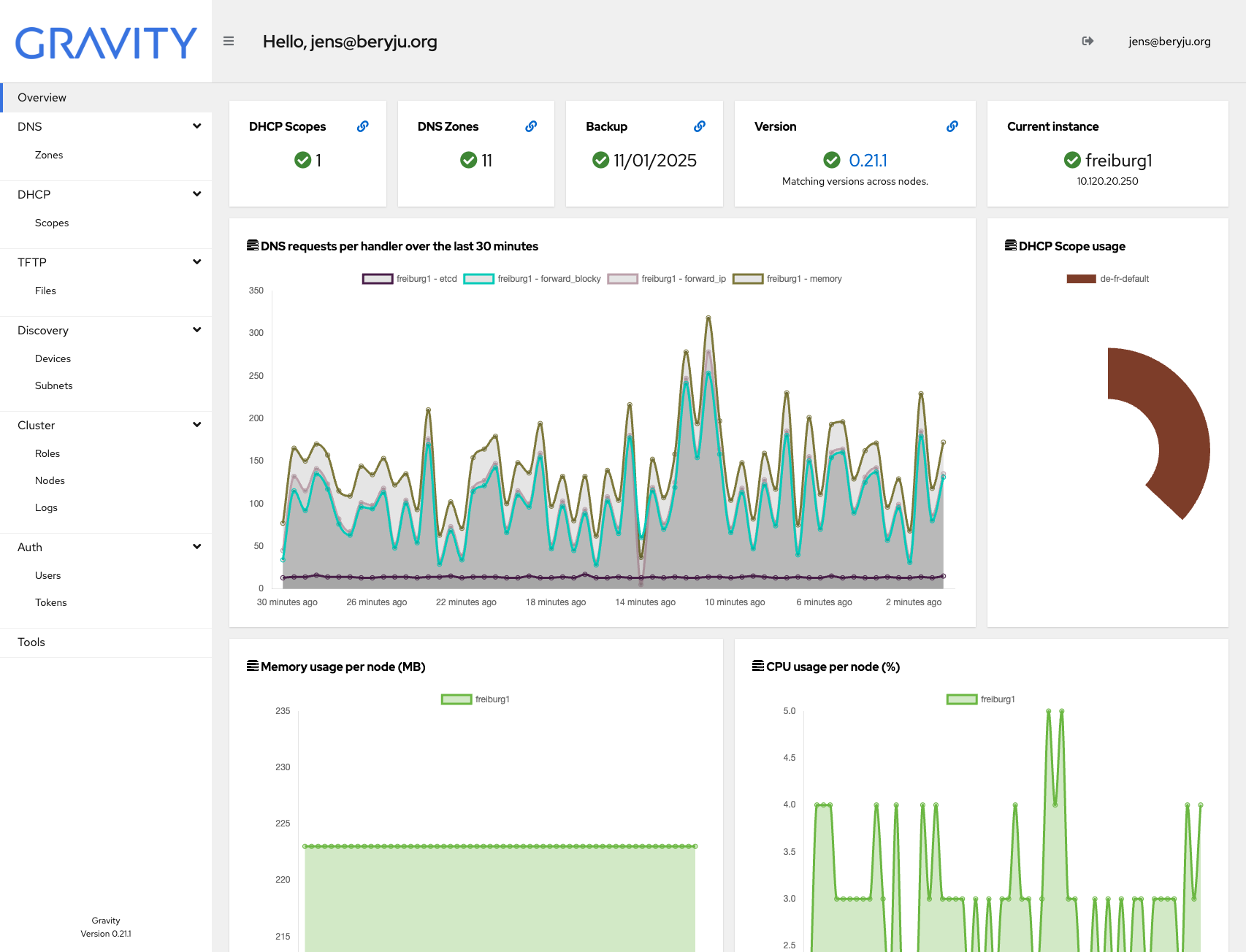
Screenshots
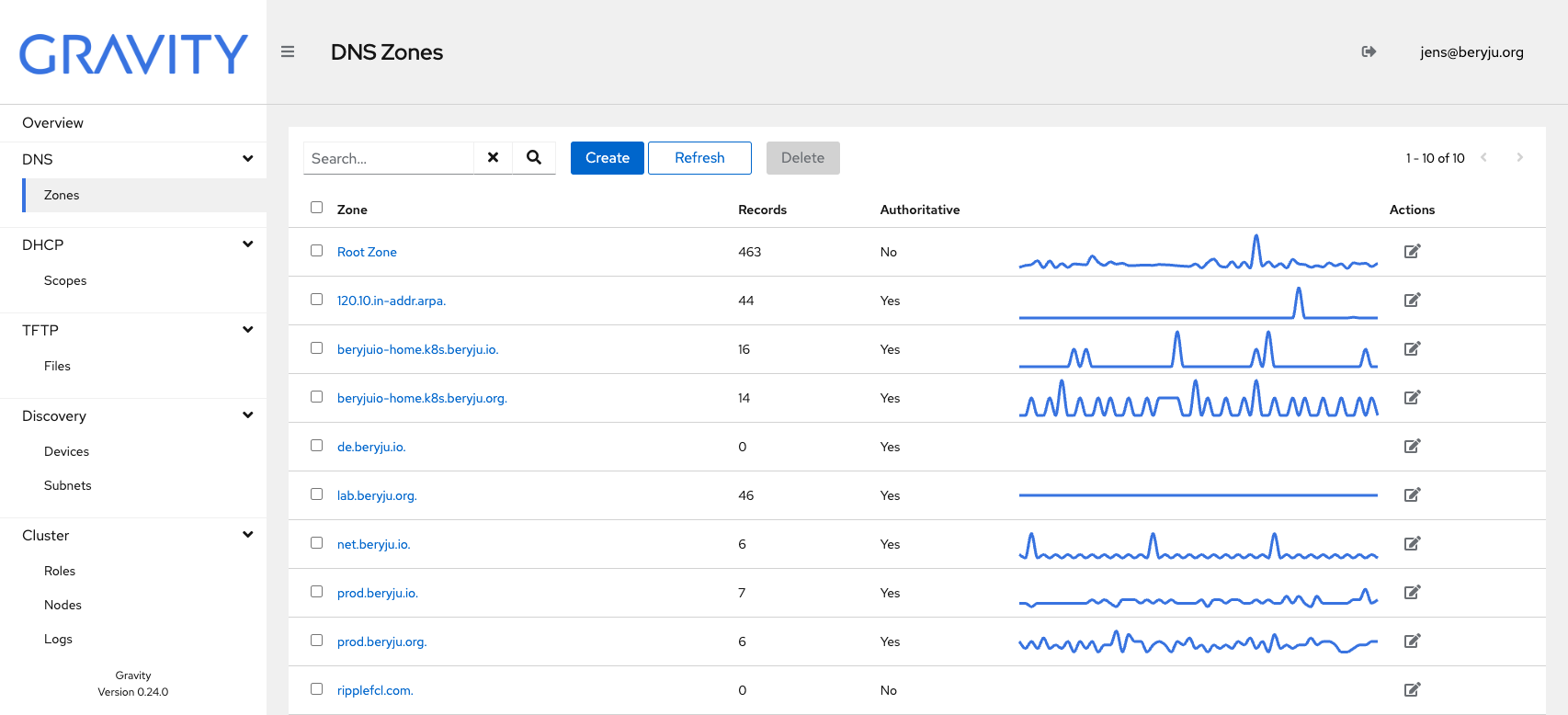
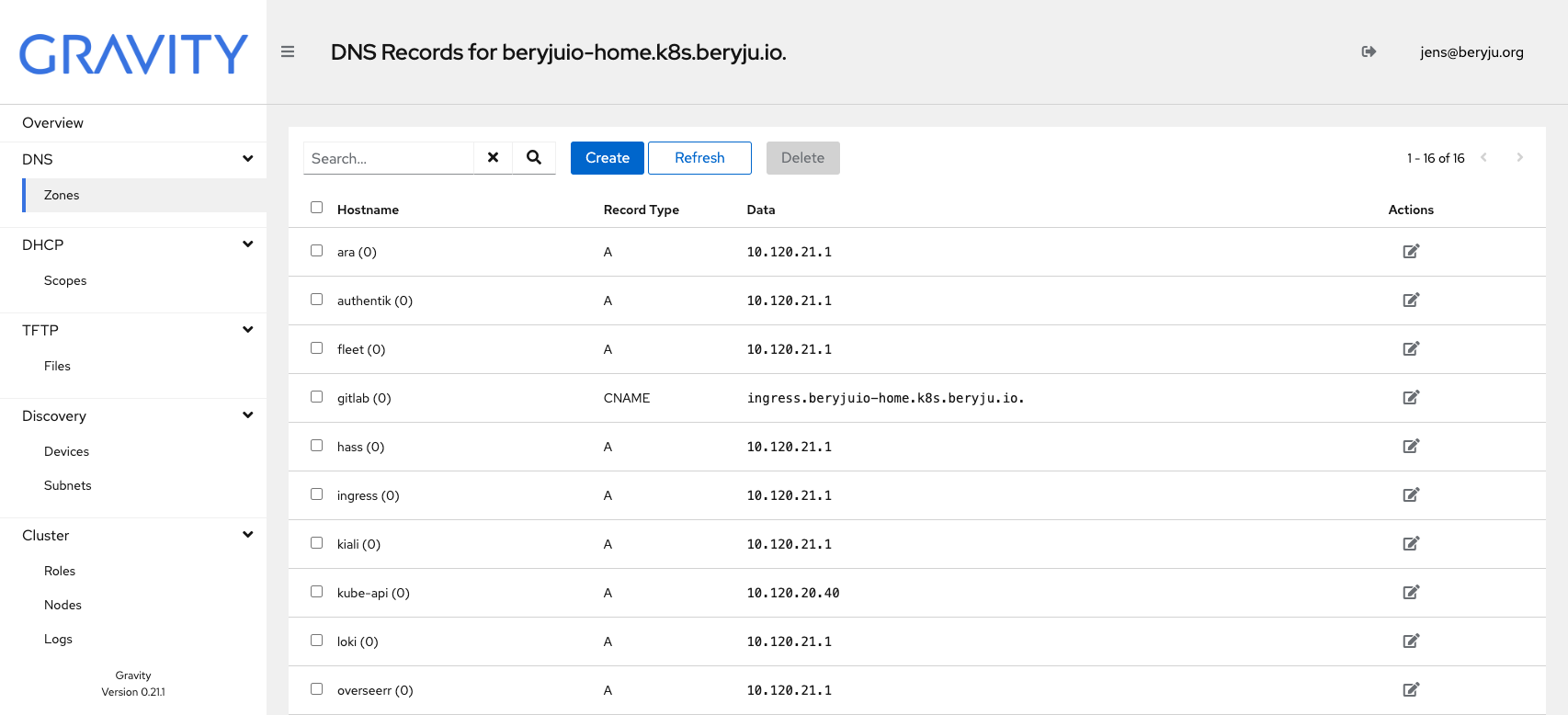
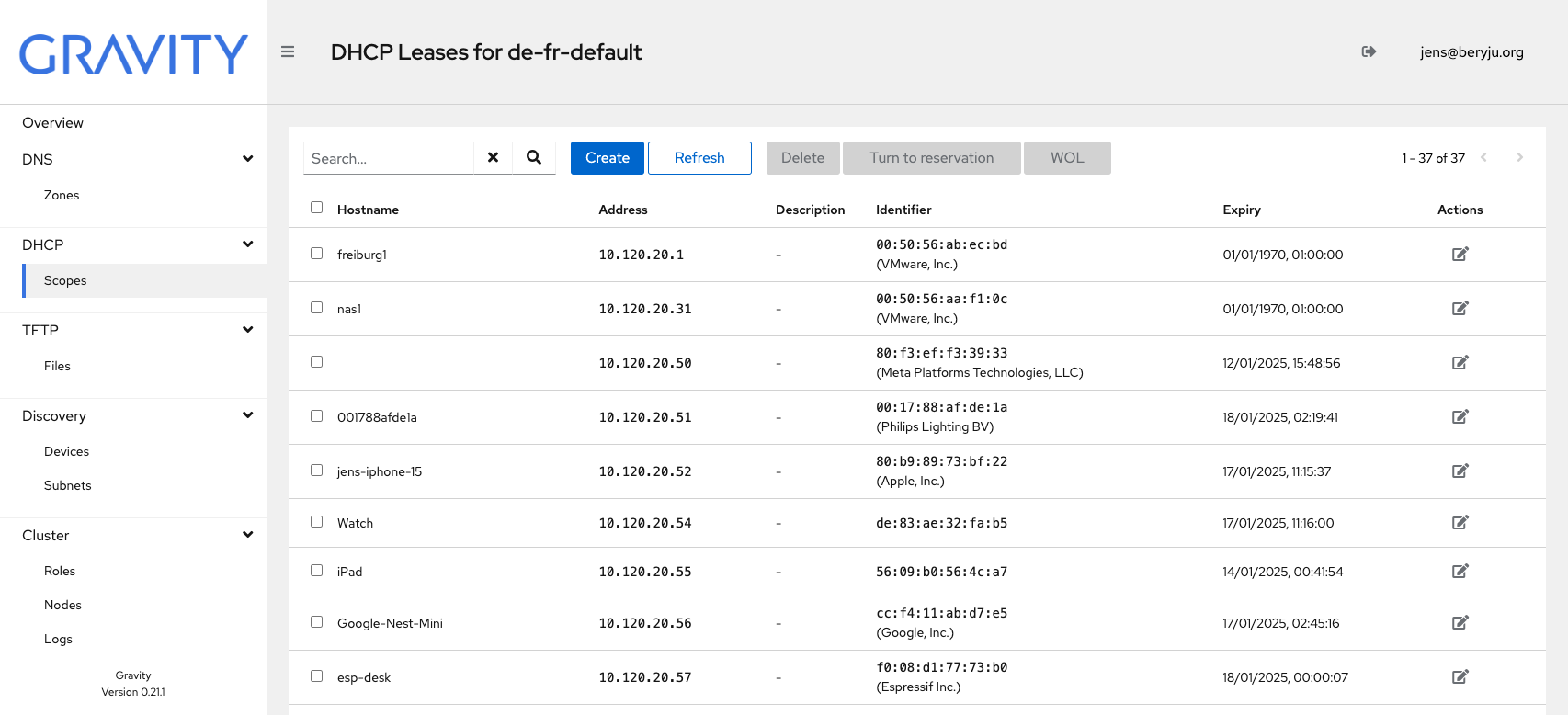
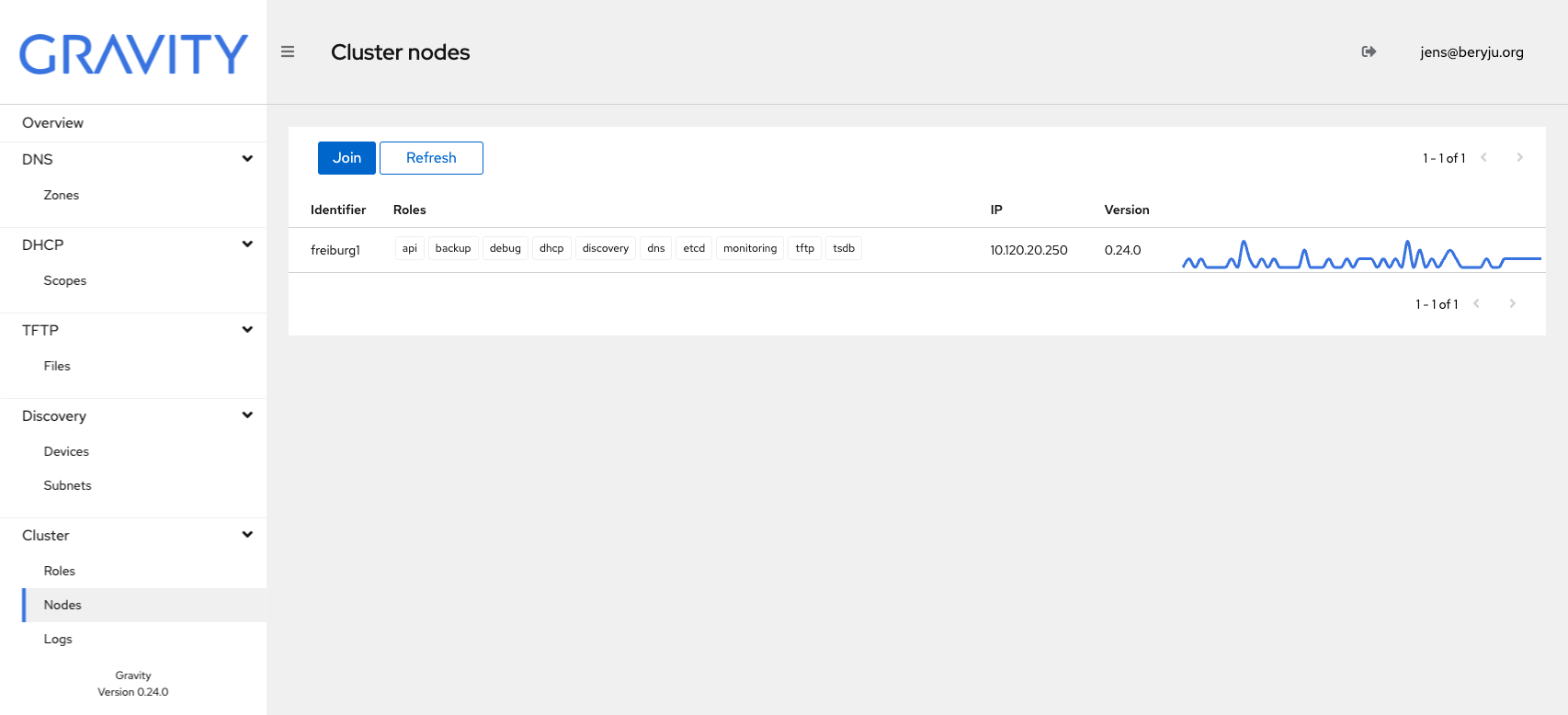
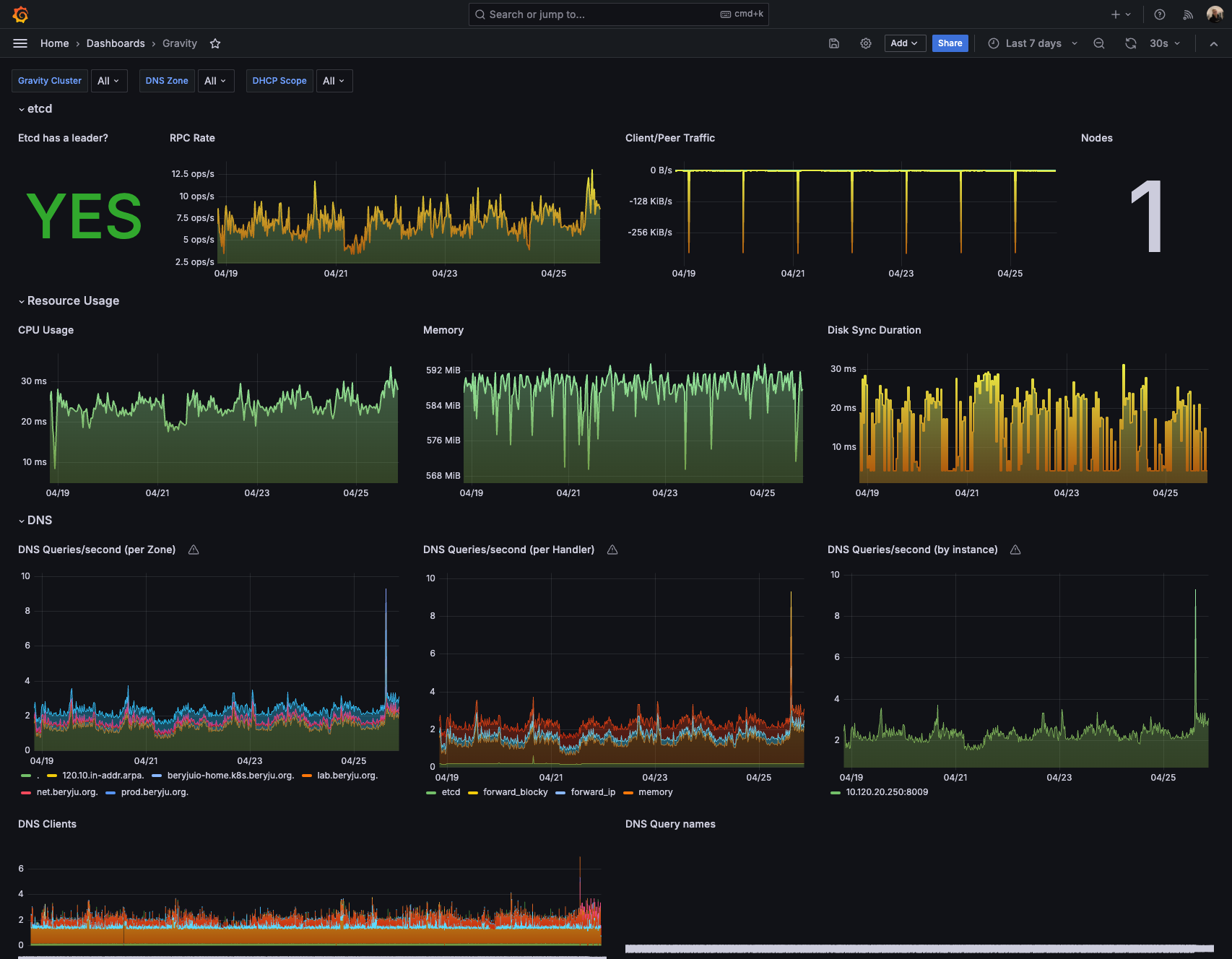
See gravity.beryju.io for more info.
gravity is a free, open source networking & connectivity project written in Go and released under GPL-3.0. It has 930 GitHub stars, 31 forks and 59 open issues, and was last pushed 12 hours ago. On this registry it ranks #45 of 47 tracked projects in Networking & Connectivity, with 5 head-to-head comparisons available.
Gravity is a fully-replicated DNS, DHCP and TFTP server with ad-blocking, written in Go and backed by etcd, for self-hosters and network operators who want name and address services that stay consistent across a cluster.
Gravity is an infrastructure server written in Go, licensed under GPL-3.0, that combines DNS, DHCP and TFTP in a single service whose state is stored in and replicated through etcd. The project ships a WebUI and an HTTP API for administration, and its topic list flags ad-blocking, DNS caching, Prometheus metrics and a WebUI among its concerns. Screenshots in the repository show interfaces for DNS zones, DNS records, DHCP leases and cluster nodes, and the README points to gravity.beryju.io for fuller documentation.
The concrete problem it addresses is running authoritative network services on more than one node without duplicated or drifting configuration. Because gravity keeps its data in etcd and describes itself as fully-replicated, zone records, DHCP leases and other state are shared across cluster members rather than maintained per host, which replaces the arrangement of running separate, independently configured DNS and DHCP daemons on each machine that needs to answer requests.
docs/static/images/dns_zones.png and docs/static/images/dns_records.png.docs/static/images/dhcp_leases.png.docs/static/images/cluster_nodes.png.dns-cache for caching behaviour.api alongside the WebUI so configuration can be driven programmatically.docs/static/images/grafana.png.The README does not list an install command itself; it directs readers to https://gravity.beryju.io for setup and further information, and the repository's release version is tracked in web/package.json.
The project's topic list tags blocky, placing it alongside blocky-style DNS ad-blocking resolvers, while gravity additionally carries DHCP and TFTP and replicates its state through etcd rather than keeping configuration local to one host. It is offered under GPL-3.0 with 929 stars and 31 forks at the time of writing.
You must be willing to operate an etcd cluster as gravity's backing store, and to run a GPL-3.0 codebase yourself; anyone unwilling to administer replicated infrastructure or wanting a single-host resolver should pick a simpler tool instead. The README excerpt itself is thin — a badge block, one line of description and screenshots with an external docs link — so expect to rely on gravity.beryju.io for operational detail, and note the 59 open issues as a sign of ongoing rough edges.
Fully-replicated DNS, DHCP and TFTP Server backed by etcd.
See gravity.beryju.io for more info.
gravity is open source under the GPL-3.0 licence. There is no licence fee and no seat count — you can self-host it or, where the project offers one, pay a vendor for a managed version instead.
Fully-replicated DNS and DHCP Server with ad-blocking powered by etcd
gravity is primarily written in Go. Its source is publicly available at https://github.com/BeryJu/gravity, and it has 930 GitHub stars.