⚒️ Forge: AI-Enhanced Terminal Development Environment
A comprehensive coding agent that integrates AI capabilities with your development environment
curl -fsSL https://forgecode.dev/cli | sh



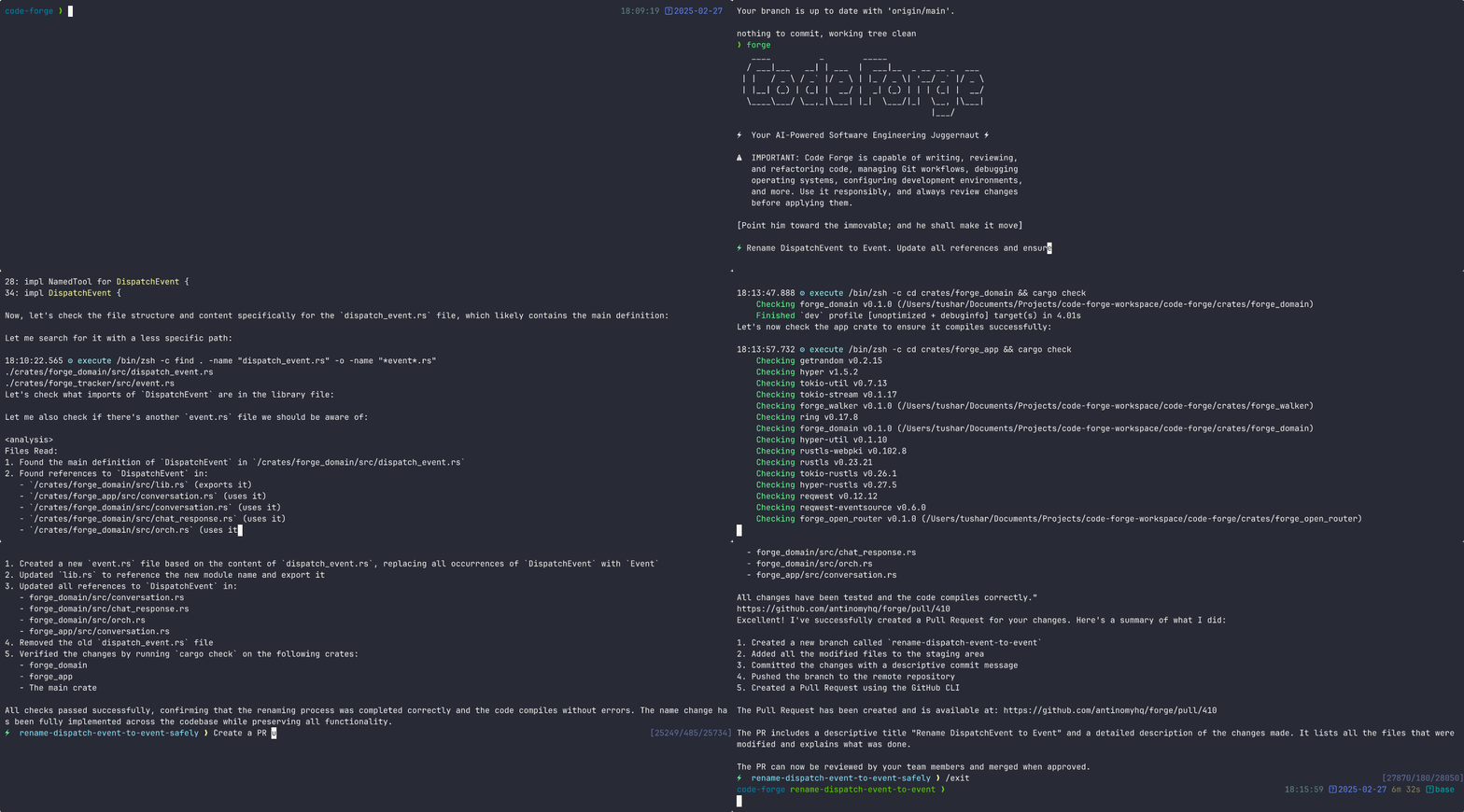
Table of Contents
Quickstart
To get started with Forge, run the command below:
curl -fsSL https://forgecode.dev/cli | sh
On first run, Forge will guide you through setting up your AI provider credentials using the interactive login flow. Alternatively, you can configure providers beforehand:
# Configure your provider credentials interactively
forge provider login

# Then start Forge
forge
That's it! Forge is now ready to assist you with your development tasks.
Usage Examples
Forge can be used in different ways depending on your needs. Here are some common usage patterns:
Code Understanding
> Can you explain how the authentication system works in this codebase?
Forge will analyze your project's structure, identify authentication-related files, and provide a detailed explanation of the authentication flow, including the relationships between different components.
Implementing New Features
> I need to add a dark mode toggle to our React application. How should I approach this?
Forge will suggest the best approach based on your current codebase, explain the steps needed, and even scaffold the necessary components and styles for you.
Debugging Assistance
> I'm getting this error: "TypeError: Cannot read property 'map' of undefined". What might be causing it?
Forge will analyze the error, suggest potential causes based on your code, and propose different solutions to fix the issue.
Code Reviews
> Please review the code in src/components/UserProfile.js and suggest improvements
Forge will analyze the code, identify potential issues, and suggest improvements for readability, performance, security, and maintainability.
Learning New Technologies
> I want to integrate GraphQL into this Express application. Can you explain how to get started?
Forge will provide a tailored tutorial on integrating GraphQL with Express, using your specific project structure as context.
Database Schema Design
> I need to design a database schema for a blog with users, posts, comments, and categories
Forge will suggest an appropriate schema design, including tables/collections, relationships, indexes, and constraints based on your project's existing database technology.
Refactoring Legacy Code
> Help me refactor this class-based component to use React Hooks
Forge can help modernize your codebase by walking you through refactoring steps and implementing them with your approval.
Git Operations
> I need to merge branch 'feature/user-profile' into main but there are conflicts
Forge can guide you through resolving git conflicts, explaining the differences and suggesting the best way to reconcile them.
Why Forge?
Forge is designed for developers who want to enhance their workflow with AI assistance while maintaining full control over their development environment.
- Zero configuration - Just add your API key and you're ready to go
- Seamless integration - Works right in your terminal, where you already work
- Multi-provider support - Use OpenAI, Anthropic, or other LLM providers
- Secure by design - Restricted shell mode limits file system access and prevents unintended changes
- Open-source - Transparent, extensible, and community-driven
Forge helps you code faster, solve complex problems, and learn new technologies without leaving your terminal.
How Forge Works: Three Modes
Forge has three distinct ways to use it. Understanding this distinction upfront will save you confusion.
Interactive Mode (TUI)
Running forge with no arguments starts the interactive terminal UI, a persistent session where you type prompts and the AI responds in a conversational loop. This is the primary way to do multi-step work.
forge                              # Start a new interactive session
forge conversation resume <id>     # Resume a specific saved conversation in interactive mode
forge --conversation-id <id>       # Same: resume conversation by ID
forge --agent <agent-id>           # Start interactive session with a specific agent
forge -C /path/to/project          # Start in a specific directory
forge --sandbox experiment-name    # Create an isolated git worktree + branch, then start there
Once inside interactive mode, type your prompt and press Enter. Forge reads files, writes patches, runs commands, and maintains context across the whole session.
One-Shot CLI Mode
Pass -p (or --prompt) to run a single prompt and exit. Forge does the work and returns to your shell. Useful for scripts, piping output, or quick tasks.
forge -p "Explain the purpose of src/main.rs"
forge -p "Add error handling to the parse() function in lib.rs"
echo "What does this do?" | forge    # Pipe input as the prompt
forge commit                         # Generate an AI commit message and commit (exits when done)
forge commit --preview               # Generate commit message, print it, then exit
forge suggest "find large log files" # Translate natural language to a shell command, then exit
Note:
forge conversation resumeopens the interactive TUI. It does not just print a message and exit. If you run it and see the cursor waiting, you are inside the interactive session. Type your prompt or pressCtrl+Cto exit.
ZSH Plugin Mode (: prefix)
Install the ZSH plugin once with forge setup, then use : commands directly at your shell prompt without ever typing forge. This is the fastest mode for day-to-day development: send prompts, switch conversations, commit, and suggest commands without leaving your shell.
: refactor the auth module      # Send a prompt to the active agent
:commit                         # AI-powered git commit
:suggest "find large log files" # Translate description → shell command in your buffer
:conversation                   # Browse saved co