ByteChef is an open-source, Java-based platform in the Productivity & Utilities / Automation category that unifies AI agent orchestration and workflow automation for developers, low-code builders, and enterprises that need both capabilities in one system.
What it is
ByteChef is the open-source platform described in its README as unifying AI agent orchestration and workflow automation, with the tagline “Autonomy and precision — in one platform.” It lives in the Java ecosystem and carries topics for ai, ai-agents, api, automation, embedded-ipaas, integrations, ipaas, llm, low-code, and mcp, which point to embedded iPaaS, API integration, and low-code automation.
The concrete problem it solves is the split between separate tools for AI agents and automated workflows. ByteChef replaces that split with one platform that provides one orchestration layer, centralized management, and enterprise-grade security, and it can run in regulated environments or be embedded into products that deliver AI capabilities to end users. A drag-and-drop AI Agent component runs the full agent loop — model → tool selection → execution → observation → next step — with streaming and structured output, so agent autonomy and workflow precision are handled in the same system.
Key capabilities
- AI Agent component: runs the full agent loop — model → tool selection → execution → observation → next step — with streaming and structured output.
- 14 LLM providers: OpenAI, Anthropic, Azure OpenAI, Bedrock, Vertex Gemini, Mistral, Groq, DeepSeek, Hugging Face, Nvidia, Perplexity, Stability, Ollama, and OpenRouter.
- Tools: Every component is a tool; properties can be marked with
fromAi("…", "STRING", { required: true }) and filled by the agent at runtime, and sub-workflows are tools too.
- Memory and guardrails: 8 memory backends — JDBC, Redis, MongoDB, Cassandra, Cosmos DB, Neo4j, vector-store-backed, and in-memory — plus 12 guardrails including PII, LLM-PII, jailbreak, NSFW, topical alignment, keywords, secret keys, URLs, sanitize, custom regex, custom rules, and violation aggregator.
- Knowledge bases and RAG: native ingestion and chunking; 15+ vector stores including pgvector, Pinecone, Qdrant, Weaviate, Milvus, Couchbase, Neo4j, Redis, Typesense, MariaDB, Oracle, S3, and built-in; patterns
rag-modular and rag-questionanswer.
- MCP in and out: consume any MCP server as a tool source, and expose any workflow as an MCP tool to Claude Desktop, Cursor, or Windsurf with API-key auth.
- Copilot: generates workflows from a sentence, drops in configured agent steps, explains failed runs, and suggests fixes.
Who uses it and how
- Modern enterprises use it in regulated environments and embed it into products that deliver AI capabilities to end users.
- Product teams use topics embedded-ipaas and integrations to add AI and automation inside their own software.
- Low-code builders use drag-and-drop AI Agent component and Copilot to create workflows from a sentence.
- Developers use MCP both ways: consume any MCP server as tool source; expose workflows to Claude Desktop, Cursor, or Windsurf with API-key auth.
- API, automation, and iPaaS teams unify agent orchestration with workflow automation in same platform, per api, automation, ipaas, integrations topics.
Getting started
ByteChef is distributed as the Docker image bytechef/bytechef on Docker Hub, and the README links documentation at docs.bytechef.io, the homepage at https://www.bytechef.io, and a live demo.
How it compares
No comparable tools are named in the provided facts, so ByteChef stands alone in this registry. It sits in the Productivity & Utilities / Automation category as an open-source platform that unifies AI agent orchestration and workflow automation.
When to use it — and when not to
Choose ByteChef when you need one platform for AI agent orchestration and workflow automation with MCP connectivity and Docker-based self-hosting, especially in regulated or embedded-product environments. A self-hoster must operate the supporting infrastructure named in the facts for memory and retrieval, such as JDBC, Redis, MongoDB, Cassandra, Cosmos DB, Neo4j, vector-store backends, and vector stores including pgvector, Pinecone, Qdrant, Weaviate, Milvus, Couchbase, Typesense, MariaDB, Oracle, or S3. Do not pick it if you require mature Agent Skills or Evaluations today, because both are in development, or if you need an unambiguous licence, because GitHub metadata reports NOASSERTION while the README badge says Apache 2.0 + EE; it also carries 455 open issues.
project readme (upstream, from github) — read inline





The open-source platform that unifies AI agent orchestration and workflow automation
Autonomy and precision — in one platform.
Documentation · Live Demo · Discord · Connect on X · Roadmap
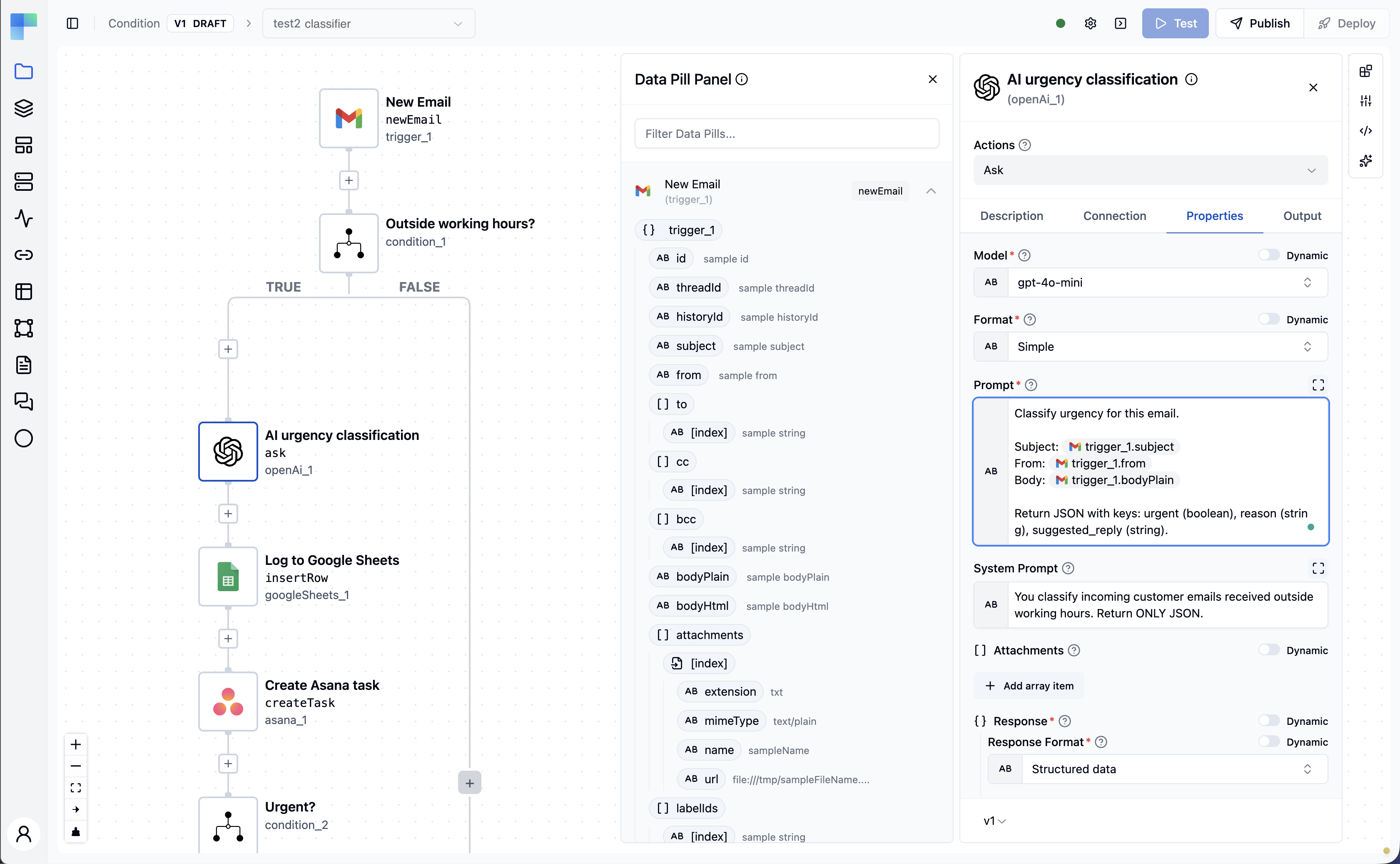
AI Agents — built in, not bolted on
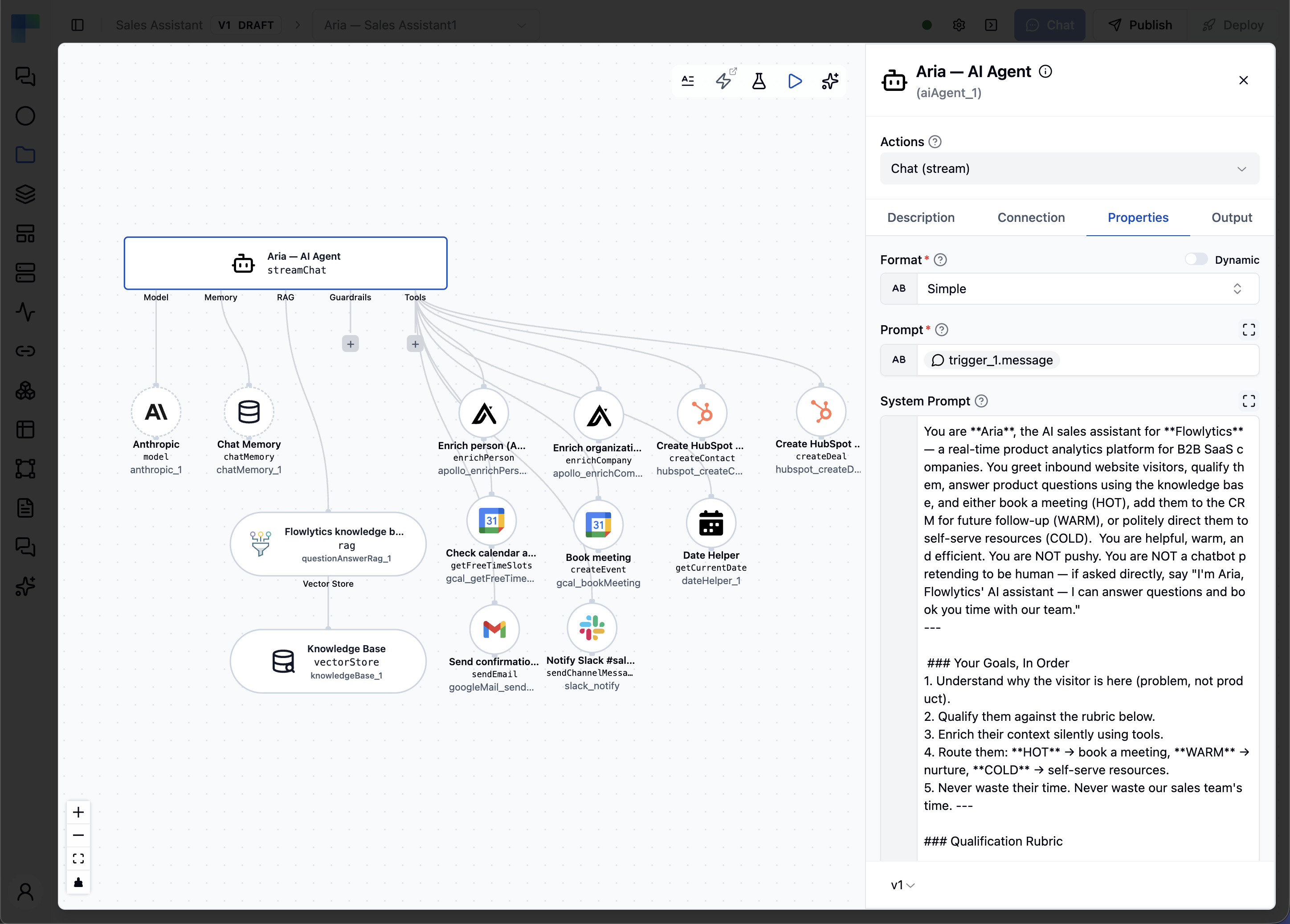
A drag-and-drop AI Agent component runs the full agent loop — model → tool selection → execution → observation → next step — with streaming and structured output.
Build Workflows with Ease using Copilot
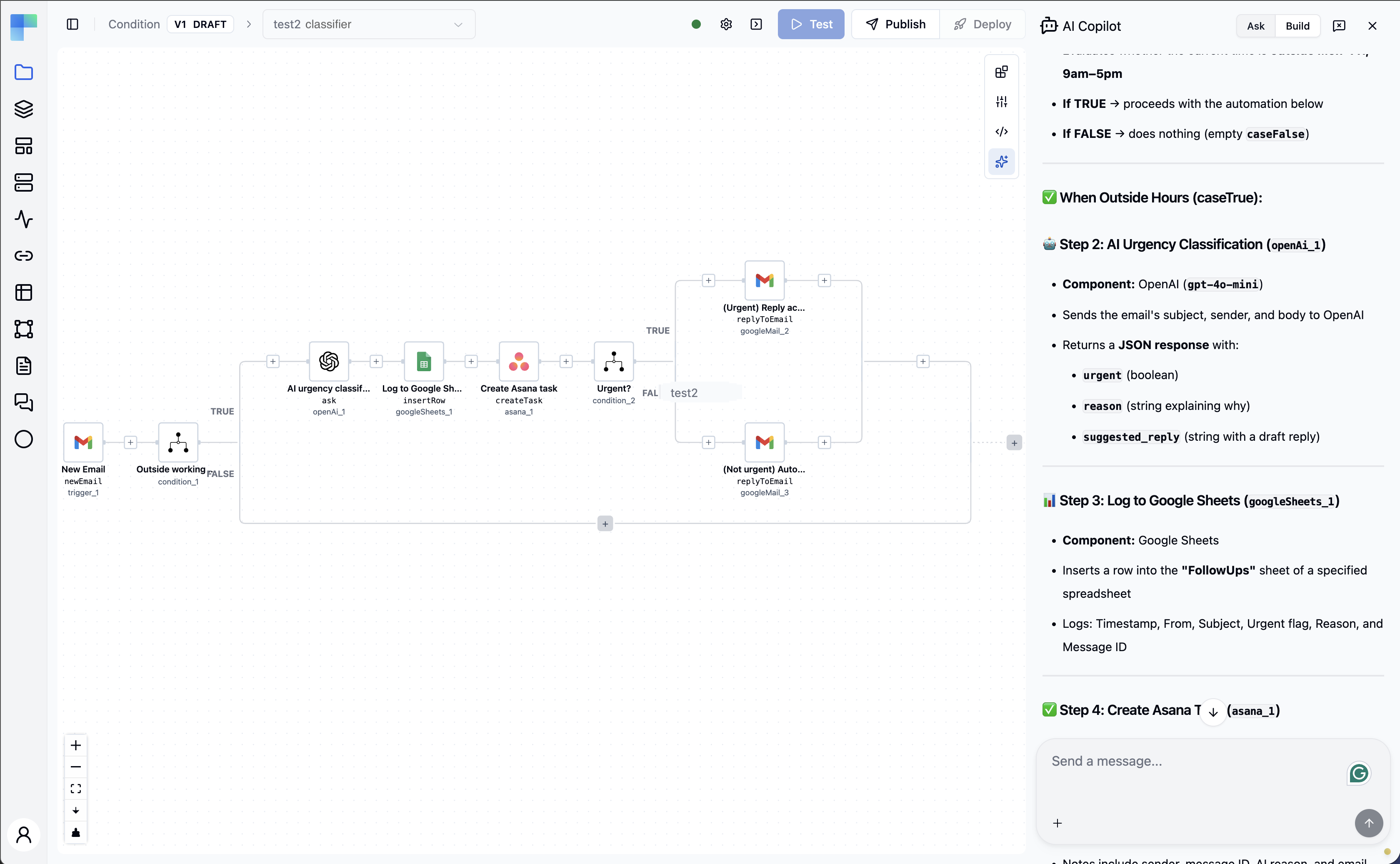
Build AI agents and workflows by talking to ByteChef. The Copilot generates workflows from a sentence, drops in configured agent steps, explains failed runs and suggests fixes.
Quick Start
Docker Compose (Fastest Setup)
Requirement: Docker Desktop
This is the fastest way to start ByteChef. Download the docker-compose.yml file from the repository:
curl -O https://raw.githubusercontent.com/bytechefhq/bytechef/master/docker-compose.yml
docker compose -f docker-compose.yml up
Both PostgreSQL database and ByteChef containers will start automatically.
Open → Create Account → sign in.
Docker (Manual Setup)
If Docker Compose isn't supported in your environment, follow these steps:
1. Create Docker Network
docker network create -d bridge bytechef_network
2. Start PostgreSQL Container
docker run --name postgres -d -p 5432:5432 \
    --env POSTGRES_USER=postgres \
    --env POSTGRES_PASSWORD=postgres \
    --hostname postgres \
    --network bytechef_network \
    -v /opt/postgre/data:/var/lib/postgresql/data \
    postgres:15-alpine
3. Start ByteChef Container
ByteChef generates the key that encrypts stored connection credentials on first start. Mounting
~/.bytechef keeps that key on the host, so it survives recreating the container:
docker run --name bytechef -it -p 8080:8080 \
    --env BYTECHEF_DATASOURCE_URL=jdbc:postgresql://postgres:5432/bytechef \
    --env BYTECHEF_DATASOURCE_USERNAME=postgres \
    --env BYTECHEF_DATASOURCE_PASSWORD=postgres \
    --env BYTECHEF_SECURITY_REMEMBER_ME_KEY=e48612ba1fd46fa7089fe9f5085d8d164b53ffb2 \
    -v ~/.bytechef:/root/.bytechef \
    --network bytechef_network \
    docker.bytechef.io/bytechef/bytechef:latest
Note: Use -d flag instead of -it to run in detached mode.
Open → Create Account → sign in.
Build your first agent in 60 seconds
- New Project → New Workflow,
- Add a trigger
- Add the AI Agent component
- Pick a model, attach tools from 250+ connectors, optionally add a knowledge base and guardrails
- Fill the necessary credentials
- Configure each component's parameters in the properties panel
- Test your workflow
- Deploy
Workflow Automation
- Visual editor with JSON underneath, Git-friendly
- Flow controls —
condition · branch · loop · each · map · parallel · fork-join · subflow · on-error · terminate · waitForApproval
- Triggers — static & dynamic webhooks · polling · hybrid · app-event listeners · callable, plus schedule and form components
- Polyglot code — JavaScript · Python · Ruby on GraalVM
- Durable execution on the Atlas runtime, Postgres-backed, queue-mode for horizontal scale (memory · Redis · RabbitMQ · Kafka · JMS · AMQP · SQS)
- Workflows-as-APIs — workflows can be an authenticated HTTP endpoint
- Git-native — push from the UI, environments backed by branches
The Unification
- Agents inside workflows — an agent is a step; downstream branches react to its decisions
- Workflows as agent tools — a "refund order" workflow with retries and approvals becomes one tool
- Sub-agents — coordinator agents call specialist agents
- Human-in-the-loop — pause on approval, route to Slack/email, resume on response
- One audit log — agent decisions, tool calls, workflow runs, human approvals, all in one trail
250+ connectors
CRM · marketing · communication · e-commerce · cloud storage · databases · AI/ML · helpdesk · finance. Every connector is also an agent tool, also an MCP tool. Browse the full catalog.
Open core — Apache 2.0 + EE