Appsmith is an open-source, Apache-2.0 low-code platform written primarily in TypeScript that lets teams build custom internal tools such as admin panels, dashboards, and CRUD applications on top of their own databases and APIs.
What it is
Appsmith is a low-code application builder for internal software. Organizations use it to assemble dashboards, admin panels, customer 360 views, IT automation, and service management tools so that their teams can work more efficiently and effectively. The project ships as a GUI-based builder, tagged across topics including admin-dashboard, admin-panels, app-builder, automation, crud, custom-internal, gui, and internal-tools, and sits in the Developer Tools / Frameworks & Platforms category within this registry. User interface work, data binding, and deployment are handled through the platform rather than through hand-written front ends for every internal tool.
The concrete problem it solves is the repeated cost of building and maintaining bespoke internal applications. Instead of a developer writing a new admin interface for each database or service, Appsmith connects to the data sources a team already runs — its GitHub description states integration with 25+ databases and any API — and lets an application be composed on top. It also packages development, deployment, and maintenance into one workflow, so the same platform that builds a tool keeps running it. The registry positions Appsmith as the open alternative to Retool, which is the specific paid product it replaces.
Key capabilities
- Builds admin panels, admin dashboards, and CRUD applications through a graphical builder, per the repository topics.
- Connects to more than 25 databases and to any API, as stated in the GitHub description.
- Deploys self-hosted through Docker (documented as the recommended route), Kubernetes, or an AWS AMI.
- Offers a hosted option through Appsmith Cloud signup, alongside self-managed installation.
- Provides Appsmith Agents, an agentic AI platform that integrates AI models with private and proprietary data inside existing tools and systems, without model fine-tuning or complex RAG implementations.
- Ships learning material as Documentation, Tutorials, Videos, and Templates.
- Supports community contribution and support channels through Discord, a Community Portal, and [email protected], with a hacktoberfest topic on the repository.
Who uses it and how
- Organizations building internal dashboards, admin panels, customer 360 views, IT automation, and service management tools for their own teams.
- Business and operations groups — sales, support, customer success, and human resources among them — which the README names as the audience for Appsmith Agents, asking questions and configuring automations specific to their business.
- Teams that need data to stay inside their own infrastructure and therefore choose the Docker, Kubernetes, or AWS AMI install paths rather than the hosted cloud.
- Development teams that need to build and run Appsmith locally; the repository documents a setup for local development in
contributions/CodeContributionsGuidelines.md.
- Contributors and community members, who engage through the Discord server, the community portal, and hacktoberfest participation.
Getting started
There are two documented ways to start: sign up on Appsmith Cloud, or install Appsmith on a machine. Docker is marked as the recommended installation method, with Kubernetes and AWS AMI documented alongside it.
How it compares
This registry lists Appsmith as the open alternative to Retool. The contrast the facts support is one of licence and control: Appsmith is Apache-2.0 and can be self-hosted through Docker, Kubernetes, or an AWS AMI, whereas Retool is the paid product the project is positioned against. That distinction matters most for teams that need internal tools running against their own data inside their own infrastructure rather than in a vendor-hosted environment.
When to use it — and when not to
A self-hoster takes on running and maintaining the deployment themselves, and the README does not document the backing services that a self-managed installation requires, so that work has to be established from the installation guides. The repository also carries a large backlog, with 4,467 open issues at the time of writing, and the topic list includes java even though the project is written primarily in TypeScript, which suggests metadata drift worth verifying. Teams that want a fully managed, vendor-operated internal tooling platform with no operational burden should look at the hosted commercial alternative rather than the self-hosted Apache-2.0 route.
project readme (upstream, from github) — read inline






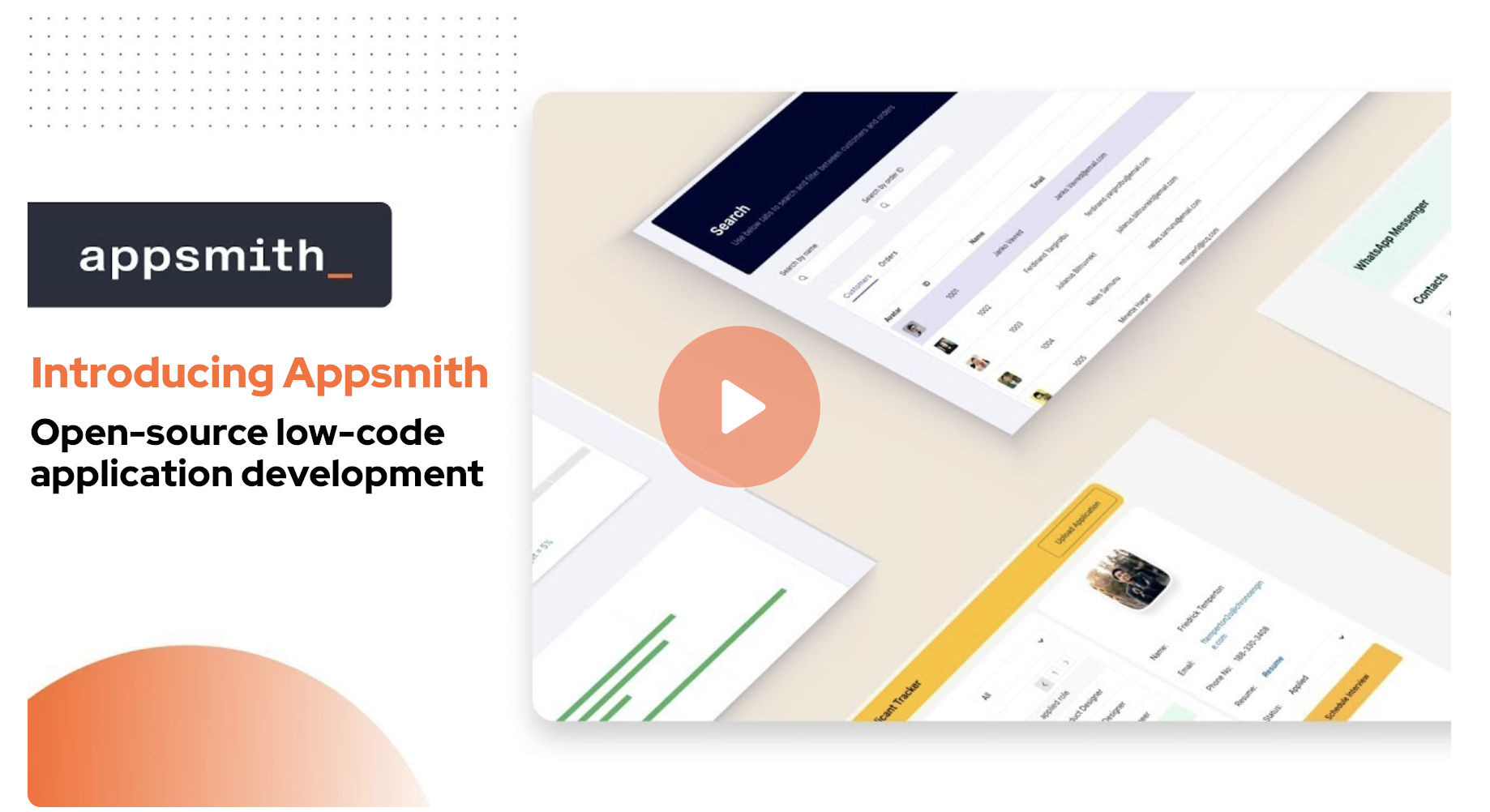
Organizations build custom applications like dashboards, admin panels, customer 360, IT automation, and service management tools to help their teams work more efficiently and effectively. Appsmith is an open-source low-code platform that streamlines custom application development, deployment, and maintenance. Learn more on our website.
Installation
There are two ways to start using Appsmith:
- Signup on Appsmith Cloud.
- Install Appsmith on your machine. See the installation guides below.
For other deployment options, see the Installation Guides documentation.
Development
To build and run Appsmith in your local dev environment, see Setup for local development.
Learning Resources
Need Help?
Appsmith Agents
Introducing a new agentic AI platform that integrates the latest AI models with private and proprietary data at scale — inside the tools and systems that teams use every day. Appsmith Agents expands generative AI’s capabilities for the millions of knowledge workers in sales, support, customer success, human resources, and other business teams. By giving continuous context to AI models, Appsmith Agents lets teams ask questions and configure automations specific to their business without model fine-tuning or complex RAG implementations. Visit appsmith.com/ai to learn more.
Contributing
We ❤️ our contributors. We're committed to fostering an open, welcoming, and safe environment in the community.
📕 We expect everyone participating in the community to abide by our Code of Conduct. Please read and follow it.
🤝 If you'd like to contribute, start by reading our Contribution Guide.
👾 Explore some good first issues.
Let's build great software together.
Top Contributors


 [
[ ](ht
](ht