agentrq is a free, open source project & work management project written in Go and released under Apache-2.0. It has 1,122 GitHub stars, 79 forks and 6 open issues, and was last pushed 7 hours ago. On this registry it ranks #47 of 62 tracked projects in Project & Work Management, with 5 head-to-head comparisons available.

What is agentrq?

AgentRQ is a self-hosted, Apache-2.0 human-in-the-loop task manager that gives human operators and AI agents one shared workspace over the Model Context Protocol, aimed at people who run their own Claude subscriptions or any agent harness with ACP support.

What it is

AgentRQ is a platform for collaboration between human operators and AI agents, written in Go with a Vue.js 3 frontend and released under Apache-2.0. It lives in the agentic-AI ecosystem and speaks the Model Context Protocol through an integrated mcp-go SSE server that exposes tools and resources to models such as Claude. The architecture is decoupled and service-oriented: a Fiber-based REST API for workspace and task management, an MCP server, and a CoreMCP supervisor that is a global MCP server letting agents manage all workspaces, tasks and statistics across the platform. Storage is GORM over SQLite with user-scoped persistence, authentication is Google OAuth2 with JWT-based sessions, and an internal pub/sub event bus drives real-time SSE notifications. The frontend is built with Vue 3, Pinia and Tailwind CSS.

The concrete problem it solves is the gap between a person and the agent doing the work. It replaces polling loops and glue code: a background poller ticks every minute and spawns a scheduled task the instant it is due, so no server or agent has to stay awake and wait. It replaces YAML and decision-tree DSLs in release orchestration with a visible graph of events and workspaces. It also replaces the single browser tab chained to one agent session, because the board, tasks and conversations reach mobile, web and desktop.

Key capabilities

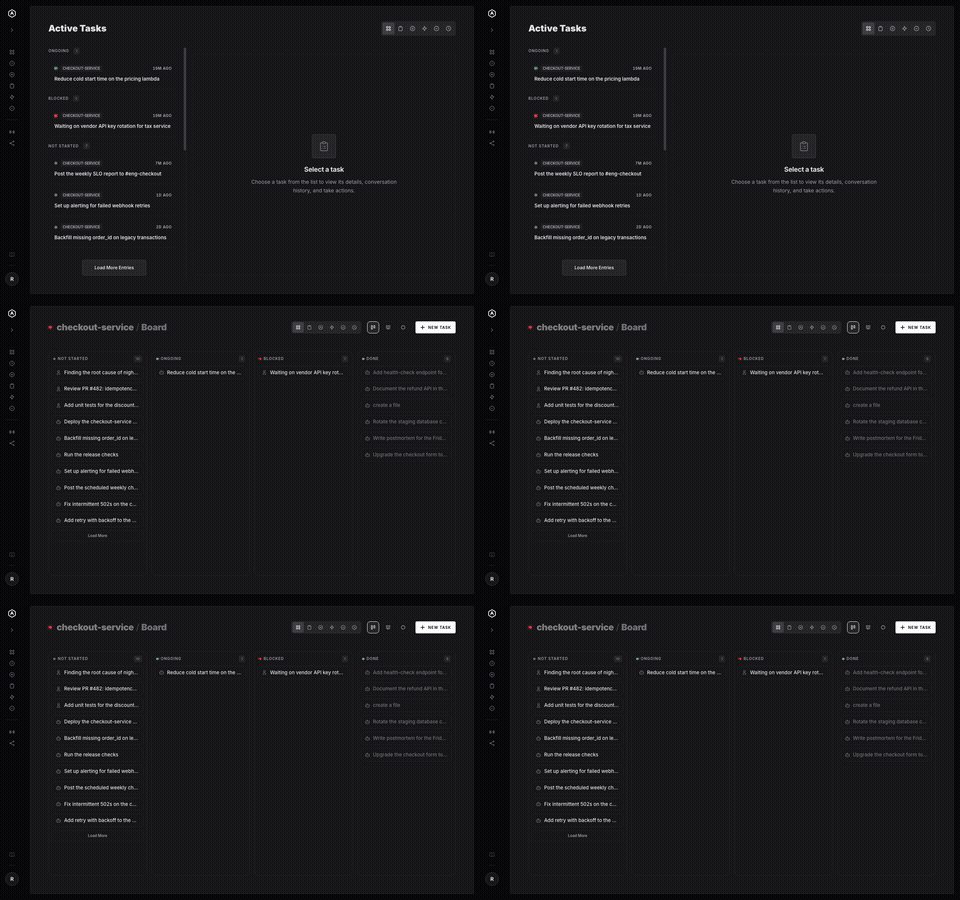
  • Visual task board: every task Claude creates appears instantly, viewable on any device as a list or a Kanban, with a ⌘K (Ctrl+K off macOS) finder that matches any word in a task title or description from locally saved copy.
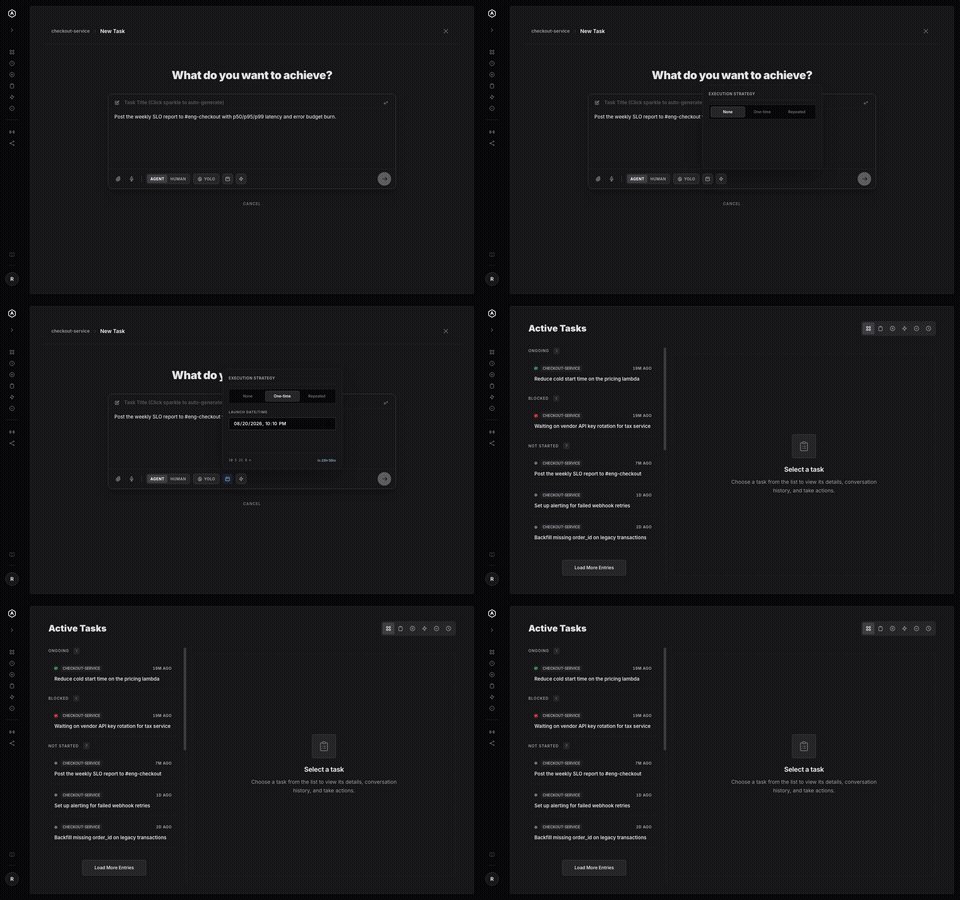
  • Task scheduling: a launch date or recurring cadence of every 15 minutes, hourly, daily, weekly or custom days, spawned by a poller that runs each minute.
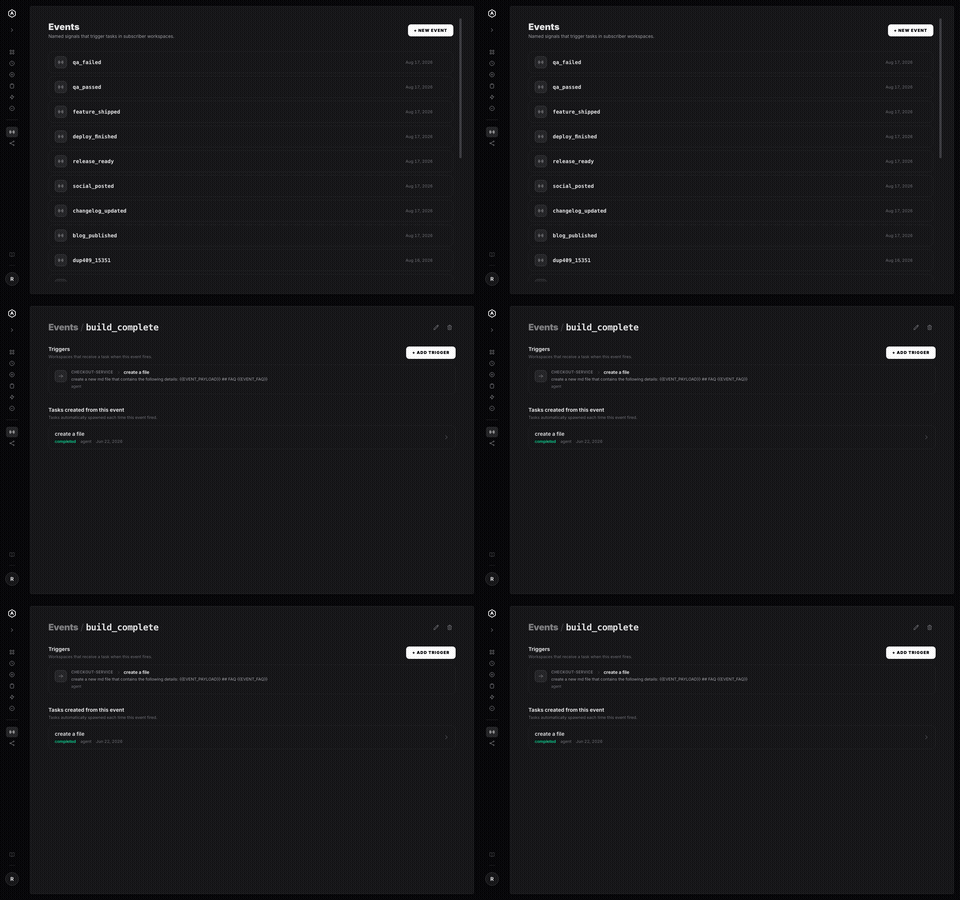
  • Events: named signals such as qa_passed, deploy_finished and blog_published fired on completion; wiring an event to a workspace creates the next task automatically, with no polling and no glue code.
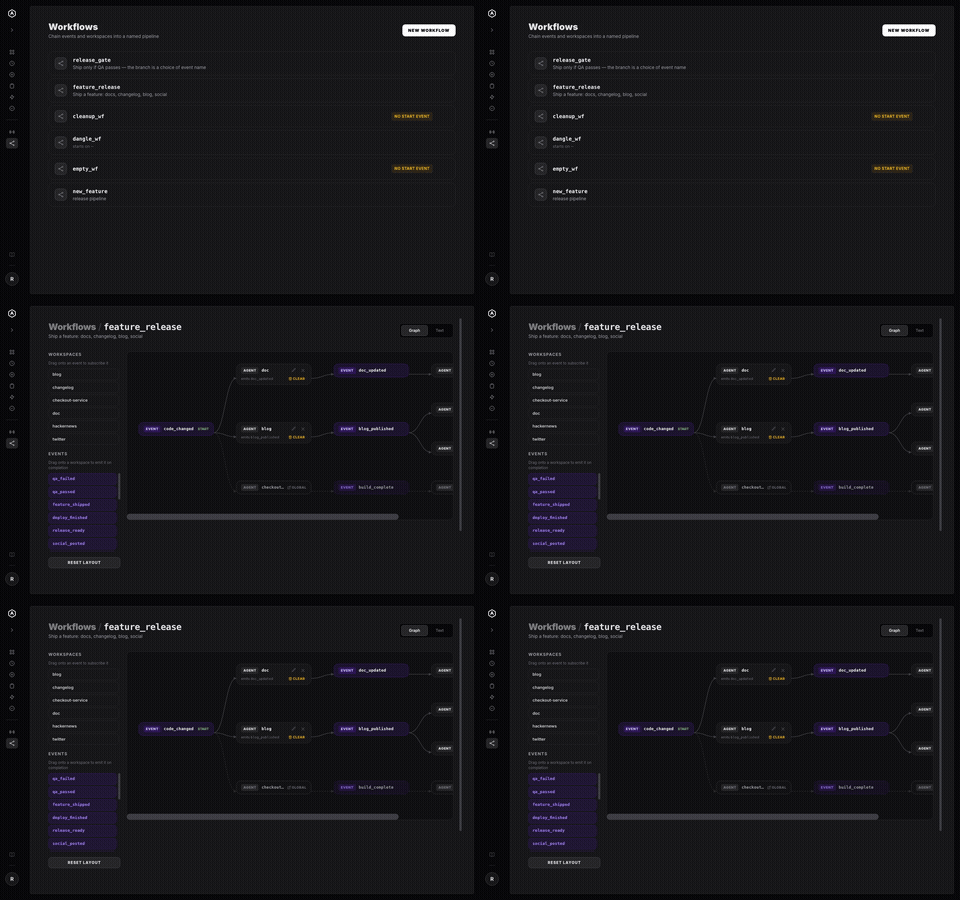
  • Workflows: events and workspaces arranged on a graph, where dragging a workspace onto an event subscribes it and dragging an event onto a workspace emits it on completion.
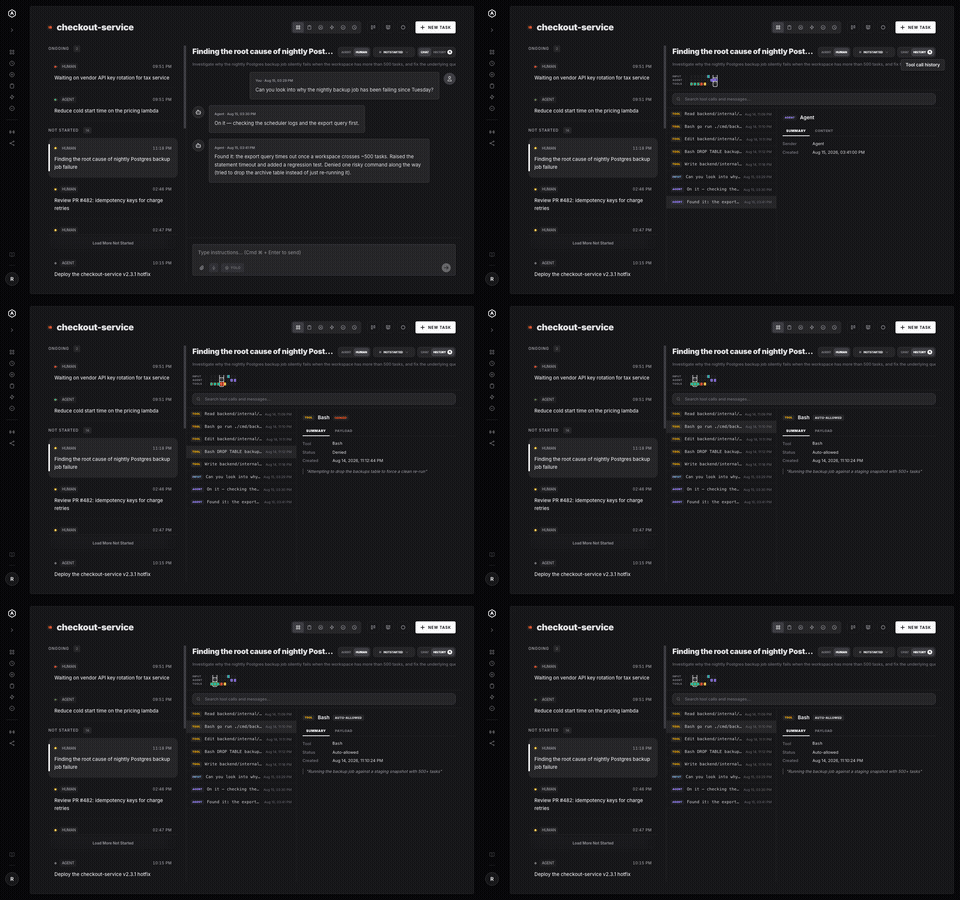
  • Tool Call History: the task detail view's History tab lays out a lane-grouped timeline of every tool call and message in a run across Input, Agent and Tools, searchable and showing whether each was allowed or denied.
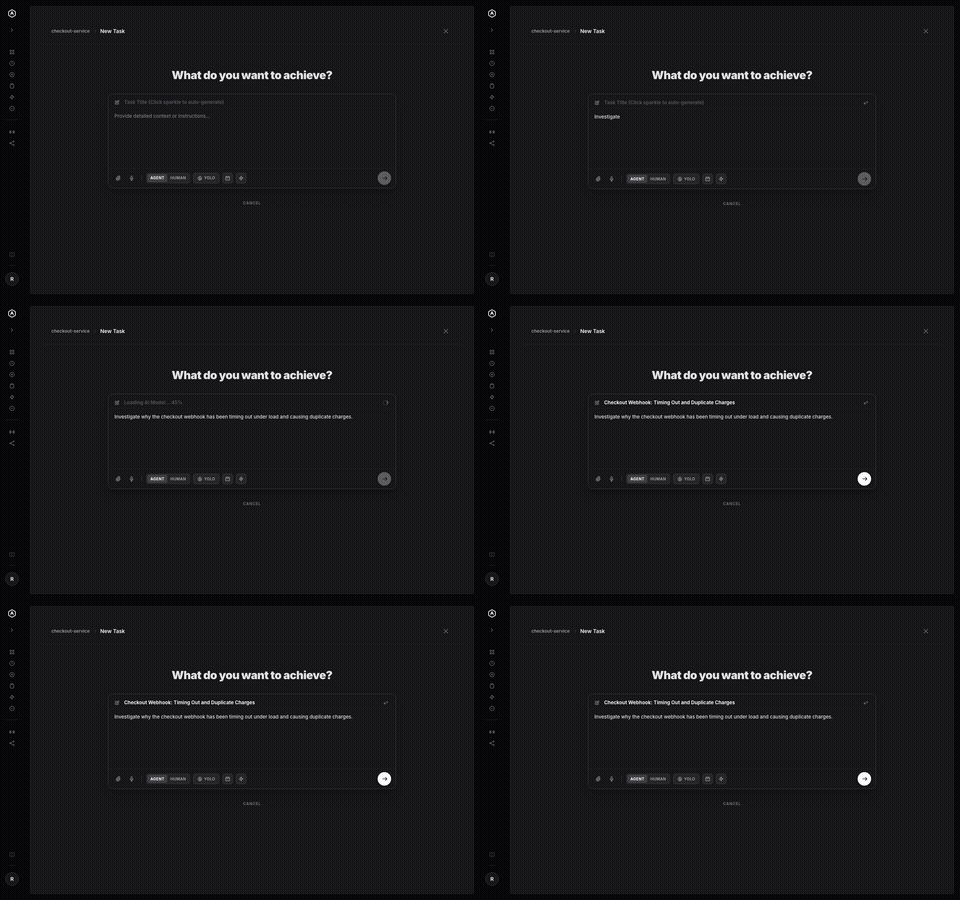
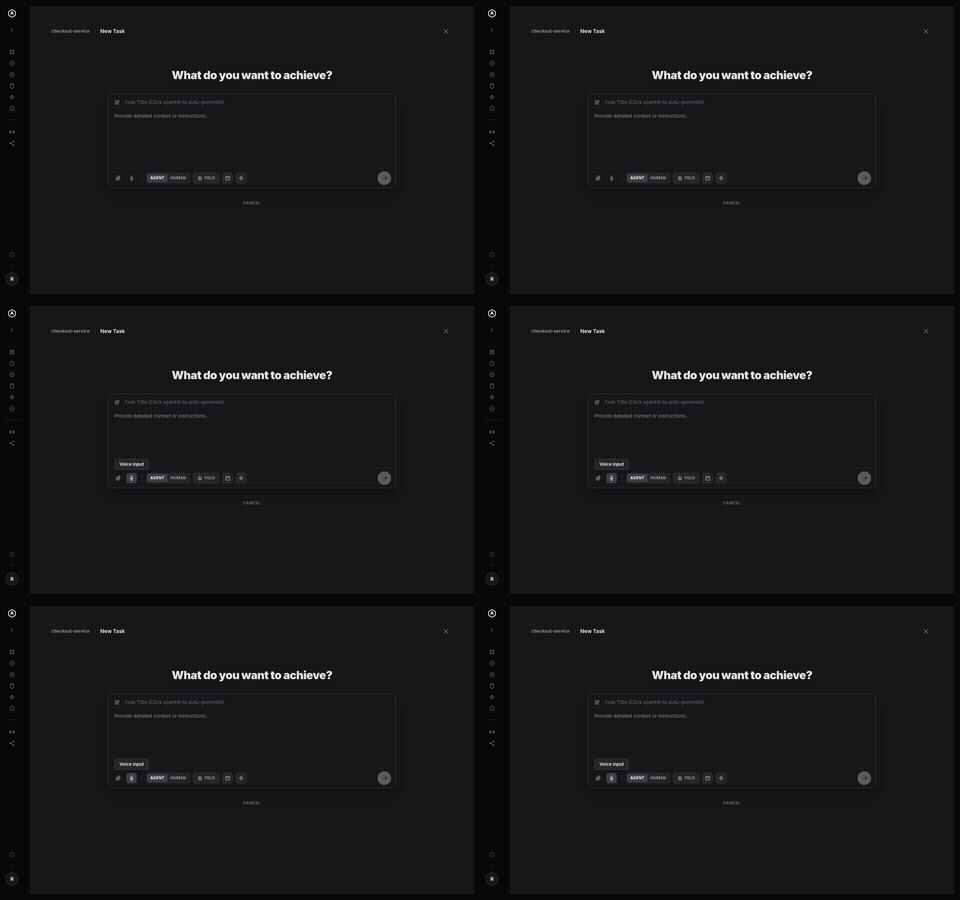
  • On-device privacy features: auto-title generation uses a small language model downloaded once and cached by the browser, and dictation uses an in-browser Whisper model, so neither text nor voice leaves the machine.
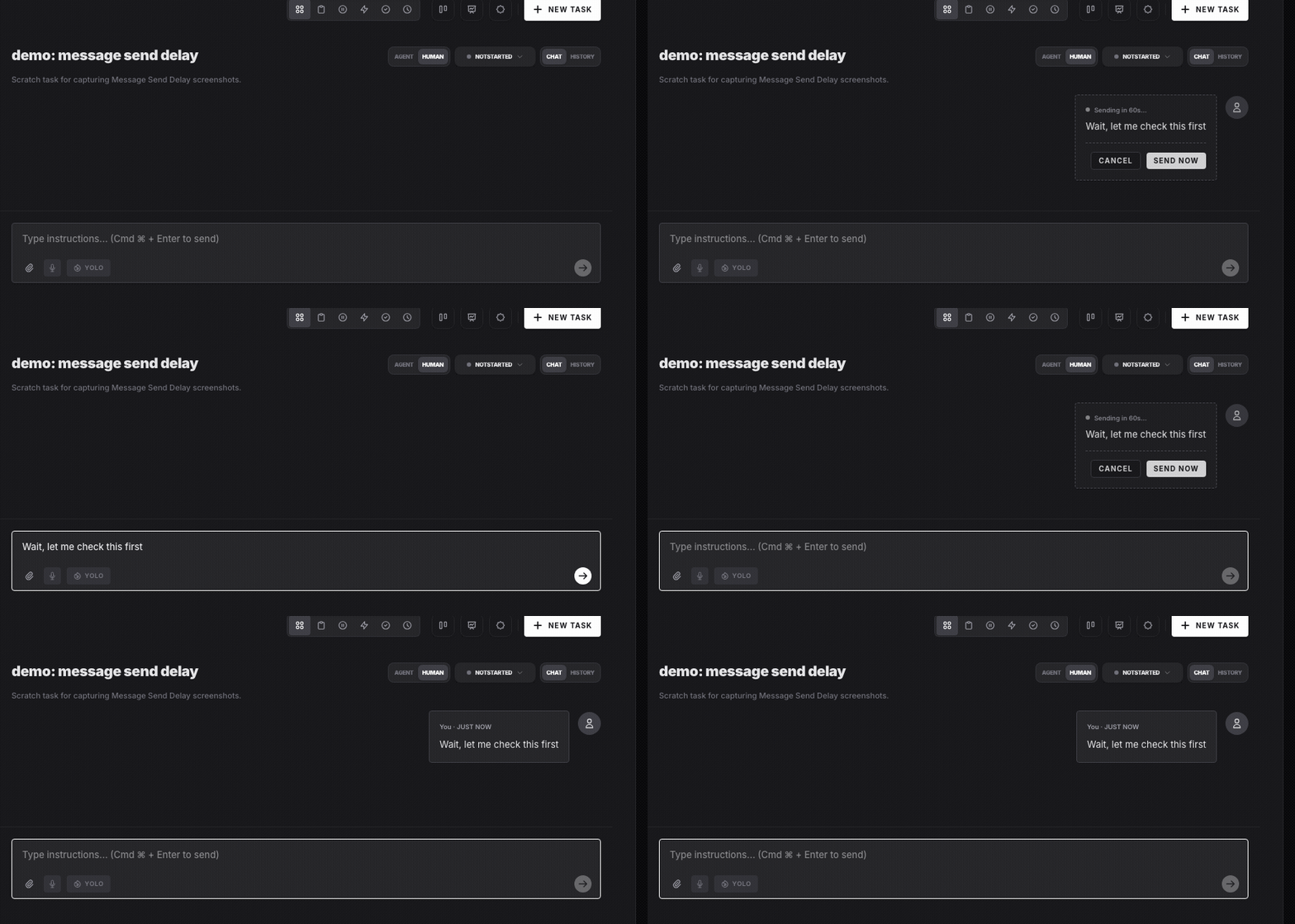
  • Message send delay: a per-workspace countdown of 3s, 5s, 10s, 15s, 30s or 60s before a chat message reaches the agent, with Send Now and Cancel, off by default.

Who uses it and how

  • Operators running their own Claude subscriptions, who let agents pull assigned tasks, update statuses and request permissions for sensitive actions over MCP.
  • Teams with ACP-capable harnesses: the topics list acp-client, acp-gateway, claude-plugin, deepseek-harness-plugin, dsh-plugin and hermes-agent, so AgentRQ acts as the shared gateway those harnesses connect through.
  • Release pipeline owners who model their process as a Workflow graph and chain tasks through events such as deploy_finished.
  • Mobile-first operators who control agents from a phone, web browser or desktop client rather than a terminal session.
  • Supervisors using the CoreMCP global server to manage workspaces, tasks and statistics across the whole platform from one agent.

Getting started

The README excerpt supplied here contains no install command, package name or Docker image; https://agentrq.com is listed as the homepage and is the reference point for hosted use. Self-hosting means running the Go Fiber API server and MCP server, building the Vue 3 frontend, and providing SQLite storage plus Google OAuth2 credentials.

How it compares

This registry provides no list of paid products that AgentRQ replaces, so no licence, cost or data-ownership comparison can be drawn from the supplied facts. It stands as an MCP and ACP gateway layer that sits alongside the harnesses named in its topics, rather than as a harness itself.

When to use it — and when not to

Choose AgentRQ when agents already speak MCP or ACP and the goal is one shared board for humans and agents across devices. A self-hoster must operate the Go backend, SQLite storage, a Google OAuth2 client and the frontend build, so teams wanting a turnkey hosted service, or teams with no MCP-capable agent, should look elsewhere. The README excerpt is detailed on features but silent on installation and deployment steps, which makes setup effort impossible to judge from the facts given.

project readme (upstream, from github) — read inline

AgentRQ ── Agent-Human Collaboration Platform

简体中文

Discord

AgentRQ is a modern, high-performance platform designed for seamless collaboration between human operators and AI agents. It leverages the Model Context Protocol (MCP) to allow AI models (like Claude) to interact directly with your workspace's task management system.

🚀 Overview

Think of AgentRQ as a shared workspace where humans and AI agents work together seamlessly. You can break down complex goals into manageable tasks, and delegate work directly to your AI agents.

Because agents "see" the workspace state via MCP, they can autonomously pull their assigned tasks, update statuses, request permissions for sensitive actions, and communicate with you—all synchronized instantly across the platform in real-time.

✨ Features

Real captures from the running app — no mockups.

Visual Task Board

Every task Claude creates appears instantly on your board. See what it's working on, what it needs, and what it just finished — all from a clean, fast dashboard you can open on any device, as a list or a Kanban.

AgentRQ active tasks dashboard and kanban board
AgentRQ scheduled task auto-spawning into the dashboard

Task Scheduling

Give any task a launch date, or a recurring cadence — every 15 minutes, hourly, daily, weekly, custom days. A background poller ticks every minute and spawns the task the instant it's due, no server or agent needing to stay awake and wait.

Events

Events are named signals — qa_passed, deploy_finished, blog_published — that any task can fire when it completes. Wire one to a workspace and that workspace gets a new task automatically, no polling and no glue code.

AgentRQ events list and configured trigger
AgentRQ workflow node graph

Workflows

A Workflow is Events and workspaces arranged on a graph. Drag a workspace onto an event to subscribe it; drag an event onto a workspace to emit it on completion. No decision-tree DSL, no YAML — just the shape of your release process, visible.

Tool Call History

The task detail view's History tab lays out a lane-grouped timeline of every tool call and message in a run — Input, Agent, and Tools. Search it, click into any entry, and see exactly what ran, what it returned, and whether it was allowed or denied.

AgentRQ tool call history trajectory panel
AgentRQ auto-title generation in action

Auto-Title Generation

Write your task description, click the sparkle, and a small language model — downloaded once and cached by your browser — reads it and writes the title. No API call, no server, no data leaving your machine.

Speech-to-Text

Click the mic on any task description or reply and dictate it instead. Transcription runs on an in-browser Whisper model — your voice is processed on-device and never uploaded anywhere.

AgentRQ speech-to-text mic entry point
AgentRQ message send delay countdown with Send Now and Cancel

Message Send Delay

Give a workspace a countdown — 3s, 5s, 10s, 15s, 30s or 60s — and every chat message waits that long in the thread before it reaches the agent. Send Now delivers it early, Cancel pulls it back unsent and puts the exact text and attachments back in your composer. Off by default, per workspace.

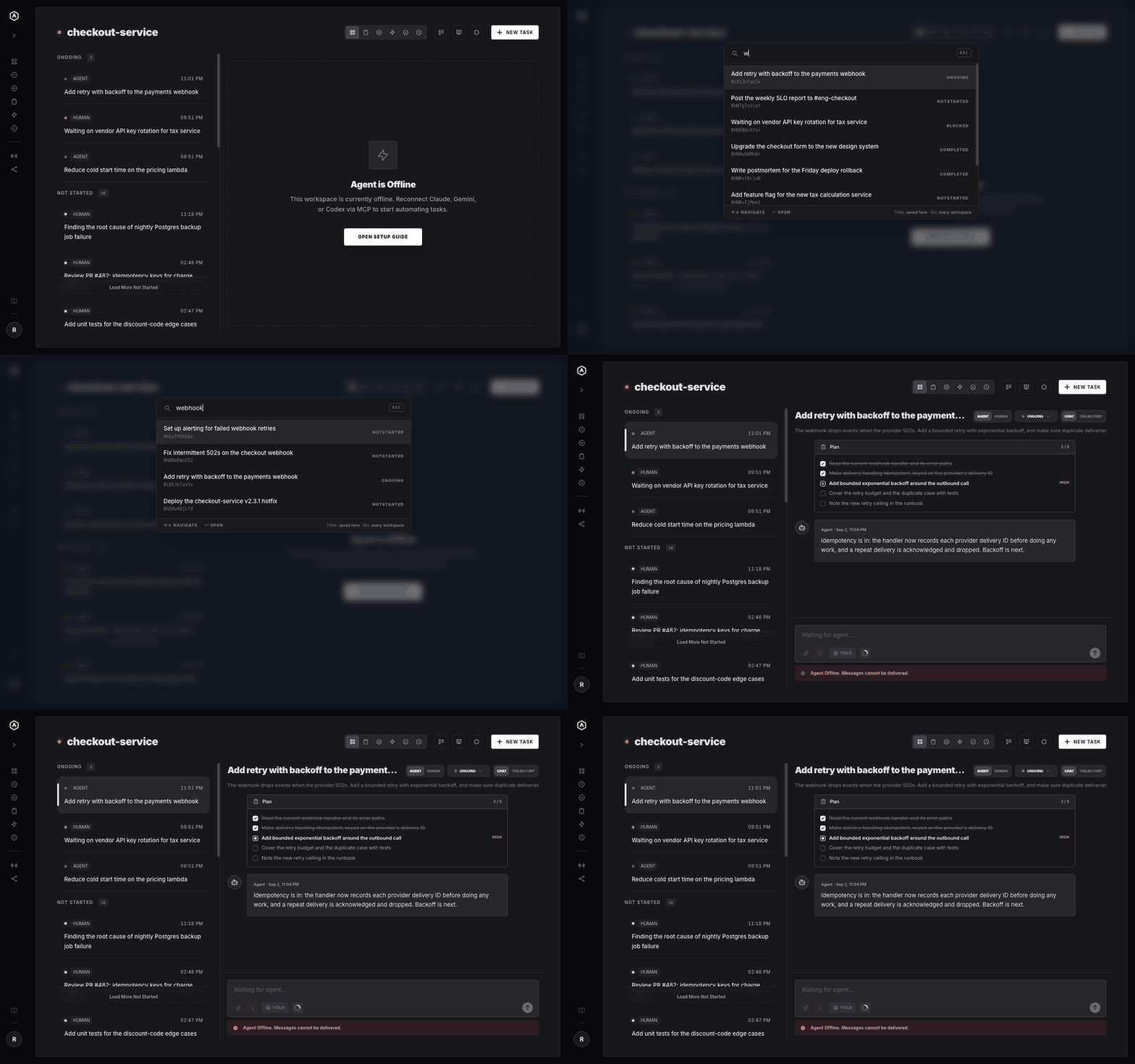
Search & Keyboard Shortcuts

⌘K (Ctrl+K off macOS) opens a task finder that matches any word in a title or description, straight from the copy your device already saved — so it answers offline, and tells you how far it looked. Everything else is a bare letter: N for a new task, M and T to flip between a task's chat and its trajectory, ? for the list. Nothing to configure, and nothing to memorise.

AgentRQ task finder and keyboard shortcuts sheet

See the full list at agentrq.com/features.

🏛 Architecture

AgentRQ follows a decoupled service-oriented architecture:

Backend (Go / Fiber)

  • API Server: Fiber-based REST API for workspace and task management.
  • MCP Server: Integrated mcp-go SSE server that exposes tools and resources to AI models.
  • CoreMCP (Supervisor): A global MCP server that allows agents to manage all workspaces, tasks, and statistics across the entire platform.
  • Data Layer: GORM with SQLite for persistent, user-scoped storage.
  • Authentication: Google OAuth2 integration with JWT-based session management.
  • Event Bus: Internal pub/sub system for real-time SSE notifications.

Frontend (Vue.js 3 / Vite)

  • Modern UI: Tailored with Vue 3, Pinia, and Tailwind CSS.
  • Glassmorphism: A sleek, premium design language with smooth transitions and real-time updates.
  • Reactive State: Synchronized with the backend via SSE events.

Desktop (Electron)

  • Same application, native shell: the desktop app renders the same Vue components as the browser, so the two never diverge.
  • Native notifications: agent activity reaches you while the window is in the background, with a dock or taskbar badge.
  • Tray, global shortcut, deep links: Cmd/Ctrl+Shift+N from anywhere, and agentrq:// URLs that open the app at a specific task.
  • Auto-updating: checks in the background and installs on restart.

💻 Desktop App

AgentRQ has a desktop app for macOS, Windows and Linux. It is a client — it connects to whichever AgentRQ server you run.

On macOS and Linux, one command installs it — and updates it later:

curl -fsSL https://agentrq.com/install.sh | sh -s -- --quit

Or download the latest release →

Platform Download
macOS .dmg — Apple silicon and Intel
Windows .exe installer — x64 and arm64
Linux .AppImage or .deb — x64 and arm64

Builds are currently unsigned, so a hand-downloaded build warns on first launch on macOS and Windows, and macOS cannot auto-update until signing certificates are in place — the install command above is the way around both. Connecting to a server and troubleshooting are covered in the Desktop Guide.

Extending the desktop app

Extensions add pages, actions, keyboard shortcuts and scheduled work. They are ordinary Node modules, discovered from GitHub repositories carrying the agentrq-extension topic, and installed from the desktop app.

Extensions are desktop-only, and deliberately so. An extension is code somebody else wrote, running with the privileges of the process it is in. On a self-hosted server that would mean a stranger's code next to your database and your other users; on the desktop it runs on the machine of the person who chose to install it. The server never loads extension code.

What AgentRQ does enforce is everything it owns: which surfaces an extension can contribute to, and which MCP tools it may call against which workspaces — the extension never holds a credential, it asks, and the app attaches the token on the way out. That is a real boundary around your AgentRQ data. It is not a sandbox around your machine, and the install screen says so on every install.

Three worked examples live in examples/extensions/, from one that asks for no permissions at all to one that runs a daily digest across every workspace. See th

readme truncated — read the full docs on github

Frequently asked questions

Is agentrq free to use?

agentrq is open source under the Apache-2.0 licence. There is no licence fee and no seat count — you can self-host it or, where the project offers one, pay a vendor for a managed version instead.

What does agentrq do?

AgentRQ: Human-in-loop realtime conversational task manager for AI Agents. Self-hosted! Control your own agents from wherever you want Mobile, Web, Desktop. Des

What is agentrq written in?

agentrq is primarily written in Go. Its source is publicly available at https://github.com/agentrq/agentrq, and it has 1,122 GitHub stars.