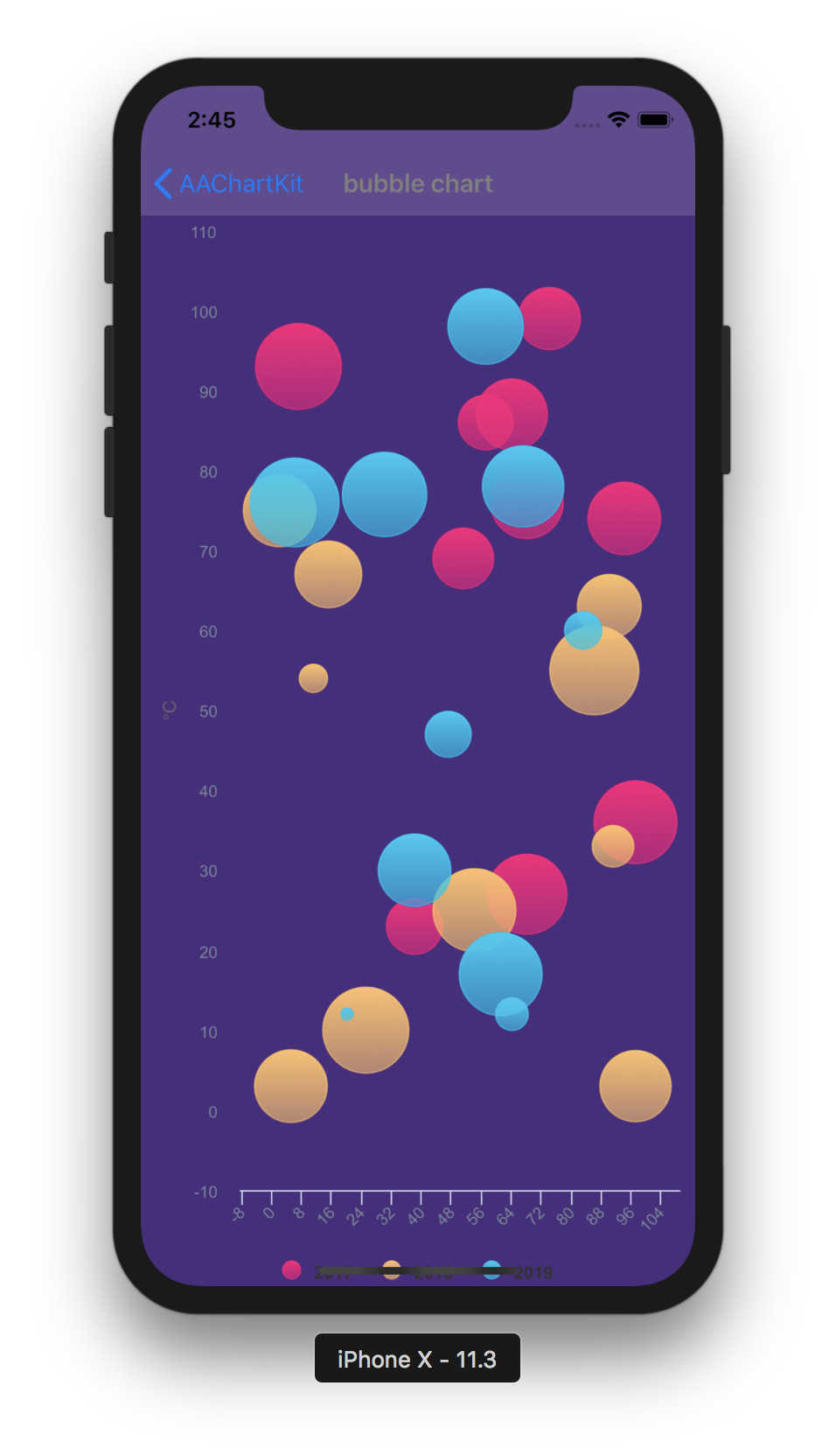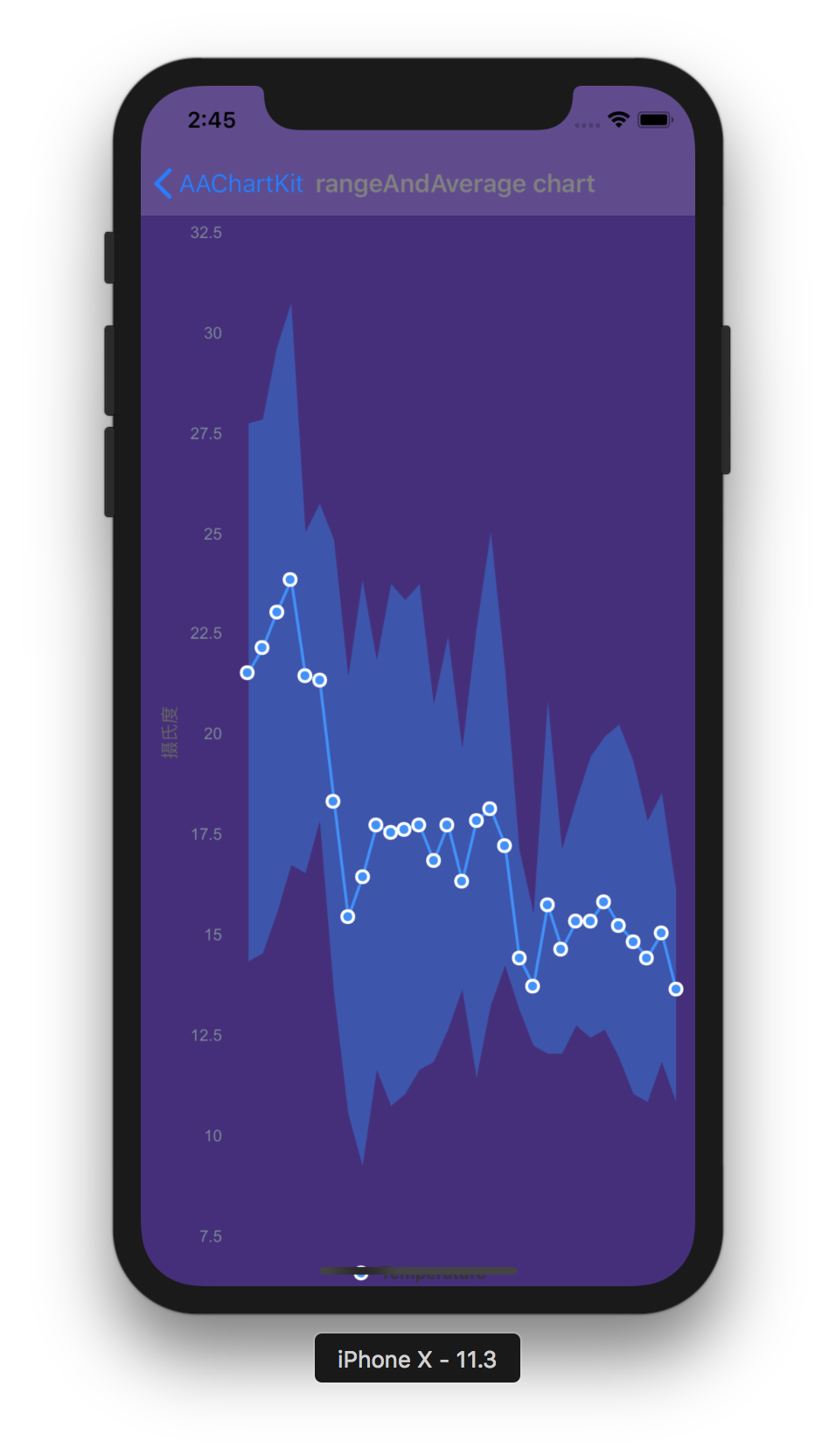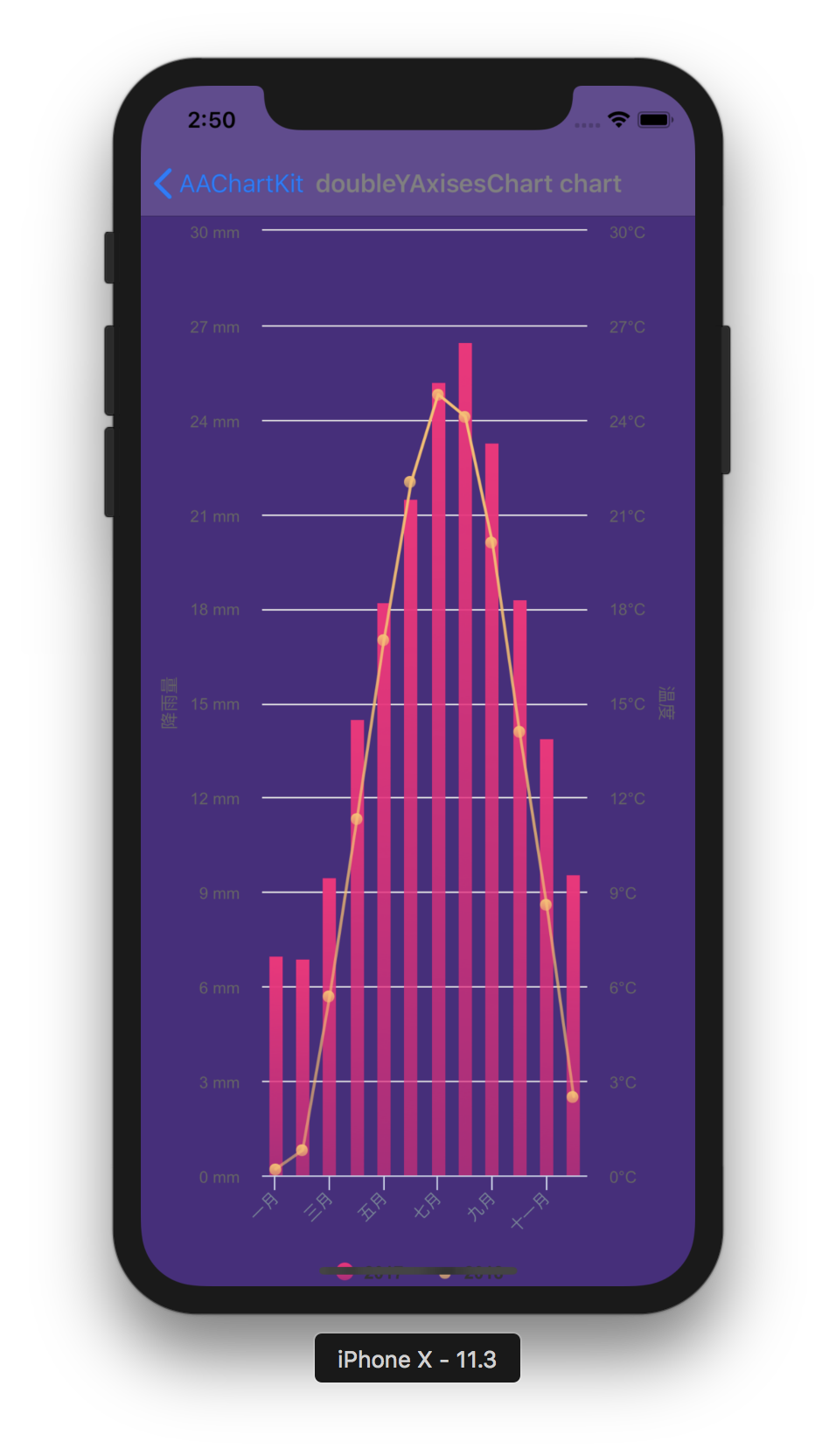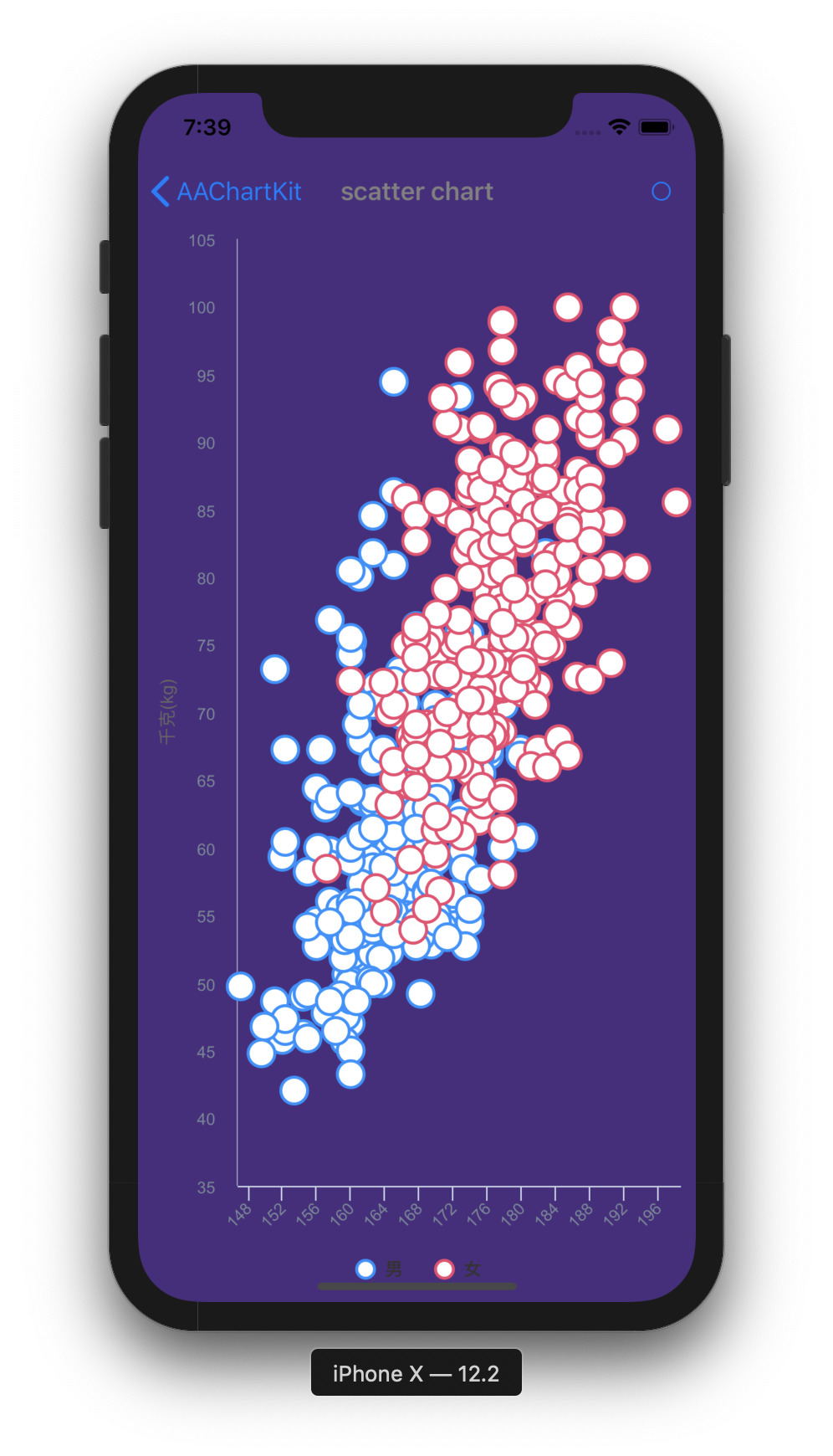






AAChartKit-Swift is a free, open source business intelligence & reporting project written in Swift and released under MIT. It has 2,526 GitHub stars, 263 forks and 160 open issues, and was last pushed 5 months ago. On this registry it ranks #44 of 77 tracked projects in Business Intelligence & Reporting, with 5 head-to-head comparisons available.

What is AAChartKit-Swift?

AAChartKit-Swift is a declarative data visualization framework for iOS, iPadOS and macOS, distributed as the AAInfographics package, that lets Swift developers add interactive and animated charts to an app by describing the chart they want instead of writing drawing code.

What it is

AAChartKit-Swift lives in the Swift and Apple-platform ecosystem, supporting iOS, iPadOS and macOS, and is the Swift-language counterpart of the Objective-C library AAChartKit. It is built on the front-end chart library Highcharts and exposes that engine through native Swift constructs, with the README summarizing its model as "AAChartView + AAChartModel = Chart". The framework is published on CocoaPods under the name AAInfographics, carries an MIT licence, and is also listed on the Swift Package Index.

The concrete problem it solves is the imperative drawing work that normally sits between a developer and a finished chart. Instead of managing the inner implementation details of a rendering pipeline, a developer declares a model, hands it to a chart view, and receives the rendered chart. It also removes the need for an Apple-platform team to embed and drive a web charting stack directly, since AAChartKit-Swift wraps the Highcharts-derived behavior in a native view and model pair with two-way touch interactions already wired up.

Key capabilities

  • Declarative chart definition through the AAChartView and AAChartModel pair, where the model describes the chart and the view renders it.
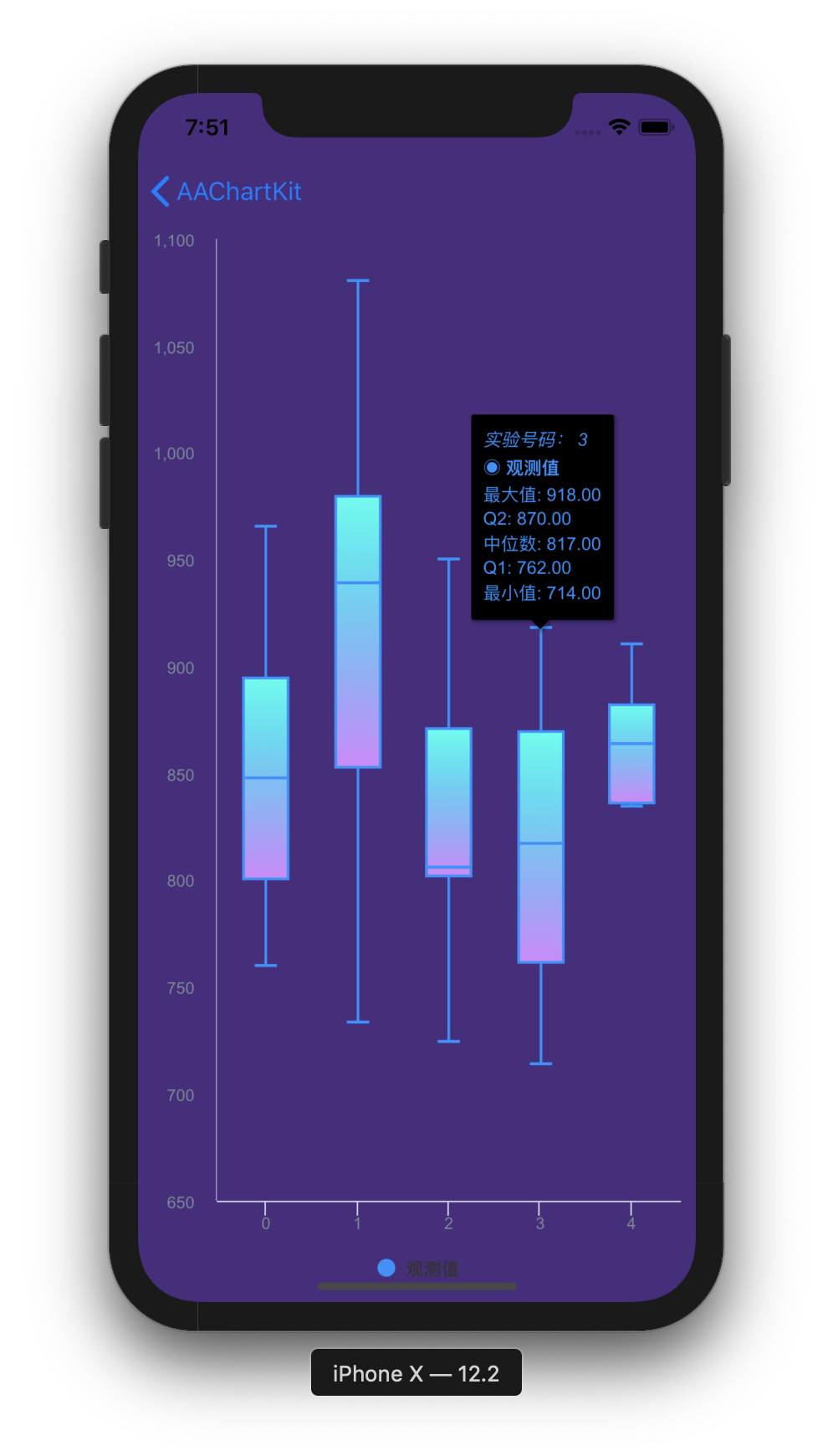
  • Broad chart-type coverage: line, spline, area, areaspline, column, bar, pie, scatter, angular gauges, arearange, areasplinerange, columnrange, bubble, box plot, error bars, funnel, waterfall and polar charts.
  • Chain programming syntax comparable to SwiftUI and Jetpack Compose, so chart configuration can be written as a fluent chain.
  • Interactive inspection, with single touch-drag for data inspection and multi-touch for zooming.
  • Animated rendering, with the README describing the animation as smooth, and animation listed as a supported feature and as a repository topic.
  • Advanced responsiveness for apps, alongside support for mixed charts and additional chart types described as planned.
  • Cross-language sibling implementations sharing the same approach: AAChartKit for Objective-C, AAChartCore for Java, and AAChartCore-Kotlin for Kotlin.

Who uses it and how

  • iOS and iPadOS app teams that need reporting or analytics views without maintaining a custom rendering layer, including apps that still target iOS 8 and above.
  • macOS application developers who want the same chart model on the desktop as on Apple mobile platforms.
  • Teams migrating from or maintaining parity with the Objective-C AAChartKit, where the Swift version preserves the same view-plus-model structure.
  • Projects that also ship Android or JVM clients and want a consistent declarative charting approach across the Java, Kotlin and Swift variants.
  • Apps requiring touch-driven exploration of dense data, such as zooming into a series or dragging across a plot to inspect values.

Getting started

Install through CocoaPods using the AAInfographics pod, which is linked from the project homepage, or add the package through Swift Package Manager, since the repository publishes Swift Package Index version and platform badges. Integration then follows the documented pattern of pairing an AAChartView with an AAChartModel.

How it compares

The facts list no paid products that this project replaces, so the closest named alternatives are its own sibling implementations. AAChartKit-Swift sits beside AAChartKit for Objective-C, AAChartCore for Java and AAChartCore-Kotlin for Kotlin, all sharing the same declarative approach over the Highcharts-derived engine. It is the Swift entry in that family rather than a competitor to it, and it is the version to choose when the host application is written in Swift.

When to use it โ€” and when not

Choose AAChartKit-Swift when the target is iOS, iPadOS or macOS and the application is written in Swift, because the chart view and model handle rendering, animation and touch interaction for the developer. It is a client-side chart library only, so it provides no data backend, storage or reporting service, and teams outside the Apple platforms should look to the Java or Kotlin siblings instead. Two facts warrant caution: the repository carried 160 open issues at the time of writing, and the README is dense with badges and bilingual links, so a team needing vendor support or a minimal setup guide should budget time for reading the examples and issue tracker.

project readme (upstream, from github) โ€” read inline

AAInfographics-LOGO

AAInfographics

Support


Average time to resolve an issue

English Document ๐Ÿ‡ฌ๐Ÿ‡ง | ็ฎ€ไฝ“ไธญๆ–‡ๆ–‡ๆกฃ ๐Ÿ‡จ๐Ÿ‡ณ

There is the link of Objective-C version of AAChartKit as follow

https://github.com/AAChartModel/AAChartKit

Preface

AAInfographics is the Swift language version of AAChartKit which is object-oriented, a set of easy-to-use, extremely elegant graphics drawing controls,based on the popular open source front-end chart library Highcharts. It makes it very fast to add interactive charts to your mobile projects. It supports single touch-drag for data inspection, multi-touch for zooming, and advanced responsiveness for your apps .


Features

  • ๐ŸŽ‚ Environment friendly. Support iOS ใ€iPadOS and macOS. Totally support Swift language, and there are more types version such as Objective-C language version AAChartKit ใ€ Java language version AAChartCore ใ€Kotlin language version AAInfographics . To get more details you can see the source code links list.

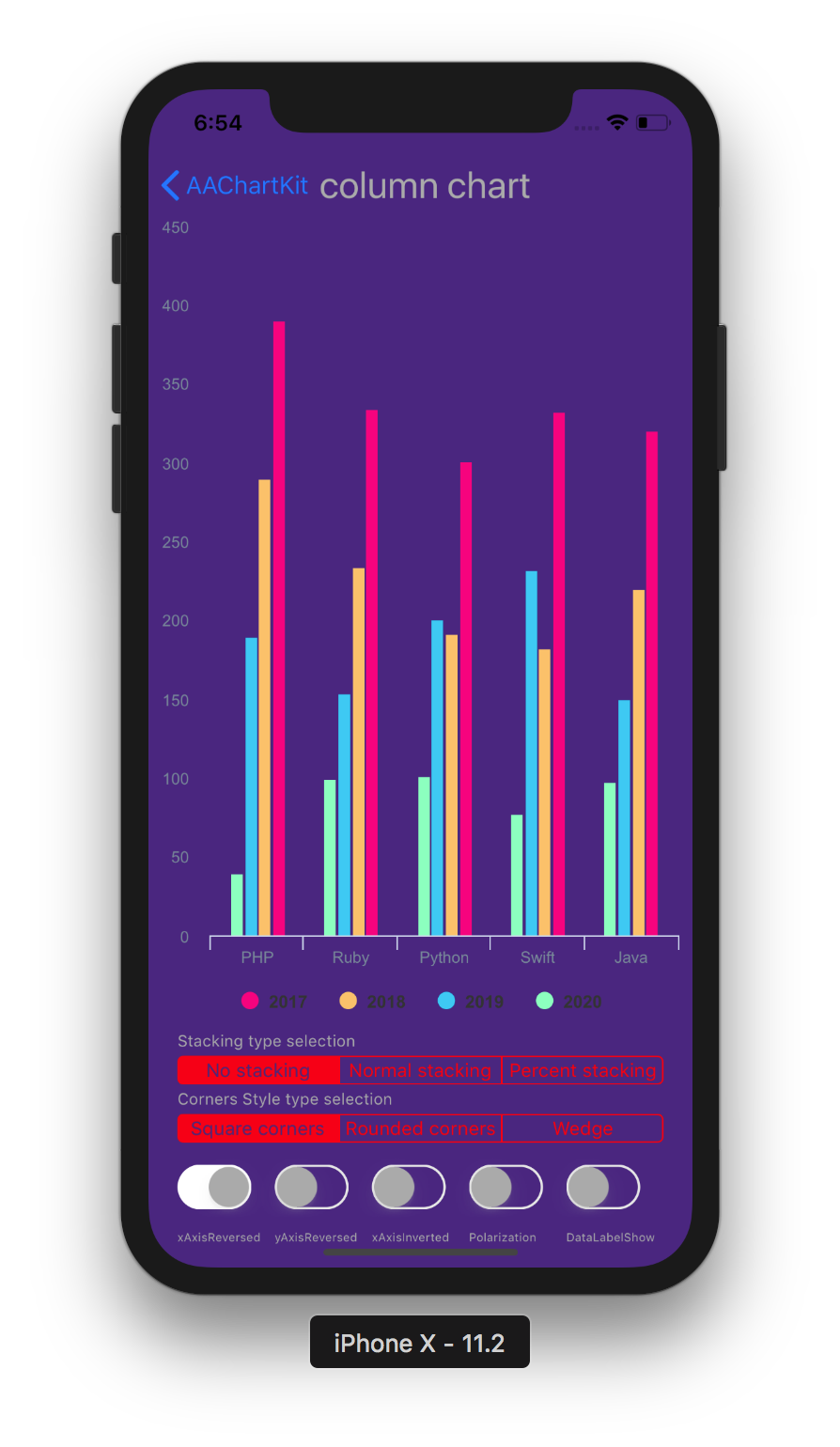
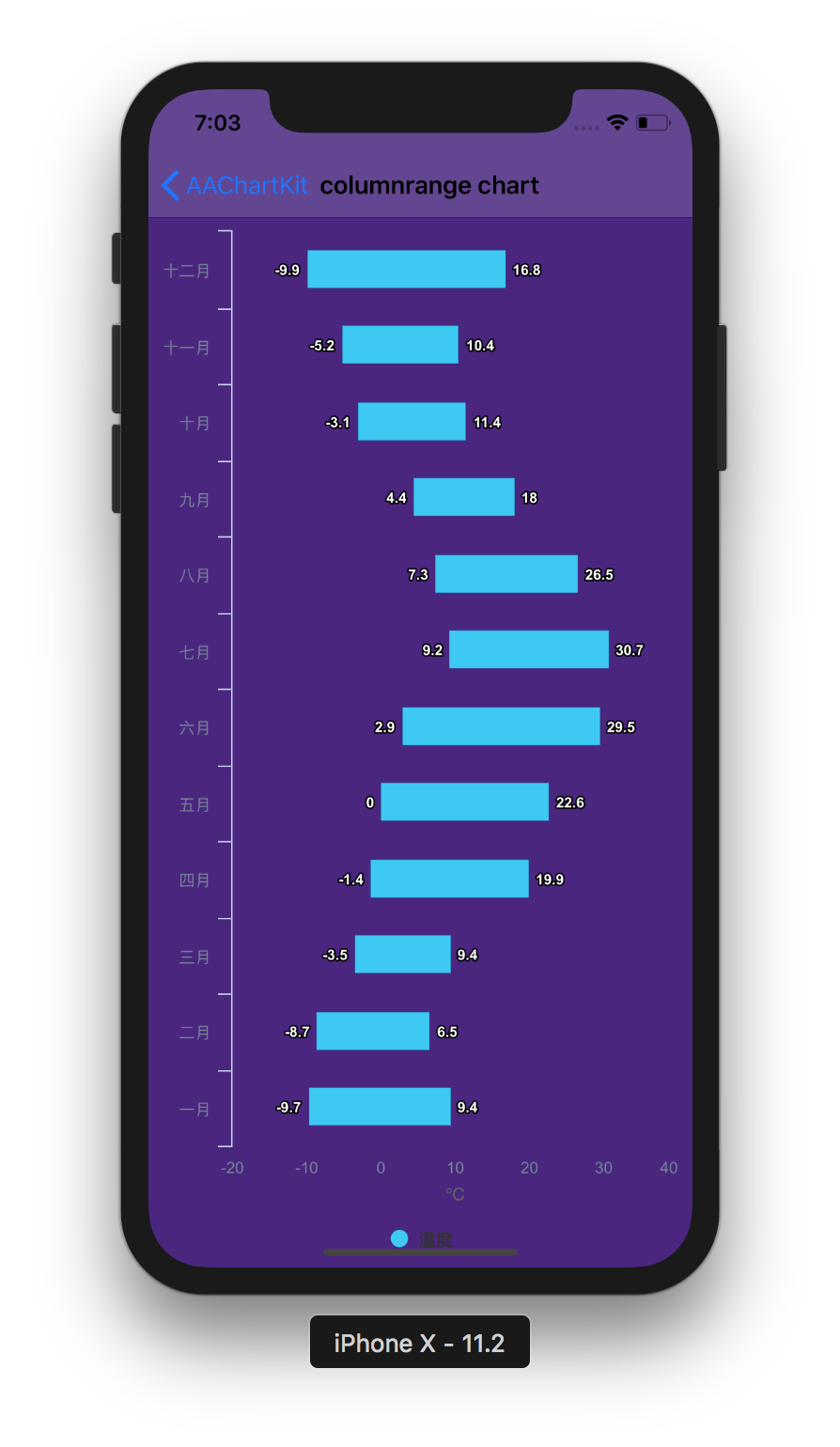
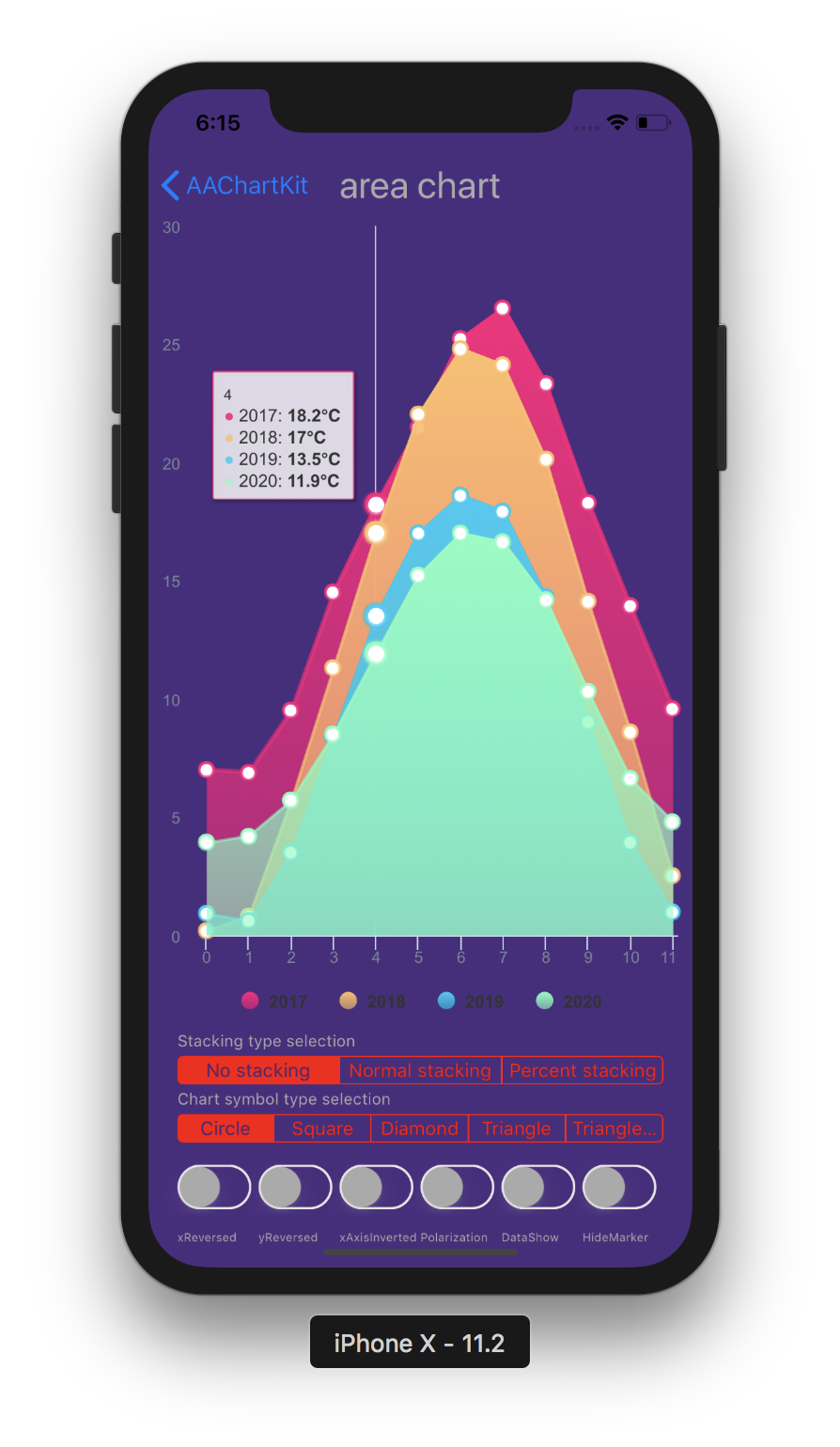
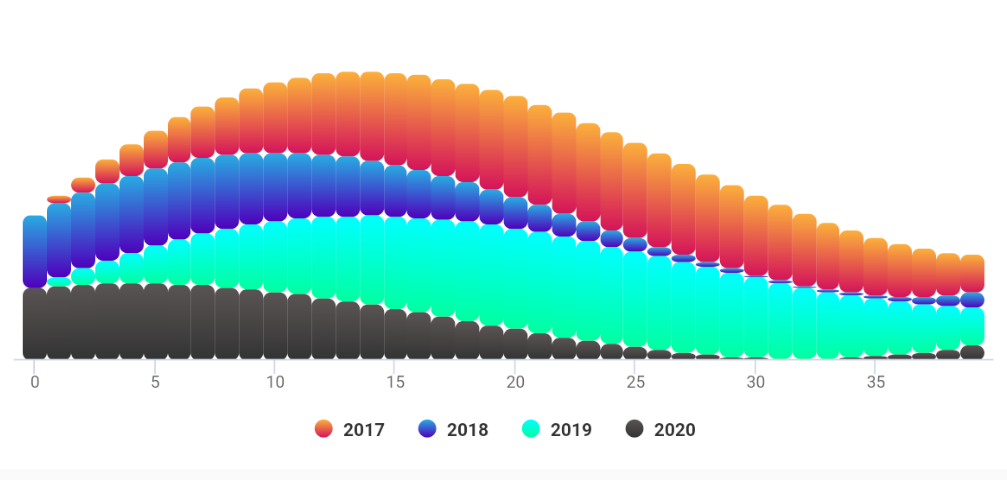
  • ๐Ÿš€ Powerful and easy to use. It supports column chart, bar chart, area chart, areaspline chart, line chart, spline chart, radar chart, polar chart, pie chart, bubble chart, packedbubble chart, pyramid chart, funnel chart, columnpyramid chart, columnrange chart, arearange chart, mixed chart and other graphics. Support for more chart types is planned.

  • ๐Ÿ“ Modern Declarative Syntax. Unlike previous imperative programming techniques, drawing any custom chart in AAChartKit, you don't need to care about the inner implementation details which is annoying && boring. Describe what you want, you will get what you described.

  • ๐ŸŽฎ Interactive and animated. The charts animation effect is exquisite, delicate, smooth and beautiful.

  • โ›“ Chain programming. Supports chain programming syntax like SwiftUI and Jetpack Compose.

  • ๐Ÿฆ‹ Minimalist. AAChartView + AAChartModel = Chart. The AAInfographics follows a minimalist formula: Chart view + Chart model = The chart you want, just like the powerful and beautiful charts framework AAChartKit.

  • ๐Ÿ–ฑ Interaction event callback. Support for monitoring user click events and single finger move over events, which can be used to achieve double charts linked-working and even multiple charts linkage, as well as other more complex custom user interaction effects.


Appreciation

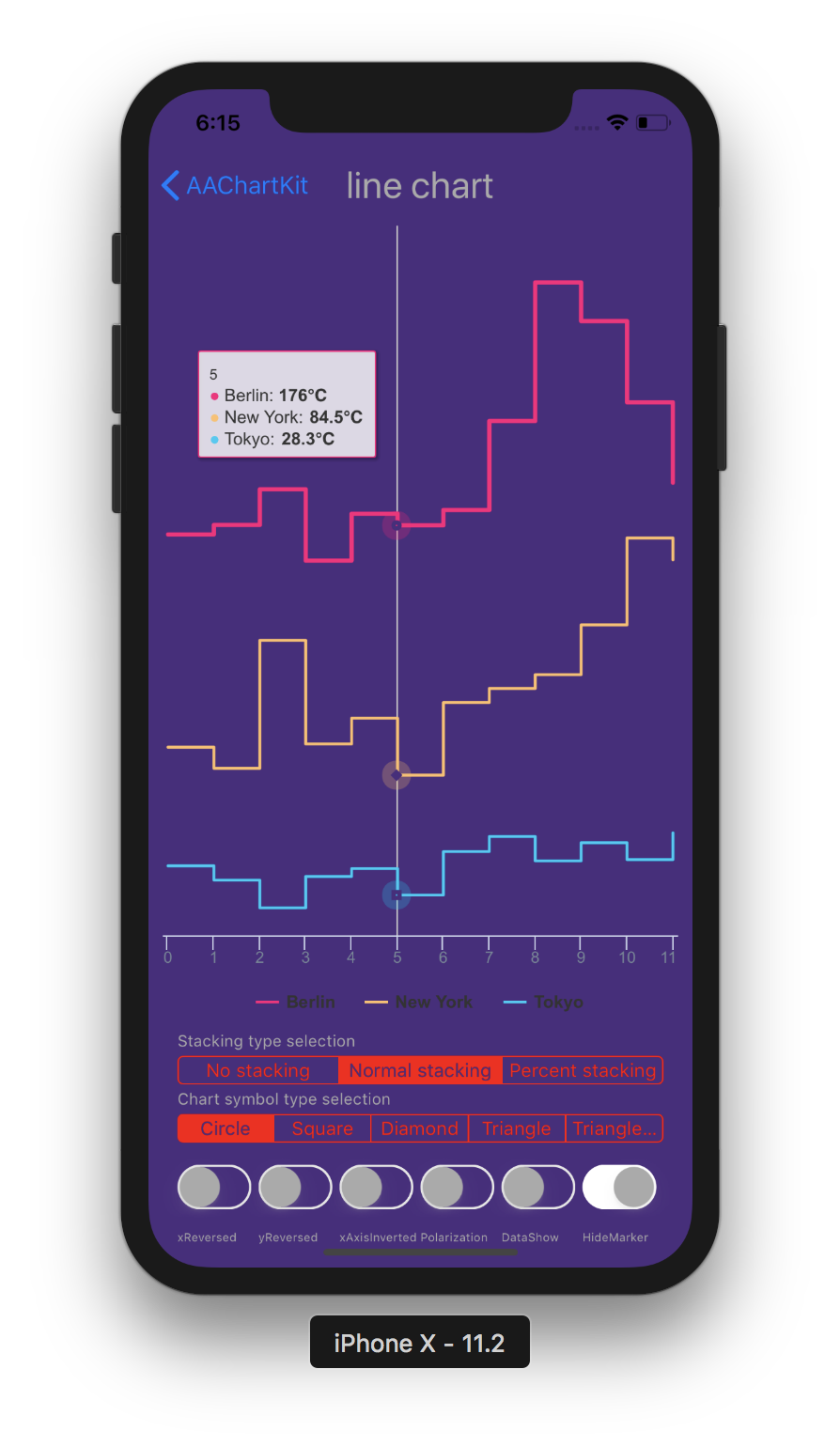
Column Chart Column Range Chart Area Chart
image1 image1 image1
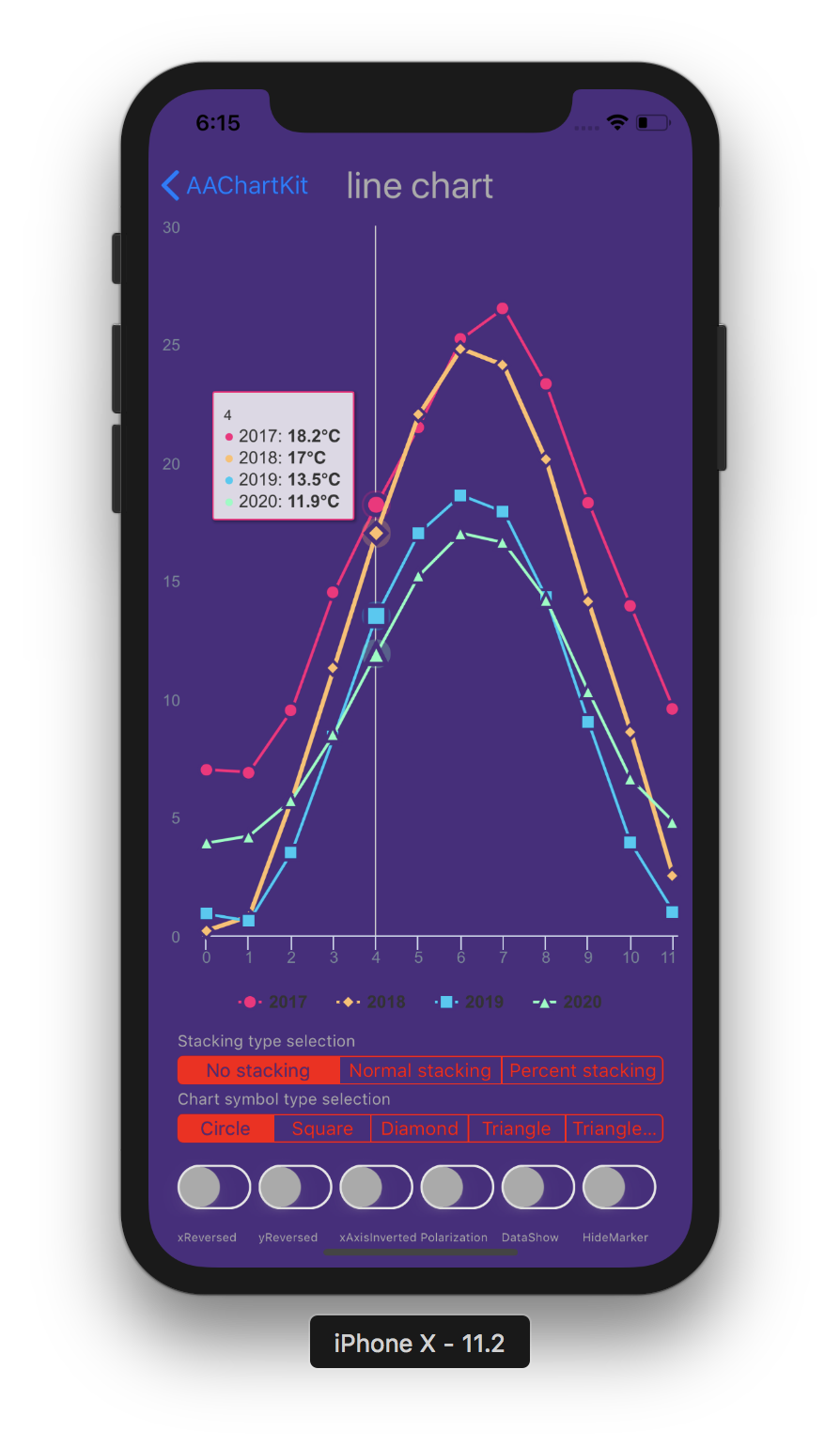
Line Chart Step Area Chart Step Line Chart
image1 image1 image1
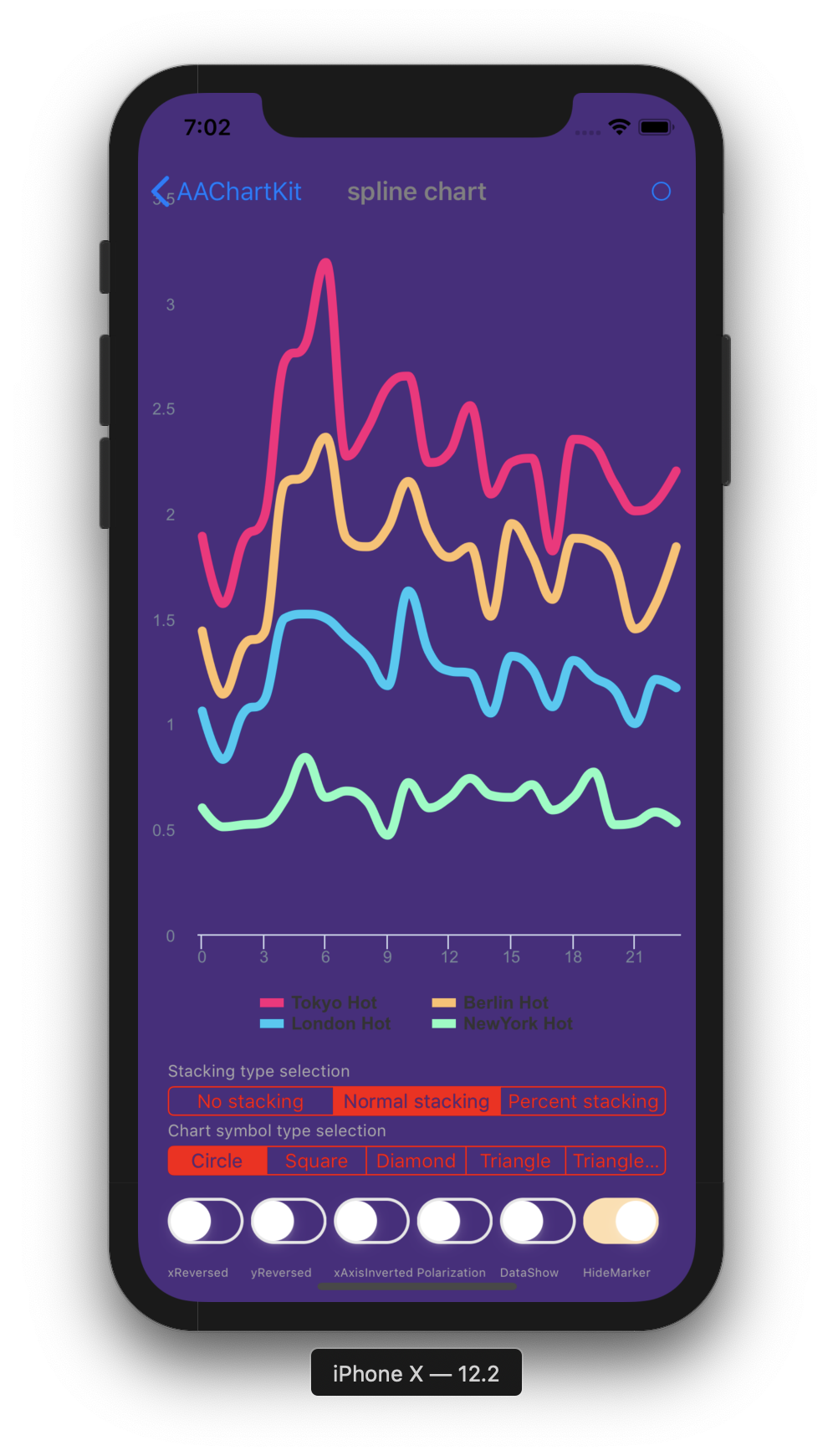
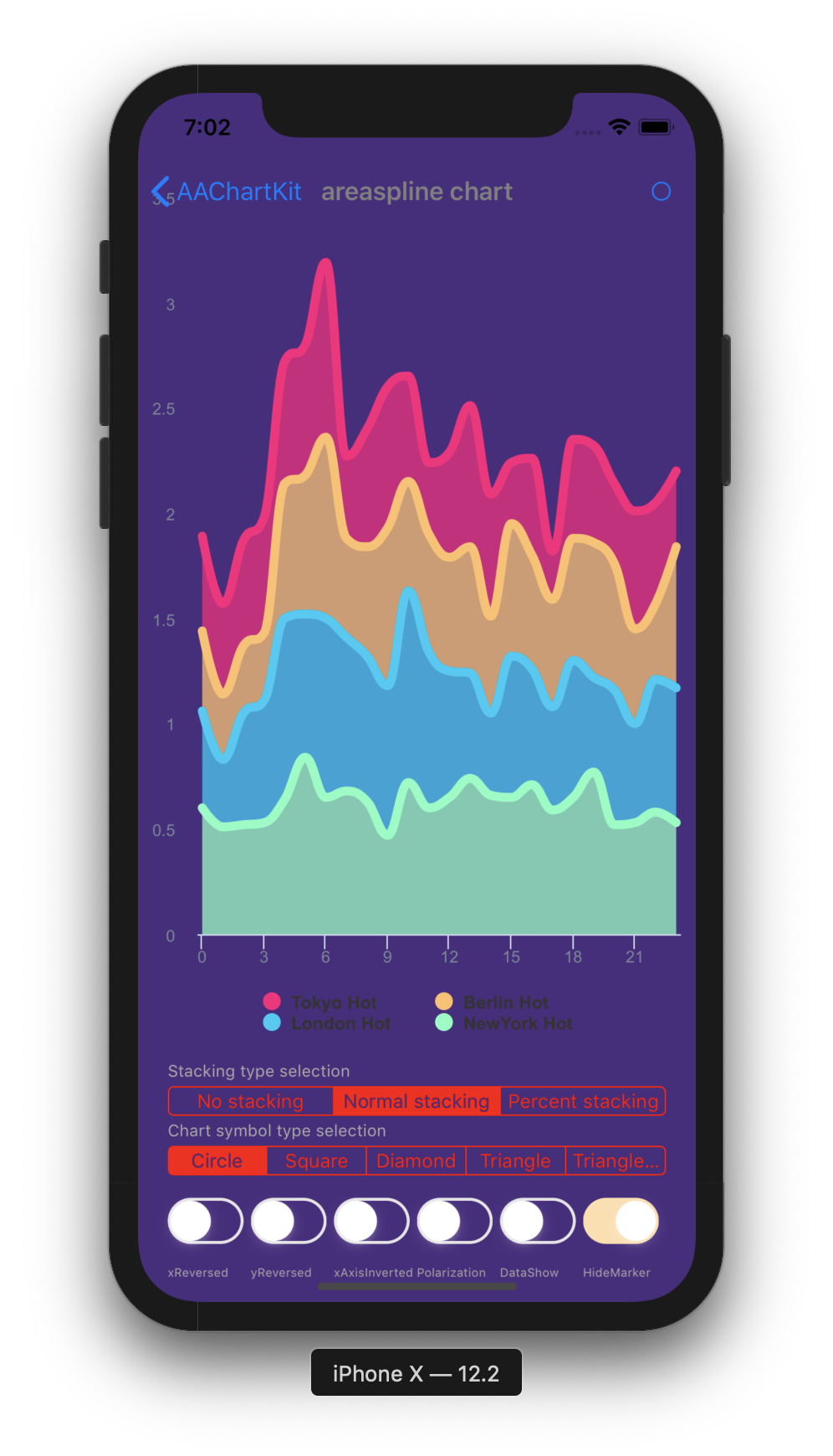
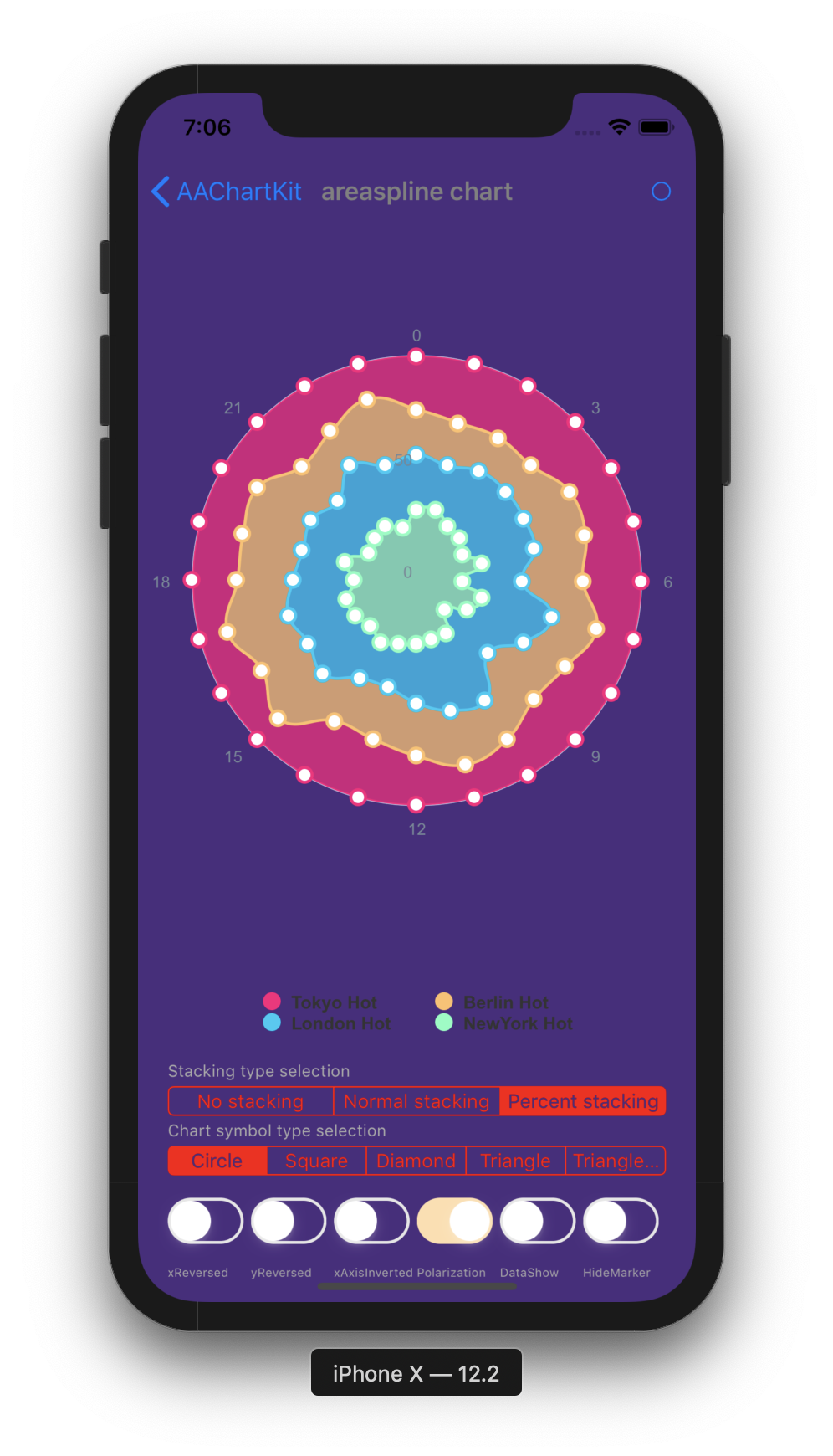
Spline Chart Areaspline Chart Stacked Polar Chart
image1 image1 image1
Bubble Chart Arearange Average Value Chart Column Mixed Line Chart
image1 image1 image1
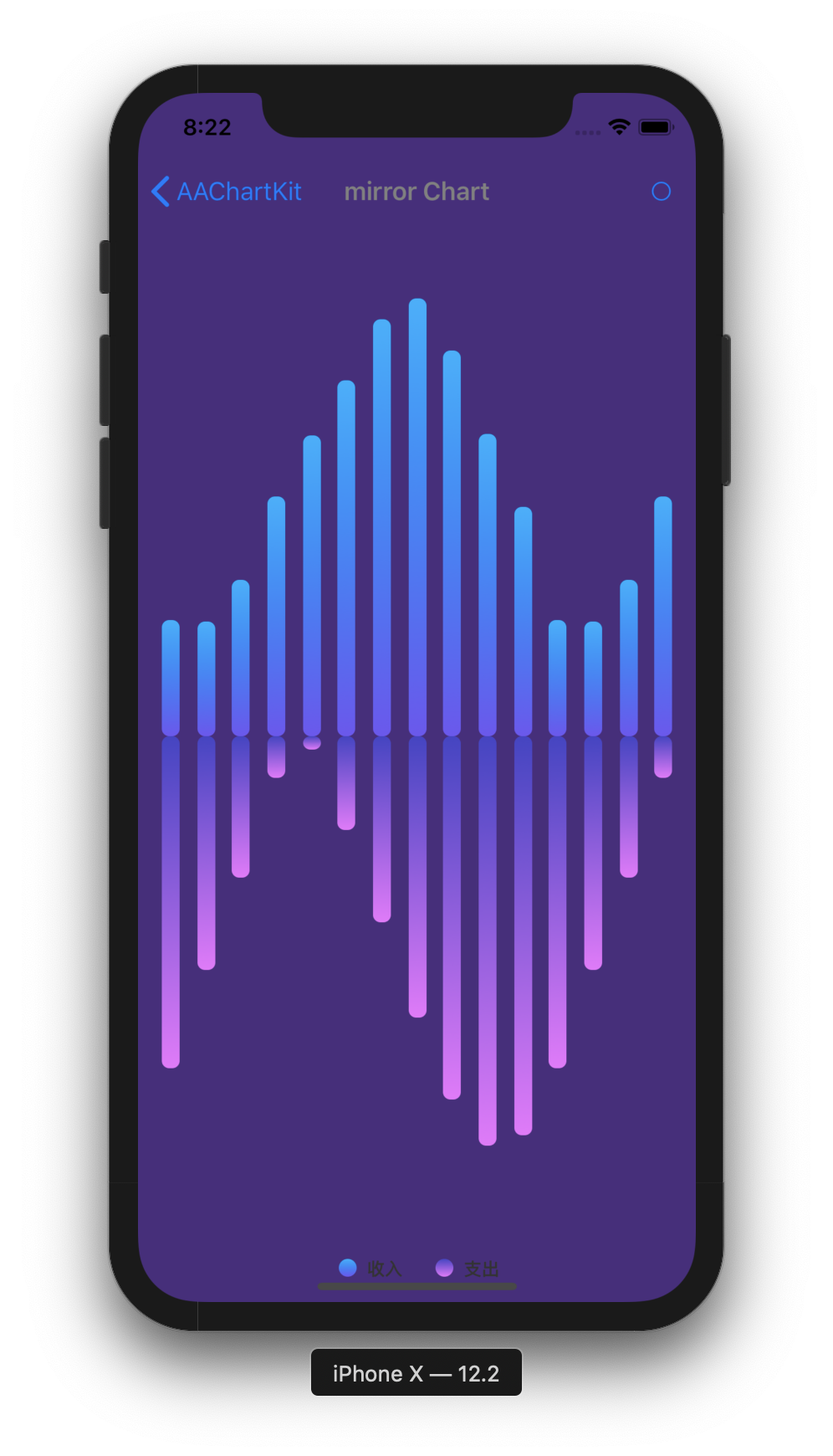
Scatter Chart Boxplot Chart Mirror Column Chart
image1 image1 image1

Installation

CocoaPods (recommended)

  1. Add following content
pod 'AAInfographics', :git => 'https://github.com/AAChartModel/AAChartKit-Swift.git'

to your project Podfile.

  1. Run pod install or pod update.
  2. Import AAInfographics.

Swift Package Manager

  1. In Xcode, select File > Add Package Dependencies...
  2. Enter the package URL:
https://github.com/AAChartModel/AAChartKit-Swift.git
  1. Select version 9.5.0 or later.
  2. Add the AAInfographics product to your target.

If you use Package.swift, add the dependency like this:

dependencies: [
    .package(url: "https://github.com/AAChartModel/AAChartKit-Swift.git", from: "9.5.0")
],
targets: [
    .target(
        name: "YourTarget",
        dependencies: [
            .product(name: "AAInfographics", package: "AAChartKit-Swift")
        ]
    )
]

Carthage

  1. Add following content
github "https://github.com/AAChartModel/AAChartKit-Swift.git" ~> 9.5

to your project Cartfile.

  1. Run carthage bootstrap --use-xcframeworks or carthage update --use-xcframeworks.
  2. Link AAInfographics.xcframework to your app target.
  3. Import AAInfographics.

Manually (old school way)

  1. Download whole project demo of AAInfographicsDemo
  2. Drag the folder AAInfographics into your project.

Usage

  1. Creat the instance object of chart view:AAChartView
        let chartViewWidth  = self.view.frame.size.width
        let chartViewHeight = self.view.frame.size.height
        aaChartView = AAChartView()
        aaChartView?.frame = CGRect(x: 0,
                                    y: 60,
                                    width: chartViewWidth,
                                    height: chartViewHeight)
        // set the content height of aachartView
        // aaChartView?.contentHeight = self.view.frame.size.height
        self.view.addSubview(aaChartView!)
  1. Configure the properties of

readme truncated โ€” read the full docs on github

Frequently asked questions

Is AAChartKit-Swift free to use?

AAChartKit-Swift is open source under the MIT licence. There is no licence fee and no seat count โ€” you can self-host it or, where the project offers one, pay a vendor for a managed version instead.

What does AAChartKit-Swift do?

๐Ÿ“ˆ๐Ÿ“Š๐Ÿ“ฑ๐Ÿ’ป๐Ÿ–ฅ๏ธAn elegant modern declarative data visualization chart framework for iOS, iPadOS and macOS. Extremely powerful, supports line, spline, area, areaspli

What is AAChartKit-Swift written in?

AAChartKit-Swift is primarily written in Swift. Its source is publicly available at https://github.com/AAChartModel/AAChartKit-Swift, and it has 2,526 GitHub stars.