0security is an open-source AI cybersecurity harness for security teams, developers and researchers who need to build and deploy continuous security agents that find, prove, fix and monitor vulnerabilities across code, binaries, dependencies, infrastructure and AI agents.
What it is
0security is an open-source, TypeScript-based AI cybersecurity harness released under Apache-2.0. It lives in the developer-tools and application-security ecosystem and is driven through a web UI, a CLI, CI and an MCP server. The project runs on the user's own infrastructure with the LLM provider of their choice, including any provider key or a local OpenAI-compatible server, so only the context sent to the chosen model leaves the environment.
The concrete problem it solves is the gap between finding a vulnerability and proving, fixing and monitoring it. It replaces a detection-only, one-off scanning workflow with persistent security agents that have a scope, budget and memory and that run on a schedule or on every pull request. Those agents can examine source code, web apps and APIs, MCP endpoints and packages, dependencies, binaries, infrastructure and AI agents; every finding links to its source evidence, and patches are reproduced and validated before they are applied.
Key capabilities
- Finds vulnerabilities in source code, web apps and APIs, MCP endpoints and packages, with each finding linked to its source evidence.
- Checks and fixes dependencies for npm, pnpm, Cargo and PyPI through 0 deps scan and 0 deps fix.
- Reproduces findings, generates patches and validates each patch before application, then keeps watching for recurrence.
- Builds persistent security agents with a scope, budget and memory that run on a schedule or on every pull request, with skills, plugins and automations.
- Reverse engineers binaries with Ghidra and supports kernel and memory-safety fuzzing, while mapping attack surface across domains, JavaScript, cloud and Entra ID posture.
- Hunts variants of a known fix across a codebase, tests AI agents with prompt-injection campaigns, and assembles GHSA-ready advisory drafts from saved findings.
- Automates scans in CI/CD with JSON and SARIF output, exposes an MCP server for coding agents, and can be extended with plugins and skills.
Who uses it and how
- Security engineers can run the harness on a laptop, in CI or in a container, keeping scan context on infrastructure they control and sending only selected context to a provider key or local OpenAI-compatible server.
- Application security teams can create persistent agents with a scope, budget and memory that run on a schedule or on every pull request, covering code, dependencies, infrastructure and AI agents.
- CI/CD owners can automate scans with JSON and SARIF output and use the GitHub Action guide referenced by the README.
- Coding-agent users can drive 0security over MCP; the README shows the 0 mcp-server command with --automations and --workspace options, alongside plugin and skill extension points.
- Security researchers can reverse engineer binaries with Ghidra, run kernel and memory-safety fuzzing, and assemble GHSA-ready advisory drafts; the project cites disclosed vulnerabilities and upstream fixes, including in the Linux kernel.
Getting started
The README's quick start is curl -fsSL https://raw.githubusercontent.com/0sec-labs/0security/main/install.sh | bash, followed by the 0 command; the terminal path sets ANTHROPIC_API_KEY and runs 0 scan source ./your-repo --runtime api --depth quick --cost-ceiling 2. It also ships as the Docker image ghcr.io/0sec-labs/0security:latest, a Windows x64 executable marked experimental, and a source build with Node.js 24+ and pnpm.
How it compares
No comparable tools or paid-product replacement list is provided, so 0security stands alone in this registry. Its documented integrations are with coding agents, MCP, CI/CD and model providers rather than with named competing security products.
When to use it — and when not to
A self-hoster must supply model access through a provider key or a local OpenAI-compatible server and run the CLI, container or CI job on infrastructure they control. Teams that want a fully hosted, zero-operations service should not pick it, because the README describes a self-hosted deployment model. The Windows build is marked experimental, and the licence metadata (Apache-2.0) differs from the README (MIT or Apache-2.0), so terms should be confirmed before adoption.
project readme (upstream, from github) — read inline

Continuous security agents for your whole tech stack
By the Swiss Applied AI & Cybersecurity Research Lab
Backed by




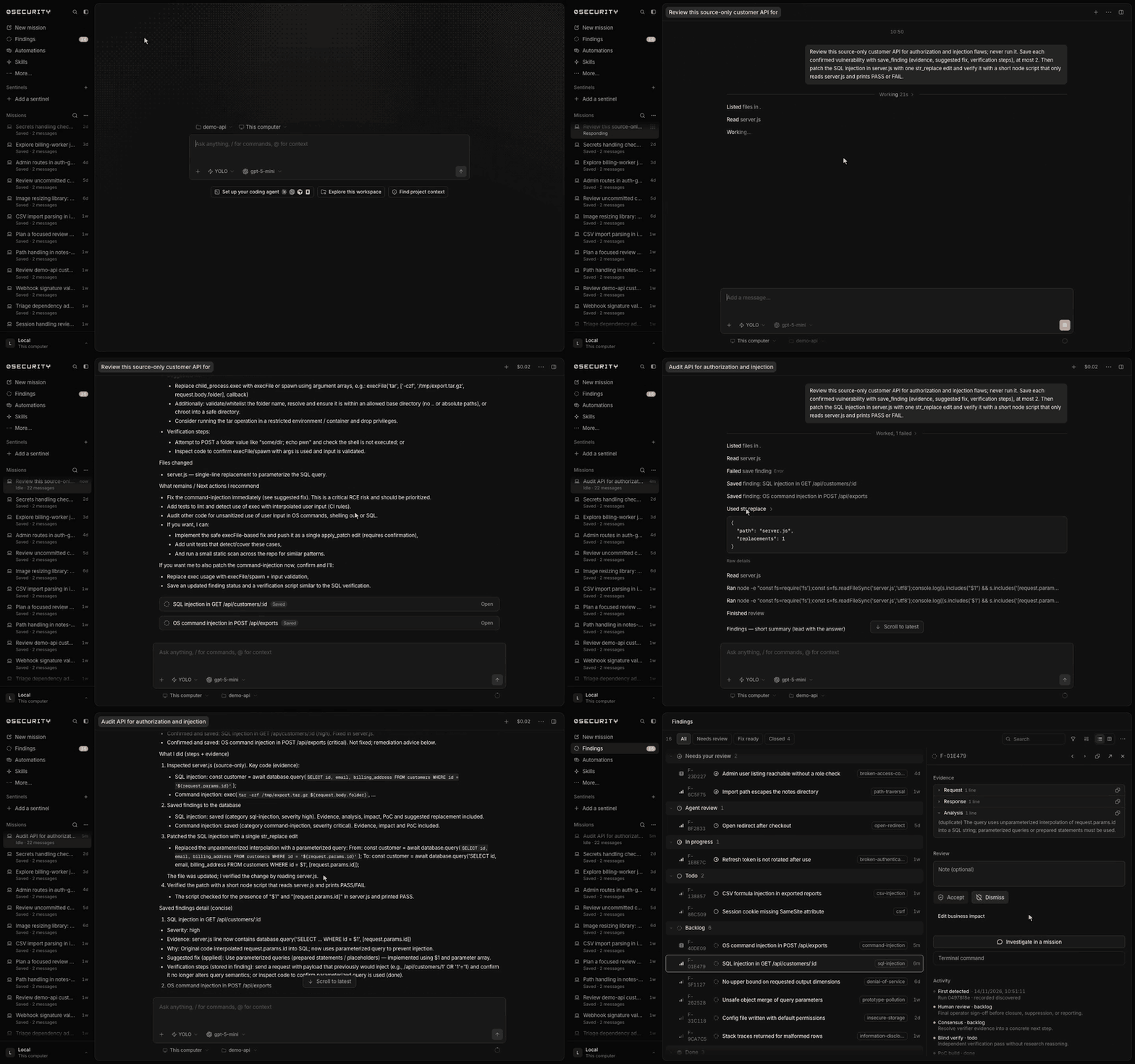
0security is an open-source framework for building and deploying security agents. They find vulnerabilities across your code, dependencies, infrastructure, LLM apps and AI agents, prove them, fix them, verify the fix and keep watching. It runs on your own infrastructure, with the LLMs you choose.




Quick start
curl -fsSL https://raw.githubusercontent.com/0sec-labs/0security/main/install.sh | bash
0
Prefer the terminal?
export ANTHROPIC_API_KEY="your-api-key"
0 scan source ./your-repo --runtime api --depth quick --cost-ceiling 2
Windows, Docker and source installs
- Windows (experimental): download
0-windows-x64.exe from Releases.
- Docker:
docker run --rm ghcr.io/0sec-labs/0security:latest --help. See the Docker guide.
- Source: Node.js 24+ and pnpm, then
pnpm install --frozen-lockfile && pnpm build.
install.sh supports Apple Silicon macOS and x64/ARM64 Linux. Set INSTALL_DIR to change the location.
Only scan systems you own or are authorized to test. See Scope & authorization.
What can you do with 0?
- Find vulnerabilities in source code, web apps and APIs, MCP endpoints and packages
- Check dependencies with
0 deps scan and 0 deps fix for npm, pnpm, Cargo and PyPI
- Hunt variants of a known fix across a codebase
- Reverse engineer binaries with Ghidra, plus kernel and memory-safety fuzzing
- Map your attack surface: domains, JavaScript, cloud and Entra ID posture
- Verify and fix: reproduce findings, generate patches and validate each one
- Build persistent security agents: Agents with a scope, budget and memory that run on a schedule or on every pull request, with skills, plugins and automations
- Disclose: assemble GHSA-ready advisory drafts from saved findings
- Test AI agents with prompt-injection campaigns
- Automate scans in CI/CD with JSON and SARIF output
- Extend it with plugins and skills, or drive it from coding agents over MCP
Why 0?
- Open source: MIT or Apache-2.0, built in the open
- Private: runs on your computer, in your CI or in a container, and only the context you send to your chosen model leaves it
- Flexible: any provider key or local OpenAI-compatible server, from the CLI, CI or a coding agent over MCP
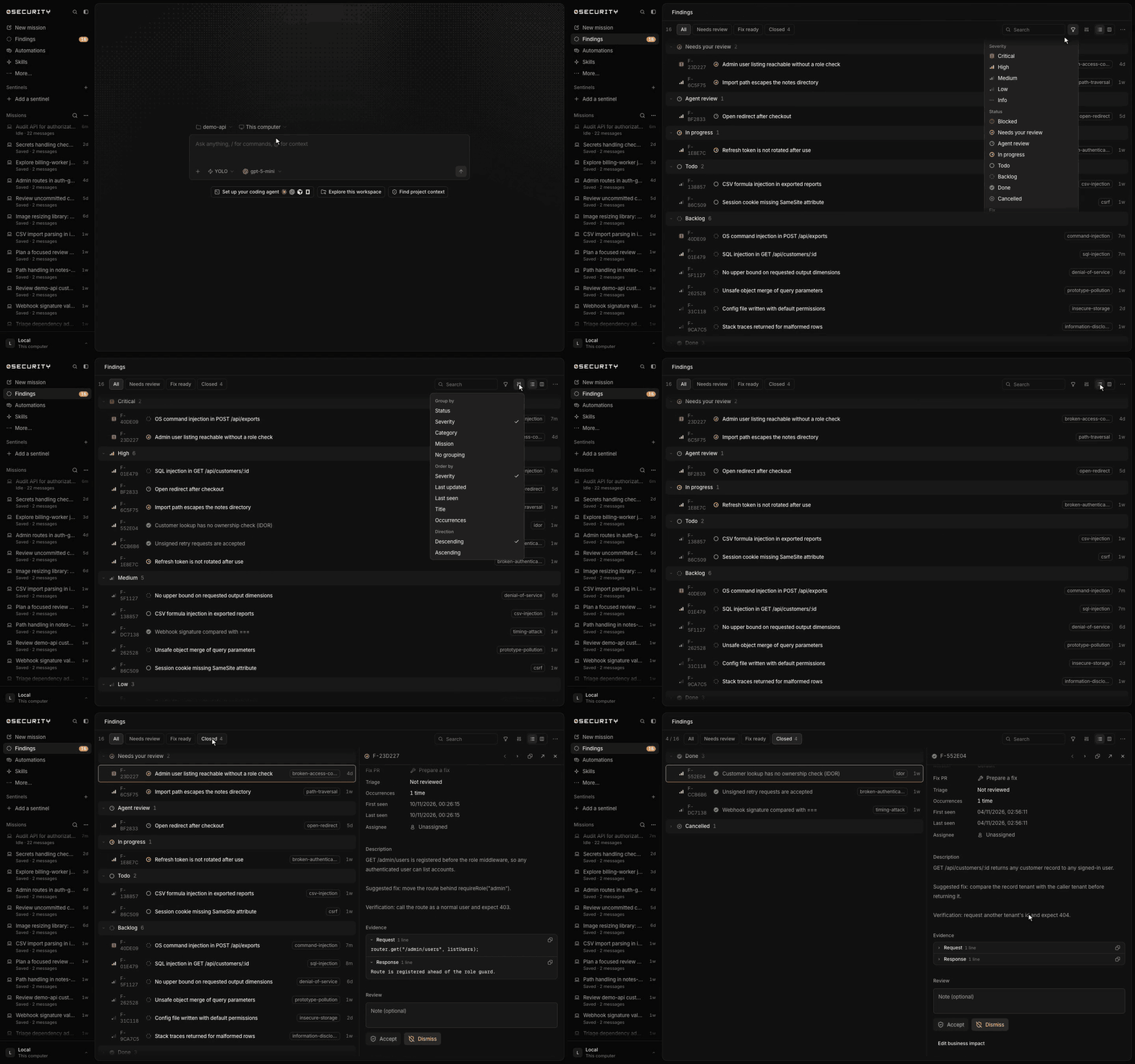
- Evidence first: every finding links to its source evidence
- Verified fixes: patches are reproduced and validated before you apply them
- Proven in public: disclosed vulnerabilities and upstream fixes, including in the Linux kernel
CI and coding agents
0 automation run --template security-research \
  --target /absolute/path/to/repo --workspace /absolute/path/to/repo
0 mcp-server --automations --workspace /absolute/path/to/repo
See the CI/CD guide, plugins and MCP and the command reference.
Learn more
Contributing
0 is built in the open. Huge thanks to everyone who has filed a bug, fixed a doc or sent a patch.
- Report bugs in issues
- Improve the docs
- Write a plugin or scan module
- Found a vulnerability in 0? See SECURITY.md
Start with the contributing guide. Run pnpm install and pnpm dev to work on the engine. Open an issue before large changes.

License
MIT OR Apache-2.0. Public disclosures and upstream fixes.