







xalgorix is a free, open source ai security & privacy project written in Go and released under Apache-2.0. It has 1,103 GitHub stars, 194 forks and 2 open issues, and was last pushed 2 days ago. On this registry it ranks #23 of 34 tracked projects in AI Security & Privacy, with 5 head-to-head comparisons available. It gained 24 stars over the last 3 tracked days.

What is xalgorix?

Xalgorix is an open-source, self-hosted autonomous AI penetration-testing platform for security teams, pentesters, and bug-bounty hunters who want every reported finding independently re-exploited as proof instead of triaged as a maybe.

What it is

Xalgorix combines an autonomous LLM agent with an independent verifier inside a single self-hosted tool. The agent works a full penetration-testing methodology end to end — real-time reconnaissance, vulnerability detection, and exploitation orchestration — and the verifier then re-exploits each finding before it reaches the report. The project is written in Go and TypeScript, ships under the Apache-2.0 licence, and lives in the AI security and privacy space as an autonomous-pentesting and ethical-hacking tool.

The concrete problem it solves is the triage pile. Conventional scanners detect and report, which leaves a human to separate real issues from maybes. Xalgorix is built on the position that most scanners detect while Xalgorix proves, so the output is a verified finding rather than a queue of unconfirmed alerts. It runs on the operator's own infrastructure, keeps data private, and works bring-your-own-LLM, so the model provider and the API key stay under the operator's control.

Key capabilities

  • Autonomous LLM agent that runs a full pentest methodology covering reconnaissance, vulnerability detection, and exploitation.
  • Independent verifier that re-exploits every finding before it is reported, so results carry proof rather than confidence scores.
  • Bring-your-own-LLM setup through xalgorix --setup, storing the key privately in ~/.xalgorix.env with mode 0600.
  • Local model support: Ollama needs no API key at all.
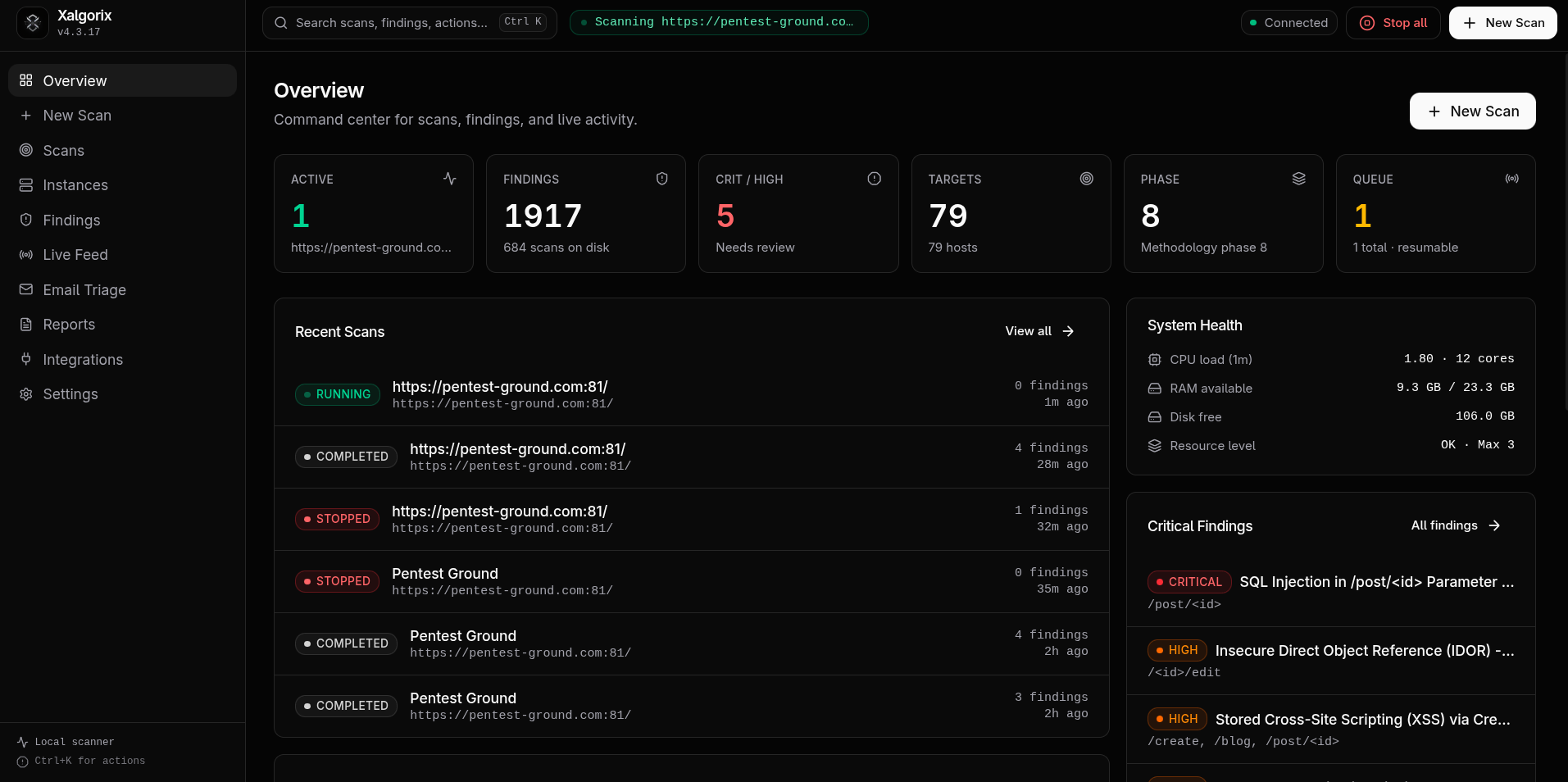
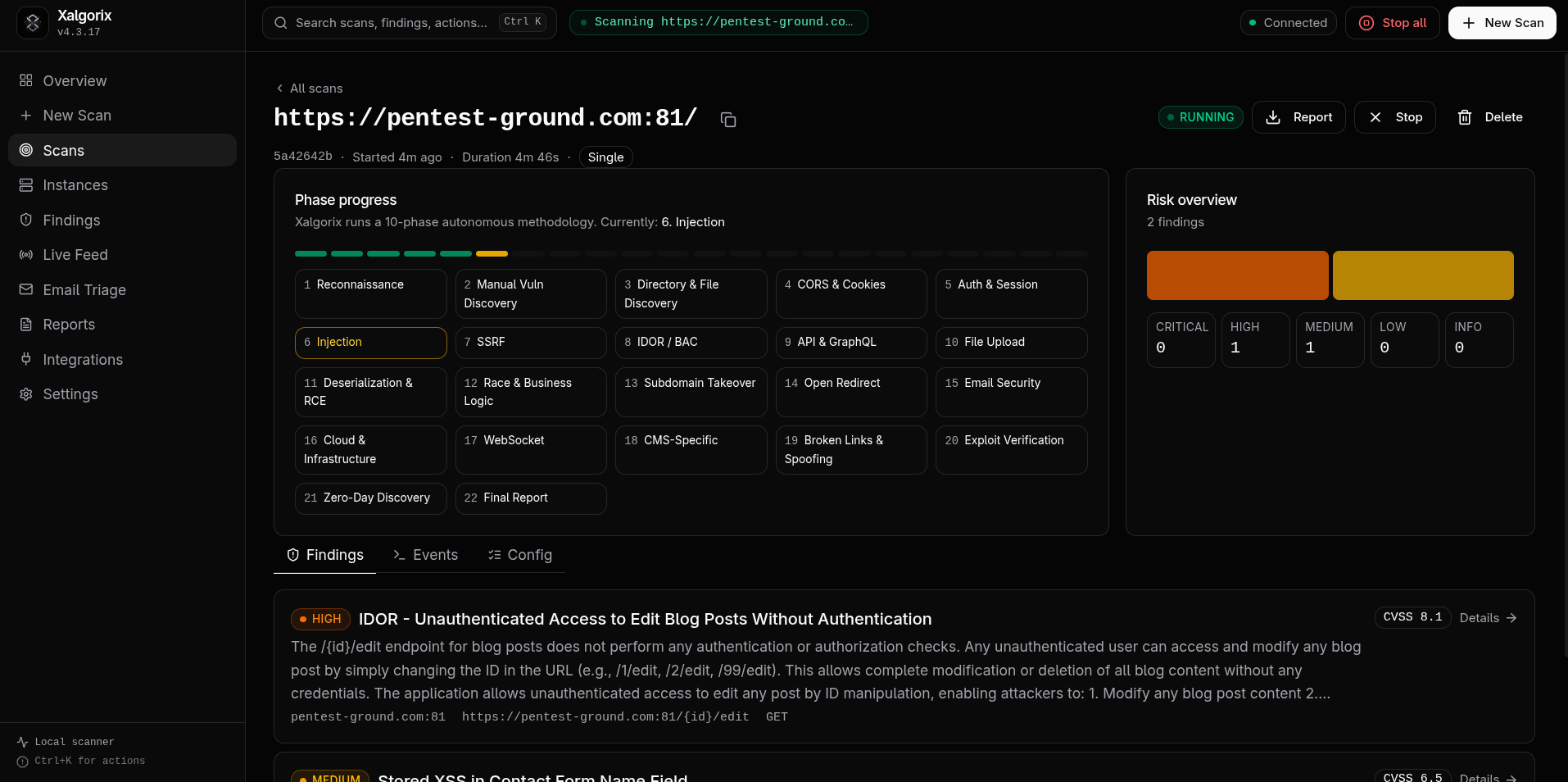
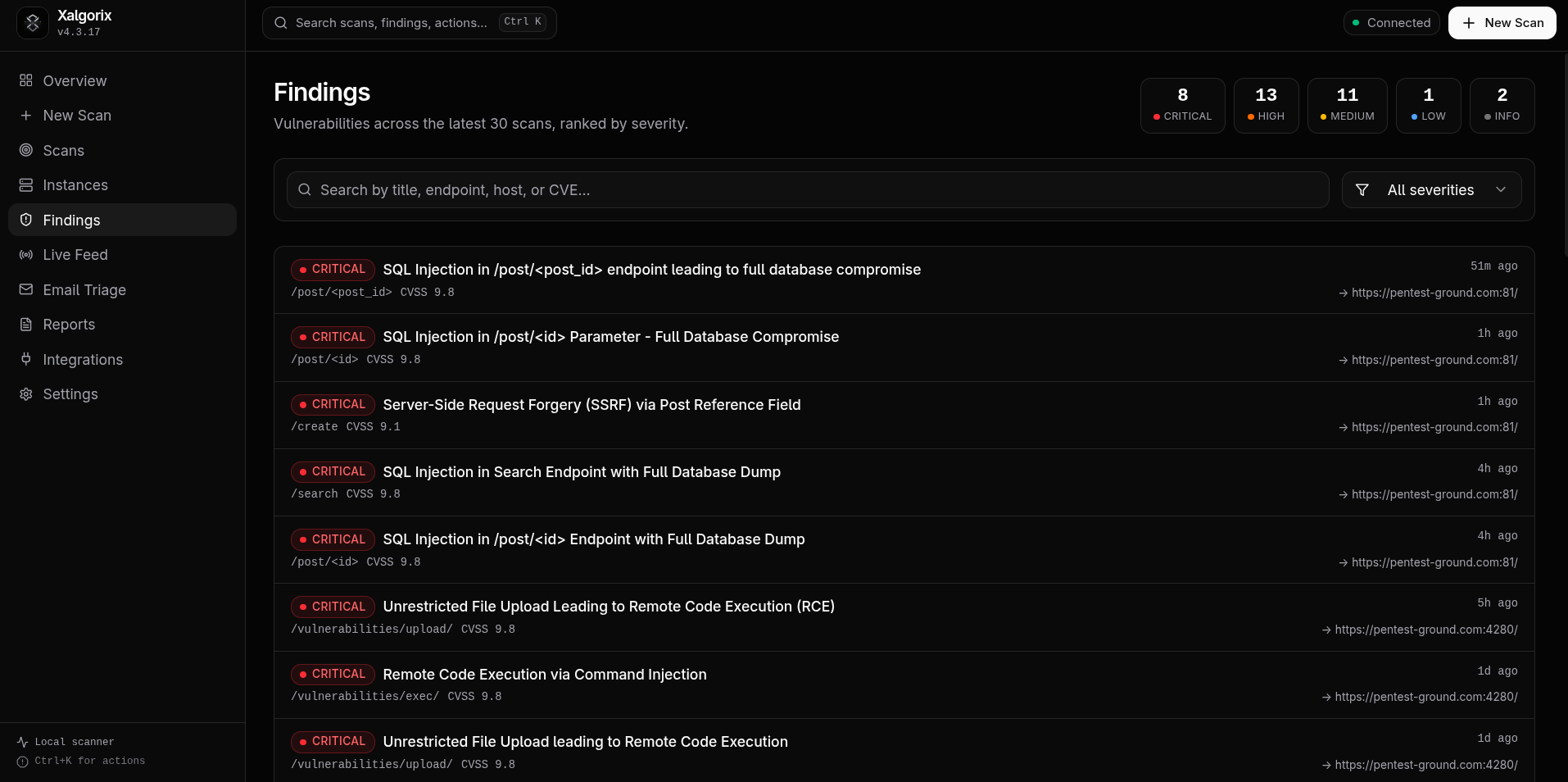
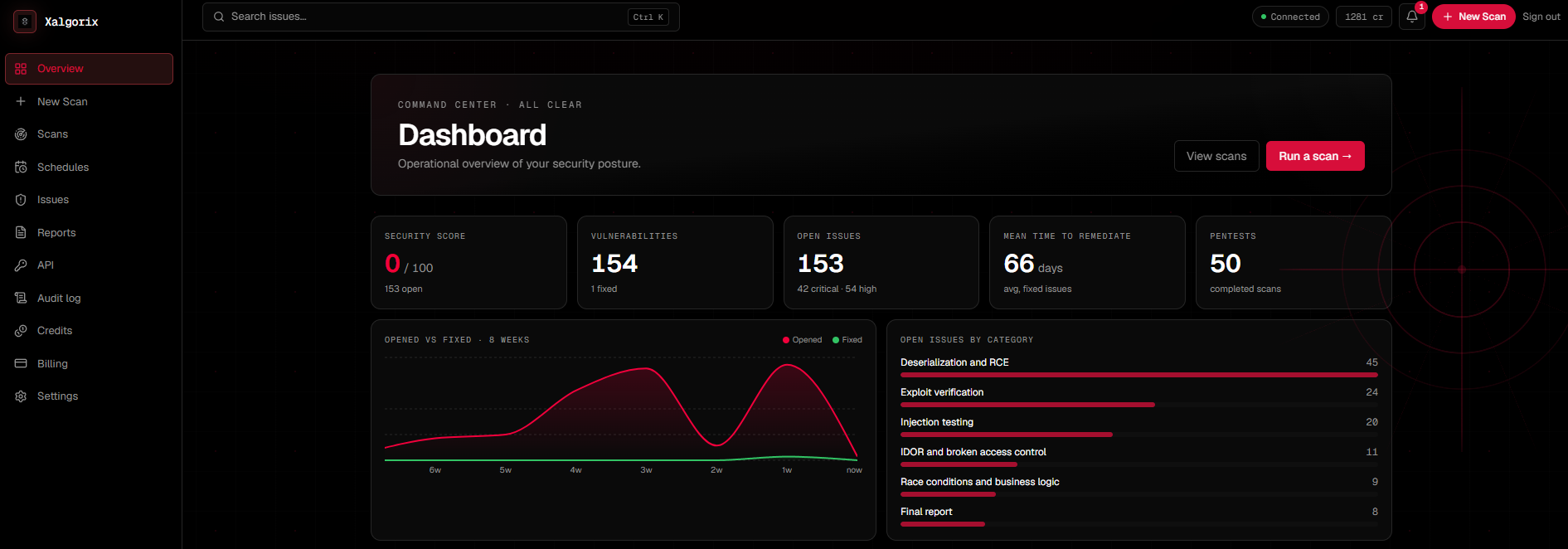
  • Self-hosted web dashboard on 127.0.0.1:9137, showing an overview, scan detail, and findings views.
  • Proxy support over HTTP(S) and SOCKS5.
  • Two distribution paths: a one-line install script that pulls the prebuilt binary for Linux or macOS on amd64/arm64, and a Docker image published as xalgord/xalgorix:latest.

Who uses it and how

  • Bug-bounty hunters running autonomous reconnaissaince and exploitation against their own targets, with the verifier filtering noise before submission.
  • Internal security teams self-hosting on Linux or macOS who need scans to stay inside their own network and off third-party infrastructure.
  • Teams with data-residency or model-choice constraints, using the bring-your-own-LLM path or a local Ollama model so prompts and findings never leave the host.
  • Operators checking regional application behaviour through proxies, using location targeting and sticky sessions over HTTP(S) or SOCKS5.
  • Teams that prefer not to run anything themselves can use the fully managed hosted cloud at www.xalgorix.com.

Getting started

Install with curl -sSL https://www.xalgorix.com/install | bash, then run xalgorix --setup to pick a provider, confirm a model, and enter an API key; start the dashboard later with xalgorix --web. The toolchain-free alternative is the Docker route: docker run --rm -p 9137:9137 --privileged -v xalgorix-data:/data xalgord/xalgorix:latest.

How it compares

The available facts name no paid products that Xalgorix replaces, and they name no comparable open-source pentesting tools either, so on this registry it stands alone in its category. The nearest reference point in the README is the general class of scanners, which it positions against on the axis of verification rather than detection. Anyone needing a concrete side-by-side comparison should treat that positioning as the project's own claim, not an independently verified benchmark.

When to use it — and when not to

A self-hoster should expect to run the Docker image with --privileged, because Docker's default sandbox drops capabilities such as NET_ADMIN and applies a seccomp filter that breaks low-level tooling access — so this is not a workload for a hardened, capability-restricted container environment. Long autonomous scans work best on a frontier model with strong reasoning, long-context performance, and reliable tool calling; smaller or local models are supported but need more supervision. Anyone unwilling to grant that level of host-like access, or who wants zero operational responsibility, is better served by the hosted cloud than by a self-managed deployment.

project readme (upstream, from github) — read inline

Go License Platform Hosted GitHub stars GitHub forks GitHub release

Ask DeepWiki

xalgorix/xalgorix | Trendshift

Xalgorix — Open-source AI pentester that proves vulnerabilities

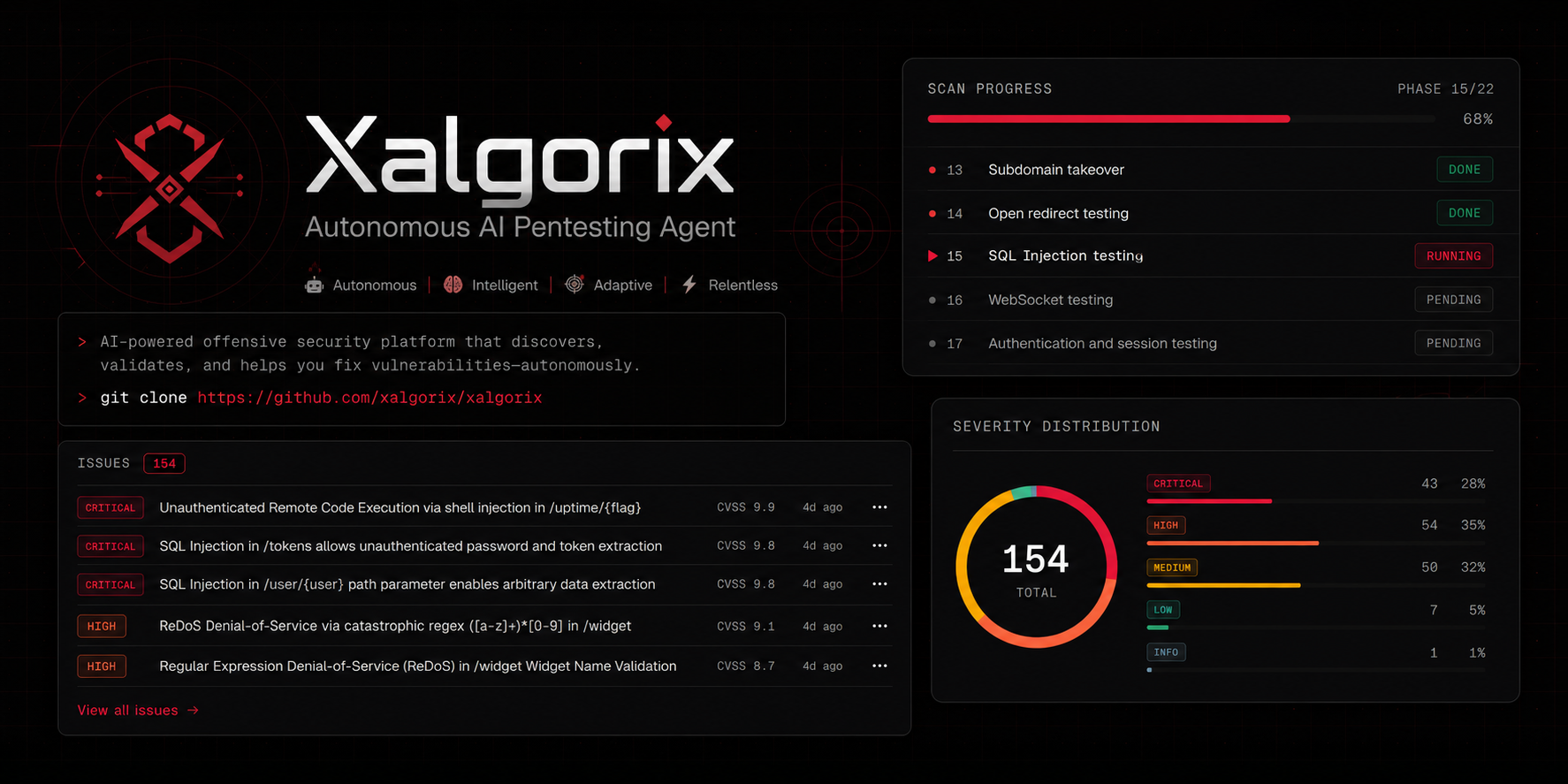
Most scanners detect. Xalgorix proves. An autonomous LLM agent works a full pentest methodology, then an independent verifier re-exploits every finding before it's reported — so you get proof, not a pile of maybes to triage. Self-hosted, private, and bring-your-own-LLM. Built in Go + TypeScript.

🚀 Quick Start · 💡 Why Xalgorix · ✨ Features · 🎯 Use Cases · ☁️ Hosted Cloud · 📖 Docs


📸 Screenshots

🖥️ Self-hosted dashboard — runs locally on 127.0.0.1:9137

Overview dashboard Scan detail Findings
Xalgorix overview dashboard Xalgorix scan detail Xalgorix findings

☁️ Hosted cloud dashboard — the fully managed version at www.xalgorix.com

🤝 Sponsors

Thanks to Swiftproxy for sponsoring Xalgorix.
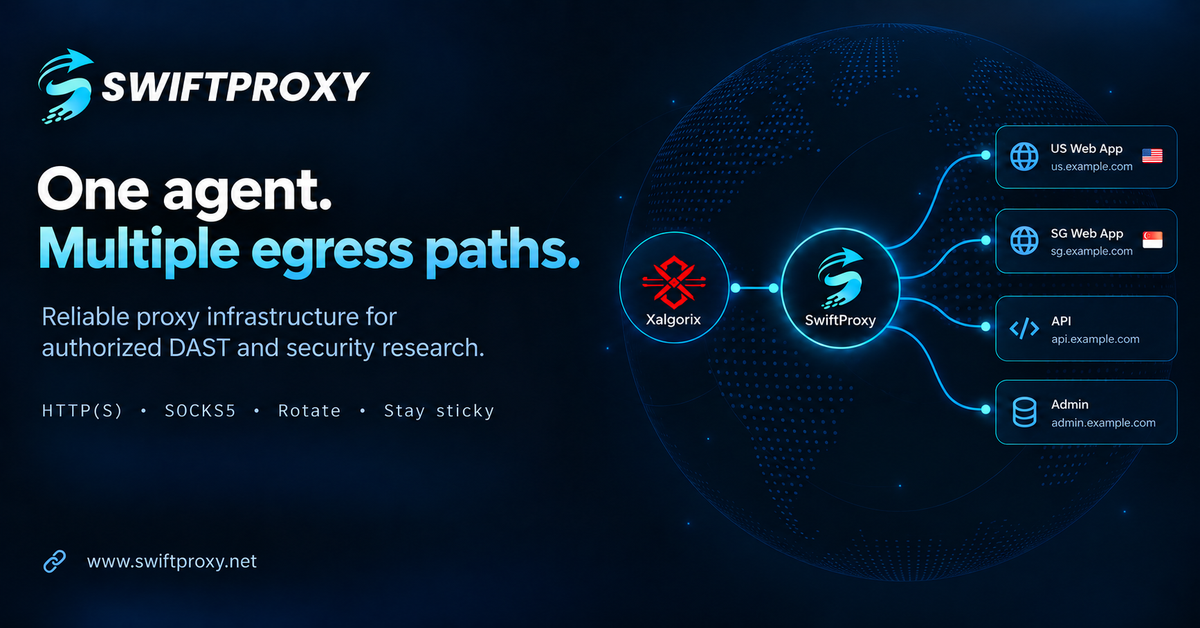
Your app can behave differently depending on where a request comes from. For Xalgorix users checking their own applications across regions, Swiftproxy offers location targeting to review regional behavior and sticky sessions to help keep a consistent IP during a test session. It supports HTTP(S) and SOCKS5, the same proxy protocols Xalgorix supports.

Residential proxies from $0.70/GB. Free testing is available, and Xalgorix users get 10% off with code PROXY90.

Explore Swiftproxy and request a free test →


🚀 Quick Start

Install (one line):

curl -sSL https://www.xalgorix.com/install | bash

This downloads the prebuilt binary for your platform (Linux or macOS, amd64/arm64) from the latest release. Then run the interactive setup wizard:

xalgorix --setup

Choose your provider, confirm a model, and enter the API key when prompted. For best results, use a current frontier model with strong reasoning, long-context performance, and reliable tool calling—such as the latest capable GPT, Claude, or Gemini model available to you. Smaller or local models remain supported, but may require more supervision during long autonomous scans. Xalgorix stores the key privately in ~/.xalgorix.env (mode 0600) and can launch the dashboard for you. Local Ollama needs no API key.

If you choose not to launch immediately, start later with xalgorix --web and open http://127.0.0.1:9137. You can change providers or advanced options at any time under Settings → LLM, or rerun xalgorix --setup.

Or run with Docker — batteries included, no toolchain needed:

docker run --rm -p 9137:9137 \
  --privileged \
  -v xalgorix-data:/data \
  xalgord/xalgorix:latest

--privileged gives the toolset the same host-like access it has when run natively as root. Docker's default sandbox drops capabilities (like NET_ADMIN) and applies a seccomp filter, which breaks low-level tools (iptables/route changes, ARP-spoof/MITM, tun/tap VPNs, ptrace-based debuggers, masscan interface tuning). Since an image can't grant itself these, they must be set at run time. The container is a disposable, network-isolated scanning sandbox running as root — privileged is the intended posture; never expose the dashboard publicly without auth. Prefer least-privilege? Swap --privileged for --cap-add=NET_ADMIN --cap-add=NET_RAW --cap-add=SYS_PTRACE --security-opt seccomp=unconfined.

Open http://localhost:9137. You don't need an LLM key to start — the dashboard launches without one; set the model + API key under Settings → LLM (it persists to the /data volume). If you don't pass XALGORIX_USERNAME/XALGORIX_PASSWORD, a random admin password is generated and printed to the container logs on first run.

Easiest — Docker Compose (maps the port + a persistent volume for you):

curl -sSLO https://raw.githubusercontent.com/xalgorix/xalgorix/main/docker-compose.yml
docker compose up -d
docker compose logs -f   # shows the generated admin password on first start

The image ships an extensive offensive-security toolset preinstalled (nmap, nuclei, httpx, subfinder, katana, ffuf, gobuster, sqlmap, masscan, dalfox, feroxbuster, and more) and keeps every package manager (apt, go, cargo, pipx, npm) available so the agent can still auto-install anything missing at runtime. It runs as root inside the container by design — treat the container as a disposable, network-isolated scanning sandbox and never expose the dashboard without auth. Images are published for both amd64 and arm64.

Or build from source (needs Go 1.26+ and Node.js):

git clone https://github.com/xalgorix/xalgorix.git
cd xalgorix
make build
sudo install -m 755 build/xalgorix /usr/local/bin/xalgorix

[!TIP] Prefer zero setup? A fully managed version runs at www.xalgorix.com — click-to-scan, no install or API keys required.

🤖 Review pull requests automatically — free GitHub App

Want a security review on every pull request with zero setup? Install the Xalgorix GitHub App. It reads each PR's diff and comments a security review — injection, broken auth/IDOR, SSRF, secrets, unsafe patterns — right on the pull request. Updates in place on new commits, and you can comment @xalgorix review to re-run on demand. No workflow file, no API key, no account — and it's free.

➕ Add Xalgorix to GitHub →

For merge gating and full exploit-verified pentests in CI, use the hosted scanner or the GitHub Action.

[!IMPORTANT] Use Xalgorix only on systems you own or have explicit permission to test.

[!TIP] Prefer not to self-host? A fully managed version is available at www.xalgorix.com — click-to-scan, no install or API keys required.

📚 Contents

📸 Screenshots 🔩 Configuration 🧾 Environment Variables
🚀 Quick Start 🆙 Upgrading 🔤 Provider Prefixes
🔎 Overview 🏃 Running 💻 CLI Reference
💡 [Why Xalgorix](#-why-xa

readme truncated — read the full docs on github

Frequently asked questions

Is xalgorix free to use?

xalgorix is open source under the Apache-2.0 licence. There is no licence fee and no seat count — you can self-host it or, where the project offers one, pay a vendor for a managed version instead.

What does xalgorix do?

Autonomous AI pentesting agents — real-time reconnaissance, vulnerability detection, and exploitation orchestration. Go + TypeScript.

What is xalgorix written in?

xalgorix is primarily written in Go. Its source is publicly available at https://github.com/xalgorix/xalgorix, and it has 1,103 GitHub stars.