Windshift is a self-hosted, open-source work management platform written in Go that gives teams kanban boards, custom workflows, and optional test, time, and asset management while keeping project data on infrastructure they control.
What it is
Windshift is work management software that fits the way a team works: plan projects, organize work, and keep things moving, with data staying under the operator's control. It brings planning, tracking, and collaboration into a single workspace, starting from a simple kanban board and growing into custom workflows, nested work items, milestones, saved searches, and dashboards as a team's needs evolve. It lives in the Business Software / Project & Work Management space and ships as a single Go binary with the Svelte frontend built in, which keeps deployment simple.
The concrete problem it solves is tool sprawl and loss of control over project data. Teams that want planning views, issue tracking, customer-facing intake, and test tracking in one system usually have to stitch together several products or accept a hosted service where the data lives elsewhere. Windshift replaces that arrangement with one self-hostable application: boards, backlogs, hierarchy views, milestones, iterations, dashboards, a customer portal, and optional test, time, and asset management modules, running on the operator's own server. For teams already on a proprietary tracker, it also provides a Jira project import path, which names the specific thing it most directly stands in for.
Key capabilities
- Plan work across multiple views: boards, backlogs, hierarchy views, milestones, iterations, and dashboards.
- Configure the workflow around the team: item types, statuses, fields, screens, priorities, and recurring work.
- Keep context on the work through rich descriptions, comments, mentions, attachments, collections, and knowledge pages.
- Bring customers into the system with public boards and external requests through a customer portal.
- Connect existing tools: GitHub, Gitea, and Forgejo integrations, Jira project import, and email or webhook notifications.
- Add capabilities when needed: test management, time tracking, or asset management extensions.
- Deploy as a single Go binary with the Svelte frontend built in; SQLite by default, with PostgreSQL support.
Who uses it and how
- Self-hosting teams that want work management on their own hardware; the project is designed to run comfortably on anything from a Raspberry Pi to a dedicated server.
- Teams migrating off Jira, which can bring existing projects across through the Jira import path.
- Product and support teams that need external intake, using public boards and a customer portal to accept requests from outside the organization.
- Engineering teams that pair planning with test management, time tracking, or asset management as separate extensions.
- Organizations standardizing authentication on an identity provider, since OIDC is supported and the project is actively seeking real-world feedback from OIDC providers.
Getting started
Download the latest release from windshift.sh and follow the quick start guide for self-hosting. To build from source instead, follow BUILD.md, with CONTRIBUTING.md covering local development.
How it compares
The facts name Jira as an import source, GitHub, Gitea, and Forgejo as integrations, and nothing else as a direct competitor, so this registry entry stands mostly on its own. What can be said is that Windshift offers a migration path from Jira and stays extensible through forge and source-control integrations rather than through a hosted suite.
When to use it — and when not to
A self-hoster must operate a database (SQLite by default or PostgreSQL), handle backups as described in the Docker backup and restore documentation, and run an SMTP path for email notifications, plus OIDC configuration if single sign-on is wanted. Teams that do not want to run and maintain their own infrastructure, or that need a fully managed service, should not pick it. The project is also early: its maintainers explicitly ask for early bug reports and real-world OIDC feedback, so organizations needing a long-settled platform should weigh that. The licence is AGPL-3.0, which is clear but carries copyleft obligations worth checking before embedding it in a commercial product.
project readme (upstream, from github) — read inline





Work management that fits the way your team works.
Plan projects, organize your work, and keep things moving, while keeping your data under your control.
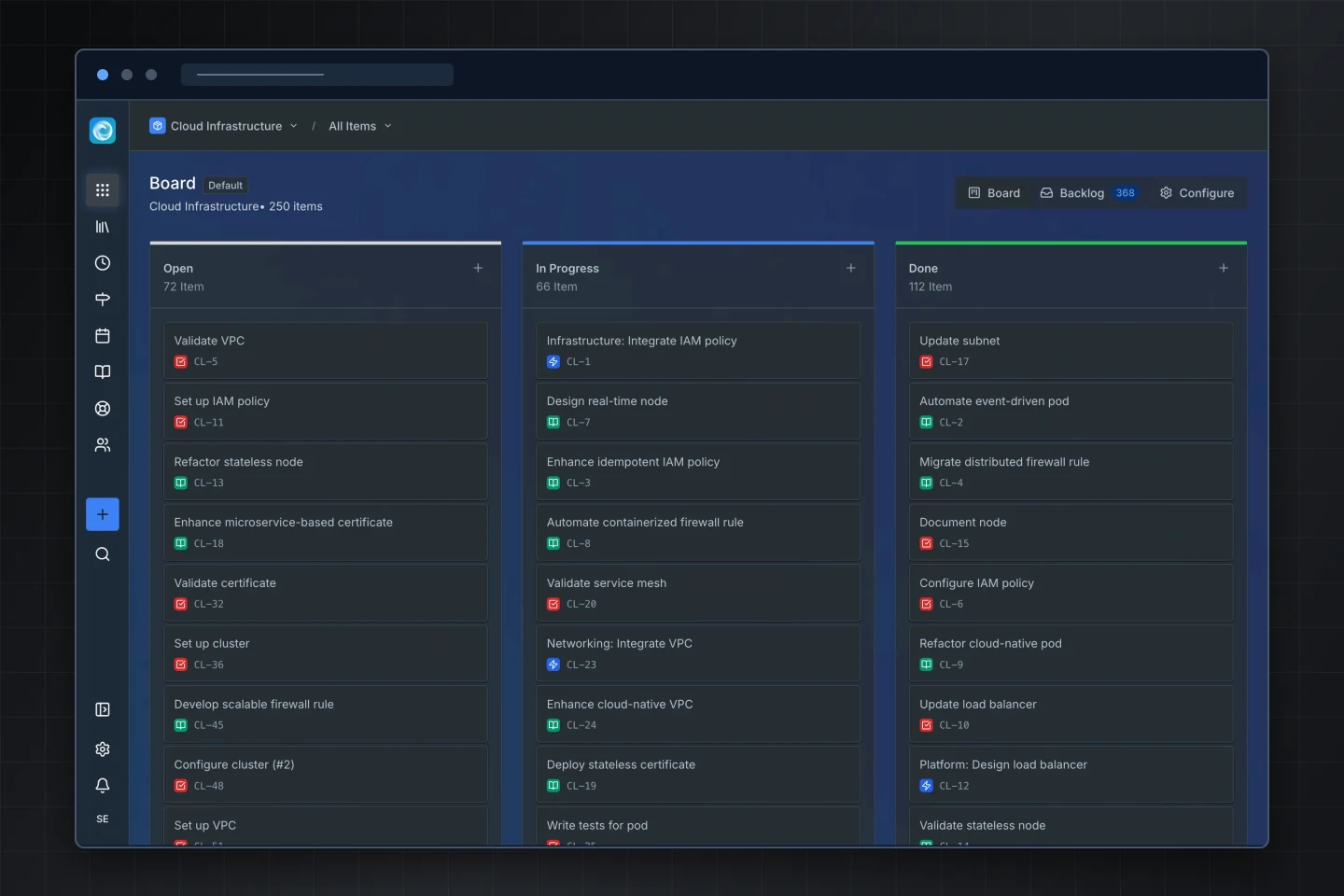
One place for the work that matters
Windshift brings planning, tracking, and collaboration into a fast, flexible workspace. Start with a simple kanban board, then add the structure your team needs: custom workflows, nested work items, milestones, saved searches, dashboards, and more.
It ships as a single Go binary with the Svelte frontend built in.
Highlights
- Plan work your way - move between boards, backlogs, hierarchy views, milestones, iterations, and dashboards as your work evolves.
- Customize the workflow around your team - configure item types, statuses, fields, screens, priorities, and recurring work.
- Keep context - add rich descriptions, comments, mentions, attachments, collections, and knowledge pages.
- Bring customers into the system - share public boards and accept external requests through a customer portal.
- Connect the tools you already use - integrate GitHub, Gitea, and Forgejo, import Jira projects, and send email or webhook notifications.
- Add the capabilities you need - extend work management with test management, time tracking, or asset management.
Get started
Download the latest release, then follow the quick start guide. Windshift is designed to run comfortably on anything from a Raspberry Pi to a dedicated server.
Want to build from source? See BUILD.md. For local development and contribution guidelines, see CONTRIBUTING.md.
Contributing
Code contributions, bug reports, and feedback are all welcome here on GitHub. Open pull requests against main; use GitHub Issues and Discussions for bug reports and feedback.
We are especially interested in early bug reports and real-world feedback about OIDC providers.
Tech stack
- Backend: Go
- Frontend: Svelte, Vite, and Tailwind CSS
- Database: SQLite by default, with PostgreSQL support
Documentation
License
Windshift is available under the GNU Affero General Public License v3.0.