
Open-source developer platform for internal code: APIs, background jobs, workflows and UIs. Self-hostable alternative to Retool, Pipedream, Superblocks and a simplified Temporal with autogenerated UIs and custom UIs to trigger workflows and scripts as internal apps.
Scripts are turned into sharable UIs automatically, and can be composed together into flows or used into richer apps built with low-code. Supported languages: Python, TypeScript, Go, Bash, SQL, GraphQL, PowerShell, Rust, and more.





Try it - Website - Docs - Discord - Hub - Contributing
Windmill - Developer platform for APIs, background jobs, workflows and UIs
Windmill is fully open-sourced (AGPLv3) and Windmill Labs offers dedicated instances and commercial support and licenses.
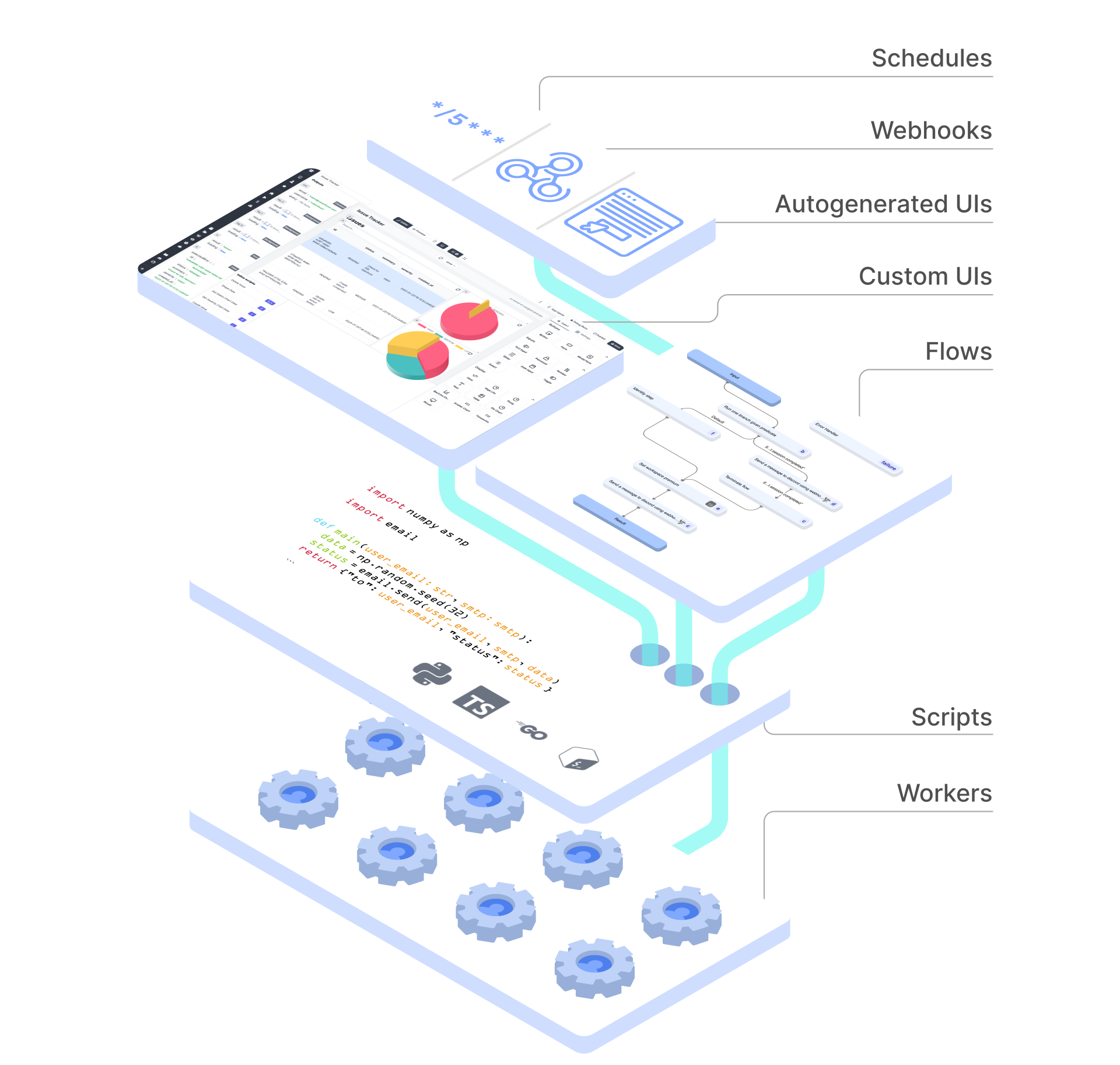
https://github.com/user-attachments/assets/d80de1d9-64de-4d89-aacd-6df23fa81fc4
- Windmill - Developer platform for APIs, background jobs, workflows and UIs
Main Concepts
- Define a minimal and generic script in Python, TypeScript, Go or Bash that solves a specific task. The code can be defined in the provided Web IDE or synchronized with your own GitHub repo (e.g. through VS Code extension): provided Web IDE or synchronized with your own GitHub repo (e.g. through VS Code extension):
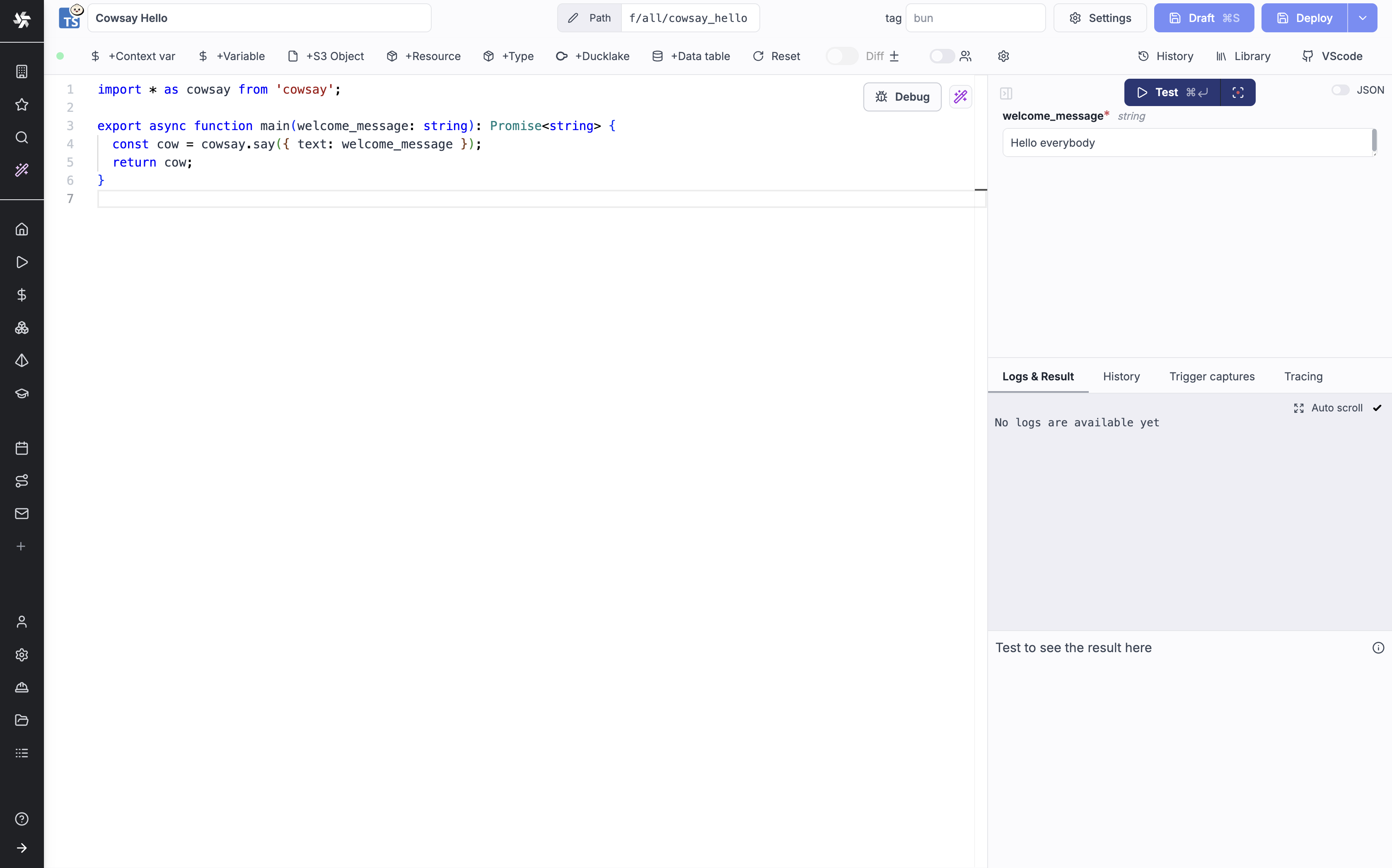
- Your scripts parameters are automatically parsed and generate a frontend.
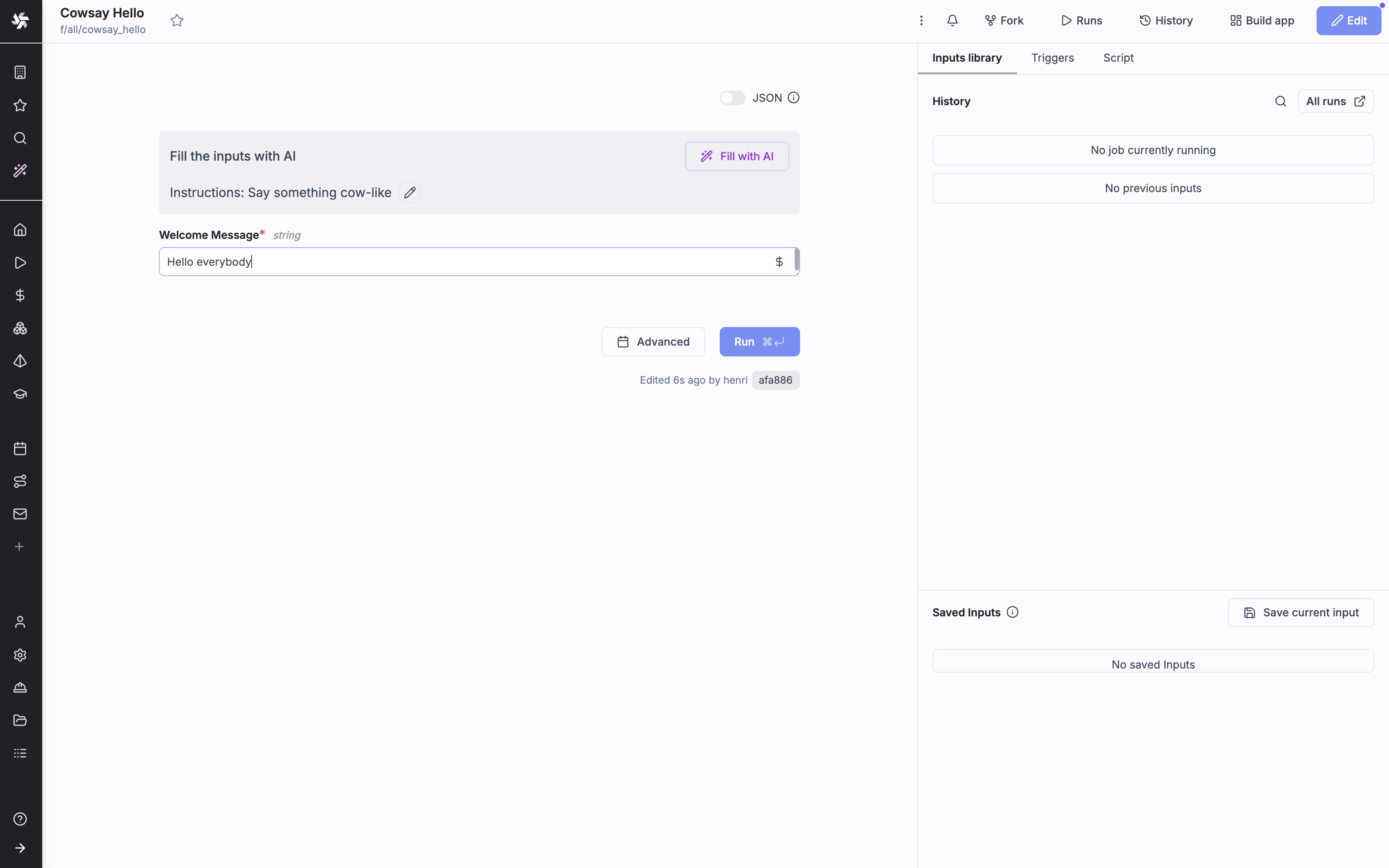
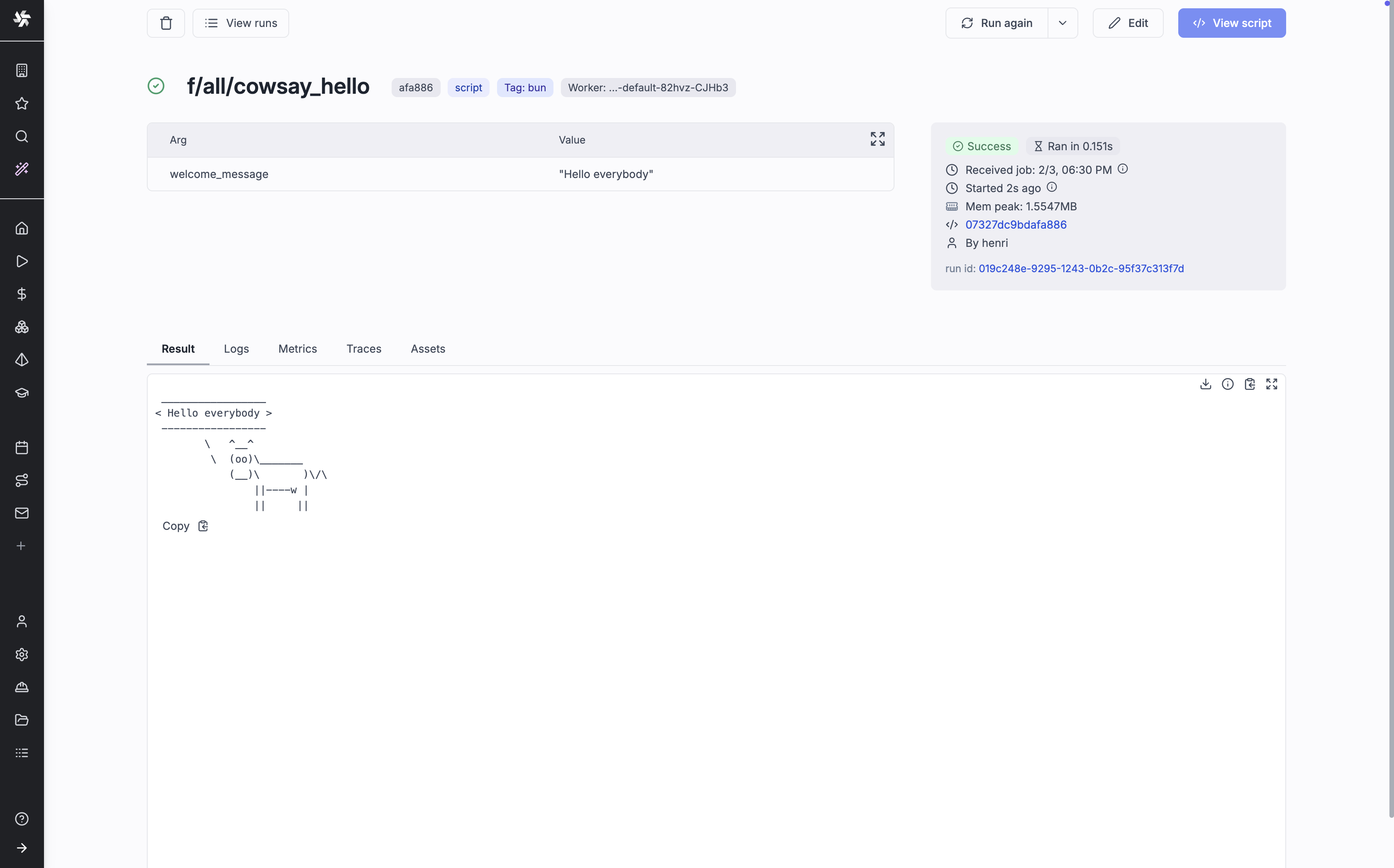
- Make it flow! You can chain your scripts or scripts made by the community shared on WindmillHub.
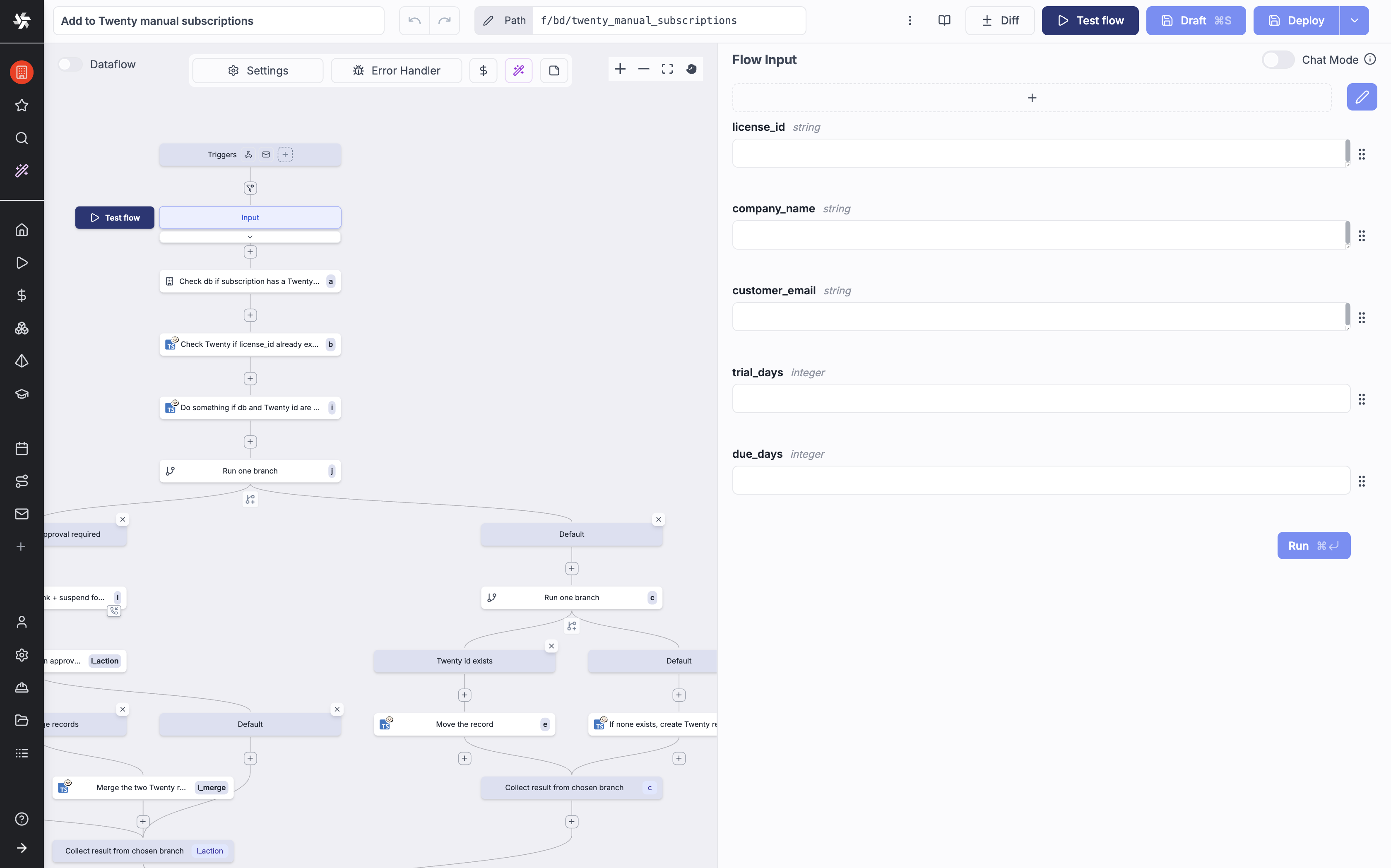
- Build complex UIs on top of your scripts and flows.
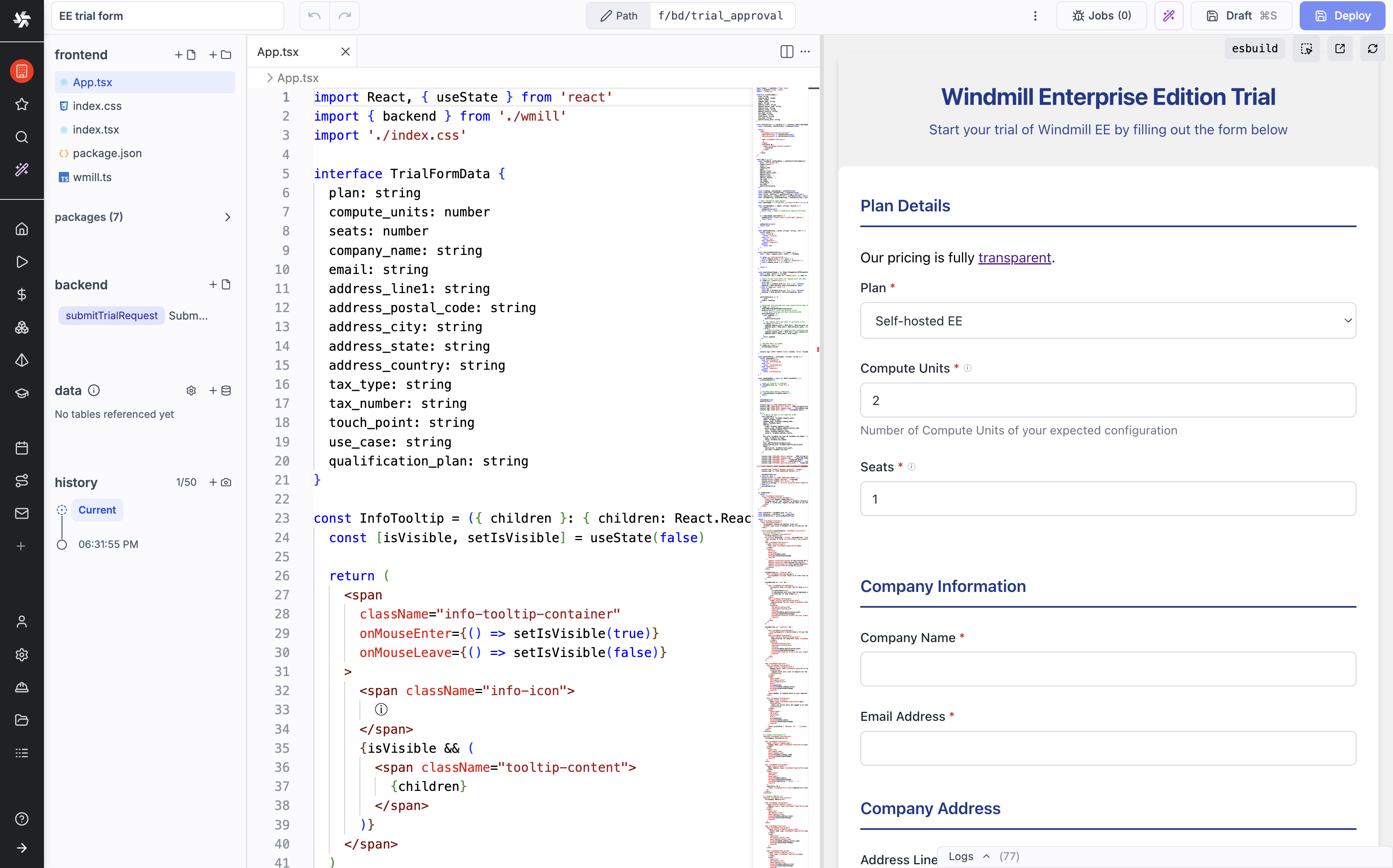
Scripts and flows can be triggered by schedules, webhooks, HTTP routes, Kafka, WebSockets, emails, and more.
Build your entire infra on top of Windmill!
Show me some actual script code
//import any dependency  from npm
import * as wmill from "windmill-client";
import * as cowsay from "[email protected]";

// fill the type, or use the +Resource type to get a type-safe reference to a resource
type Postgresql = {
  host: string;
  port: number;
  user: string;
  dbname: string;
  sslmode: string;
  password: string;
};

export async function main(
  a: number,
  b: "my" | "enum",
  c: Postgresql,
  d = "inferred type string from default arg",
  e = { nested: "object" }
  //f: wmill.Base64
) {
  const email = process.env["WM_EMAIL"];
  // variables are permissioned and by path
  let variable = await wmill.getVariable("f/company-folder/my_secret");
  const lastTimeRun = await wmill.getState();
  // logs are printed and always inspectable
  console.log(cowsay.say({ text: "hello " + email + " " + lastTimeRun }));
  await wmill.setState(Date.now());

  // return is serialized as JSON
  return { foo: d, variable };
}
Local Development
Windmill supports multiple ways to develop locally and sync with your instance:
| Tool | Description |
|---|---|
| CLI | Sync scripts from local files or GitHub, run scripts/flows from the command line |
| VS Code Extension | Edit and test scripts & flows directly from VS Code / Cursor with full IDE support |
| Git Sync | Two-way sync between Windmill and your Git repository |
| Claude Code | AI-assisted development with Claude for scripts, flows, and apps |
https://github.com/user-attachments/assets/c541c326-e9ae-4602-a09a-1989aaded1e9
You can run scripts locally by passing the right environment variables for the wmill client library to fetch resources and variables from your instance. See local development docs.
Stack
- Database: Postgres (compatible with Aurora, Cloud SQL, Neon, Azure PostgreSQL)
- Backend: Rust - stateless API servers and workers pulling jobs from a Postgres queue
- Frontend: Svelte 5
- Sandboxing: nsjail and PID namespace isolation
- Runtimes:
- TypeScript/ Bun (default) and Deno
- Python: python3 with uv for dependency management
- Go, Bash, PowerShell, PHP, Rust, C#, Java, Ansible
Fastest Self-Hostable Workflow Engine
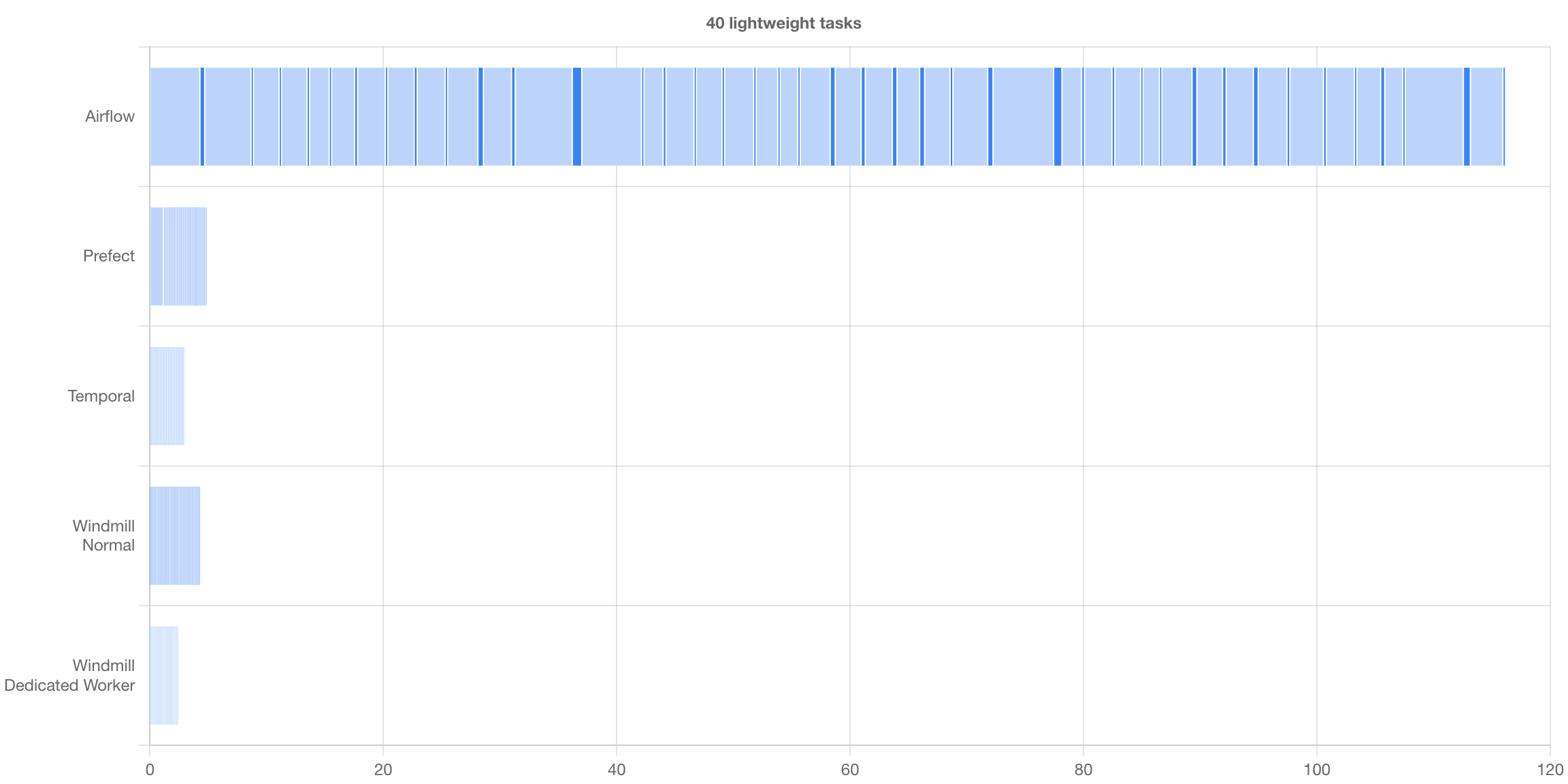
We have compared Windmill to other self-hostable workflow engines (Airflow, Prefect & Temporal) and Windmill is the most performant solution for both benchmarks: one flow composed of 40 lightweight tasks & one flow composed of 10 long-running tasks.
All methodology & results on our Benchmarks page.
Security
- Sandboxing: nsjail for filesystem/resource isolation, and PID namespace isolation (enabled by default) to prevent jobs from accessing worker process memory
- Secrets: One encryption key per workspace for credentials stored in Windmill's K/V store. We recommend encrypting the Postgres database as well.
See Security documentation for details.
Performance
Once a job started, there is no overhead compared to running the same script on the node with its corresponding runner (Deno/Go/Python/Bash). The added latency from a job being pulled from the queue, started, and then having its result sent back to the database is ~50ms. A typical lightweight deno job will take around 100ms total.
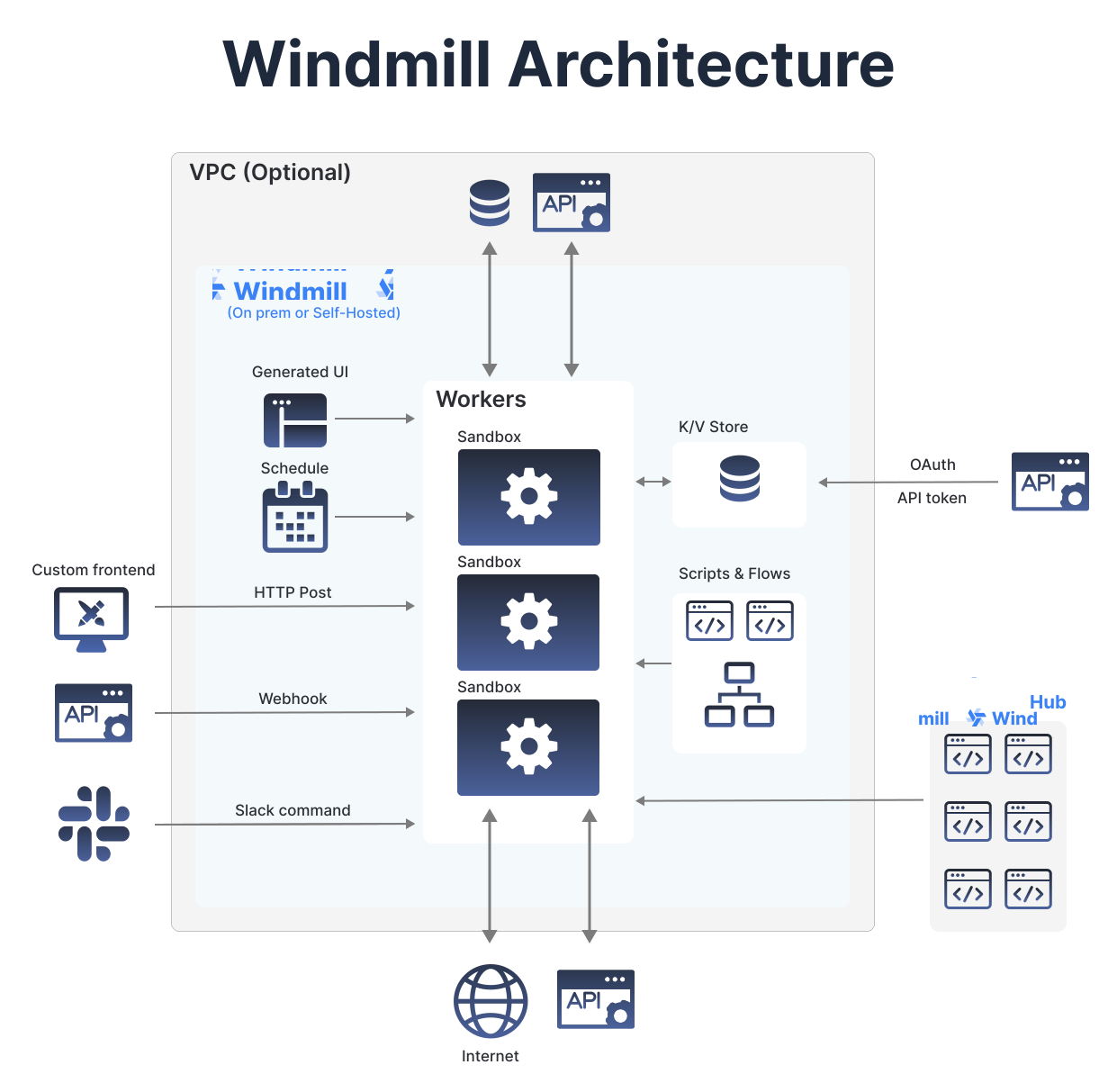
Architecture
How to self-host
For detailed setup options, see [Self-Host do