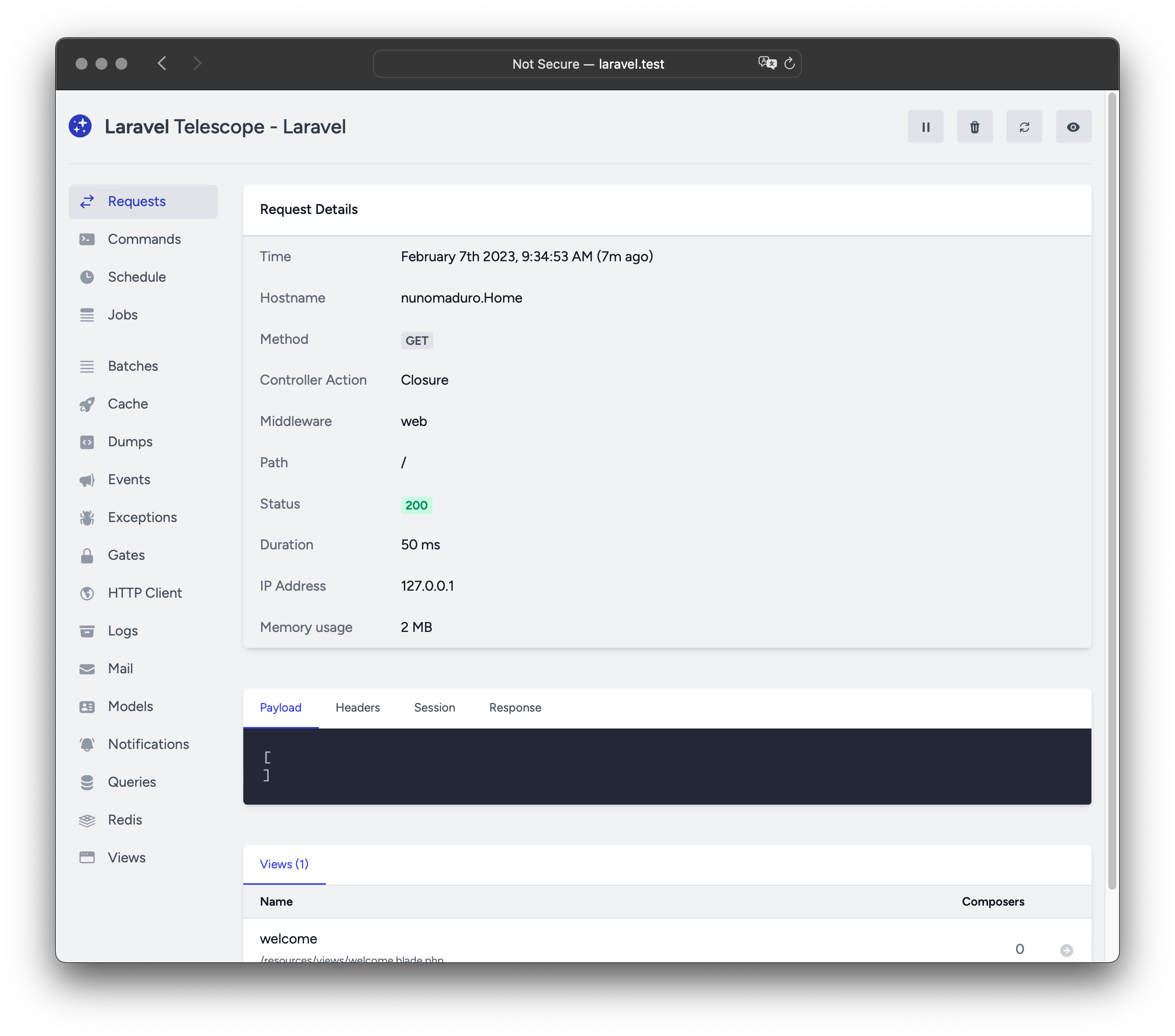
Laravel Telescope is an open-source debug assistant for the Laravel framework that surfaces the requests, exceptions, log entries, database queries, queued jobs, mail, notifications, cache operations, scheduled tasks and variable dumps passing through an application, and it is built for Laravel developers who need that visibility while working on an application.
What it is
Telescope is a PHP package living in the Laravel ecosystem, released under the MIT license and maintained in the laravel/telescope repository on GitHub. Its stated purpose is narrow and explicit: it provides insight into what an application is doing at runtime by collecting and exposing the events Laravel raises as it handles work. The README describes it as a companion to a local Laravel development environment, which places it in the Infrastructure and Operations space, specifically monitoring and observability, and the repository carries the topics debugging, laravel and monitoring.
The concrete problem it replaces is guesswork during development. Rather than reaching for a general-purpose logging stack or a full application performance monitoring service to answer questions such as which query ran, which job was dispatched, which mail was sent or which exception was thrown, a developer installs Telescope into the application itself and reads that activity in one place. It does not attempt to be a production analytics platform or a hosted service; the insight is about the local application instance the developer is working on.
Key capabilities
- Captures incoming requests to the application for inspection.
- Records exceptions thrown during execution.
- Collects log entries produced by the application.
- Tracks database queries executed by the application.
- Monitors queued jobs and their lifecycle.
- Captures mail and notifications sent by the application.
- Records cache operations, scheduled tasks and variable dumps.
Who uses it and how
- Laravel developers running an application locally and inspecting request traffic as they build features.
- Teams debugging an exception or a failing database query during development rather than in production.
- Developers verifying that queued jobs, mail and notifications are dispatched as expected.
- Engineers auditing cache operations and scheduled tasks while tracing unexpected application behaviour.
- Projects that want observability during development without standing up a separate monitoring service.
Getting started
The README does not include install or run commands; it directs readers to the official documentation at https://laravel.com/docs/telescope for installation and usage guidance.
How it compares
No comparable or paid products are named in the facts provided for this entry, so Telescope stands alone in this registry. It is distributed under the MIT license, which permits self-hosting and modification without a commercial agreement.
When to use it — and when not to
Telescope suits a Laravel developer who wants detailed runtime insight into a local application and is comfortable installing an additional package into that application. It is a poor fit for anyone seeking production-grade monitoring, alerting or long-term metric retention, since the README frames it as a companion to the local development environment rather than a production observability platform. The repository README is also thin: it carries an introduction, contribution and security notes, and a license section, but no installation instructions of its own, so the official Laravel documentation is the mandatory starting point.
project readme (upstream, from github) — read inline





Introduction
Laravel Telescope is an elegant debug assistant for the Laravel framework. Telescope provides insight into the requests coming into your application, exceptions, log entries, database queries, queued jobs, mail, notifications, cache operations, scheduled tasks, variable dumps and more. Telescope makes a wonderful companion to your local Laravel development environment.
Official Documentation
Documentation for Telescope can be found on the Laravel website.
Contributing
Thank you for considering contributing to Telescope! The contribution guide can be found in the Laravel documentation.
Code of Conduct
In order to ensure that the Laravel community is welcoming to all, please review and abide by the Code of Conduct.
Security Vulnerabilities
Please review our security policy on how to report security vulnerabilities.
License
Laravel Telescope is open-sourced software licensed under the MIT license.