Sulu is an MIT-licensed, Symfony-based PHP content management system core framework for building multi-lingual and multi-portal websites with an extensible administration interface, aimed at PHP teams that want to own their own content platform.
What it is
This repository contains the core framework of the Sulu content management system. It implements the functionality that is built into Sulu itself, which makes it a dependency of every Sulu project rather than a standalone application. The project is written in PHP, released under the MIT License, and lives in the Symfony ecosystem, as reflected in its topics: php, symfony, cms, cmf, and admin. The framework is developed to deliver multi-lingual and multi-portal websites while providing an administration interface that covers the full content lifecycle.
The concrete problem it solves is the amount of groundwork a team would otherwise write itself on top of Symfony. Multi-lingual routing, multi-portal delivery, and administration tooling for the content lifecycle are supplied by the framework instead of being assembled per project. Teams then extend that base through the official Sulu bundles listed in the Sulu organization on GitHub, rather than patching the core. New work starts from the sulu/skeleton template repository, and this repository supplies the layer beneath it.
Key capabilities
- Requires PHP version 8.2 or higher and is compatible with Symfony versions 6.4 through 7.4.
- Delivers multi-lingual and multi-portal websites as a core design goal, not an add-on.
- Provides an intuitive and extensible administration interface for managing the full content lifecycle.
- Acts as a shared dependency: the
require section of the repository's composer.json holds the up-to-date list of requirements.
- Ships under the MIT License, with the licence text in the
LICENSE file at the repository root.
- Supports extension through the official Sulu bundles published in the Sulu organization, keeping core changes out of project code.
- Is backed by partner companies as a community-driven open source project with a transparent development process.
Who uses it and how
- Teams starting a new project use the sulu/skeleton pre-configured project template, which depends on this framework, instead of wiring the core themselves.
- Existing Sulu installations add official bundles from the Sulu organization when they need extra functionality, leaving the core framework untouched.
- Organisations that run multi-lingual and multi-portal websites fit the stated design target of the framework directly.
- Contributors work through pull requests against sulu/sulu, guided by the contribution guidelines, with the hacktoberfest topic indicating recurring outreach to new contributors.
- Support and discussion happen through the official Slack channel, GitHub Discussions, the Sulu account on Twitter, and StackOverflow under the
sulu tag.
Getting started
Start from the sulu/skeleton repository, which provides a pre-configured project template for quick-starting development. The official Sulu documentation at docs.sulu.io covers how to use that template to begin a project; this repository is the dependency it pulls in, not the entry point.
How it compares
Sulu builds on Symfony rather than competing with it, so the relationship named in the facts is one of dependency, not rivalry. No comparable content management system is named anywhere in the supplied facts, so on the evidence available this project stands alone in this registry.
When to use it — and when not to
A self-hoster must operate a PHP 8.2 or higher runtime and a Symfony 6.4 to 7.4 application, and must keep the requirements listed in composer.json satisfied. Anyone wanting a hosted, zero-operations product, or without PHP and Symfony experience, should not start here. The trade-offs are visible in the facts: the README is thin on installation detail and defers features to sulu.io and docs.sulu.io, and the repository carries 593 open issues against 1,350 stars and 368 forks, so expect to lean on the documentation, Slack, and issue tracker rather than on the README alone.
project readme (upstream, from github) — read inline


Sulu is a highly extensible open-source PHP content management system based on the Symfony framework. Sulu is developed to deliver robust multi-lingual and multi-portal websites while providing an intuitive and extensible administration interface to manage the full content lifecycle.
Have a look at the official Sulu website for a comprehensive list of Sulu's features, core values and use cases.
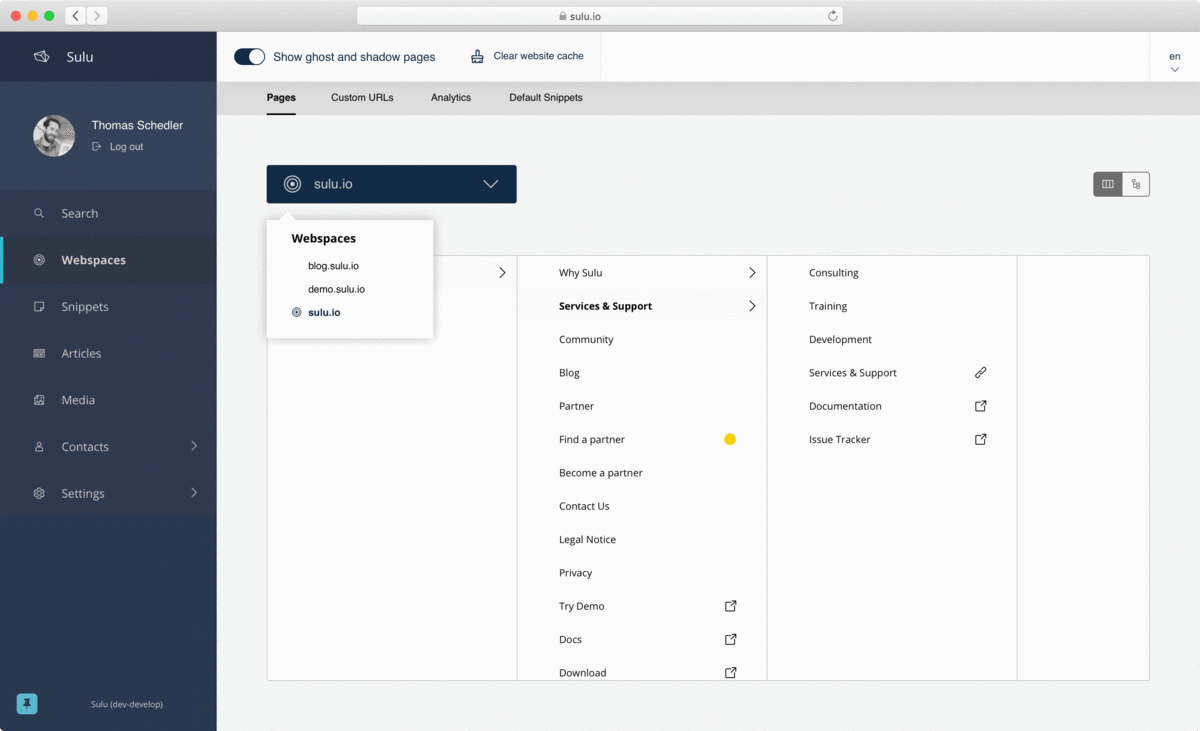
This repository contains the core framework of the Sulu content management system. The framework implements the functionality that is built into the Sulu content management system and therefore is a dependency of all Sulu projects.
If you want to start a new Sulu project, you might be interested in the sulu/skeleton template repository. If you are planning to extend your existing Sulu project, visit the Sulu organization on GitHub for a complete list of official Sulu bundles.
🚀 Installation and Documentation
The sulu/skeleton repository provides a pre-configured project template to quick-start your development. Visit the official Sulu documentation to find out how to use the project template for starting your own Sulu project.
❤️ Community and Contributions
The Sulu content management system is a community-driven open source project backed by various partner companies. We are committed to a fully transparent development process and highly appreciate any contributions. Whether you are helping us fixing bugs, proposing new feature, improving our documentation or spreading the word - we would love to have you as part of the Sulu community.
📫 Have a question? Want to chat? Ran into a problem?
We are happy to welcome you in our official Slack channel or answer your questions via GitHub Discussions! Obviously you can always reach out to us directly via the Sulu twitter account or post your question on StackOverflow with the official sulu tag.
🤝 Found a bug? Missing a specific feature?
Feel free to file a new issue with a respective title and description on the the sulu/sulu repository. If you already found a solution to your problem, we would love to review your pull request! Have a look at our contribution guidelines to find out about our coding standards.
✅ Requirements
Sulu 3.0 requires a PHP version higher or equal to 8.2 and is compatible with every Symfony version 6.4 - 7.4. Have a look at the require section in the composer.json of the sulu/sulu core framework to find an up-to-date list of the requirements of Sulu content management system.
📘 License
The Sulu content management system is released under the terms of the MIT License.