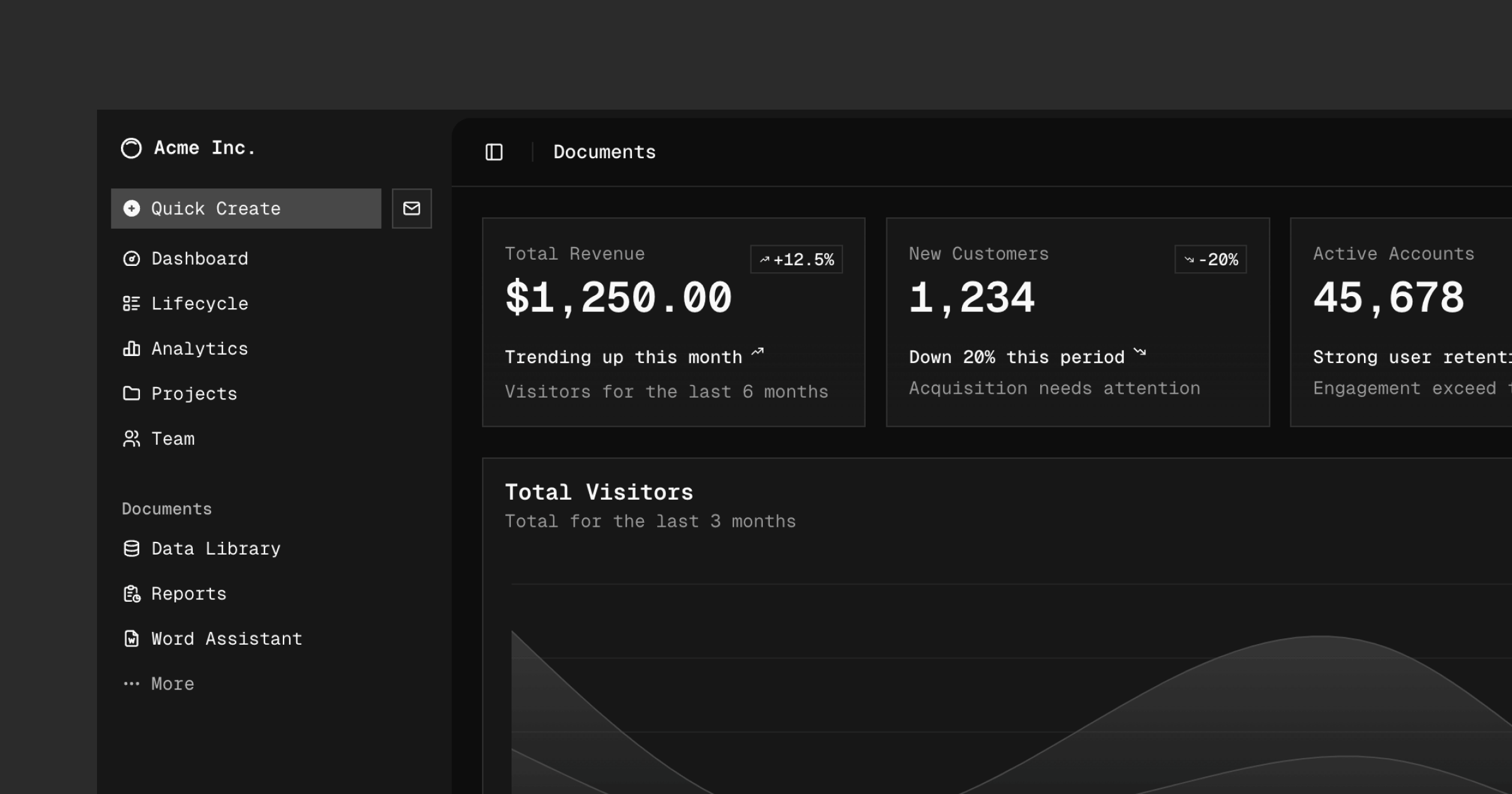
shadcn-vue is an MIT-licensed TypeScript component library that ports shadcn-ui to Vue, building on Radix Vue and Reka UI primitives, and it is aimed at Vue developers who want components they can customise, extend and turn into their own library.
What it is
shadcn-vue is a UI library and component kit for the Vue ecosystem, written in TypeScript. Its tagline and GitHub description both call it the Vue port of shadcn-ui, and its topic list shows that it builds on the Radix Vue and Reka UI primitives while covering accessibility, component libraries and UI kits. It is developed at github.com/unovue/shadcn-vue, where it holds 10,613 stars, 679 forks and 144 open issues, and the registry files it under Miscellaneous / Design & Prototyping. Documentation is published at shadcn-vue.com.
The gap it fills is a framework gap: shadcn-ui's component approach was tied to React, so Vue applications could not adopt it as it stood, and a conventional packaged Vue UI library is something a team depends on rather than something it reshapes. shadcn-vue is the Vue port that closes that gap, and the README presents its components as material to build on rather than a finished product — "A set of beautifully designed components that you can customize, extend, and build on" — with the instruction to "Use this to build your own component library." The specific thing it replaces for a Vue codebase is the React-only original of shadcn-ui.
Key capabilities
- Designed Vue components that the README describes as things to customise, extend and build on rather than a fixed finished product.
- Support for assembling your own component library on top of it, the stated use in the README: "Use this to build your own component library."
- Accessibility as a first-class concern, listed as a topic and delivered through the Radix Vue and Reka UI primitives named alongside it.
- A Vue-native TypeScript implementation, reflected in the vue, vue-ui-kit, component-library and ui-library topics.
- Documentation hosted at shadcn-vue.com/docs, which the README names as the starting point, plus a contributing guide at CONTRIBUTING.md in the repository.
- MIT licensing, stated in the README and in the LICENSE file at the repository root.
Who uses it and how
- Vue teams assembling an in-house design system, treating the components as the starting point the README describes rather than as a managed dependency.
- Developers already working with Radix Vue or Reka UI who want styled components layered on top of those primitives, both of which appear in the topic list.
- Front-end engineers moving a shadcn-ui workflow from React into a Vue codebase, which is precisely the port the project provides.
- Adopters who expect to adapt rather than depend, consistent with the 679 forks and 10,613 stars recorded for the project.
Getting started
The README points to the documentation as the entry route — "Visit http://shadcn-vue.com/docs to view the documentation" — and no package name, CLI command, Docker image or compose file appears in the facts provided here. Installation instructions should therefore be taken from shadcn-vue.com/docs.
How it compares
Among the comparable tools named in the facts, shadcn-vue is the Vue counterpart of shadcn-ui, the React project it declares itself a port of, and it builds on the Radix Vue and Reka UI primitives rather than implementing interaction behaviour itself. Its distinguishing axis is the framework it targets: the same component-and-customisation approach, expressed for Vue applications.
When to use it — and when not to
shadcn-vue is a front-end component set: the facts mention nothing a self-hoster must operate, such as a database, object storage or mail service, so the only burden is the build and tooling of the Vue application that consumes it. It suits teams that are happy to own and maintain the component code they take, and it is a poor fit for teams wanting a versioned dependency with a formal upgrade path, or for anyone not building in Vue. The clearest weakness in the facts is documentation depth: the README excerpt is only a few lines long, with no install command, package name or version information, and the repository carries 144 open issues.