Semaphore is an open-source continuous integration and continuous delivery platform that product teams install on their own infrastructure, or use as a hosted service, to build, test, and deploy software from a YAML-based configuration.
What it is
Semaphore is an all-in-one delivery platform for AI-driven development, written primarily in Elixir with Go also present in the codebase. It ships in three flavours from a single project: the Community Edition, which is what lives in this repository outside the ee/ folder and is released under the Apache 2.0 licence; the Enterprise Edition, which adds features for larger organisations and sits in the ee/ directory under a commercial licence with professional support; and Semaphore Cloud, the hosted service at semaphoreci.com. The project is developed in the open, with a published roadmap (ROADMAP.md), governance document (GOVERNANCE.md), security policy (SECURITY.md), code of conduct (CODE_OF_CONDUCT.md), a public Kanban project board, and community support through Discord and GitHub Discussions.
The concrete problem it solves is the assembly work that surrounds software delivery. Rather than stitching together separate continuous-integration and continuous-delivery tooling and maintaining the build pipelines that connect them, a team gets one system that defines pipelines in YAML, runs jobs in parallel, and deploys into containers, Kubernetes, and multi-cloud environments. It lives in the developer tooling ecosystem under the Build & Deployment category, and it replaces the collection of discrete build-pipeline and deployment components that teams would otherwise wire together themselves.
Key capabilities
- YAML-based pipeline configuration for builds and deployments, with parallel execution of jobs.
- Support for container-based workflows, Kubernetes, and multi-cloud environments.
- Continuous integration and continuous delivery as a single platform, reflected in the
ci, cd, continuous-integration, continuous-delivery, and build-pipelines topics.
- Community Edition under the Apache 2.0 licence, contained in everything outside the
ee/ directory.
- Enterprise Edition features for larger organisations, located in the
ee/ directory under a commercial licence with professional support.
- Hosted Semaphore Cloud option, ranging from free plans for small projects to enterprise-scale solutions.
- Codebase in Elixir with Go components, delivered through an installable self-hosted service.
Who uses it and how
- Product teams that want to run Semaphore on their own infrastructure, using the Community Edition with community support.
- Organisations large enough to need the Enterprise Edition's additional features and professional support to keep CI/CD running.
- Teams that do not want to manage their own infrastructure, who use the hosted version at semaphoreci.com rather than installing anything.
- Solo developers through to large engineering teams, which the project states it scales between, since it is designed for product teams shipping software with quality and security.
- Local development setups using Minikube, and production deployments on Kubernetes or a single Ubuntu machine.
Getting started
Installation follows the project's guides: a single-machine install on Ubuntu, an install on Kubernetes, or a local Kubernetes setup on Minikube documented in LOCAL-DEVELOPMENT.md. The README states installation and running takes roughly 10 to 30 minutes; the hosted alternative is Semaphore Cloud at semaphoreci.com.
How it compares
No similar tools are named in the facts for this registry entry, and no list of paid products it replaces is provided, so it stands alone here rather than being positioned against named alternatives. The only contrast the project draws is internal: a free Apache 2.0 Community Edition for teams running their own infrastructure, a commercial Enterprise Edition with support, and a hosted cloud service.
When to use it — and when not to
A self-hoster takes on running and operating the platform itself, and while the initial install is measured in minutes, ongoing maintenance of that infrastructure falls to the team rather than a vendor. The licence metadata for this entry reports NOASSERTION even though the README states Apache 2.0 for the Community Edition, so anyone depending on the licence terms should confirm them at the source before adopting. Teams that will not operate infrastructure and will not pay for support, and organisations needing Enterprise features without accepting the commercial licence in ee/, should look elsewhere; the project also carries 178 open issues, which is worth weighing against its activity.
project readme (upstream, from github) — read inline
Semaphore - Open Source CI/CD Platform





Semaphore CI/CD helps product teams ship software faster, with quality and security.
🚀 Features
- Blazing-fast CI/CD – Get your builds & deployments done in record time.
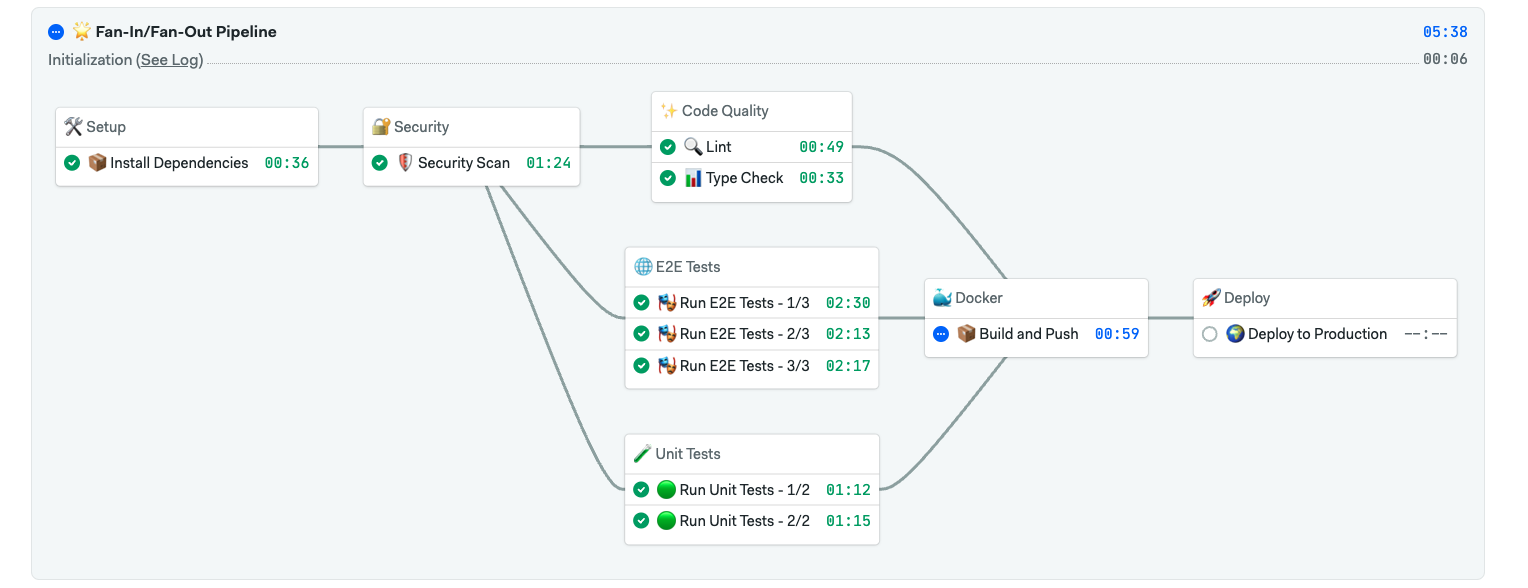
- Simple yet powerful – YAML-based config, parallel execution, and more!
- Scales with you – From solo developers to massive engineering teams.
- Built for the modern cloud – Works seamlessly with containers, Kubernetes, and multi-cloud environments.
Installation
Installing and running Semaphore is easy and only takes 10-30 minutes ⏱️
Choose your preferred installation method from our detailed guides:



Semaphore Versions
Semaphore comes in three flavors to fit your needs:
🌱 Community Edition
Free and open source under Apache 2.0 license. This is what you'll find in this repository (everything outside the ee/ folder). Perfect for teams who want to run Semaphore on their own infrastructure with community support.
🏢 Enterprise Edition
Our enhanced version with extra features for larger organizations, available under a commercial license. You'll find this code in the ee/ directory. Comes with professional support to keep your CI/CD running smoothly.
☁️ Semaphore Cloud
Don't want to manage your own infrastructure? Our hosted version at semaphoreci.com gives you all the power of Semaphore without the setup. From free plans for small projects to enterprise-scale solutions.
Important Links
- 📚 Documentation - Learn how to use Semaphore
- 🗺️ Roadmap - See what's planned for future releases
- 🏛️ Governance - How the project is managed and decisions are made
- 📋 Project Board - Track development progress on our Kanban board
- 🔒 Security - Our security policies and reporting procedures
Contributing
We're excited to welcome contributions to Semaphore! All contributors are expected to follow our Code of Conduct.





There are many ways to contribute to Semaphore:
🚧 As we open up the project, our documentation and processes are still evolving.
For now, please refer to:
❤️ Support & Stay Connected
💬 Join our community on Discord → Semaphore Discord
🐦 Follow us on Twitter → @semaphoreci
▶️ Watch our development meetings → Semaphore Backstage