Rocket.Chat is a free, open source collaboration & communication project written in TypeScript and released under a custom open-source licence. It has 46,133 GitHub stars, 13,891 forks and 4,023 open issues, and was last pushed 5 hours ago. On this registry it ranks #2 of 41 tracked projects in Collaboration & Communication, with 5 head-to-head comparisons available. It gained 24 stars over the last 6 tracked days.

Rocket.Chat — Self-hosted team messaging with voice, video, and AI

What is Rocket.Chat?

Rocket.Chat is an open-source, self-hostable team communications platform written in TypeScript that gives organisations full ownership of their messaging, voice, and federation infrastructure instead of renting it from a closed SaaS vendor.

What it is

Rocket.Chat is a communications platform for real-time and asynchronous collaboration, built in TypeScript and distributed under an open-source licence that the registry reports as NOASSERTION. It runs as a workspace that a team deploys on its own servers, in the cloud, or on an isolated network, and it combines channel messaging, voice calls, federation between separate installations, and an app platform into a single product. The web app is the primary interface, with companion desktop and mobile clients available for macOS, Windows, Linux, iOS, and Android. The repository has accumulated 46,132 stars and 13,889 forks, and it sits in the Business Software / Collaboration & Communication category with topics covering chat, collaboration, FOSS, real-time messaging, WebRTC, and Meteor.

The concrete problem it solves is data sovereignty in team communication. Organisations that cannot send internal conversations, customer exchanges, or citizen enquiries through a third-party messaging service need somewhere to put that traffic, and Rocket.Chat is the thing they put it on. It replaces hosted chat SaaS for teams whose data-protection requirements rule that route out, and it adds deployment modes those services generally do not offer, including air-gapped installations with no internet access at all. The README explicitly targets organisations with high standards of data protection, and cites Deutsche Bahn, the US Navy, and Credit Suisse as users among tens of millions of people across more than 150 countries.

Key capabilities

  • Deployment by Docker, Podman, or Kubernetes, with a Launchpad option that provisions a Kubernetes workspace without managing each dependency individually.
  • Air-gapped deployment mode for isolated networks, aimed at high-security and regulated environments.
  • End-to-end encryption alongside identity management and role- and attribute-based access control.
  • Native federation for communicating and sharing resources across separate Rocket.Chat installations.
  • Voice calls and WebRTC-based real-time communication, listed among the core collaboration features.
  • Apps-Engine for building custom apps, plus public apps installable from the Rocket.Chat Marketplace.
  • Desktop clients distributed through the Mac App Store, Microsoft Store, and Snapcraft, where Linux users install with sudo snap install rocketchat-desktop.

Who uses it and how

  • Regulated enterprises and public institutions that must keep messaging inside their own infrastructure; the README names Deutsche Bahn, the US Navy, and Credit Suisse.
  • Security-sensitive teams running air-gapped workspaces on networks with no internet access, a configuration the project documents as a supported deployment path.
  • Federated deployments where multiple organisations want to exchange messages and resources across independently operated servers rather than joining one shared tenant.
  • Engineering and platform teams that deploy through Kubernetes and want monitoring and scaling handled as part of the cluster rather than as a separate appliance.
  • Developer teams extending the product through Apps-Engine or installing prebuilt integrations from the Marketplace.

Getting started

Self-hosters deploy through Docker, Podman, or Kubernetes, following the project's deployment guide and checking the system requirements first; Launchpad is offered as a quicker Kubernetes route that avoids managing each dependency by hand. A premium, dedicated cloud hosting option with a service-level agreement exists for teams that would rather not run infrastructure themselves.

How it compares

Among the tools named in the provided facts, Slack is the closest reference point, and Rocket.Chat is positioned as the open-source, self-hostable alternative to that class of hosted messaging product. The distinction the facts support is deployment control: Rocket.Chat can run on your own servers, in the cloud, or air-gapped with no internet access, with end-to-end encryption and federation as documented features rather than add-ons. Cost model differs accordingly, since self-hosting trades subscription fees for infrastructure and operational work.

When to use it — and when not to

A self-hoster must operate the full stack: the server, its database dependency, file storage, and whatever the deployment guide's system requirements demand, plus upgrades and monitoring on an ongoing basis. Teams that want zero operational overhead, or that are happy with a hosted SaaS workspace and have no data-residency constraint, should probably not choose it. Be aware of the rough edges: the licence field reports NOASSERTION rather than a clean identifier, the repository carries 4,023 open issues, and the README excerpt provided here is largely promotional and defers most real detail to external documentation.

project readme (upstream, from github) — read inline

The ultimate secure open-source solution for team communications

Codecov branch

Rocket.Chat is an open-source, secure, fully customizable communications platform developed in TypeScript for organizations with high standards of data protection.

We are the ultimate solution for team communications, enabling real-time conversations between colleagues, with other companies, and with your customers or citizens, regardless of how they connect with you. The result is an increase in productivity and user satisfaction rates.

Every day, tens of millions of users in over 150 countries and in organizations such as Deutsche Bahn, The US Navy, and Credit Suisse trust Rocket.Chat to keep their communications completely private and secure.

🚀 Platform overview

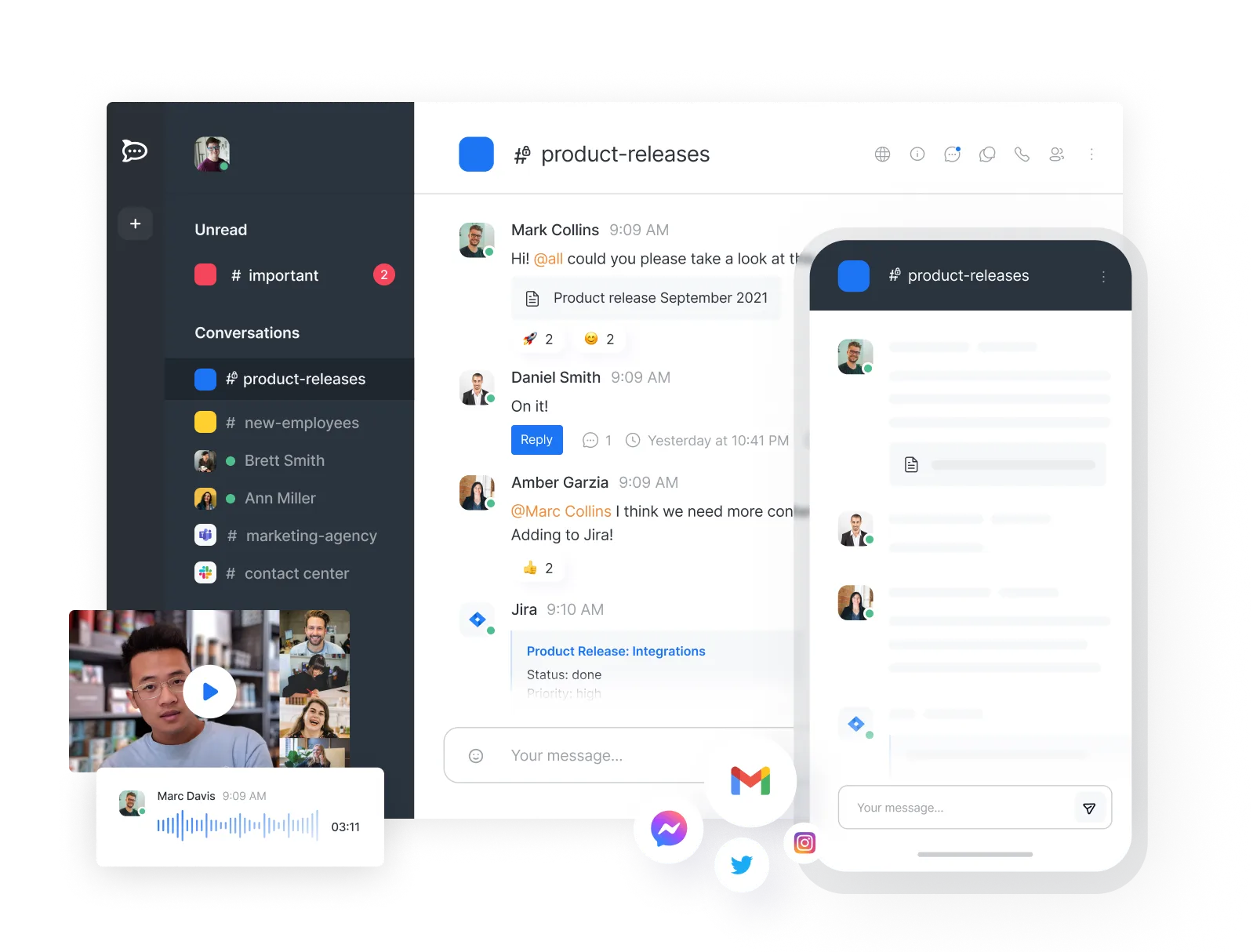
Rocket.Chat provides endless possibilities. Here’s an overview of the features you benefit from:

  • Deployment and workspace management: Flexible and reliable self-hosted, cloud, and air-gapped deployment options with scalable architecture and performance monitoring.

  • Security and sovereignty: Rocket.Chat is secure by design, with features such as identity management, end-to-end encryption, and role and attribute-based access control.

  • Team collaboration: Unified collaboration experience for asynchronous and real-time communication with seamless messaging options, voice calls, and federation.

  • Extend and integrate: Install public apps from the Rocket.Chat Marketplace, build your own apps with Apps-Engine, and integrate with external systems.
💻 Deploy Rocket.Chat

We support different methods of deployment for different needs. Choose your method:

  • Are you deploying Rocket.Chat on your own servers? You can deploy using one of the recommended methods: Docker, Podman, or Kubernetes. Refer to the Deployment Guide for details. Before you deploy, make sure to check the system requirements to deploy a workspace successfully. Alternatively, deploy Rocket.Chat using Launchpad for a quick and straightforward Kubernetes setup where you don't have to manage each dependency.

  • Do you need to run the workspace on an isolated network? Set up an air-gapped workspace to use Rocket.Chat without internet access, suitable for high-security or regulated environments.

  • Looking for a custom cloud-hosted solution without handling infrastructure? Check out our premium, dedicated cloud hosting options that adapt to your needs.

  • Interested in decentralized communication? Enable federation to securely communicate and share resources across a federated network.

📱 Desktop and mobile apps

In addition to the web app, you can also download the Rocket.Chat mobile app:

Rocket.Chat on Apple App Store Rocket.Chat on Google Play

Download the desktop app:

Refer to the Installation guide for further details.

📖 Rocket.Chat documentation

🛡️ Trust and compliance

The architecture of Rocket.Chat is designed to protect sensitive data, enforce rigorous compliance, and ensure secure, reliable communications for governments, defense, and critical infrastructure organizations operating in high-stakes environments.

  • Trust Center: The Trust Center provides a comprehensive view of how we protect data and maintain transparency. You will find details on our security practices, privacy commitments, compliance certifications, and governance policies.

  • Compliance Center: Explore the Compliance Center for additional information on how we commit to providing modern collaboration while protecting sensitive data.

🛠️ Additional resources for developers

You can set up a Rocket.Chat development environment by following the guides below:

  • Server: See how to set up a Rocket.Chat server development environment on Linux distributions, Windows, Mac, and Gitpod.

  • Desktop: Learn how to set up and customize a desktop development environment. You can follow and contribute to the Rocket.Chat.Electron repository.

  • Mobile: Learn about mobile app development and configuring push notifications. You can follow and contribute to the Rocket.Chat.ReactNative repository.

🧩 Apps-Engine

Develop your own apps that can be integrated with Rocket.Chat. We provide an open-source Apps-Engine framework which expands the integration possibilities within the Rocket.Chat ecosystem.

🆕 Feature request

Rocket.Chat/feature-requests is used to track Rocket.Chat feature requests and discussions. Click here to open a new feature request. Feature Request Forums stores the historical archives of old feature requests (up to 2018).

🤝 Community

Join thousands of members worldwide in our community server. Join #support and #general for help from the community.
Alt

👥 Contributions

Rocket.Chat is an open-source project, and we are very happy to accept community contributions. Refer to the Contribution guide for more details.

💼 Become a Rocketeer

We're hiring developers, technical support, and product managers all the time. Check out our jobs page.

🗞️ Get the Latest News

Frequently asked questions

Is Rocket.Chat free to use?

Rocket.Chat is open source. There is no licence fee and no seat count — you can self-host it or, where the project offers one, pay a vendor for a managed version instead.

What does Rocket.Chat do?

Self-hosted team messaging with voice, video, and AI

What is Rocket.Chat written in?

Rocket.Chat is primarily written in TypeScript. Its source is publicly available at https://github.com/rocketchat/rocket.chat, and it has 46,133 GitHub stars.