
Rembg is a tool to remove image backgrounds. It can be used as a CLI, Python library, HTTP server, or Docker container.





Sponsors

|
PhotoRoom Remove Background API
https://photoroom.com/api
Fast and accurate background remover API |
If this project has helped you, please consider making a donation.
Requirements
python: >=3.11, <3.14
Installation
Choose one of the following backends based on your hardware:
CPU support
pip install "rembg[cpu]" # for library
pip install "rembg[cpu,cli]" # for library + cli
GPU support (NVIDIA/CUDA)
First, check if your system supports onnxruntime-gpu by visiting onnxruntime.ai and reviewing the installation matrix.
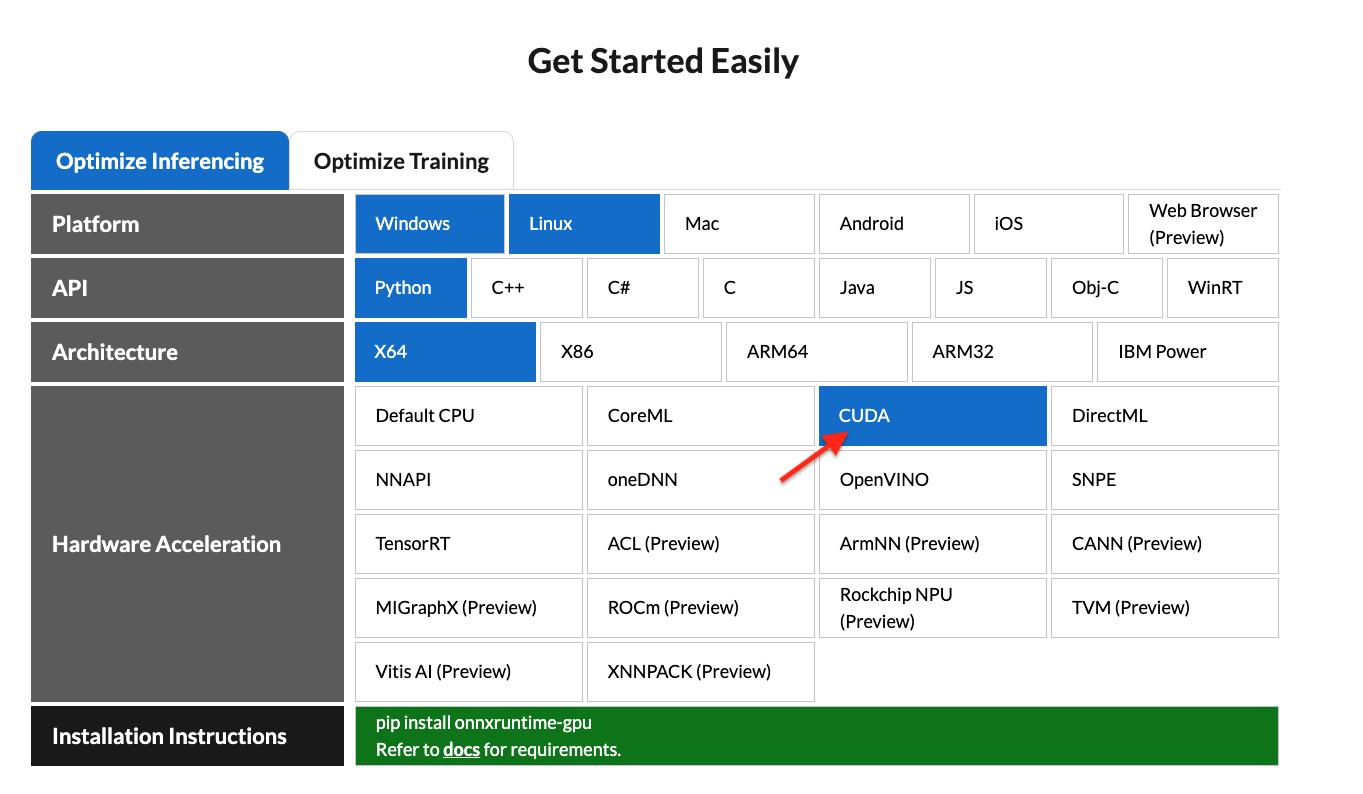
If your system is compatible, run:
pip install "rembg[gpu]" # for library
pip install "rembg[gpu,cli]" # for library + cli
Note: NVIDIA GPUs may require
onnxruntime-gpu, CUDA, andcudnn-devel. See #668 for details. Ifrembg[gpu]doesn't work and you can't install CUDA orcudnn-devel, userembg[cpu]withonnxruntimeinstead.
GPU support (AMD/ROCm)
ROCm support requires the onnxruntime-rocm package. Install it by following AMD's documentation.
Once onnxruntime-rocm is installed and working, install rembg with ROCm support:
pip install "rembg[rocm]" # for library
pip install "rembg[rocm,cli]" # for library + cli
Usage as a CLI
After installation, you can use rembg by typing rembg in your terminal.
The rembg command has these subcommands:
i- single filesp- folders (batch processing)s- HTTP serverb- RGB24 pixel binary streamd- download models ahead of timem- migrate models from the legacy~/.u2netdirectory
You can get help about the main command using:
rembg --help
You can also get help for any subcommand:
rembg <COMMAND> --help
rembg i
Used for processing single files.
Remove background from a remote image:
curl -s http://input.png | rembg i > output.png
Remove background from a local file:
rembg i path/to/input.png path/to/output.png
Omit the output path (writes .out.png next to the input):
rembg i path/to/input.png
# → path/to/input.out.png
If stdout is redirected (e.g. rembg i input.png > out.png), the output is written to stdout instead.
Specify a model:
rembg i -m u2netp path/to/input.png path/to/output.png
Return only the mask:
rembg i -om path/to/input.png path/to/output.png
Apply alpha matting:
rembg i -a path/to/input.png path/to/output.png
Remove color fringing from soft edges:
rembg i -dc path/to/input.png path/to/output.png
See Color decontamination for what this does.
Pass extra parameters (SAM example):
rembg i -m sam -x '{ "sam_prompt": [{"type": "point", "data": [724, 740], "label": 1}] }' examples/plants-1.jpg examples/plants-1.out.png
Pass extra parameters (custom model):
rembg i -m u2net_custom -x '{"model_path": "~/.u2net/u2net.onnx"}' path/to/input.png path/to/output.png
Use the withoutBG cloud API:
Get 50 free credits with signup. Sample results.
export WITHOUTBG_API_KEY=sk_...
rembg i -m withoutbg path/to/input.png path/to/output.png
Or pass the key via extras:
rembg i -m withoutbg -x '{"api_key":"sk_..."}' path/to/input.png path/to/output.png
rembg p
Used for batch processing entire folders.
Process all images in a folder:
rembg p path/to/input path/to/output
Watch mode (process new/changed files automatically):
rembg p -w path/to/input path/to/output
rembg s
Used to start an HTTP server.
rembg s --host 0.0.0.0 --port 7000 --log_level info
For complete API documentation, visit: http://localhost:7000/api
Disable the Gradio UI (reduces idle CPU usage):
rembg s --no-ui
Remove background from an image URL:
curl -s "http://localhost:7000/api/remove?url=http://input.png" -o output.png
Remove background from an uploaded image:
curl -s -F file=@/path/to/input.jpg "http://localhost:7000/api/remove" -o output.png
rembg b
Process a sequence of RGB24 images from stdin. This is intended to be used with programs like FFmpeg that output RGB24 pixel data to stdout.
rembg b <width> <height> -o <output_specifier>
Arguments:
| Argument | Description |
|---|---|
width |
Width of input image(s) |
height |
Height of input image(s) |
output_specifier |
Printf-style specifier for output filenames (e.g., output-%03u.png produces output-000.png, output-001.png, etc.). Omit to write to stdout. |
Example with FFmpeg:
ffmpeg -i input.mp4 -ss 10 -an -f rawvideo -pix_fmt rgb24 pipe:1 | rembg b 1280 720 -o folder/output-%03u.png
Note: The width and height must match FFmpeg's output dimensions. The flags
-an -f rawvideo -pix_fmt rgb24 pipe:1are required for FFmpeg compatibility.
Usage as a Library
Input and output as bytes:
from rembg import remove

with open('input.png', 'rb') as i:
    with open('output.png', 'wb') as o:
        input = i.read()
        output = remove(input)
        o.write(output)
Input and output as a PIL image:
from rembg import remove
from PIL import Image

input = Image.open('input.png')
output = remove(input)
output.save('output.png')
Input and output as a NumPy array:
from rembg import remove
import cv2

input = cv2.imread('input.png')
output = remove(input)
cv2.imwrite('output.png', output)
Force output as bytes:
from rembg import remove

with open('input.png', 'rb') as i:
    with open('output.png', 'wb') as o:
        input = i.read()
        output = remove(input, force_return_bytes=True)
        o.write(output)
Batch processing with session reuse (recommended for performance):
from pathlib import Path
from rembg import remove, new_session

session = new_session()

for file in Path('path/to/folder').glob('*.png'):
    input_path = str(file)
    output_path = str(file.parent / (file.stem + ".out.png"))

    with open(input_path, 'rb') as i:
        with open(output_path, 'wb') as o:
            input = i.read()
            output = remove(inpu