photoshop-mcp is a free, open source ai interaction & interfaces project written in TypeScript and released under MIT. It has 503 GitHub stars, 57 forks and 3 open issues, and was last pushed 18 hours ago. On this registry it ranks #134 of 138 tracked projects in AI Interaction & Interfaces, with 5 head-to-head comparisons available.

What is photoshop-mcp?

Photoshop MCP is a community-maintained Model Context Protocol server that lets AI assistants such as Cursor, Claude, and VS Code drive a locally running copy of Adobe Photoshop from plain-language instructions, and it is aimed at designers, retouchers, and creative teams who want Photoshop automation without writing scripts or leaving their existing AI tooling.

What it is

The project is a TypeScript implementation of a Model Context Protocol server, published to npm as @alisaitteke/photoshop-mcp and listed in the MCP Registry and on MCP Toplist, with an MIT licence, roughly 503 stars and 57 forks on GitHub. It bridges an AI assistant on one side and an installed copy of Adobe Photoshop on the other, using ExtendScript to carry out the actual editing work on Windows or macOS. The server is documented as offering 122 tools, split into 106 atomic operations and 16 one-step recipes. It is an unofficial, community-maintained project and is not affiliated with or endorsed by Adobe Inc.

The concrete problem it solves is the scripting gap between a creative intent and Photoshop's automation surfaces. Historically, repeating a task such as background removal, portrait retouching, or resizing a design for several social platforms meant either clicking through the same menus manually or writing ExtendScript and Action files. Photoshop MCP replaces that scripting step: a person describes the outcome in ordinary words, and the assistant invokes the appropriate tools against the open document. Recipes are grouped so that a multi-step job remains a single undo step in Photoshop, which keeps an experimental instruction from permanently altering a working file.

Key capabilities

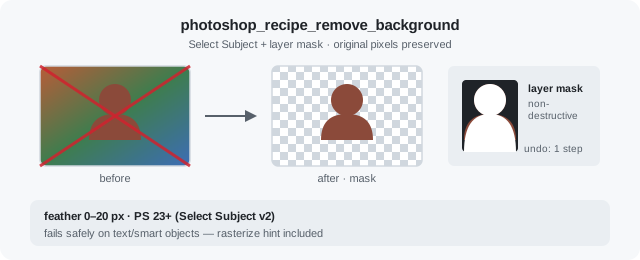
  • Removes backgrounds and returns the subject as a clean, editable mask rather than a flattened cut-out.
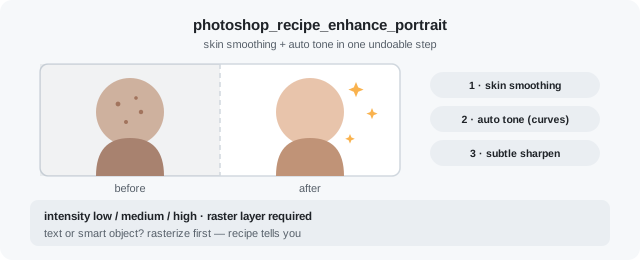
  • Performs portrait retouching, including skin smoothing, tone fixes, and dodge and burn setup at a chosen intensity.
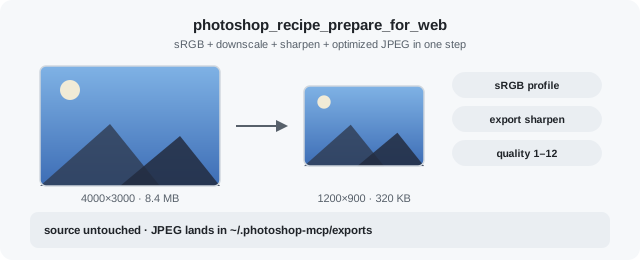
  • Exports for web and social in sRGB with sharpening and correct sizing for Instagram, X, and other targets.
  • Splits one wide design into a numbered, seamless carousel of slides for social posting.
  • Watermarks an entire folder of photographs in one pass while leaving the originals untouched.
  • Applies colour grading and film looks, sky replacement, and generative fill, the last of which requires an Adobe account.
  • Provides 16 one-step recipes on top of the 106 atomic tools, with the full list documented in docs/available-tools.md and prompt templates in docs/prompt-layer.md.

Who uses it and how

  • Individual designers and retouchers on Windows or macOS running Photoshop 2012 or later, who want automation inside Photoshop instead of in a separate editor.
  • Cursor users, who install the plugin from Customize, then Plugins, or search the Cursor Marketplace for photoshop-mcp; the package still launches npx -y @alisaitteke/photoshop-mcp and the plugin manifest supplies the Photoshop icon in the MCP list.
  • Claude, Claude Code, and VS Code users, who add the server to their existing assistant rather than adopting a new client.
  • People who would rather not use an IDE at all, using the built-in browser chat window instead.
  • Batch-oriented workflows such as folder-level watermarking, passport photos, CSV-driven cards, and mockups, driven by the prompt templates in docs/prompt-layer.md.

Getting started

Photoshop must be running, on Windows or macOS, version 2012 or later, alongside Node.js 18 or newer. The easiest route is the built-in chat window, launched with npx -p @alisaitteke/photoshop-mcp photoshop-mcp-ui, signing in with an AI provider API key or reusing an existing Claude Code or Gemini CLI account; alternatively, add npx -y @alisaitteke/photoshop-mcp to Cursor, Claude, or VS Code.

How it compares

No comparable or competing products are named anywhere in the facts provided for this listing, so there is no basis for contrasting licences, hosting models, or pricing against alternatives. On the evidence available, it stands alone in this registry.

When to use it — and when not to

A self-hoster must supply a licensed, running installation of Photoshop on Windows or macOS, a supported version of Node.js, and either an AI provider API key or a Claude Code or Gemini CLI account; generative fill additionally needs an Adobe account. It is not a fit for Linux-only environments, for headless server pipelines with no desktop Photoshop, or for anyone unwilling to depend on an unofficial community project that Adobe does not endorse. Prospective users should also note that the tagline advertising 118 tools does not match the 122 tools the README documents, and that the Action Plan for the standalone interface is still labelled beta.

project readme (upstream, from github) — read inline

Photoshop MCP

Languages: English · 简体中文 · Español · Deutsch · 日本語 · Türkçe · Website

npm version GitHub release Action Plan License: MIT TypeScript Platform MCP Registry MCP Toplist Website

Photoshop MCP Server MCP server – quality and maintenance score on Glama

Chat with Photoshop like a colleague. Describe what you want in plain words — "remove this background", "resize these for Instagram" — and your AI assistant does the clicking for you. Works with Cursor, Claude, or the built-in chat window. No code, no scripts, no IDE required.

Note: This is an unofficial, community-maintained project and is not affiliated with or endorsed by Adobe Inc.

What can it do?

  • ✂️ Remove backgrounds — subject isolated with a clean, editable mask
  • 👤 Retouch portraits — skin smoothing, tone fixes, dodge & burn setup
  • 🌐 Export for web & social — sRGB, sharpened, correctly sized for Instagram, X, and more
  • 🎞️ Make carousels — split one wide design into seamless, numbered slides
  • 💧 Watermark in bulk — a whole folder of photos in one go, originals untouched
  • 🎨 Color grade & more — film looks, sky replacement, generative fill (Adobe account required)
  • Stay safe — every multi-step "recipe" is a single undo step in Photoshop

Under the hood: 122 tools (106 atomic + 16 one-step recipes) — full list in docs/available-tools.md.

Try saying

Remove the background from this portrait — keep it editable with a mask.
Enhance this portrait — smooth the skin and fix the tones, medium intensity.
Prepare this design for web, then export Instagram and X post variants.
Split this wide banner into a 5-slide seamless Instagram carousel.
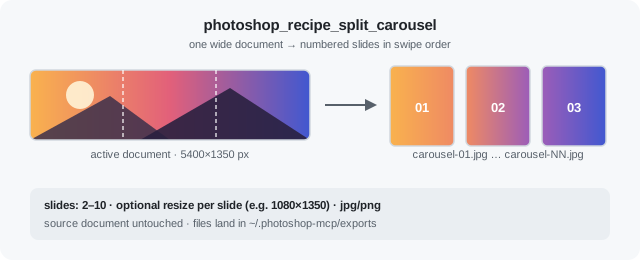
More recipes (batch watermark, passport photos, CSV-driven cards, mockups, …) and pre-engineered prompt templates: docs/prompt-layer.md.

Get started

You need Photoshop running (Windows or macOS, any version 2012+) and Node.js 18+.

Option 1 — Easiest: the built-in chat window

npx -p @alisaitteke/photoshop-mcp photoshop-mcp-ui

A chat window opens in your browser. Sign in with an AI provider API key — or reuse your existing Claude Code / Gemini CLI account, no key needed.
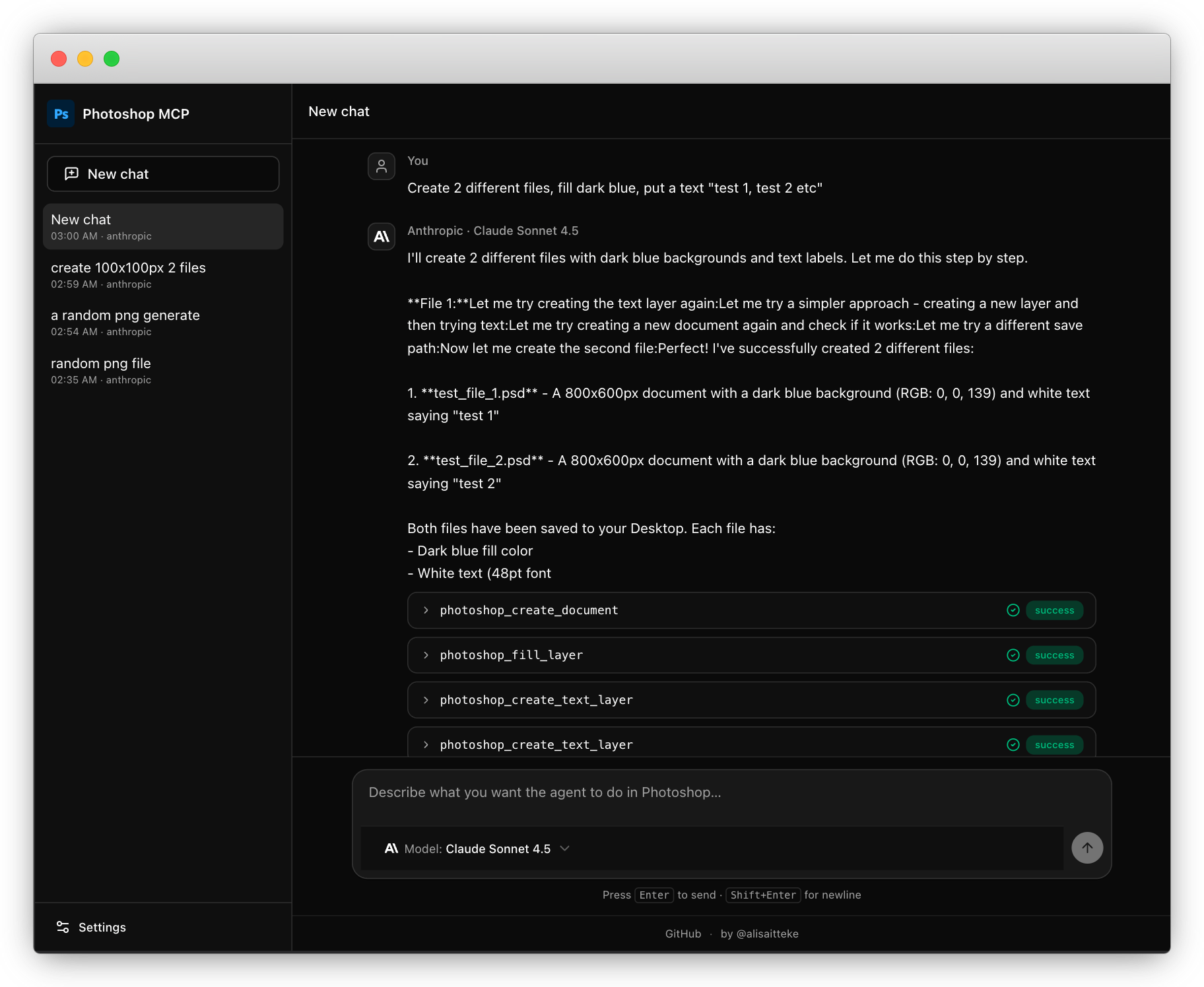
Standalone UI Screenshot

Details, providers, Action Plan (API key or CLI account), and security notes: docs/standalone-ui.md.

Option 2 — Inside your AI app (Cursor, Claude, VS Code)

Cursor (shows the Photoshop logo in the MCP list): install the plugin from Customize → Plugins, or search the Cursor Marketplace for photoshop-mcp once it is listed. That package still launches npx -y @alisaitteke/photoshop-mcp; the plugin manifest is what supplies the icon.

Until the Marketplace listing is live, copy .cursor-plugin/, mcp.json, and assets/ into ~/.cursor/plugins/local/photoshop-mcp and reload the window — details in CONTRIBUTING.md. The Install-in-Cursor button and a raw mcp.json entry still work, but they show a generic icon.


Install in Cursor Install in VS Code

Claude Code:

claude mcp add photoshop -- npx -y @alisaitteke/photoshop-mcp

Or add this to your MCP client's config (Cursor, Claude Desktop, …):

{
  "mcpServers": {
    "photoshop": {
      "command": "npx",
      "args": ["-y", "@alisaitteke/photoshop-mcp"]
    }
  }
}

How it works

  1. You type what you want in plain language.
  2. The AI plans the steps, checking the document state first.
  3. Photoshop executes — each recipe lands as one undoable step.

Something went wrong? The AI reads the structured error and knows what to try next. Common fixes: docs/troubleshooting.md.

Documentation

Contributing

Contributions are welcome! Please read CONTRIBUTING.md before opening a PR.

❤️ Contributors & Credits

Thanks to all our contributors!

Contributors

Maintainer

Built by Ali Sait TekeGitHub · LinkedIn.

License

MIT

Anonymous, aggregated usage analytics are collected by default and can be disabled anytime — details in docs/anonymous-usage-analytics.md.

Frequently asked questions

Is photoshop-mcp free to use?

photoshop-mcp is open source under the MIT licence. There is no licence fee and no seat count — you can self-host it or, where the project offers one, pay a vendor for a managed version instead.

What does photoshop-mcp do?

MCP for Adobe Photoshop. 118 tools. Control from Cursor, Claude or custom LLMs.

What is photoshop-mcp written in?

photoshop-mcp is primarily written in TypeScript. Its source is publicly available at https://github.com/alisaitteke/photoshop-mcp, and it has 503 GitHub stars.




