Paradev (formerly Superset)
Run Claude Code, Codex, or another CLI agent with terminals, code review, and browser previews in one workspace.
Download for macOS • Documentation • Changelog • Discord
What is Paradev?
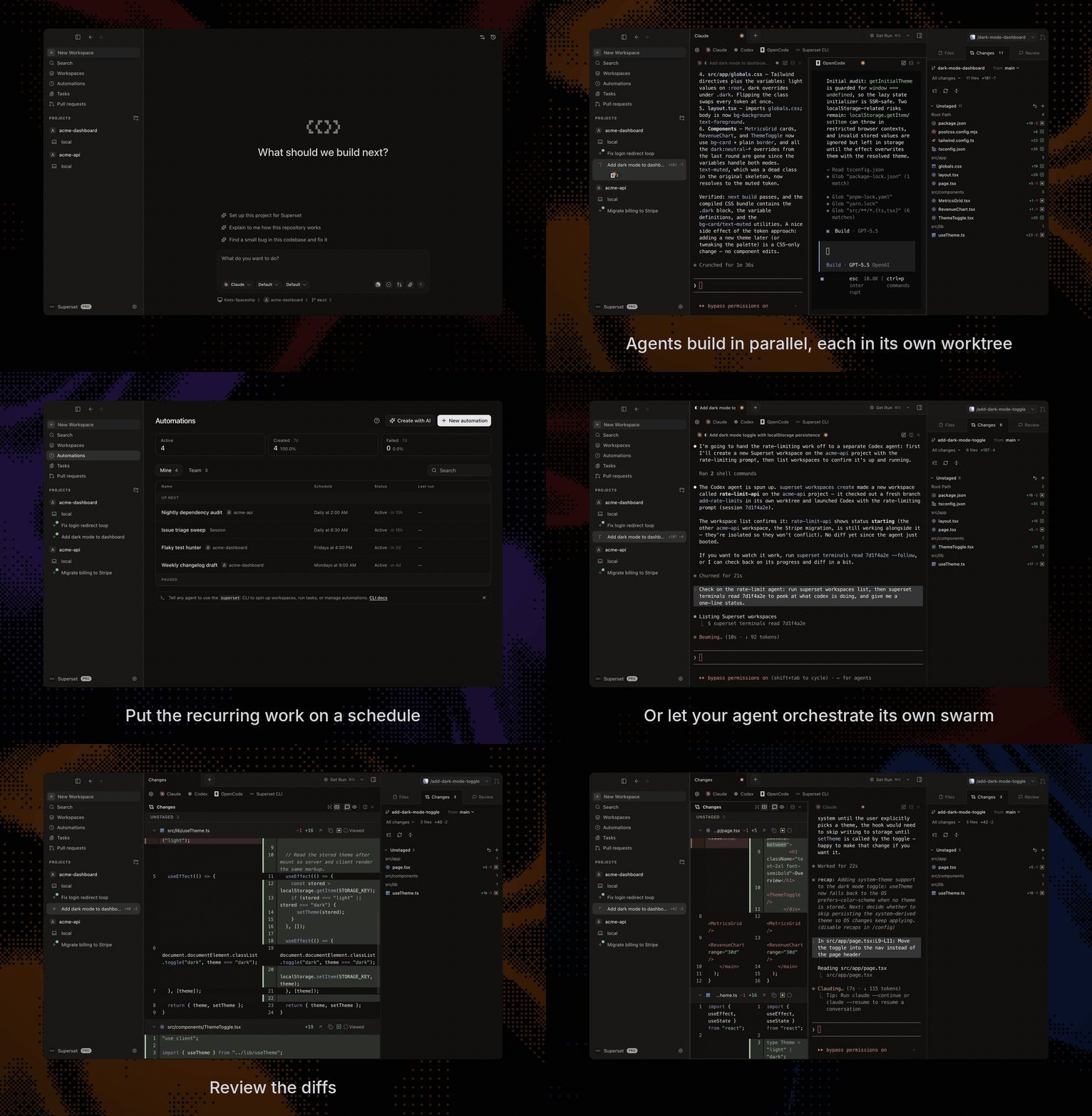
Paradev is a desktop app for running CLI coding agents in parallel. Each task gets its own Git worktree, branch, and terminals, so Claude Code, Codex, OpenCode, Gemini CLI, Cursor Agent, or any other CLI agent can work on several tasks in one repository at the same time.
Paradev is for developers who already use a coding agent in the terminal and want to run more than one task at once, without juggling terminal tabs and branches by hand.
A single agent CLI runs one session in one terminal, and an editor is built around one checkout. Paradev adds the workspace around the agents:
- One worktree per task: agents work in separate copies of the repository, on separate branches
- Review in the app: a Changes pane to review, commit, push, and open pull requests, and a pull request pane with checks, review threads, and merge
- In-app browser: preview each workspace's dev server, with ports detected per workspace
- Agent status: the sidebar shows which agent is working, done, or waiting on you
- Beyond one machine: remote hosts, an iPhone and iPad app, and automations that start agents on a schedule or from an event (Pro plan)
Paradev is not a coding agent itself. You bring your own agent subscriptions and API keys, and Paradev does not proxy model calls.
Platforms: macOS (Apple Silicon and Intel). Linux as an experimental x64 AppImage. Windows is not yet available.
Formerly Superset: Paradev was previously named Superset, and the CLI command is still superset. It is unrelated to Apache Superset, the business intelligence tool.
Paradev vs. alternatives: Cursor · Codex app · Conductor
Documentation for agents
The docs are available as a Markdown index linking to individual pages, or one full-text file.
Install
Download the desktop app:
- macOS: Apple Silicon (.dmg) · Intel (.dmg)
- Linux: x64 AppImage (experimental; macOS is the primary target)
- Windows: not yet available
- All builds
All you need installed is Git. gh is optional and enables the PR workflows; Paradev offers to install it for you.
Start with one task
- Install Paradev and add a repository from your computer or clone one.
- Create a workspace, choose your CLI agent, and describe a small change you want to make.
- Inspect its patch in Changes, run the relevant tests, and preview your app in the browser pane before committing.
For a walkthrough of workspace creation and review, see Your First Parallel Session.
Review and revise
- Change your app's UI. Use Design in the browser pane to select an element and send your requested change to an agent with element context. Walkthrough · Design Mode docs
- Ask an agent to fix a PR. Open Pull requests → Code, select diff lines, and send feedback to a running or new agent session. Posting to GitHub is optional. Walkthrough · PR docs
- Review a report with your team. Ask an agent to publish a Page. Teammates pin comments, and a watching agent can revise it at the same link. Keep its host and session running for feedback delivery. Walkthrough · Pages docs
See the diff viewer and browser previews
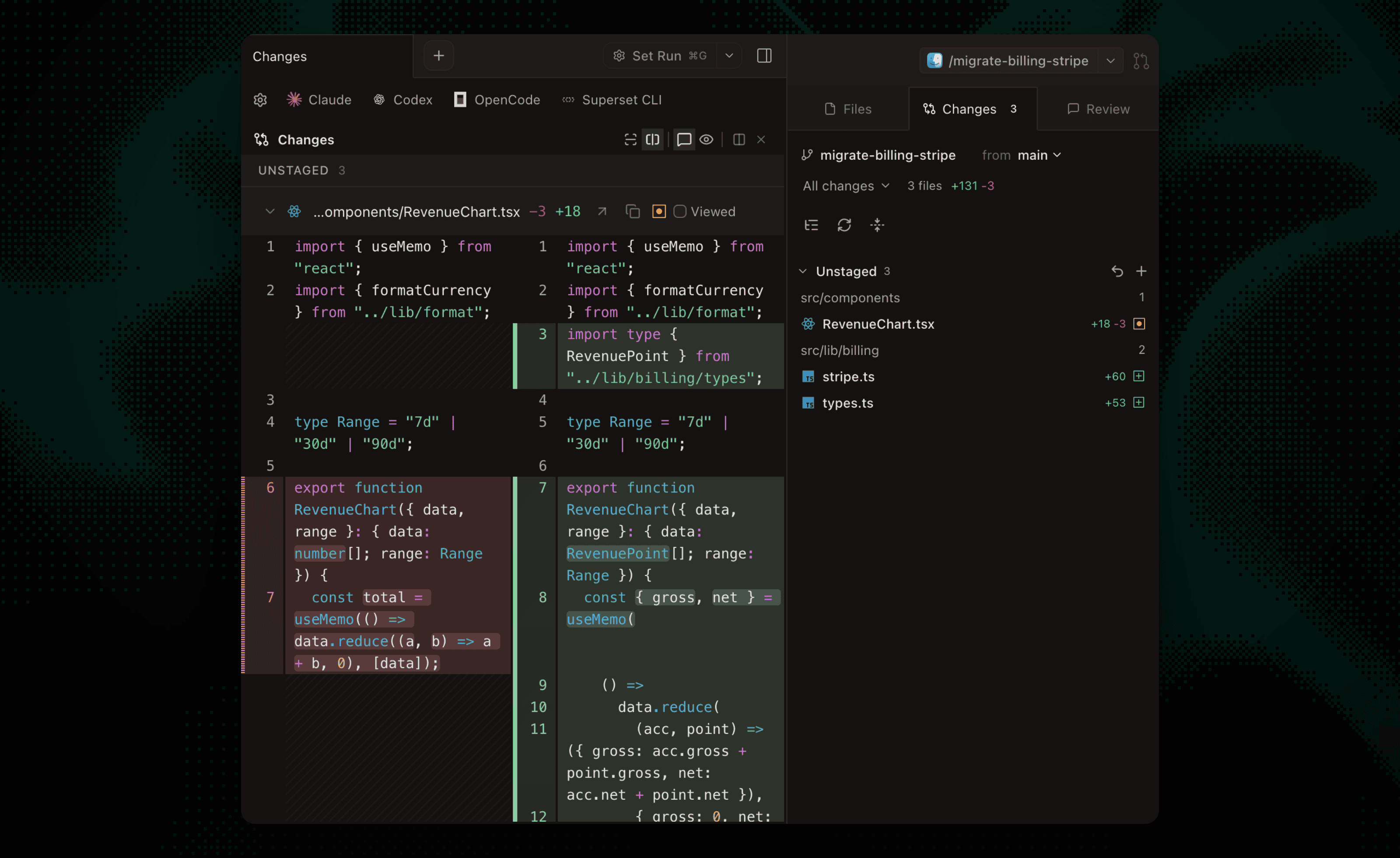
Built-in Diff Viewer
Inspect, comment on, and edit agent changes without leaving the app, then commit and push when it's ready.
In-App Browser & Ports
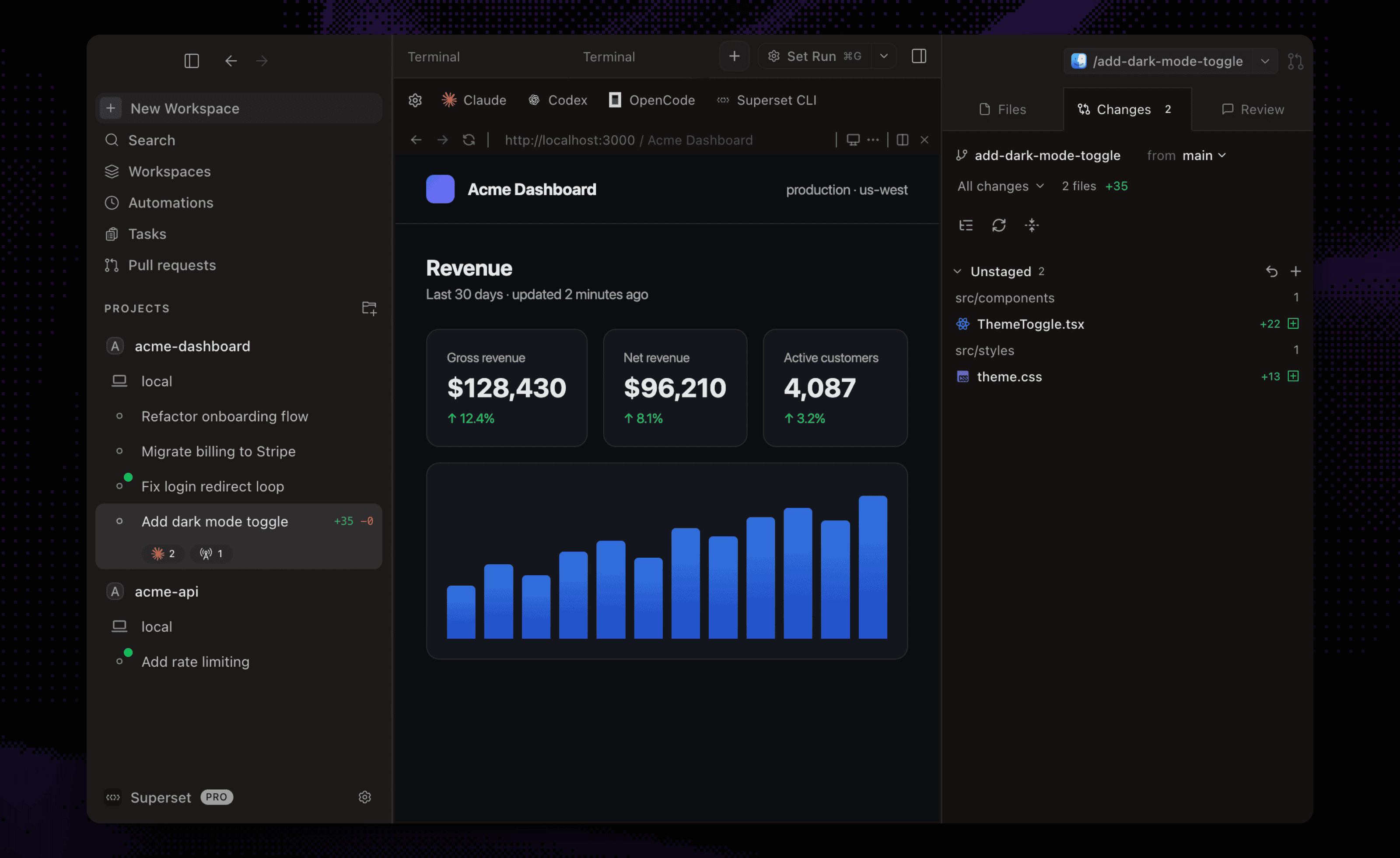
Preview running dev servers in a browser pane. Ports are detected per workspace, so every worktree gets its own preview.
Run independent tasks
Give each task a Git worktree with its own branch and terminals. Worktrees separate working files; they do not sandbox processes or prevent merge conflicts.
Workspace docs · Terminal docs · Agent status
See workspaces, monitoring, terminals, and the command palette
Parallel Workspaces
Review each result before merging, or try two approaches to the same problem and keep the one you prefer.
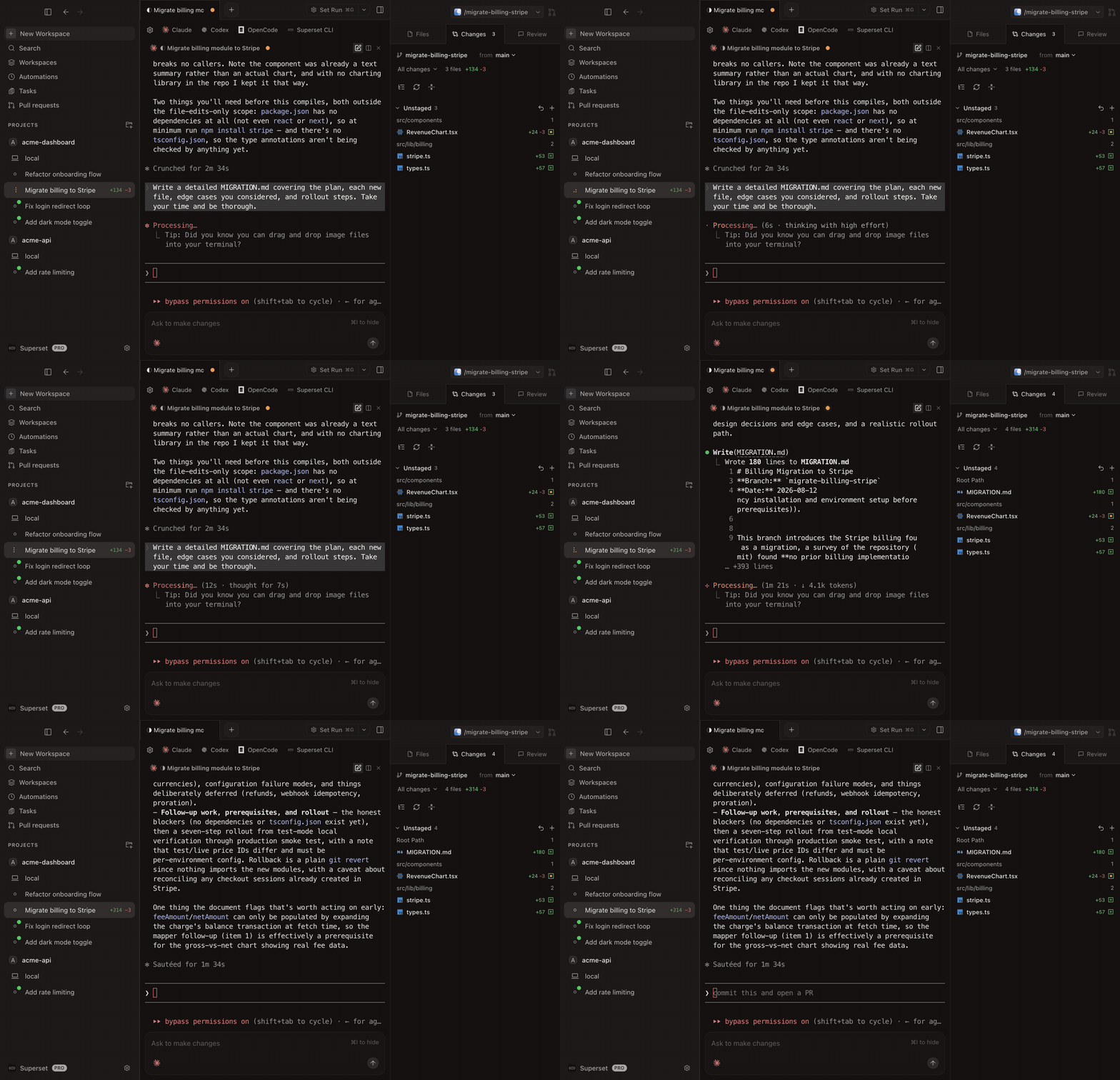
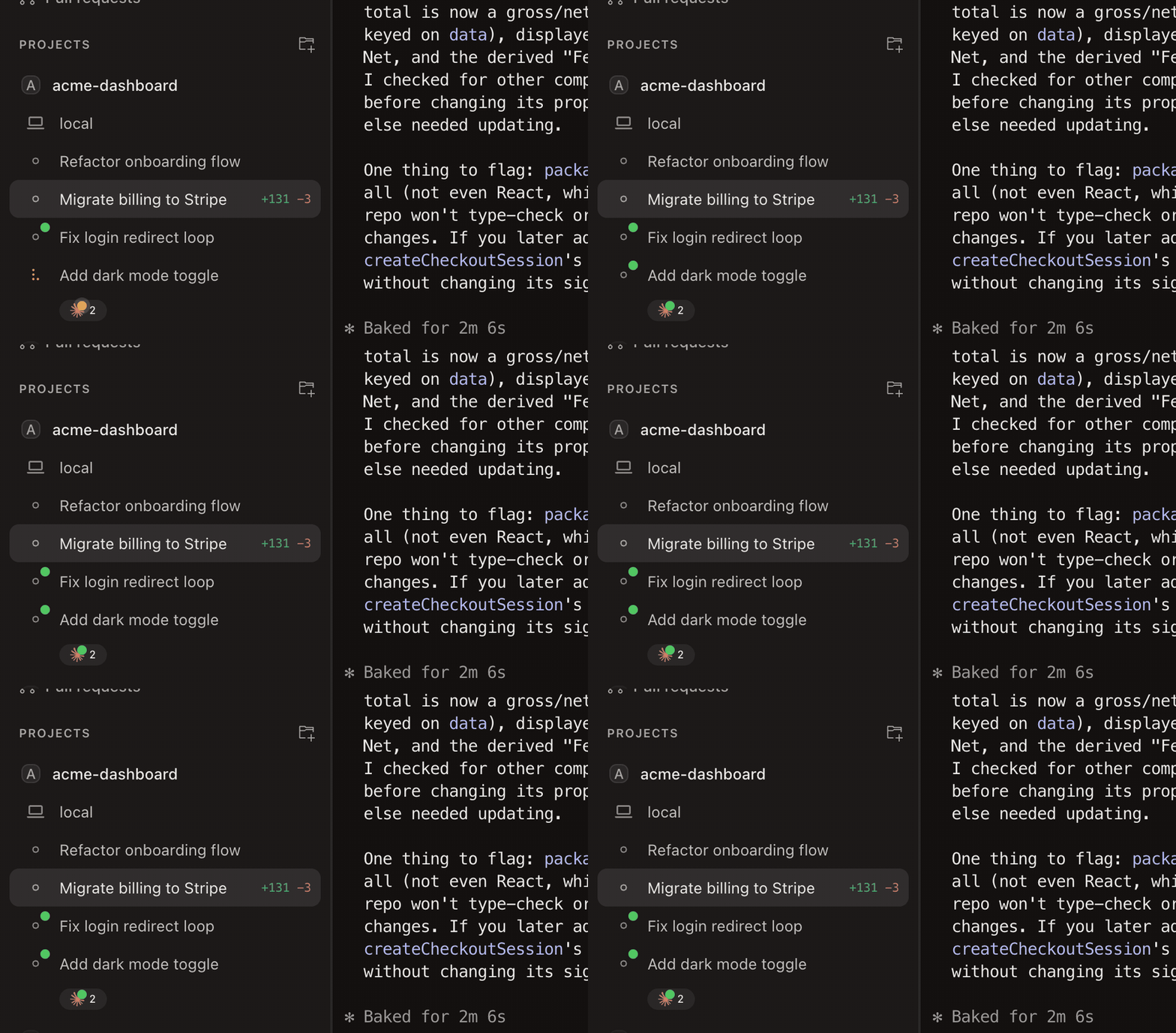
Agent Monitoring
Track every agent from the sidebar, with working indicators, completion chimes, and dock badges when one needs your attention.
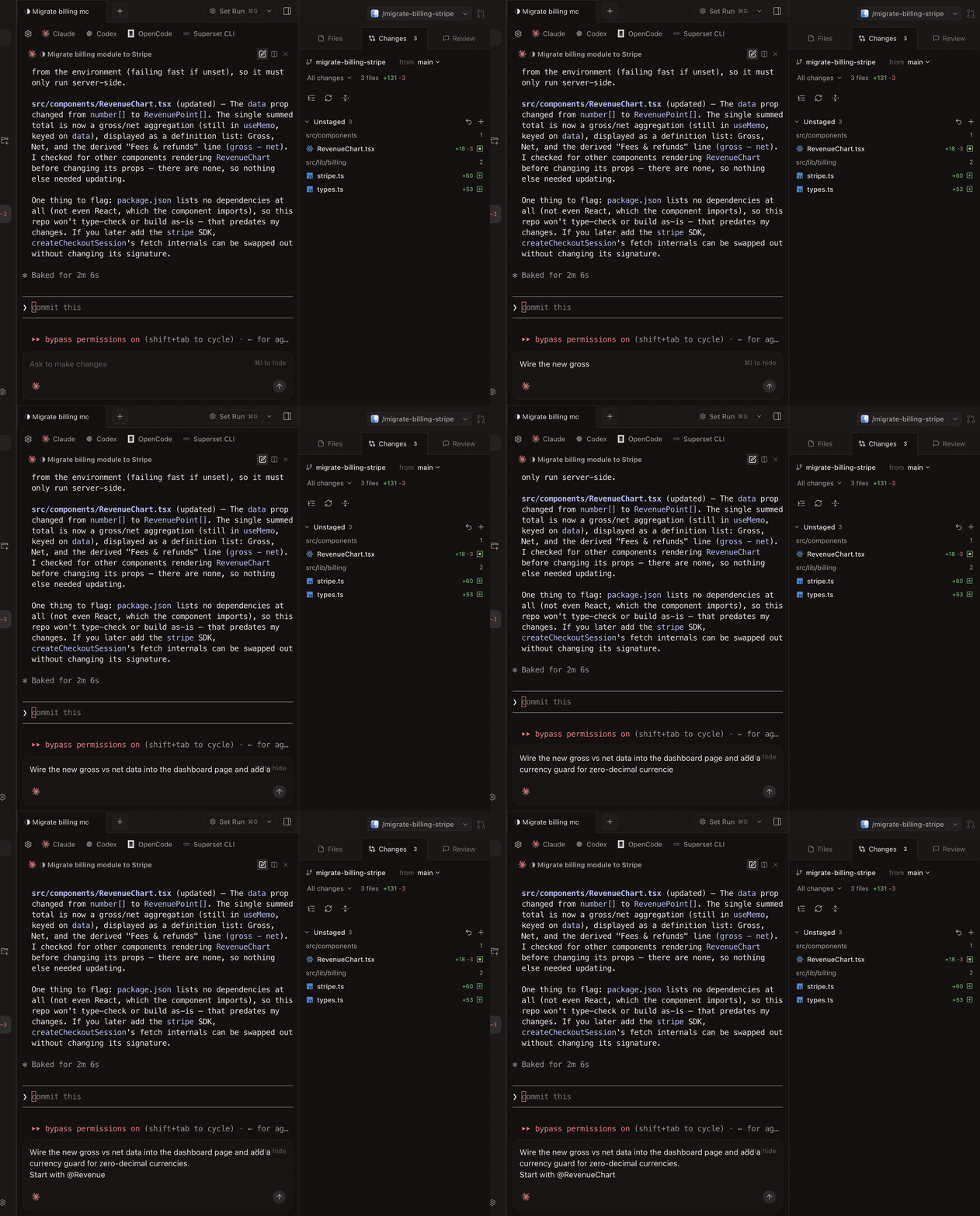
Built-in Terminal
Tabs, infinite splits, presets, and persistent sessions that survive restarts. Press ⌘I for a rich prompt editor with multiline editing and @-file mentions.
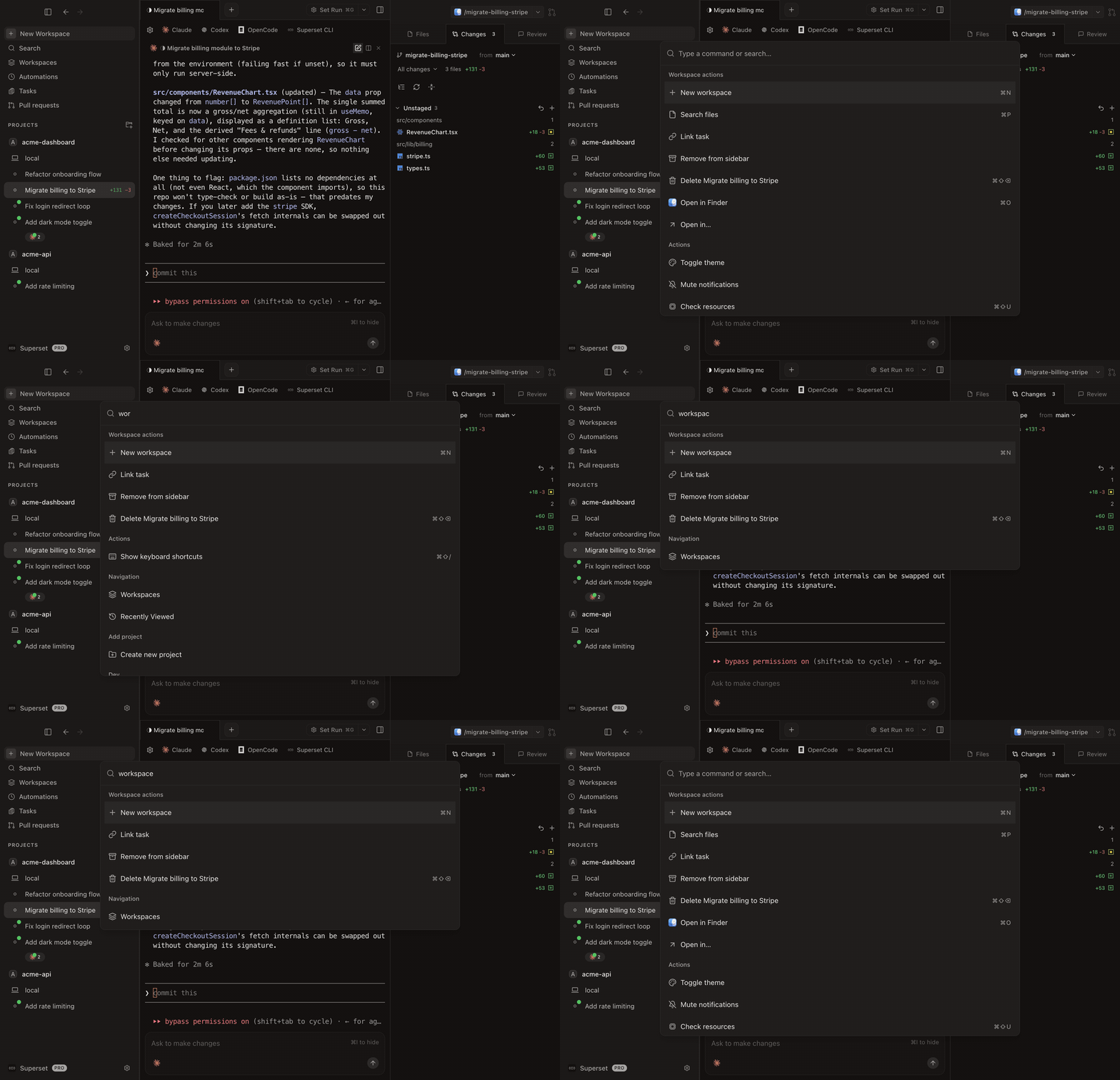
Command Palette
Jump to any workspace, action, or setting from one search box.
Work across devices and on a schedule
Connect another machine to reach its workspaces remotely, or schedule an agent to work on a recurring task. The CLI, SDK, and MCP server also let agents and scripts manage workspaces.
Mobile supports iPhone and iPad and requires Paradev Pro and iOS 26 or iPadOS 26 or later. Use cloud workspaces without keeping your own computer connected. To reach workspaces on your own computer, enable Remote Access and keep that host awake and online.
Remote access · Automations · iPhone and iPad · CLI
See mobile, automations, remote access, and the CLI
Paradev for iPhone and iPad
Control Claude Code, Codex, and other terminal agents in cloud workspaces or on your connected computer. Pick up the same workspaces and terminal sessions, send follow-up prompts, review diffs, and merge PRs from your iPhone or iPad.
Download on the App Store • Learn more →
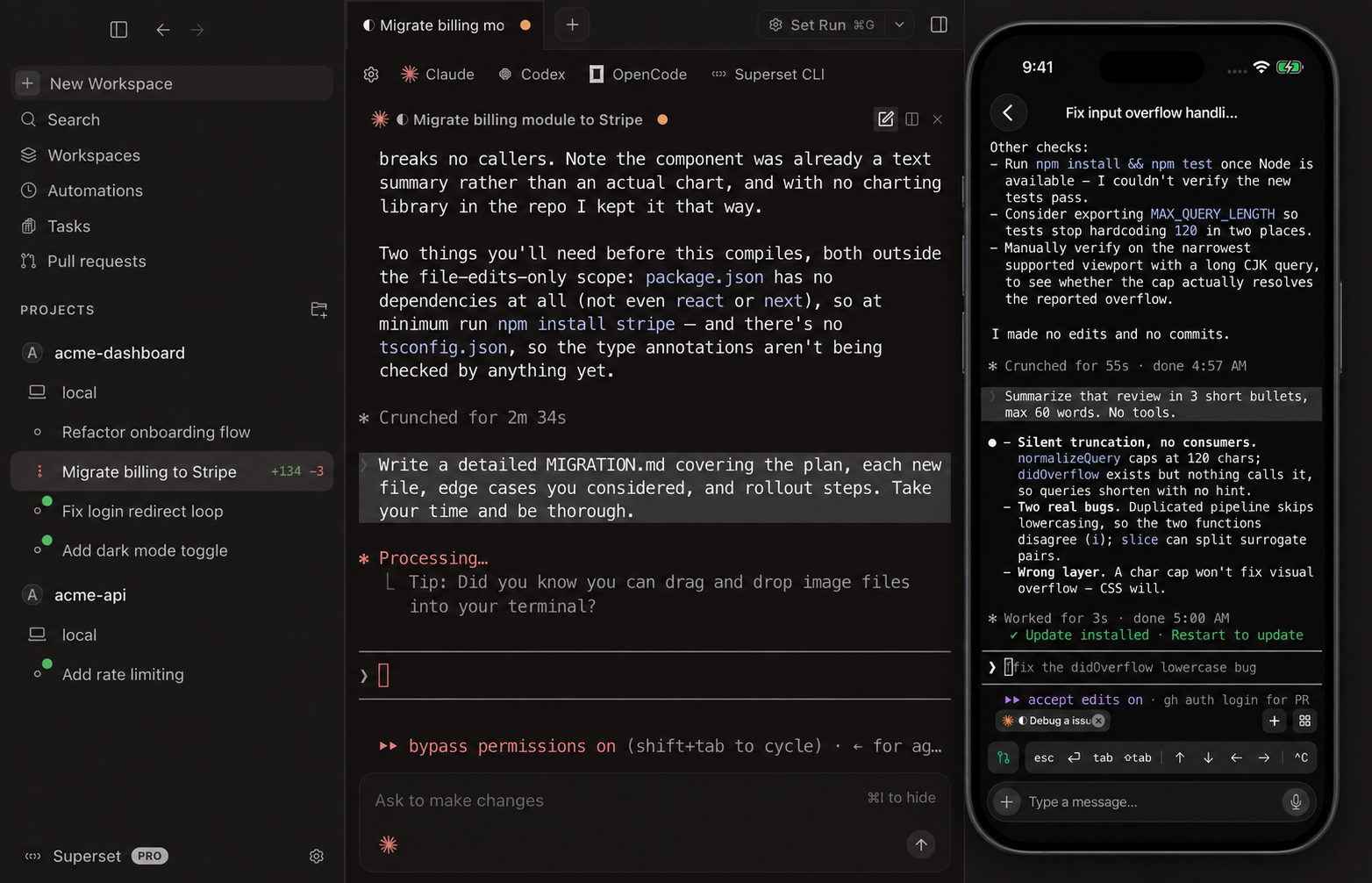
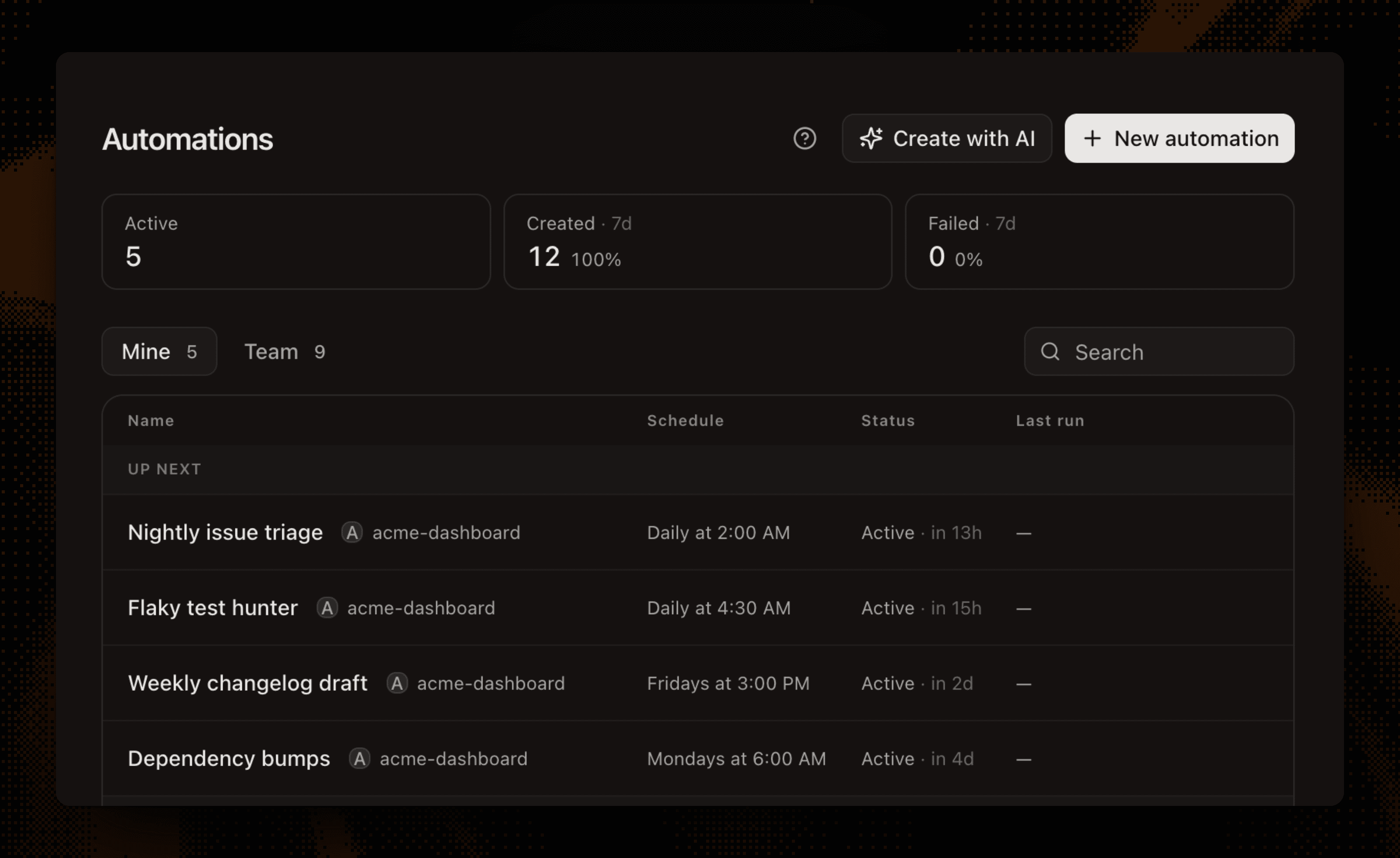
Automations
Run agent sessions on a schedule or when something happens: review a PR when you're asked, triage a new Sentry issue, pick up a bug report from Slack, draft the weekly changelog.
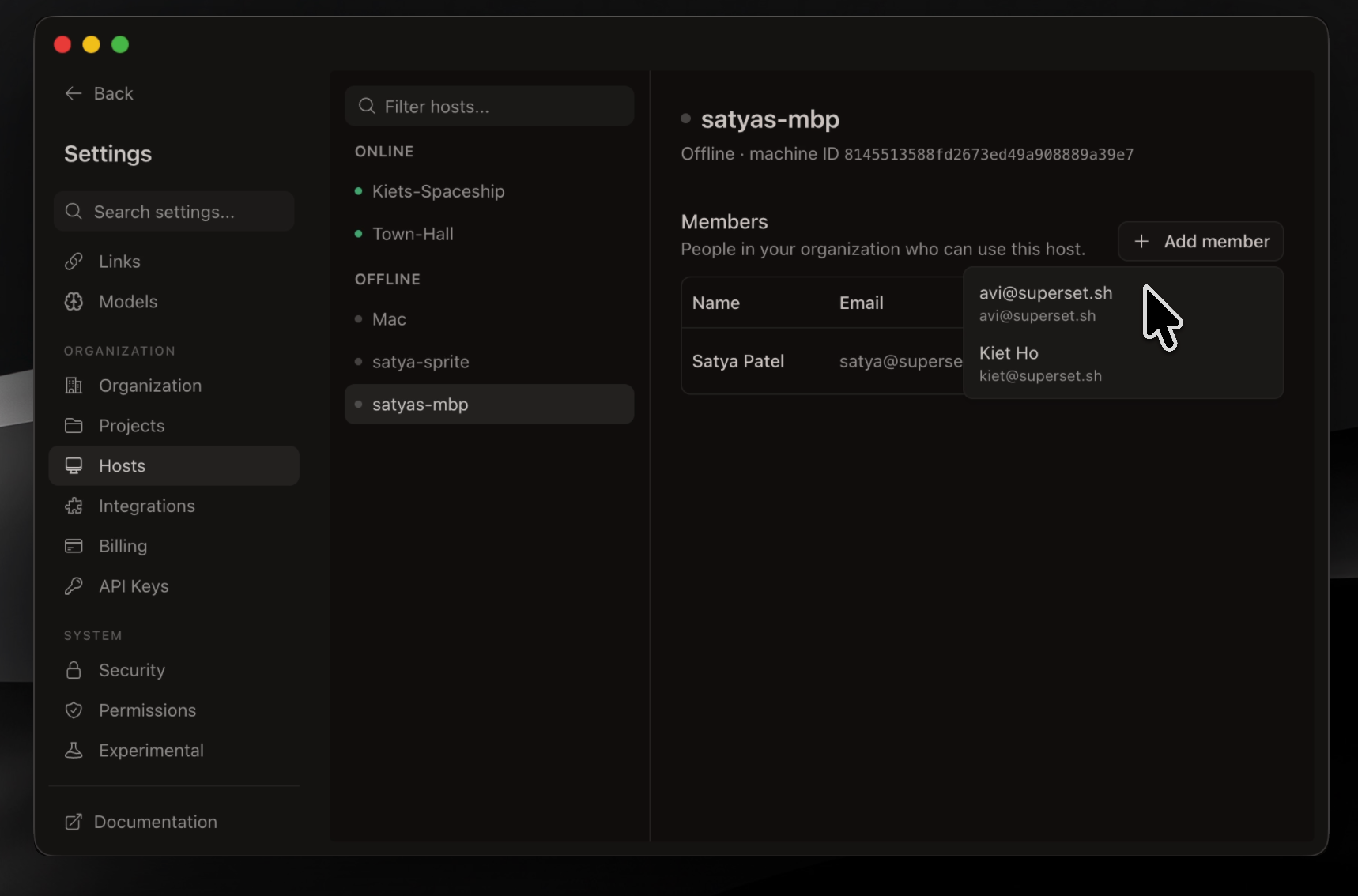
Remote Access
Connect another machine and reach its workspaces from anywhere: the desktop app, the CLI, or your phone. Wake offline hosts with a custom command.
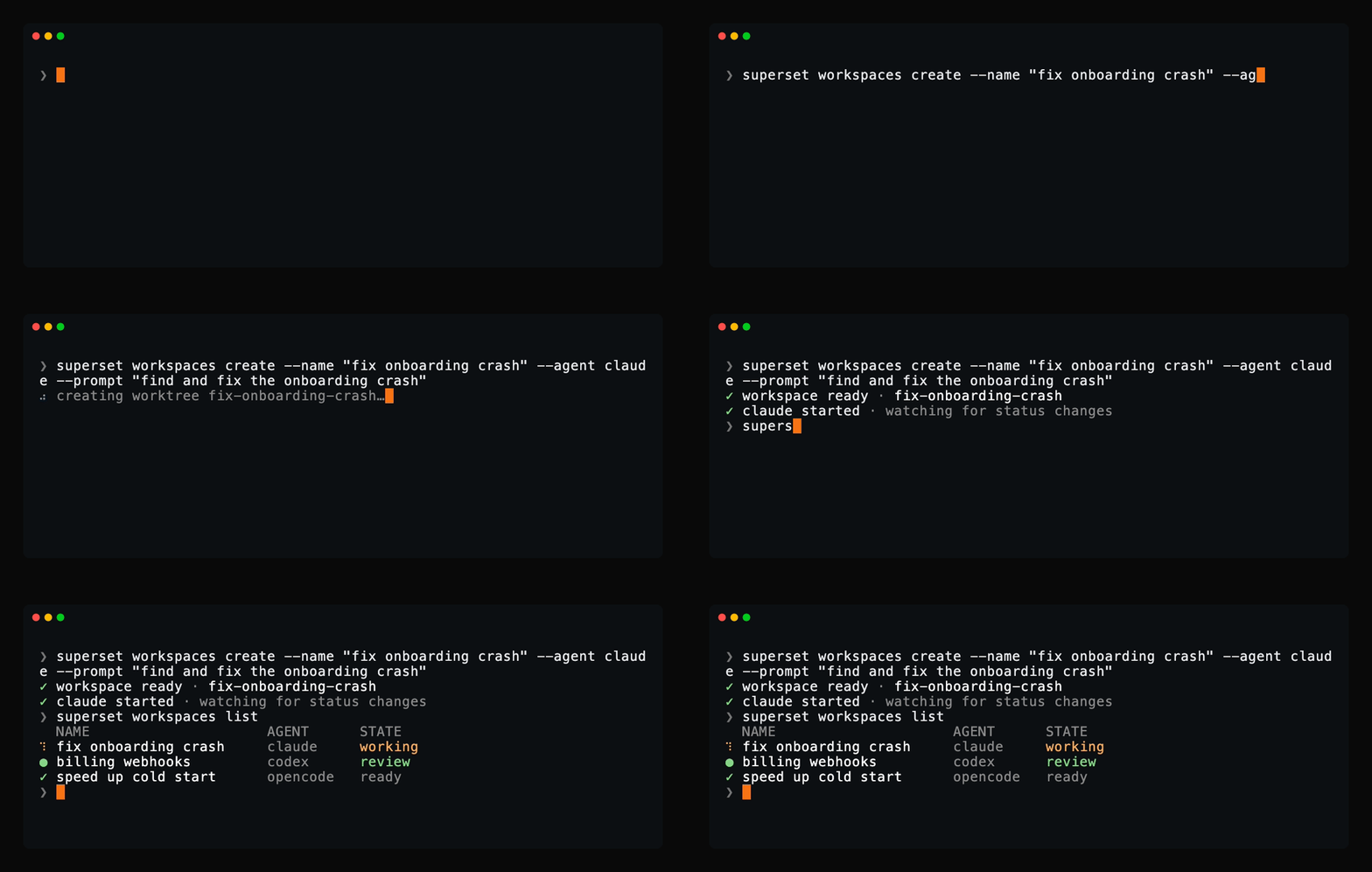
Paradev CLI
Script it from any shell: create workspaces, launch agents, read their terminals, and manage automations with a single binary. If an agent can run a command, it can drive Paradev.
Customize your workflow
- Built-in skills: agents come pre-loaded with
superset:*skills (orchestrate parallel agents, schedule automations, file feedback, diagnose issues), provisioned automatically at launch - Workspace setup scripts: automate env setup, dependency installs, and dev servers per workspace
- Terminal presets: save agent and shell layouts and open them with one keystroke
- Slack & Linear: spin up workspaces from Slack messages or Linear issues
- Open in your IDE: one-click handoff to Cursor, VS Code, or any editor
- Custom themes: build, edit, and import theme files
- Keyboard shortcuts: every action is remappable via Settings → Keyboard Shortcuts (⌘/)
- Bring your own providers: connect OpenRouter, Bedrock, Vertex, or Vercel AI Gateway
- And many more: we ship daily, so this list is perpetually behind. The changelog is the real feature list.
Supported Agents
Keep your existing agent subscriptions.
Use Claude Code, Codex, OpenCode, Cursor Agent, or another CLI coding agent.
Browse supported agents
| Agent | Status |
|---|---|
 Amp Code |
Fully supported |
 Antigravity CLI |
Fully supported |
 Claude Code |
Fully supported |
 OpenAI Codex CLI |
Fully supported |
 Cursor Agent |
Fully supported |
 Droid |
Fully supported |
 fx |
Fully supported |
 Gemini CLI |
Fully supported |
 GitHub Copilot |
Fully supported |
 Grok |
Fully supported |
 Hermes |
Fully supported |
 Muse Code |
Fully supported |
 Devin |
Fully supported |
 Kimi Code |
Fully supported |
 Kiro |
Fully supported |
 Mastra Code |
Fully supported |
 Mistral Vibe |
Fully supported |
 Oh My Pi |
Fully supported |
 OpenCode |
Fully supported |
| Pi |
Fully supported |
 Polygraph |
Fully supported |
| Any other CLI agent | Works without configuration |
Agents get more than a terminal:
- Model picker: choose a model and reasoning effort when you launch an agent
- Per-agent settings: tune launch commands, prompt templates, and model overrides in Settings → Agents
- Custom agents: add any terminal agent with its own icon and it works like a built-in
- Built-in chat: talk to models in a chat pane, with inline tool approvals and plan review
More Than a Desktop App
Every surface talks to the same workspaces, so you can start a task in the app and check on it from anywhere.
| Surface | What you get |
|---|---|
| Desktop App | The full IDE: terminals, diff viewer, in-app browser, automations |
| CLI | A single superset binary to manage workspaces, agents, terminals, and hosts from any shell |
| TypeScript SDK | Drive Paradev programmatically with @superset_sh/sdk from Node, Bun, or Deno |
| MCP Server | Let Claude Code, Codex, Cursor, and other agents create and manage workspaces themselves |
The CLI comes bundled with the desktop app, or install it standalone:
curl -fsSL https://paradev.com/cli/install.sh | sh
# or
brew install paradevai/tap/superset
Development
Want to hack on Paradev or contribute a PR? Clone the repository, add it to the installed Paradev app, and create a workspace for your change:
git clone https://github.com/paradevai/paradev.git
Then run the development setup from that workspace terminal:
./.paradev/setup.local.sh
bun run dev
Run setup.local.sh once in every new worktree. It configures workspace-specific
app identity and ports so the development desktop app can run alongside the
installed Paradev app and other development worktrees.
No Neon account or third-party credentials are needed. setup.local.sh brings
up a local Postgres + neon-proxy + Redis stack via Docker and seeds a dev account.
Sign in with the "Sign in as dev" button (or admin@local.test / supersetdev).
Prereqs for building from source (to use Paradev, install the app instead): Bun v1.4.3+ (pinned in .bun-version), docker, jq, and gh (brew install jq gh).
See DEVELOPMENT.md for the full guide: what the setup script does, manual setup against real services, common commands, troubleshooting, and how to build the desktop app. Contribution process lives in CONTRIBUTING.md.
Configuration
Configure workspace setup, teardown, and run scripts in .paradev/config.json. See full documentation.
{
  "setup": ["./.paradev/setup.sh"],
  "teardown": ["./.paradev/teardown.sh"],
  "run": ["./.paradev/run.sh"]
}
Tech Stack
Browse the implementation stack


Private by Default
- Explicit Connections: you choose which agents, providers, and integrations to connect.
Contributing
We welcome contributions! See CONTRIBUTING.md for how to get set up and open a PR. Bugs and feature requests go in issues.




🌐 Read this in other languages
English | 日本語 | 简体中文 | 繁體中文 | 한국어 | Français | Español | Deutsch | Português | Italiano | Русский | Türkçe | Polski | Nederlands | Bahasa Indonesia | Čeština | Tiếng Việt
Community
Join the Paradev community to get help, share feedback, and connect with other users:
- Discord: chat with the team and community
- Twitter: follow for updates and announcements
- GitHub Issues: report bugs and request features
- GitHub Discussions: ask questions and share ideas
Team



License & what's free forever
The desktop app is free forever. Running agents in parallel on your own machine will never require payment. Anything we charge for will be an optional service on top.
The whole app is in this repo under the MIT License: use it, fork it, modify it, self-host it, and redistribute it.