What it is
OSSEC is an open source host-based intrusion detection system written in C and released under the GNU General Public License version 2. It combines several security functions into one platform: log analysis, file integrity checking, policy monitoring, rootkit detection, real-time alerting, and active response. The project describes itself as a full platform to monitor and control systems, mixing the aspects of HIDS, log monitoring, and SIM/SIEM into a single solution. It lives in the security and compliance tooling ecosystem, with topics spanning intrusion detection, file integrity management, log analysis, PCI-DSS, and NIST 800-53.
The concrete problem it solves is the fragmentation of host-level security monitoring. Rather than running separate tools for watching log files, verifying that critical files have not changed, checking for rootkits, and enforcing configuration policy, an operator deploys OSSEC and gets all of these from one agent and manager architecture. It also closes the loop between detection and reaction: real-time alerting reports an event, and active response can take action on the host when a rule fires. The compliance topics attached to the repository show the second problem it addresses, which is producing the file integrity and policy evidence that frameworks such as PCI-DSS and NIST 800-53 expect.
Key capabilities
- Log analysis across monitored hosts, feeding events into a central manager.
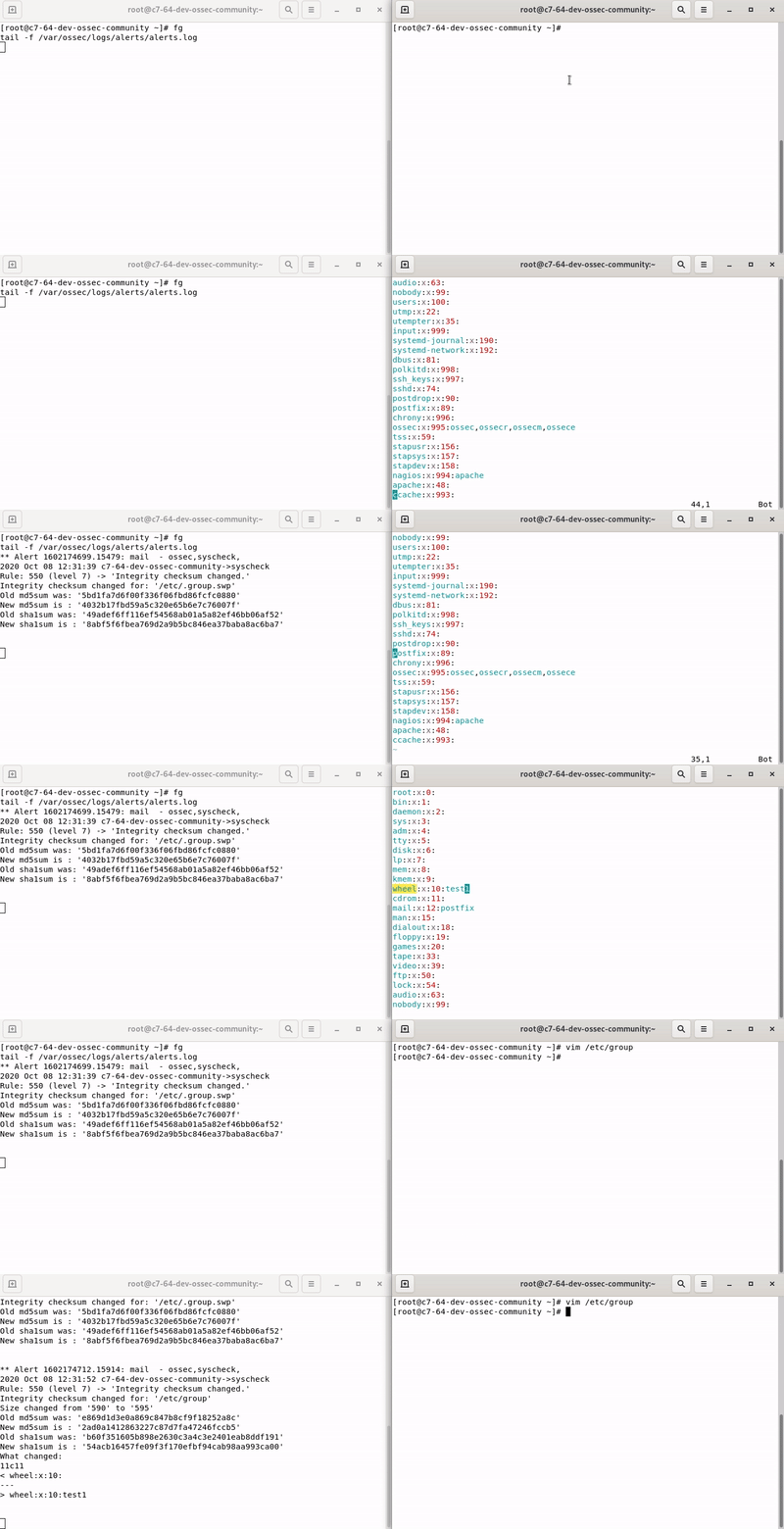
- File integrity monitoring, demonstrated in the project's own screenshots.
- Policy monitoring against defined configuration expectations.
- Rootkit detection on monitored systems.
- Real-time alerting when rules match observed activity.
- Active response, allowing the platform to react to detected events.
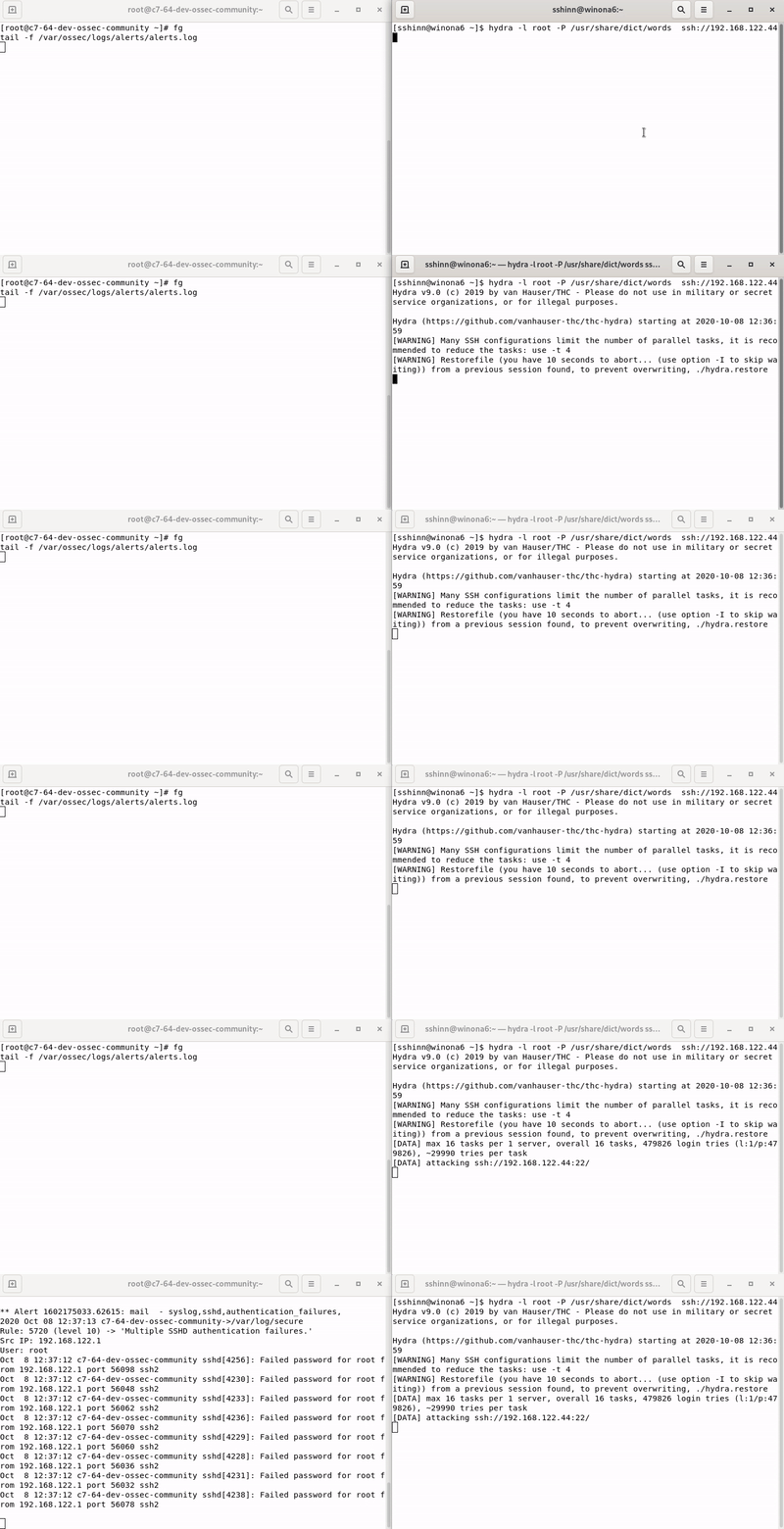
- Attack detection, illustrated in the README with an SSH brute force example.
Who uses it and how
- Security teams running host-based intrusion detection across a fleet of servers.
- Compliance and risk management groups that need file integrity and policy evidence for PCI-DSS or NIST 800-53.
- Operators who want log monitoring and SIM/SIEM-style correlation without assembling separate tools.
- Administrators who need automated reaction to attacks, using active response alongside alerting.
- Users of the development branch, who clone the repository from GitHub to track unreleased changes.
Getting started
Stable releases are downloaded from the OSSEC website, with release documentation at the project's docs page; the current stable release is v4.3.0. The development version is hosted on GitHub and is available with a simple git clone.
When to use it — and when not to
OSSEC fits teams that want a single open source platform for host intrusion detection, log monitoring, and compliance-oriented file integrity checks, and it is backed by a long-lived project with an active repository. Prospective users should note that the README describes no hosted or managed option, so deployment means obtaining releases from the website or cloning the development tree and running the software themselves. The repository carries 125 open issues, and no contributor count is published, so anyone evaluating it should review the issue tracker and release cadence before committing.
project readme (upstream, from github) — read inline
OSSEC v4.3.0




Information about OSSEC
OSSEC is a full platform to monitor and control your systems. It mixes together
all the aspects of HIDS (host-based intrusion detection), log monitoring and
SIM/SIEM together in a simple, powerful and open source solution.
Visit our website for the latest information. www.ossec.net
Current Releases
The current stable releases are available on the ossec website.
- Releases can be downloaded from: Downloads
- Release documentation is available at: docs
Development
The development version is hosted on GitHub and just a simple git clone away.


Screenshots
File Integrity Monitoring
Attack Detection
Help / Support
Join us on slack, ossec.slack.com: Invites to [email protected]
Join us on Discord: https://discord.gg/BXzM75Xzq7
Credits and Thanks
- OSSEC comes with a modified version of zlib and a small part
of openssl (sha1 and blowfish libraries)
- This product includes software developed by the OpenSSL Project
for use in the OpenSSL Toolkit (http://www.openssl.org/)
- This product includes cryptographic software written by Eric
Young ([email protected])
- This product include software developed by the zlib project
(Jean-loup Gailly and Mark Adler)
- This product include software developed by the cJSON project
(Dave Gamble)
- Atomicorp hosting the annual OSSEC conference. Presentations for the 2019 conference can be found at https://www.atomicorp.com/ossec-con2019/
License
OSSEC is licensed under the GNU General Public License version 2 (GPLv2).