open-design is a free, open source design & prototyping project written in TypeScript and released under Apache-2.0. It has 96,938 GitHub stars, 11,262 forks and 1,090 open issues, and was last pushed 4 hours ago. On this registry it ranks #2 of 23 tracked projects in Design & Prototyping, with 5 head-to-head comparisons available.

What is open-design?

OpenDesign is an open-source, local-first desktop design application for macOS and Windows that turns the coding agent already installed on a developer's machine into the design engine, producing prototypes, dashboards, decks, images, and motion graphics as real files exported to HTML, PDF, PPTX, and MP4.

What it is

OpenDesign is the open-source Claude Design alternative, released under the Apache-2.0 licence and written in TypeScript. It ships as a local-first native desktop application for macOS and Windows, built around composable skills, brand-grade DESIGN.md design systems, and ready-to-use plugins. Its organising idea is that the agent-native loop — discover the brief, lock the direction, stream the artifact, critique, deliver — should not stay closed inside a single vendor's product. Instead, that loop becomes a filesystem of functional skills, rendering design templates, design systems, and plugins that the coding agents already sitting on a laptop can read, write, and remix. The CLI becomes the design engine, the laptop becomes the studio, and the team's DESIGN.md becomes the brand contract.

The concrete problem it solves is the gap between agent-driven code generation and design artefact production. Rather than pushing pixels on a proprietary canvas, OpenDesign delivers single-page artifacts written in real CSS, with real fonts and real components, already shaped by the project's design system and already runnable inside the agent the user works in every day. Generated output stays inside the OpenDesign workflow for live preview and delivery, and is inspected through a sandboxed iframe preview rather than a simulated mockup. Inside a project's Studio, conversation, generated files, and live preview stay together across six artifact types: Prototype, Deck, Mobile app, Image, Document, and HyperFrame.

Key capabilities

  • Runs DeepSeek Harness (dsh) as a native runtime, with structured thinking, tool calls, model discovery, cancellation, and session resume.
  • Connects to Claude Code, OpenClaw, Codex, Cursor, OpenCode, Qwen, Copilot, Amp, Hermes, Kimi, and Antigravity across 26 distinct local CLI executables, or to any OpenAI-compatible endpoint through BYOK.
  • Generates six artifact types in Studio: Prototype, Deck, Mobile app, Image, Document, and HyperFrame motion graphics.
  • Exports finished work to HTML, PDF, PPTX, and MP4, with sandboxed iframe preview for rendered pages.
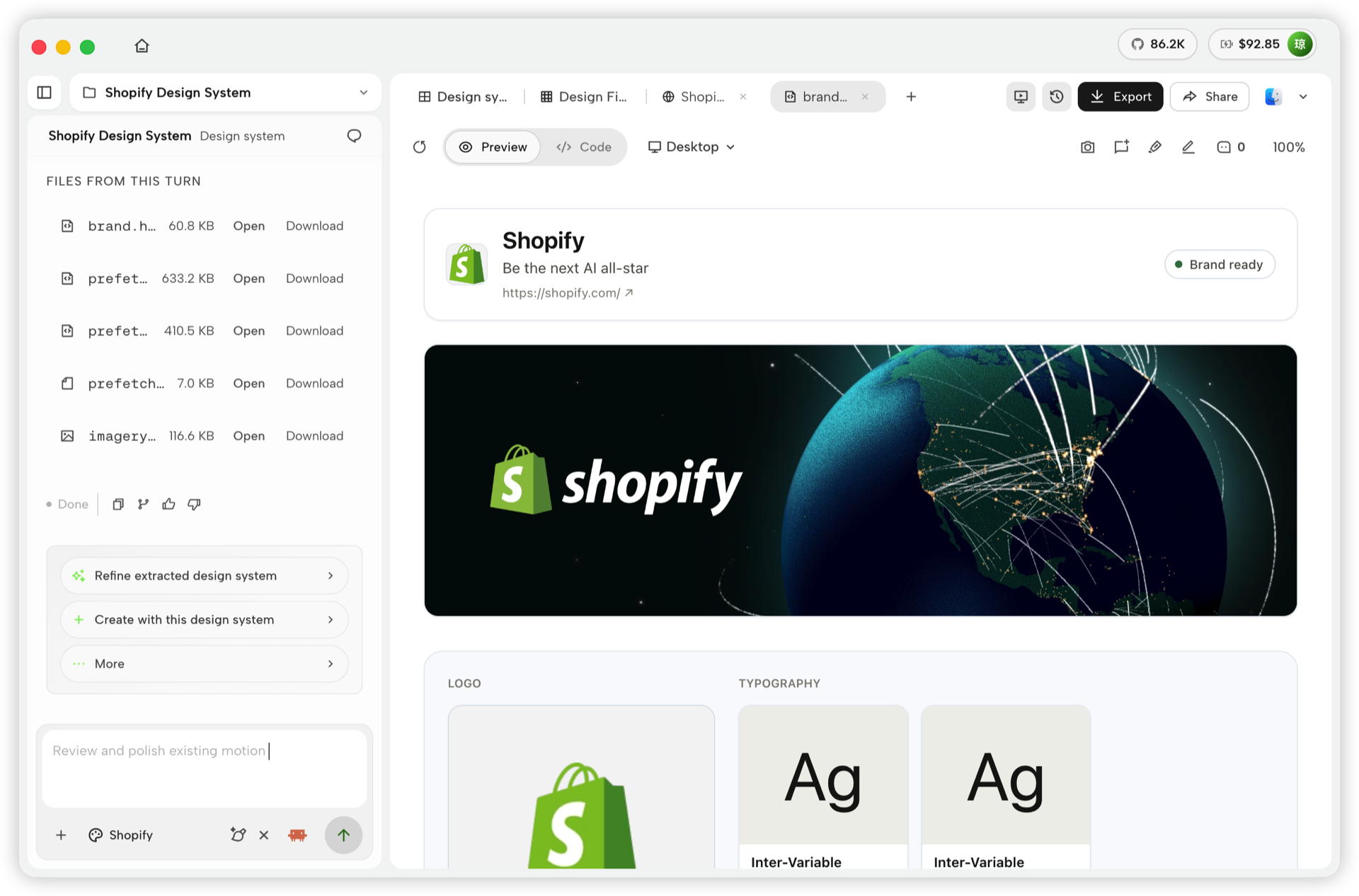
  • Builds reusable DESIGN.md design systems by extracting and refining a brand's visual language, previewing the result, and creating with it in the same workspace.
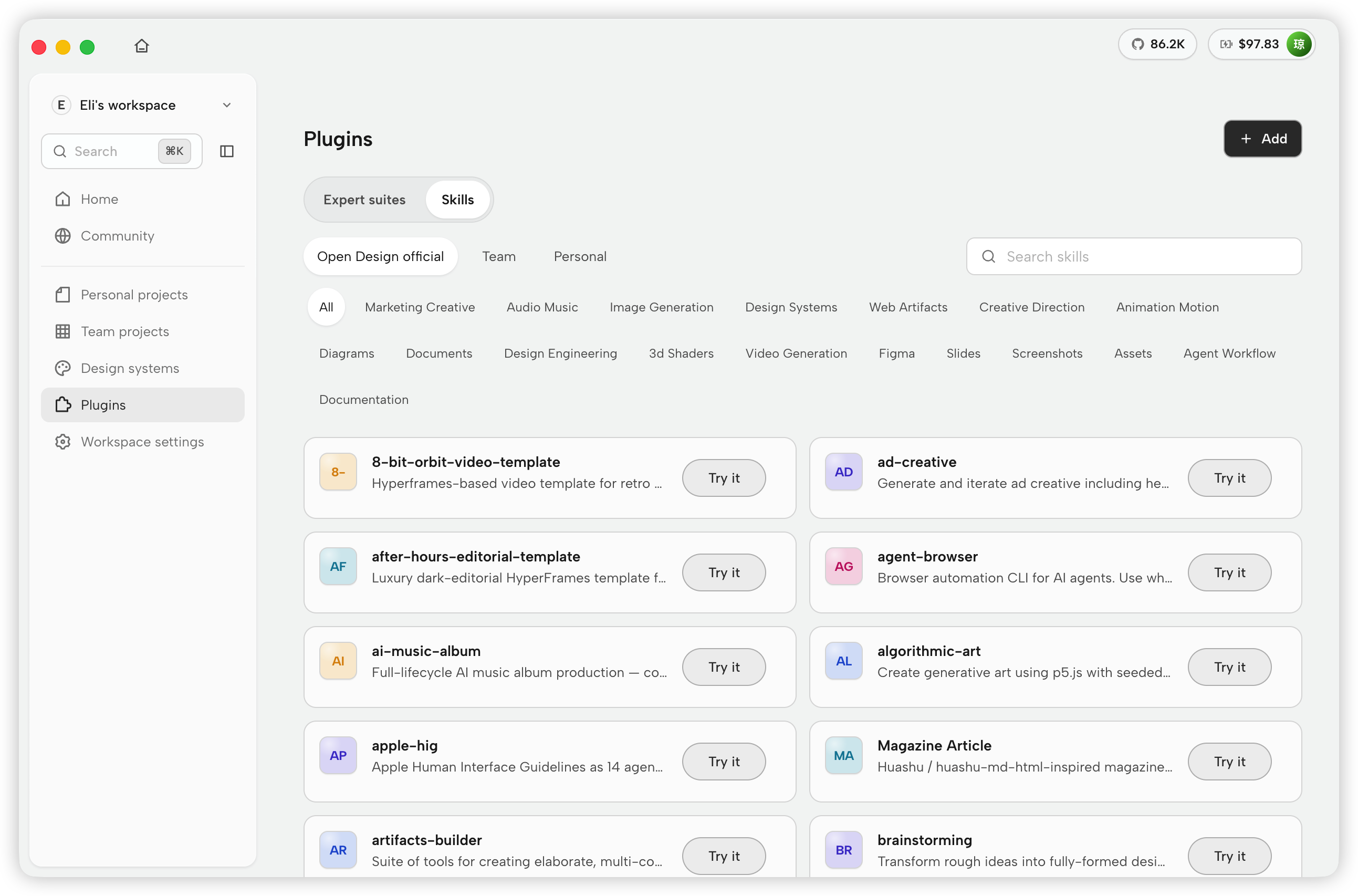
  • Offers a searchable plugin catalog of official skills grouped by category, each launched with a "Try it" action.
  • Supplies OpenDesign Cloud as an optional model service: one recharge covers GPT, Claude, and DeepSeek agent models alongside GPT Image 2.0, Seedream 5.0 Pro, and Nano Banana 2.0 image models, with DeepSeek V4 Flash and V4 Pro available.

Who uses it and how

  • Developers who already run a CLI coding agent use OpenDesign so the laptop doubles as the studio, without adopting a separate design tool.
  • Design teams standardise brand output by keeping a shared DESIGN.md as the contract every generated artifact is shaped by.
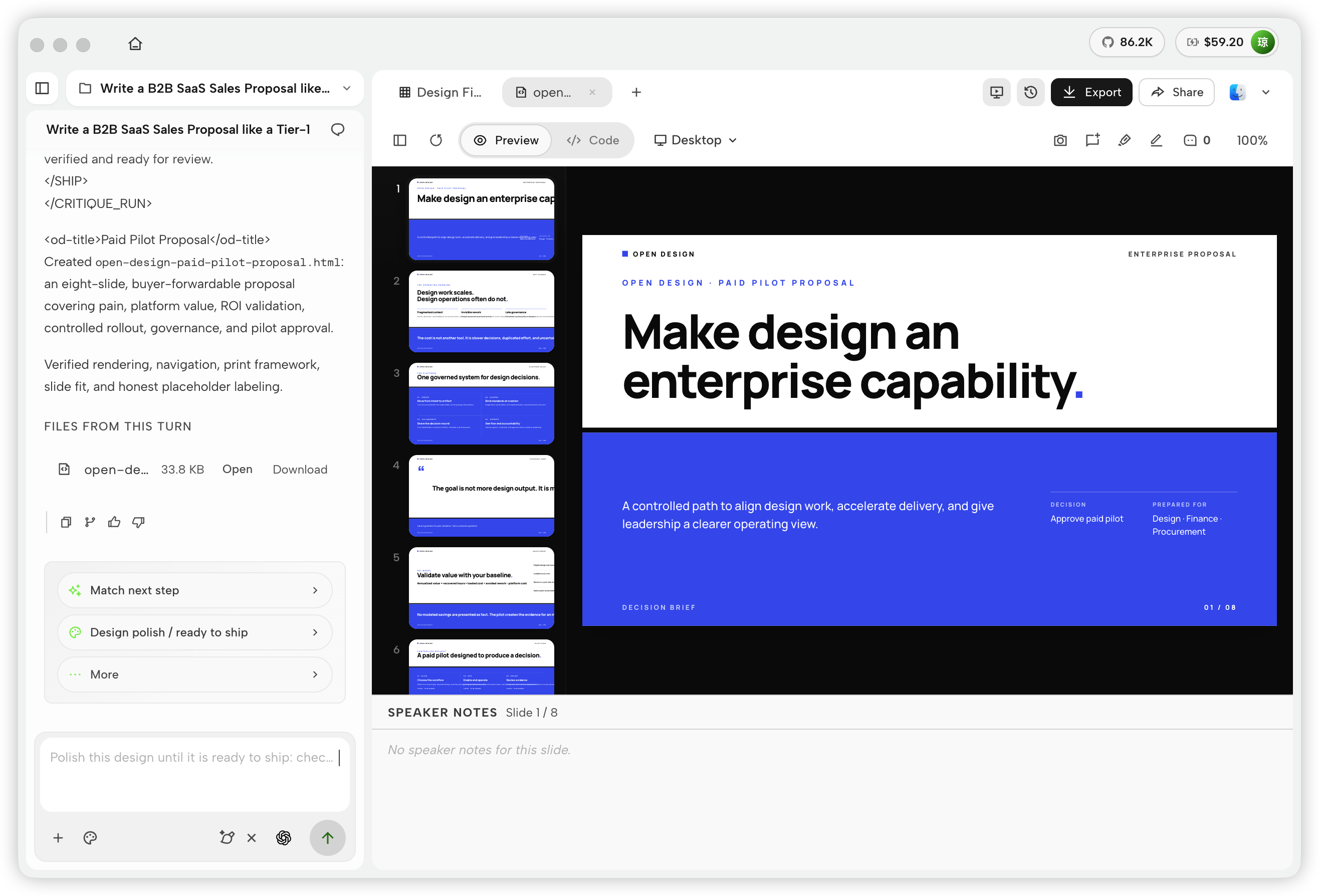
  • Teams producing presentation and document deliverables work in the Deck and Document artifacts, reviewing thumbnails, speaker notes, and rendered layout before exporting to PPTX or PDF.
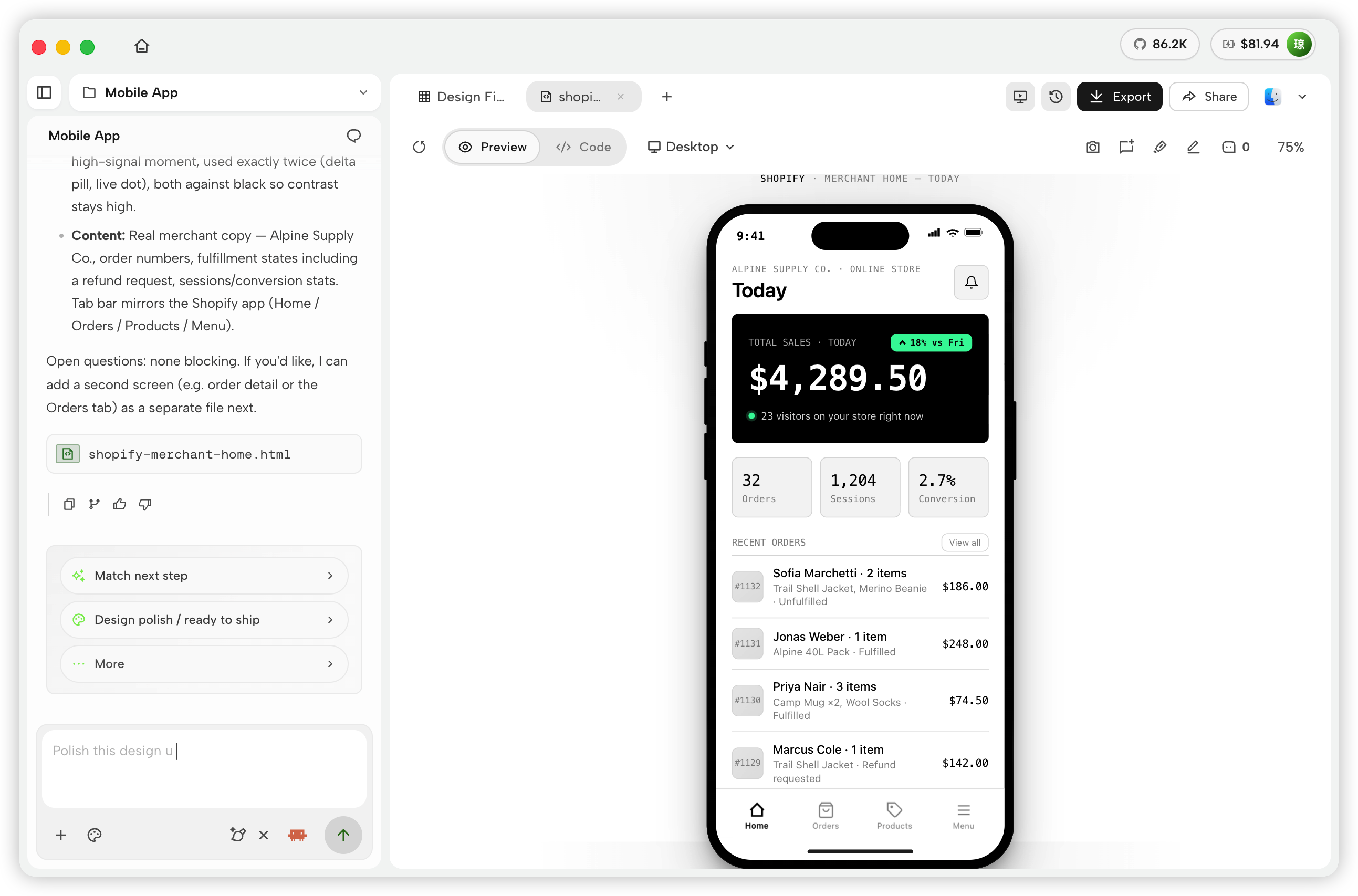
  • Interface and mobile designers generate and polish mobile interfaces inside a device preview, with the conversation, output files, and next-step actions beside it.
  • Groups without their own model keys, or wanting to avoid managing several provider accounts, use the OpenDesign Cloud recharge to run agent and image models in one place.

Getting started

Download the native desktop app for macOS or Windows from https://open-design.ai, then connect an agent by pointing OpenDesign at a local CLI harness such as dsh or another supported runtime, or by supplying an OpenAI-compatible endpoint through BYOK.

How it compares

Against Claude Design and Figma, the two products the README positions it against, OpenDesign is Apache-2.0 licensed rather than proprietary, runs as a local-first desktop app rather than a closed hosted service, and keeps generated artifacts on the user's own filesystem. Model access is bring-your-own-key, so inference is paid to whichever provider the user chooses, with OpenDesign Cloud offered only as an optional consolidated route rather than a required subscription.

When to use it — and when not to

A self-hoster must run the desktop application and at least one supported CLI agent locally, and must supply model access either through their own provider keys or an OpenDesign Cloud recharge. It is a poor fit for Linux users, since the build targets macOS and Windows only, and for teams that want a fully hosted browser tool with nothing installed. The repository also carries 1,090 open issues against 96,935 stars, so prospective adopters should weigh the size of the open backlog before standardising on it.

project readme (upstream, from github) — read inline

OpenDesign: The open-source Claude Design alternative

OpenDesign Cloud — the official model service. One recharge to use both agent and image models inside OpenDesign: GPT, Claude, and DeepSeek for agents; GPT Image 2.0, Seedream 5.0 Pro, and Nano Banana 2.0 for images.

🚀 DeepSeek V4 Flash and V4 Pro are now available. Put top-tier intelligence to work across prototypes, decks, design systems, and everyday agent tasks. OpenDesign members can use both models without limits for two weeks, directly inside the app.

🧩 DeepSeek Harness is now supported. Connect DeepSeek's official dsh agent harness to OpenDesign as a native runtime, with structured thinking, tool calls, model discovery, cancellation, and session resume. Generated files stay in the OpenDesign workflow for live preview and delivery.
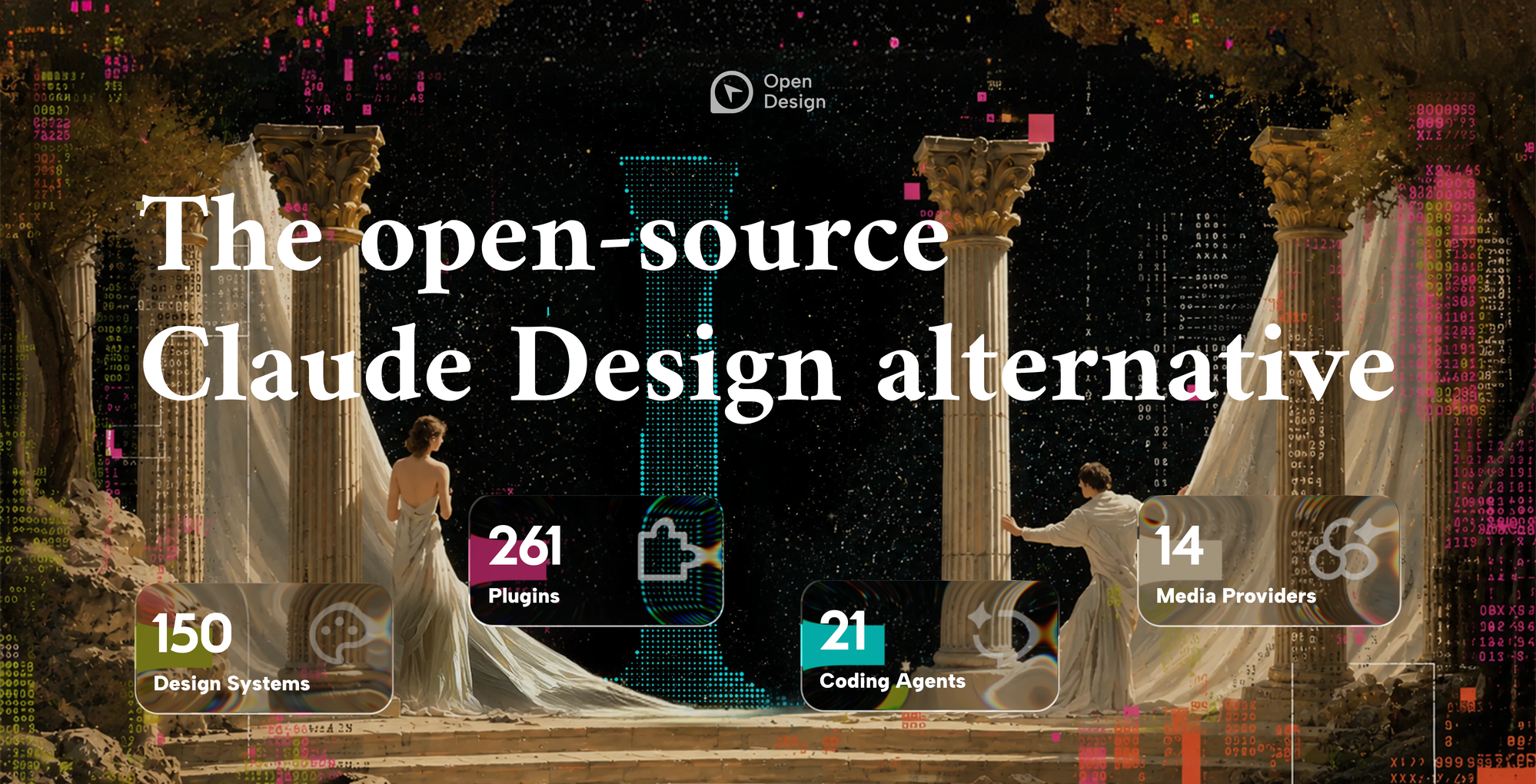
OpenDesign hero banner — the headline "The open-source Claude Design alternative" over a classical scene of columns and robed figures on a digital-code backdrop, with stat cards for design systems, plugins, coding agents, and media providers

Website · Download · OpenDesign Cloud · Discord · Follow @OpenDesignHQ

release license discord quickstart

English · Español · Português · Deutsch · Français · 简体中文 · 繁體中文 · 한국어 · 日本語 · العربية · Русский · Українська · Türkçe · ภาษาไทย


What is OpenDesign

🎨 The open-source Claude Design alternative.  🖥️ Local-first native desktop app for macOS and Windows.  ⚡ Composable skills, brand-grade DESIGN.md design systems, and ready-to-use plugins.  🖼️ Generates web · desktop · mobile prototypes, live dashboards / artifacts, decks, images, video, plus HyperFrames motion graphics. 🔒 Sandboxed iframe preview · HTML / PDF / PPTX / MP4 export.  🤖 Runs on DeepSeek Harness (dsh) · Claude Code · OpenClaw · Codex · Cursor · OpenCode · Qwen · Copilot · Amp · Hermes · Kimi · Antigravity and 26 distinct local CLI executables, or any OpenAI-compatible endpoint via BYOK.

OpenDesign is what you get when the agent-native loop Anthropic shipped with Claude Design — discover the brief, lock the direction, stream the artifact, critique, deliver — stops being closed and becomes a filesystem of functional skills, rendering design templates, design systems, and plugins that the coding agents already on your laptop can read, write, and remix. Your CLI becomes the design engine, your laptop becomes the studio, and your team's DESIGN.md becomes the brand contract.

It's also the Figma alternative for the agent era — instead of pushing pixels on a canvas, it delivers single-page artifacts in real CSS, real fonts, real components, exported straight to HTML / PDF / PPTX / MP4 — already shaped by your design system, already runnable inside the agent you use every day.


Product tour

A quick look at the core OpenDesign workflow. Start from Home with a brief, explore reusable skills in Plugins, and turn brand references into a Design System. Then enter a project's Studio to create and refine prototypes, decks, mobile apps, images, documents, and HyperFrames in one place.

Core pages
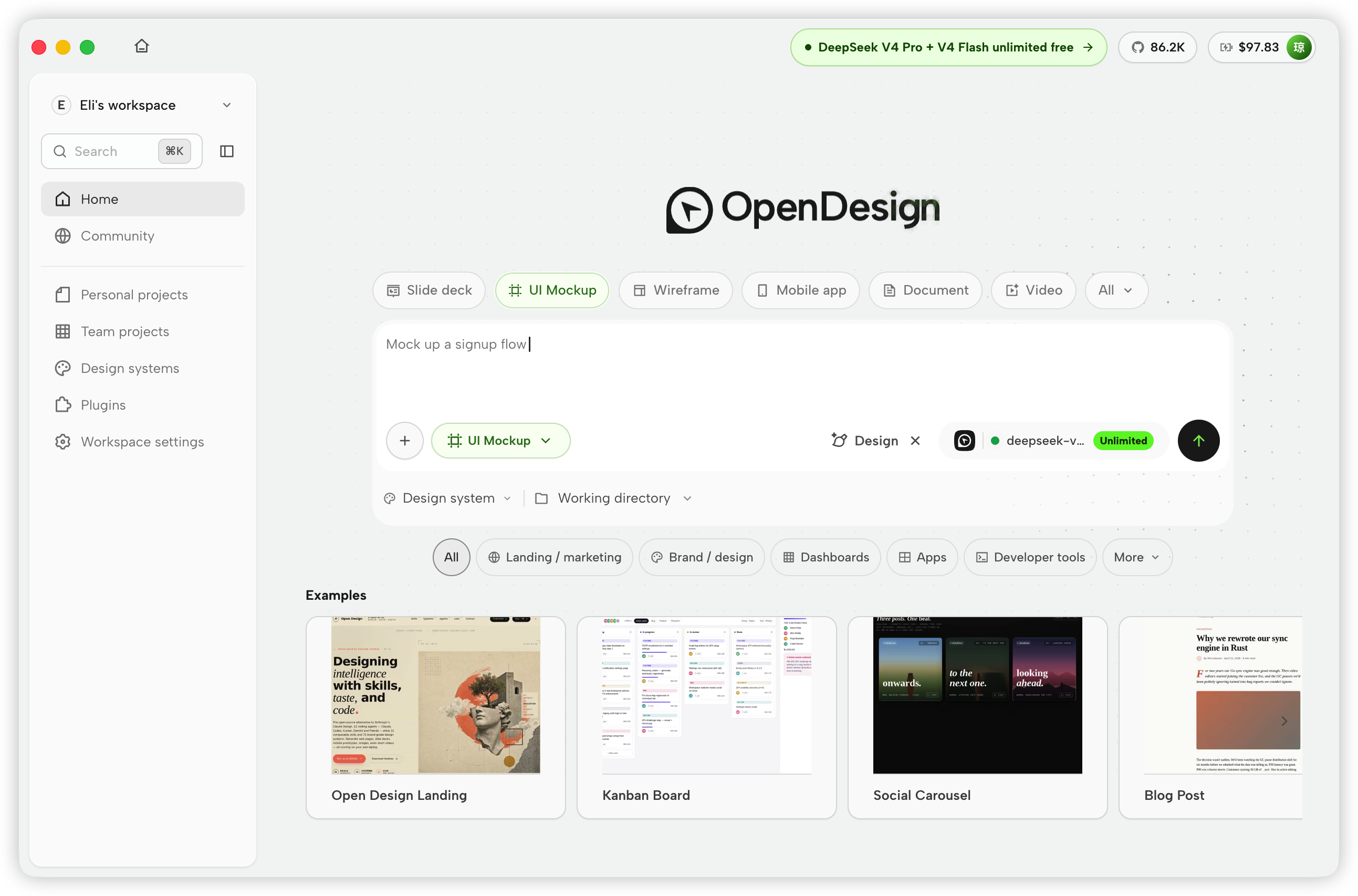

Home — choose an artifact type, enter a brief, and set the design system, working directory, and model before you start.

Plugins — browse official skills by category, search the catalog, and launch a workflow with Try it.

Design System — extract and refine a brand's visual language, preview the result, and create with it in the same workspace.

Studio — many artifact types in one project

Inside a project's Studio, the conversation, generated files, and live preview stay together across six artifact types:
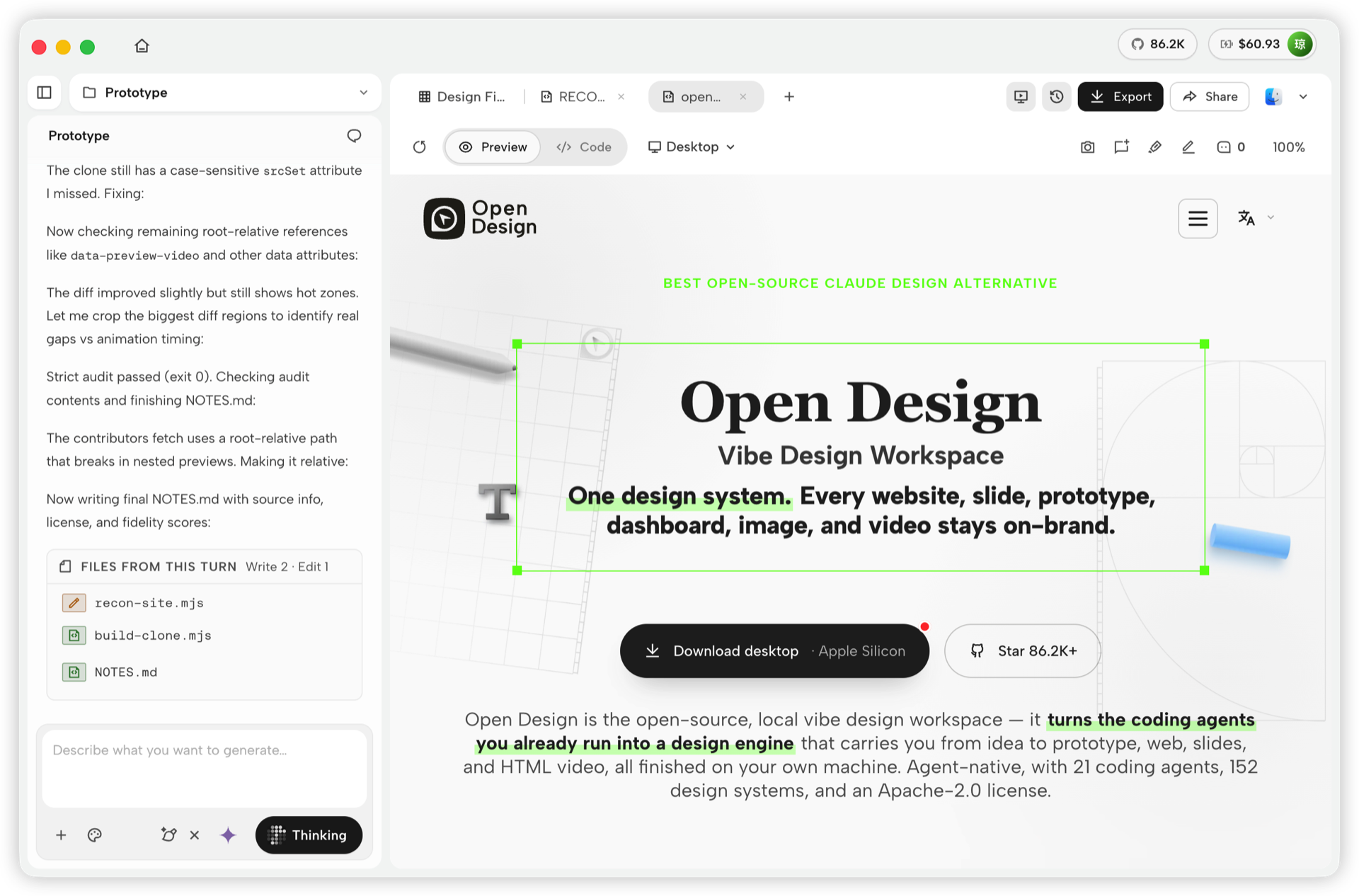

Prototype — generate or reconstruct web experiences, inspect the rendered page, and iterate with the agent in place.

Deck — create multi-slide presentations, review thumbnails and speaker notes, and export when ready.

Mobile app — generate and polish mobile interfaces in a device preview, with the conversation, output files, and next-step actions beside it.

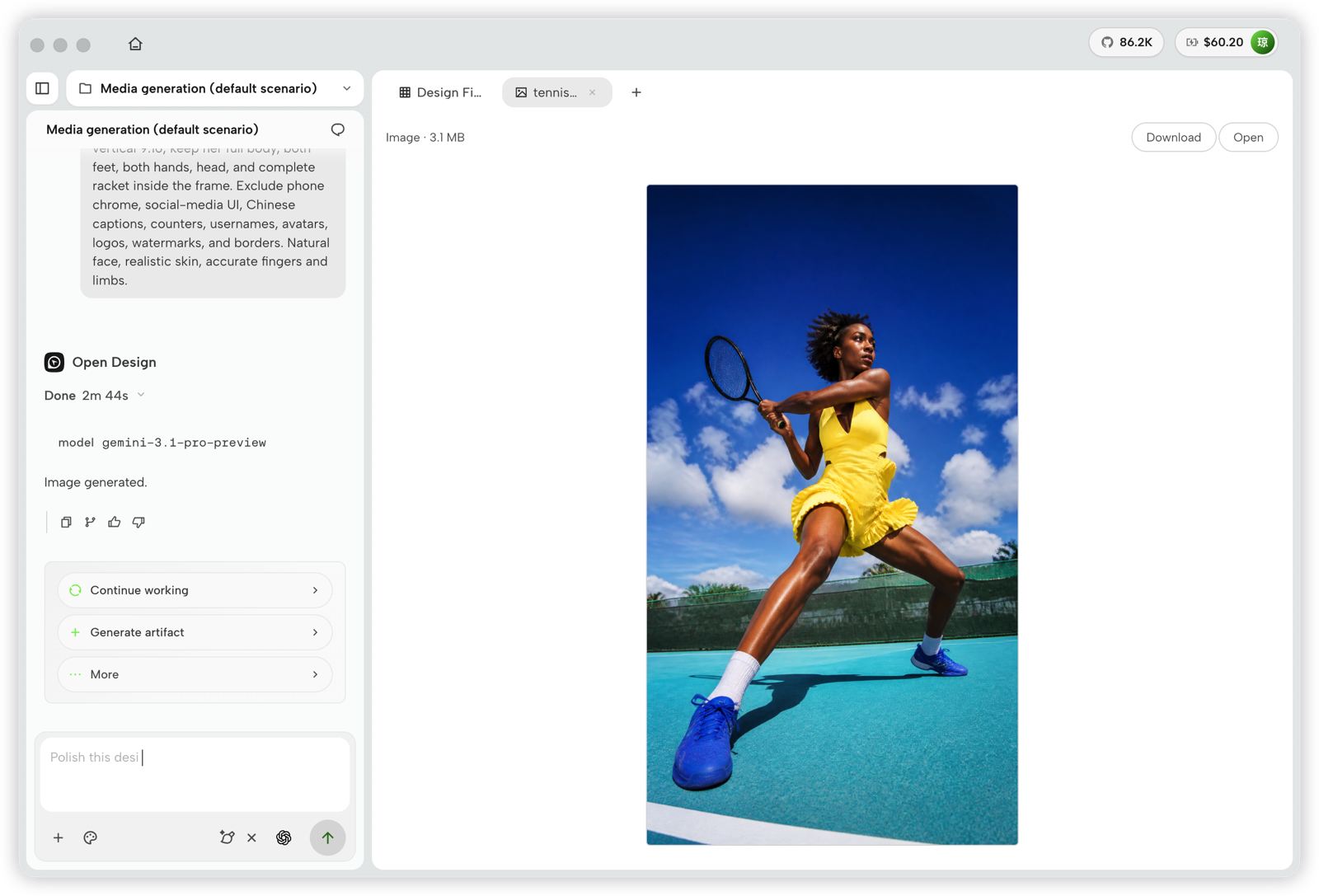
Image — generate visual assets from the project conversation, preview the result at full size, then download or open it.

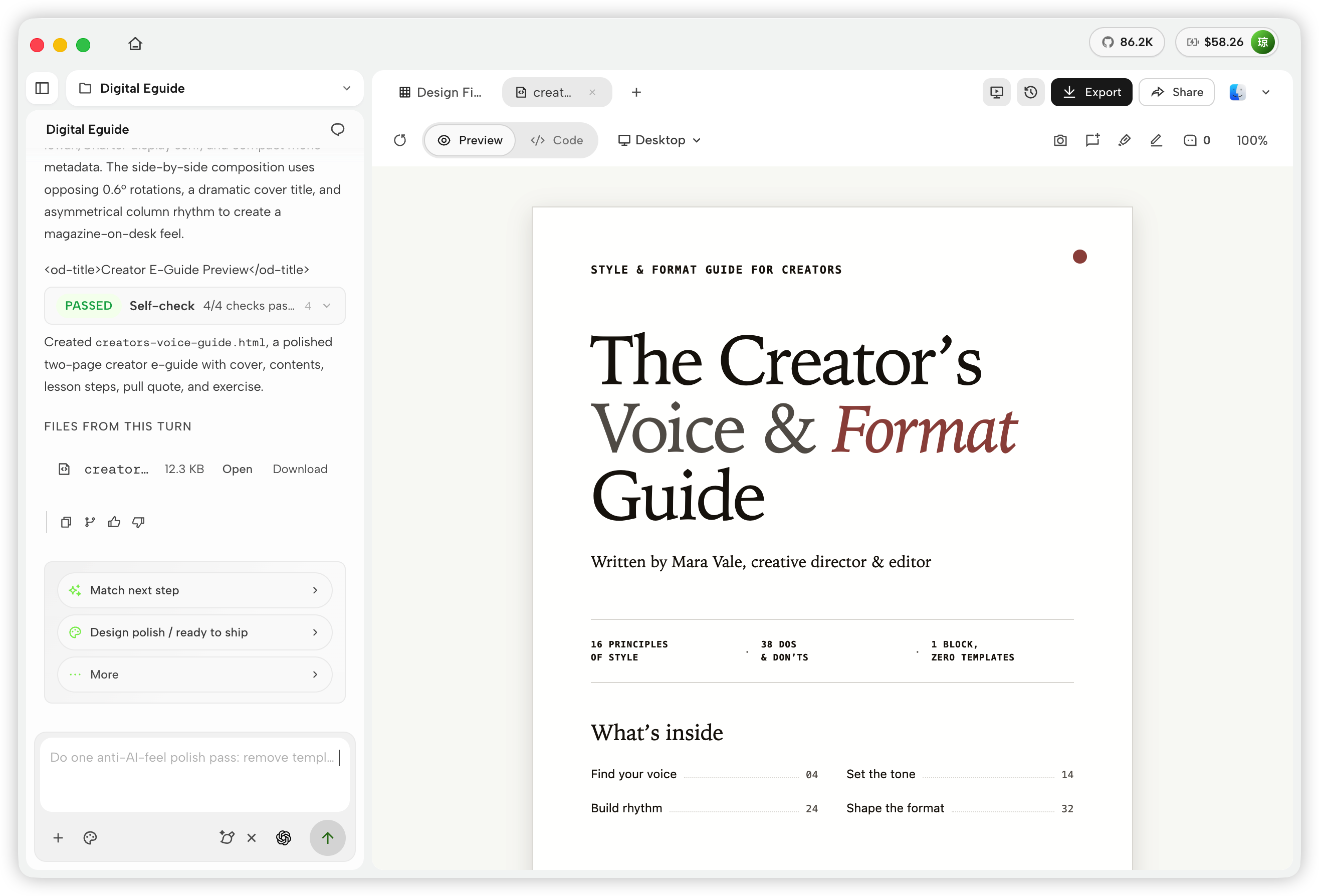
Document — create polished, multi-page guides and editorial documents, inspect the rendered layout, and export or share when ready.

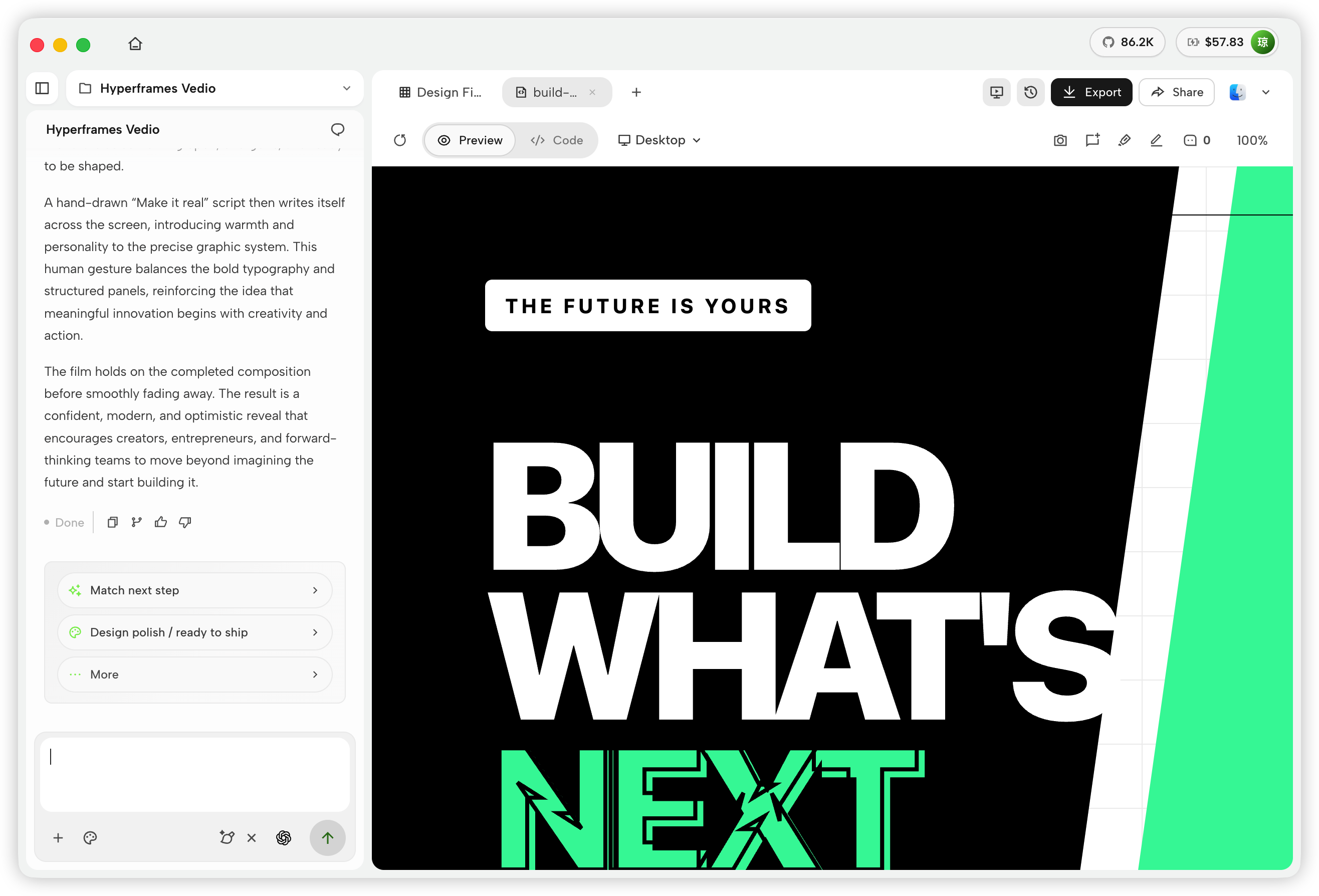
HyperFrame — build code-driven motion graphics, preview the animation inside Studio, and export the finished video.

Platform Compatibility

OpenDesign connects to mainstream coding agents in two ways: skills, CLI, and MCP for agents that consume OD, plus native runtime adapters for agents that OD launches directly. DeepSeek Harness is a first-class native runtime through the official dsh CLI, with structured streaming, model discovery, cancellation, and session resume.

Coding agent / platform          Status    Quick setup                   
Claude Code ✅ Supported od mcp install claude
Claude Desktop ✅ Supported¹ od mcp install claude-desktop
Codex CLI ✅ Supported od mcp install codex

readme truncated — read the full docs on github

Frequently asked questions

Is open-design free to use?

open-design is open source under the Apache-2.0 licence. There is no licence fee and no seat count — you can self-host it or, where the project offers one, pay a vendor for a managed version instead.

What does open-design do?

🎨 Best DeepSeek Harness Design Plugin. The open-source Claude Design alternative. 🖥️ Local-first desktop app. 🖼️ Your coding agent becomes the design engine:

What is open-design written in?

open-design is primarily written in TypeScript. Its source is publicly available at https://github.com/nexu-io/open-design, and it has 96,938 GitHub stars.