
Next-Gen Data Discovery and Data Observability Platform




Website • LinkedIn • Slack • Documentation • Blog • Demo
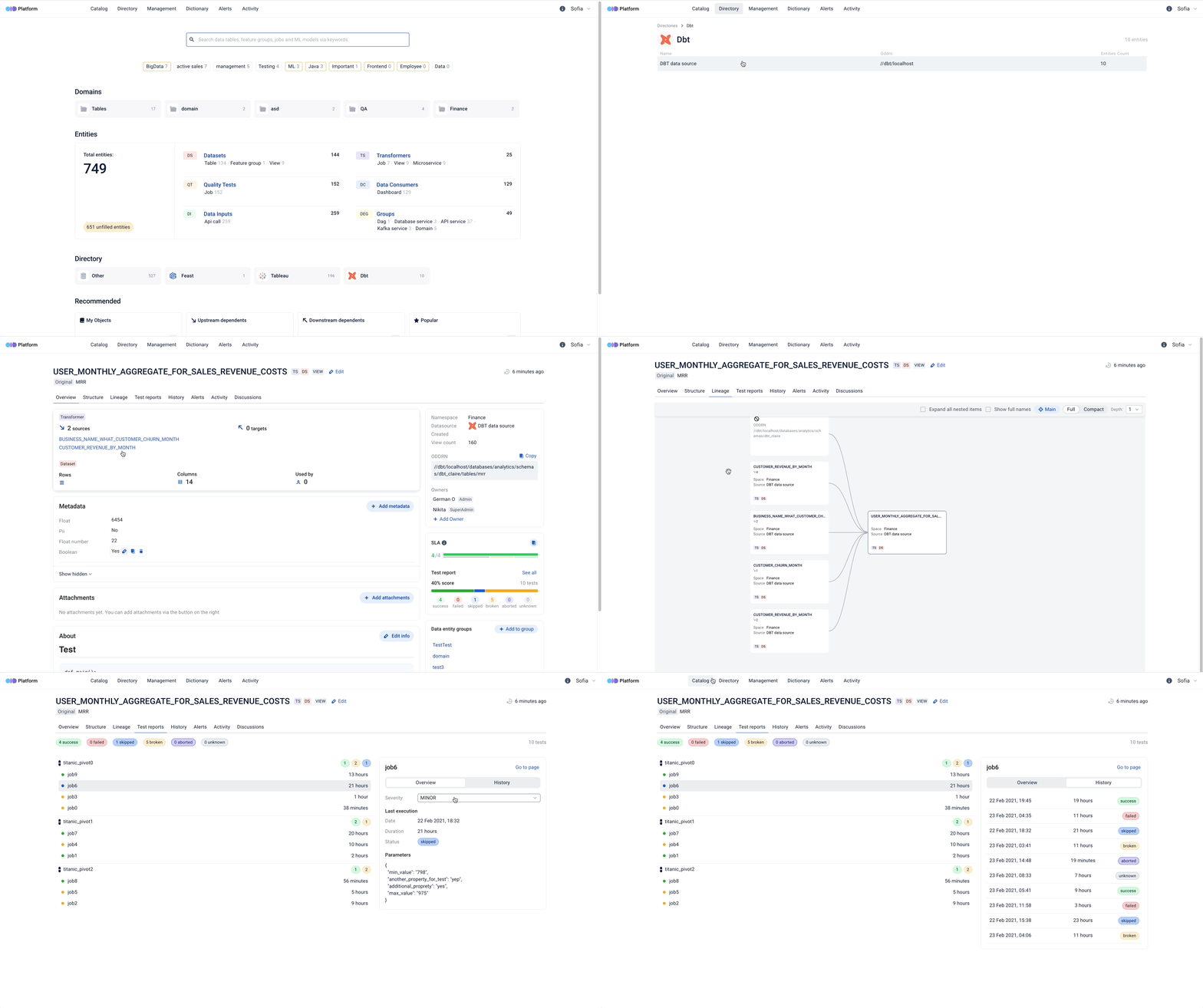
Demo
Play with our demo app!
Introduction
ODD is an open-source data discovery and observability tool for data teams that helps to efficiently democratise data, power collaboration and reduce time on data discovery through modern user-friendly environment.
Key wins
- Shorten data discovery phase
- Have transparency on how and by whom the data is used
- Foster data culture by continuous compliance and data quality monitoring
- Accelerate data insights
- Know the sources of your dashboards and ad hoc reports
- Deprecate outdated objects responsibly by assessing and mitigating the risks
- :point_right: ODD Platform is a reference implementation of Open Data Discovery Spec
Features
Data Discovery and Observability
- Accumulate scattered data insights in Federated Data catalogue
- Gain observability through E2E Data objects Lineage
- Benefit from cutting-edge E2E microservices Lineage feature in tracking your data flow through the whole data landscape
- Be warned and alerted by Pipeline Monitoring tools
- Store your metadata
- Use ODD-native modern lightweight UI
ML First citizen
- Save results of your ML Experiments by automatically logging its parameters
Data Security & Compliance
- Manage Tags to prevent any abuse of the data
- Refer to Tags to stay compliant with data security standards
- Have full transparency on how and by whom the data is used
Data Quality
- Utilize advanced Data Quality Dashboard to gain insights into data quality metrics, trends, and issues across your datasets, enabling proactive data quality management
- Simplify DQ processes by using ODD with Great Expectations and DBT tests compatibility
- Integrate ODD with any custom DQ framework
Reference Data Management (Lookup Tables) - a part of Master Data Management (MDM)
- Manage and store reference data centrally, ensuring a single source of truth for key data elements like currency codes, country names, and product categories, etc.
- Easily integrate Lookup Tables with data pipelines and transformations, enhancing data enrichment and validation processes
- Support data governance and compliance efforts by maintaining accurate and consistent reference data across all data assets
Getting Started
Running as a separate container
Setting up PostgreSQL connection details, for example:
export POSTGRES_HOST=172.17.0.1
export POSTGRES_PORT=5432
export POSTGRES_DATABASE=postgres
export POSTGRES_USER=postgres
export POSTGRES_PASSWORD=mysecretpassword
Starting new instance of the platform:
docker run -d \
  --name odd-platform \
  -e SPRING_DATASOURCE_URL=jdbc:postgresql://${POSTGRES_HOST}:${POSTGRES_PORT}/${POSTGRES_DATABASE} \
  -e SPRING_DATASOURCE_USERNAME=${POSTGRES_USER} \
  -e SPRING_DATASOURCE_PASSWORD=${POSTGRES_PASSWORD} \
  -p 8080:8080 \
  ghcr.io/opendatadiscovery/odd-platform:latest
Go to localhost:8080 in case of local environment.
Running Locally with Docker Compose
docker-compose -f docker/demo.yaml up -d odd-platform-enricher
- :point_right: QUICKSTART
Deploying to Kubernetes with Helm Charts
- :point_right: QUICKSTART
Example configurations
There are various example configurations (via docker-compose) within docker/examples directory.
Contributing
Contributing to ODD Platform is very welcome. For basic contributions, all you need is being comfortable with GitHub and Git. The best ways to contribute are:
- Work on new adapters
- Work on documentation
To ensure equal and positive communication, we adhere to our Code of Conduct. Before starting any interactions with this repository, please read it and make sure to follow.
Please before contributing check out our Contributing Guide and issues labeled "good first issue":
Integrations
OpenDataDiscovery Platform offers comprehensive data source support to meet your needs.
| Existing integrations | ||
|---|---|---|
| Proxy Adapter | Airflow | Airflow 2+ |
| Apache Druid | Cassandra | Clickhouse |
| Elasticsearch | Hive | Kafka |
| Feast | MSSQL | MySQL |
| Microsoft ODBC | MongoDB | Neo4j |
| MariaDB | Oracle | PostgreSQL |
| Redshift | Snowflake | Vertica |
| Tarantool | Athena | DynamoDB< readme truncated — read the full docs on github Frequently asked questionsIs odd-platform free to use?odd-platform is open source under the Apache-2.0 licence. There is no licence fee and no seat count — you can self-host it or, where the project offers one, pay a vendor for a managed version instead. What does odd-platform do?First open-source data discovery and observability platform. We make a life for data practitioners easy so you can focus on your business. What is odd-platform written in?odd-platform is primarily written in Java. Its source is publicly available at https://github.com/opendatadiscovery/odd-platform, and it has 1,428 GitHub stars. |