Node.js Backend Architecture Typescript Project
A complete project to build a blogging platform like Medium, and FreeCodeCamp

Note: This is the latest (version 2) of the project. If you are using version 1 then checkout the branch version-1
Project Highlights
- Node.js
- Express.js
- Typescript
- Mongoose
- Redis
- Mongodb
- zod
- Unit Tests & Integration Tests
- Docker
- JWT
About The Project
This project is designed for a production ready environment. It can handle the scale and complexity of a very demanding application. This project is being used by companies like MindOrks, AfterAcademy, and CuriousJr. Apps/Websites having 10+ million usebase.
It is suitable for Web Apps, Mobile Apps, and other API services.
About The Author
You can connect with us here:
Project Instructions
We will learn and build the backend application for a blogging platform. The main focus will be to create a maintainable and highly testable architecture.
Following are the features of this project:
- This backend is written in Typescript: The type safety at build time and having intellisense for it in the IDE like vscode is unparalleled to productivity. I have found production bug reduced to a significant amount since most of the code vulnerabilities are identified during the build phase itself.
- Separation of concern principle: Each component has been given a particular role. The role of the components is mutually exclusive. This makes the project easy to be unit tested.
- Feature encapsulation: The files or components that are related to a particular feature have been grouped unless those components are required in multiple features. This enhances the ability to share code across projects.
- Centralised Error handling: I have created a framework where all the errors are handled centrally. This reduces the ambiguity in the development when the project grows larger.
- Centralised Response handling: Similar to Error handling we have a response handling framework. This makes it very convenient to apply a common API response pattern.
- Mongodb is used through Mongoose: Mongodb fits very well to the node.js application. Being NoSQL, fast, and scalable makes it ideal for modern web applications.
- Redis Memcache: I have used the redis server for caching the items which does not change frequently. It will boost the performance of our system.
- Async execution: I have used async/await for the promises and made sure to use the non-blocking version of all the functions with few exceptions.
- Docker compose has been configured: I have created the Dockerfile to provide the easy deployability without any setup and configurations.
- Unit test is favored: The tests have been written to test the functions and routes without the need of the database server. Integration tests has also been done but the unit test is favored.
- A pure backend project: I have experienced that when a backend is developed clubbed with a frontend then in the future it becomes really difficult to scale. We would want to create a separate backend project that servers many websites and mobile apps.
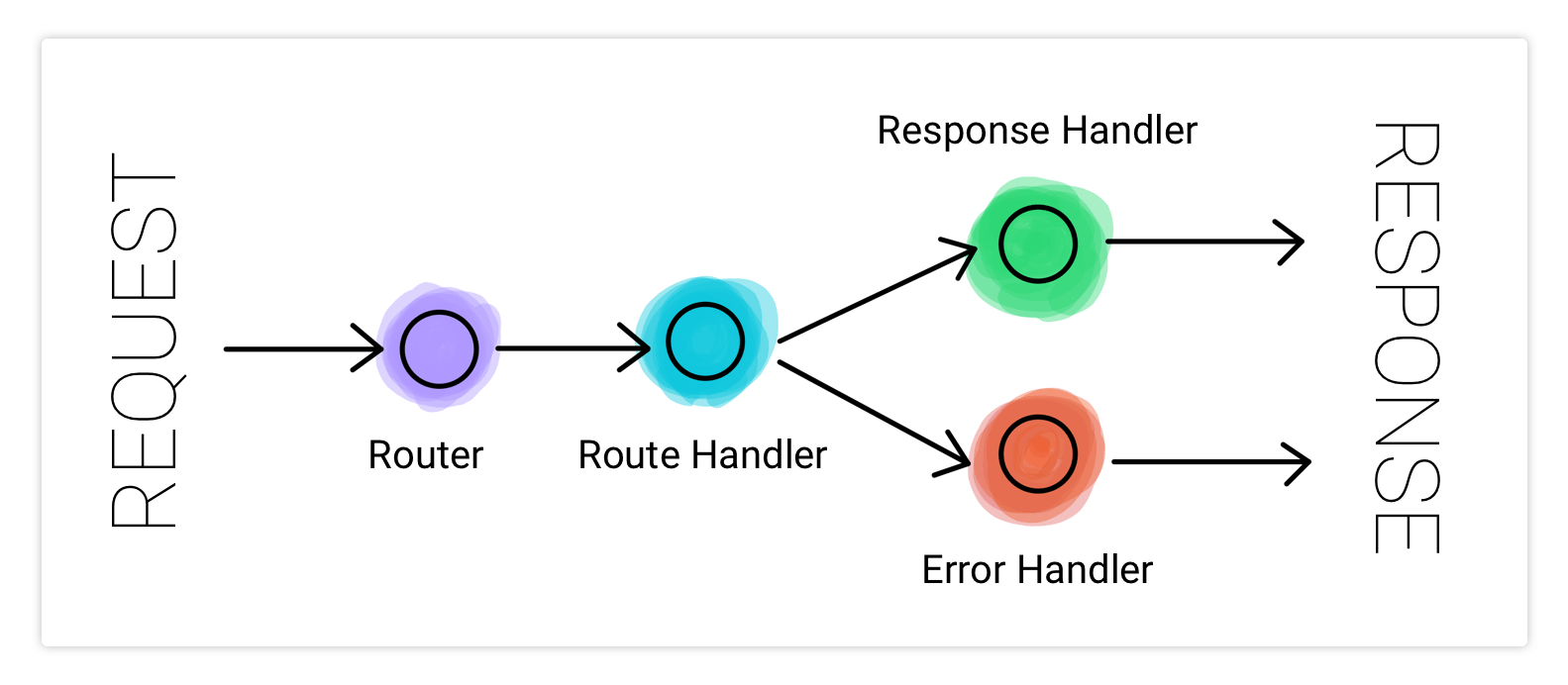
3RE Architecture: Router, RouteHandler, ResponseHandler, ErrorHandler
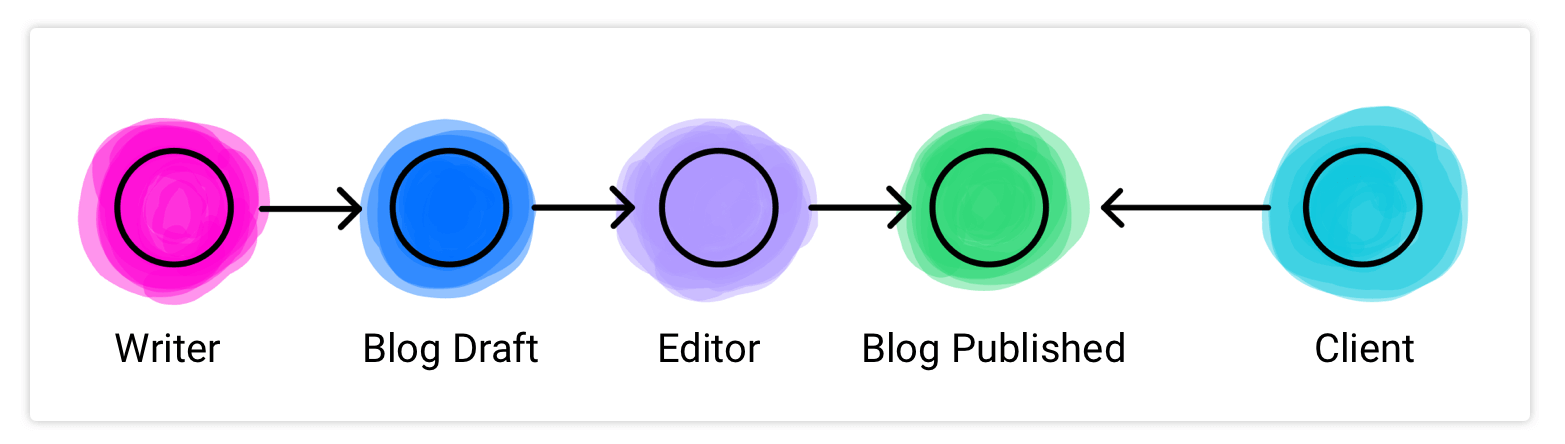
Project Outline: Blogging Platform
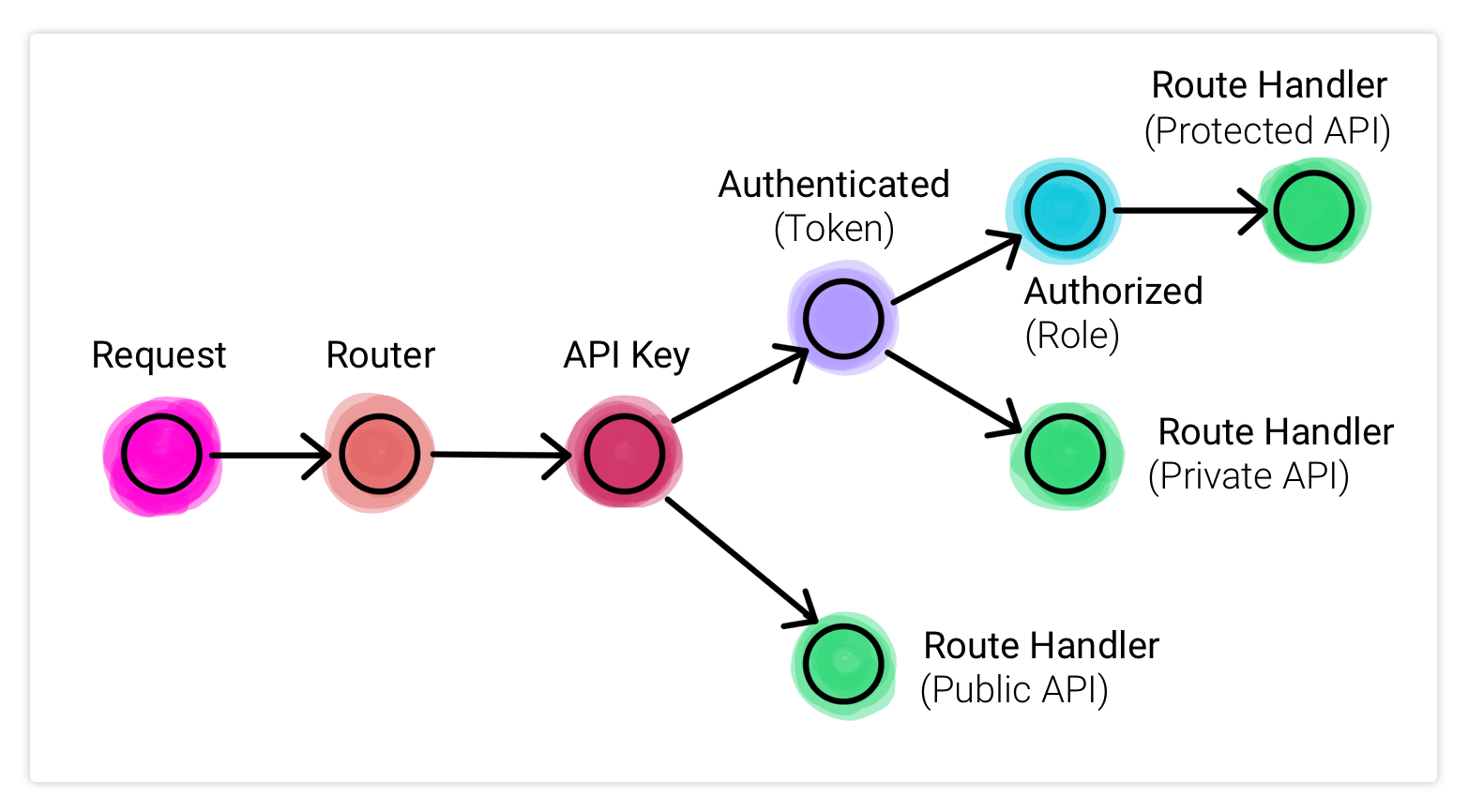
Request-Response Handling Schematic Diagram
Learn the concepts used in this project
- Design Node.js Backend Architecture like a Pro
- The video guide to build and run this project
- Implement JSON Web Token (JWT) Authentication using AccessToken and RefreshToken
- TypeScript Tutorial For Beginners
- From JavaScript to TypeScript
How to build and run this project
vscode is the recommended editor - dark theme
Get the repo
# clone repository recursively
git clone https://github.com/afteracademy/nodejs-backend-architecture-typescript.git
Run Docker Compose
- Install Docker and Docker Compose. Find Instructions Here.
# install and start docker containers
docker-compose up --build
- You will be able to access the api from http://localhost:3000
Run Tests
docker exec -t blogs-tester npm run test
If having any issue
- Make sure 3000 port is not occupied else change PORT in .env file.
- Make sure 27017 port is not occupied else change DB_PORT in .env file.
- Make sure 6379 port is not occupied else change REDIS_PORT in .env file.
Run on the local machine
Change the following hosts in the .env and .env.test
- DB_HOST=localhost
- REDIS_HOST=localhost
Best way to run this project is to use the vscode Run and Debug button. Scripts are available for debugging and template generation on vscode.
- Install node.js and npm on your local machine.
# From the root of the project executes
$ npm install
Stop the app and tester docker container
$ docker compose stop tester
$ docker compose stop app
Run the app
# production mode
$ npm start
or
# watch mode
$ npm run watch
Test
# unit and integration tests
$ npm test
API DOC

Learn To Deploy This API Service On Amazon EC2 - YouTube Video

Learn Backend Development From Our Videos
- Introduction to Web Backend Development for Beginners
- Backend System Design for Startups
- Practical Javascript for Beginners
Project Directory Structure
├── .vscode
│   ├── settings.json
│   ├── tasks.json
│   └── launch.json
├── .templates
├── src
│   ├── server.ts
│   ├── app.ts
│   ├── config.ts
│   ├── auth
│   │   ├── apikey.ts
│   │   ├── authUtils.ts
│   │   ├── authentication.ts
│   │   ├── authorization.ts
│   │   └── schema.ts
│   ├── core
│   │   ├── ApiError.ts
│   │   ├── ApiResponse.ts
│   │   ├── JWT.ts
│   │   ├── Logger.ts
│   │   └── utils.ts
│   ├── cache
│   │   ├── index.ts
│   │   ├── keys.ts
│   │   ├── query.ts
│   │   └── repository
│   │       ├── BlogCache.ts
│   │       └── BlogsCache.ts
│   ├── database
│   │   ├── index.ts
│   │   ├── model
│   │   │   ├── ApiKey.ts
│   │   │   ├── Blog.ts
│   │   │   ├── Keystore.ts
│   │   │   ├── Role.ts
│   │   │   └── User.ts
│   │   └── repository
│   │       ├── ApiKeyRepo.ts
│   │       ├── BlogRepo.ts
│   │       ├── KeystoreRepo.ts
│   │       ├── RoleRepo.ts
│   │       └── UserRepo.ts
│   ├── helpers
│   │   ├── asyncHandler.ts
│   │   ├── permission.ts
│   │   ├── role.ts
│   │   ├── security.ts
│   │   ├── utils.ts
│   │   └── validator.ts
│   ├── routes
│   │   ├── access
│   │   │   ├── credential.ts
│   │   │   ├── login.ts
│   │   │   ├── logout.ts
│   │   │   ├── schema.ts
│   │   │   ├── signup.ts
│   │   │   ├── token.ts
│   │   │   └── utils.ts
│   │   ├── blog
│   │   │   ├── editor.ts
│   │   │   ├── index.ts
│   │   │   ├── schema.ts
│   │   │   └── writer.ts
│   │   ├── blogs
│   │   │   ├── index.ts
│   │   │   └── schema.ts
│   │   ├── index.ts
│   │   └── profile
│   │       ├── sc