
multiwoven is a free, open source data engineering & integration project written in Ruby and released under AGPL-3.0. It has 1,673 GitHub stars, 96 forks and 188 open issues, and was last pushed 23 hours ago. On this registry it ranks #26 of 39 tracked projects in Data Engineering & Integration, with 5 head-to-head comparisons available.

What is multiwoven?

What it is

Multiwoven open source Reverse ETL and data activation platform, licensed AGPL-3.0. It lives in data engineering and data integration ecosystem. It moves data from warehouse to business tools. README calls it alternative to HighTouch, Census, RudderStack. Topics include cdp, customer-data-platform, data-activation, data-engineering, data-pipeline, data-warehouse, databricks, dbt, etl.

Project solves problem of sending transformed warehouse data into operational systems without building custom syncs. It gives control plane for sources, models, destinations, and syncs. It lets teams connect warehouse sources, prepare data through models, then push records to destinations like Salesforce, HubSpot, Slack. It targets self-hosted deployment on cloud infrastructure like AWS, Azure, or GCP.

Key capabilities

  • Connects data sources such as Databricks, Redshift, BigQuery, and more.
  • Creates models to transform and prepare warehouse data for syncing.
  • Syncs data with destinations such as Salesforce, HubSpot, Slack, and more.
  • Uses monorepo services: server backend control plane, ui React frontend, integrations Ruby Gem connector framework.
  • Provides one-click deployment and customizable connectors.
  • Supports Docker Compose, Helm Charts, AWS EC2, Azure VMs, Azure AKS deployment paths.
  • Covers connector categories listed in README: CRM, marketing automation, customer support, advertising, collaboration, analytics, others.

Who uses it and how

  • Data engineering teams move warehouse records into CRM, marketing automation, customer support, advertising, collaboration, and analytics tools.
  • Self-hosters run Multiwoven on AWS, Azure, or GCP cloud infrastructure.
  • Developers clone monorepo, initialize .env, copy .env to ui, set git hooks, build and start Docker Compose services.
  • Users access UI at PORT 8000 to manage data sources, destinations, and sync configuration.
  • Integration builders extend connectors with Ruby Gem framework.

Getting started

Typical local install uses Docker Compose: clone repository, move .env.example to .env, copy .env to ui, run docker-compose build and docker-compose up, then open http://localhost:8000. Self-hosted options include Docker, Helm Charts, AWS EC2, Azure VMs, Azure AKS, with AWS ECS, AWS EKS, and Google Cloud GKE guides marked coming soon.

When to use it โ€” and when not to

Use Multiwoven when open source Reverse ETL replaces HighTouch, Census, RudderStack, and self-hosted control over data activation matters. Do not choose it when you need all deployment guides ready, because AWS ECS, AWS EKS, and Google Cloud GKE guides are coming soon and README says development is active with 188 open issues. Self-hosters must operate server, ui, integrations, Docker or Kubernetes environment, connector configuration, and cloud infrastructure.

project readme (upstream, from github) โ€” read inline

Multiwoven

Open Source Reverse ETL & Data Activation Platform

Multiwoven is an open-source alternative to HighTouch, Census, and RudderStack. It lets you easily sync data from your warehouse to any business tool, unlocking the full potential of your data.


GitHub stars GitHub release (latest) GitHub commit activity License
server-ci integrations-ci ui-ci

Maintainability Code Coverage


Explore the docs ยป

Slack โ€ข Website โ€ข Blog โ€ข Roadmap


Why Multiwoven?

Multiwoven simplifies self-hosting a secure, scalable Reverse ETL platform on your cloud infrastructure like AWS, Azure, or GCP. With one-click deployment and customizable connectors, you can easily sync data from your warehouse to business tools.

โญ Consider giving us a star! Your support helps us continue innovating and adding new, exciting features.

Connect to sources

Connect to your data sources like Databricks, Redshift, BigQuery, and more.
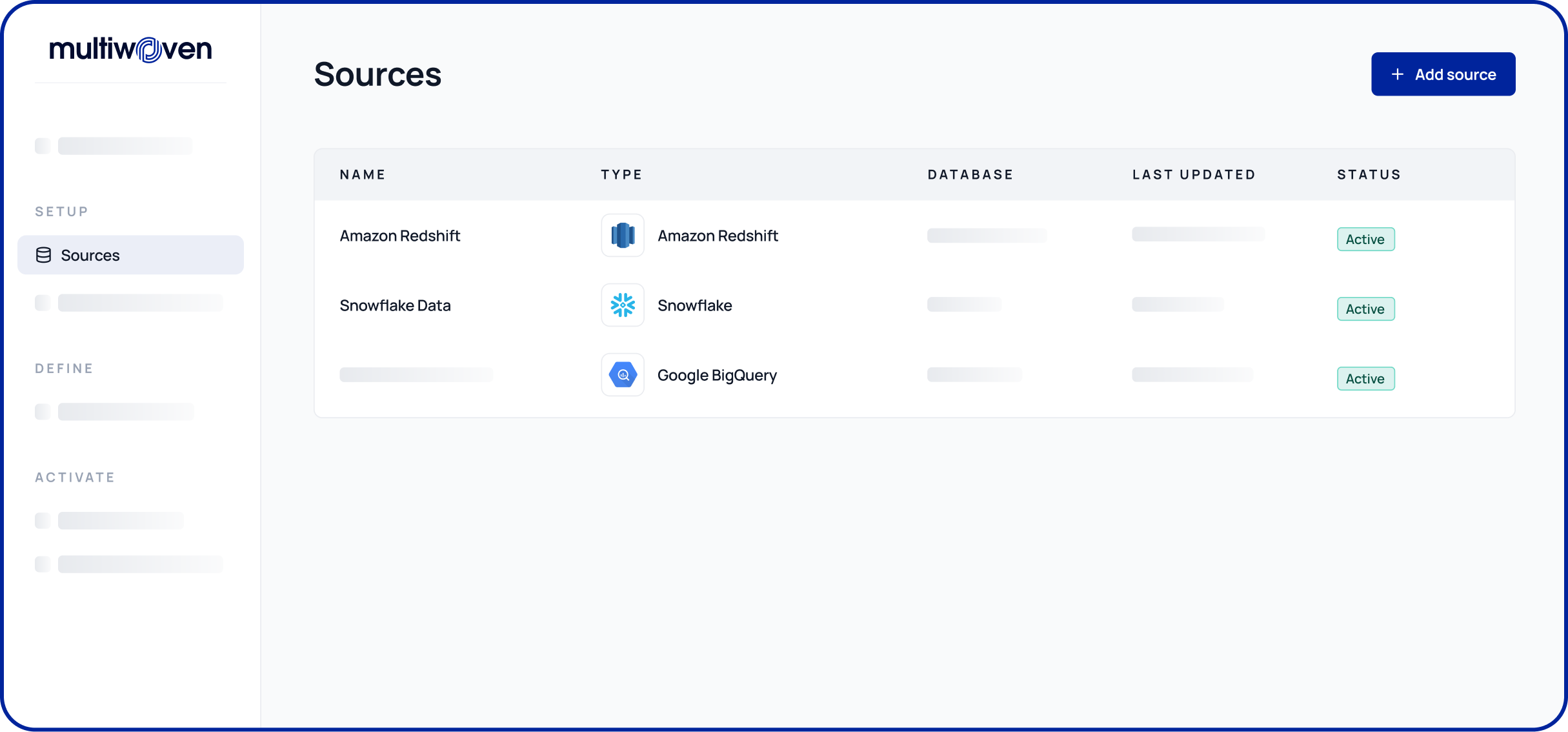
Example Image

Prepare your data

Create models to transform and prepare your data for syncing.
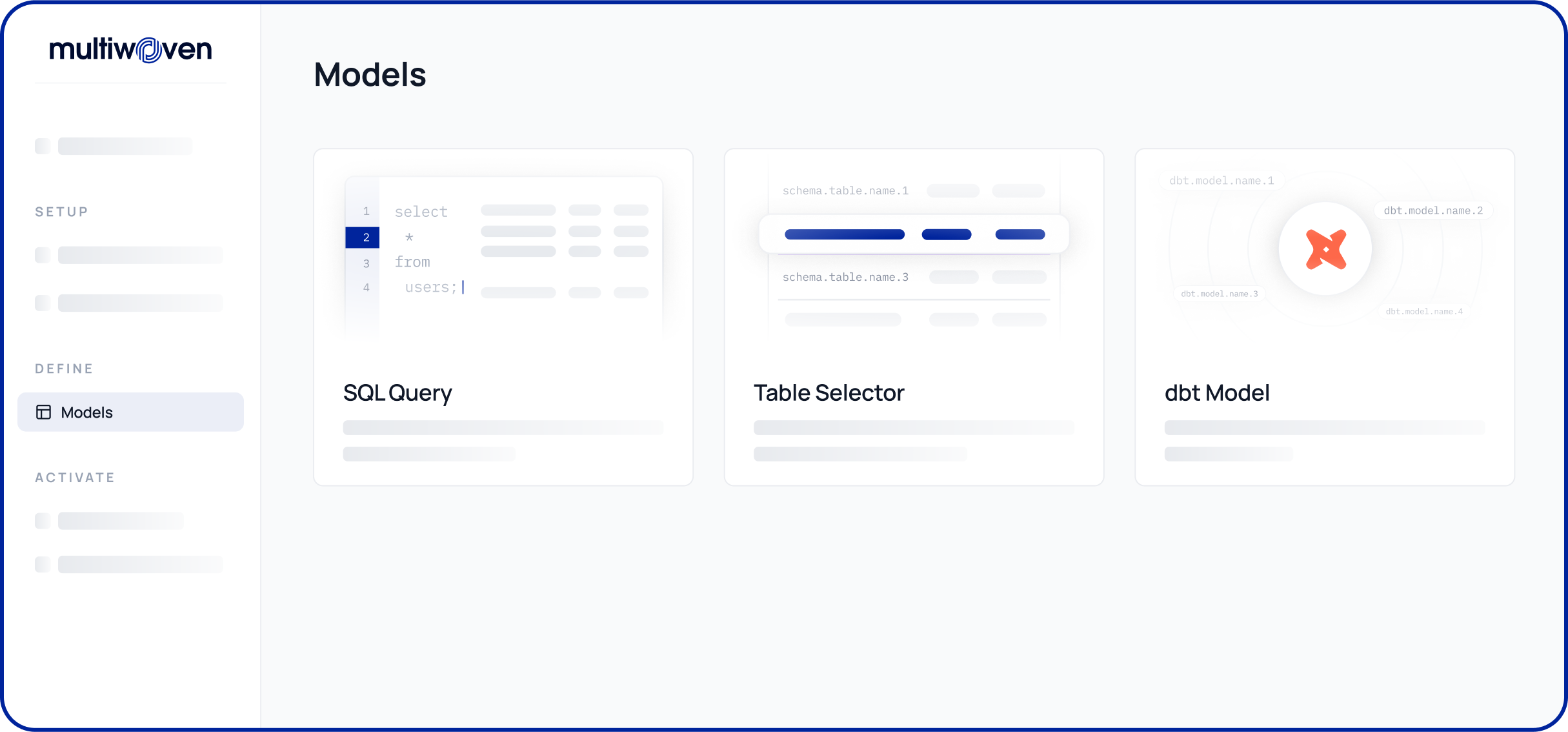
Example Image

Sync with destinations

Sync your data with destinations like Salesforce, HubSpot, Slack, and more.
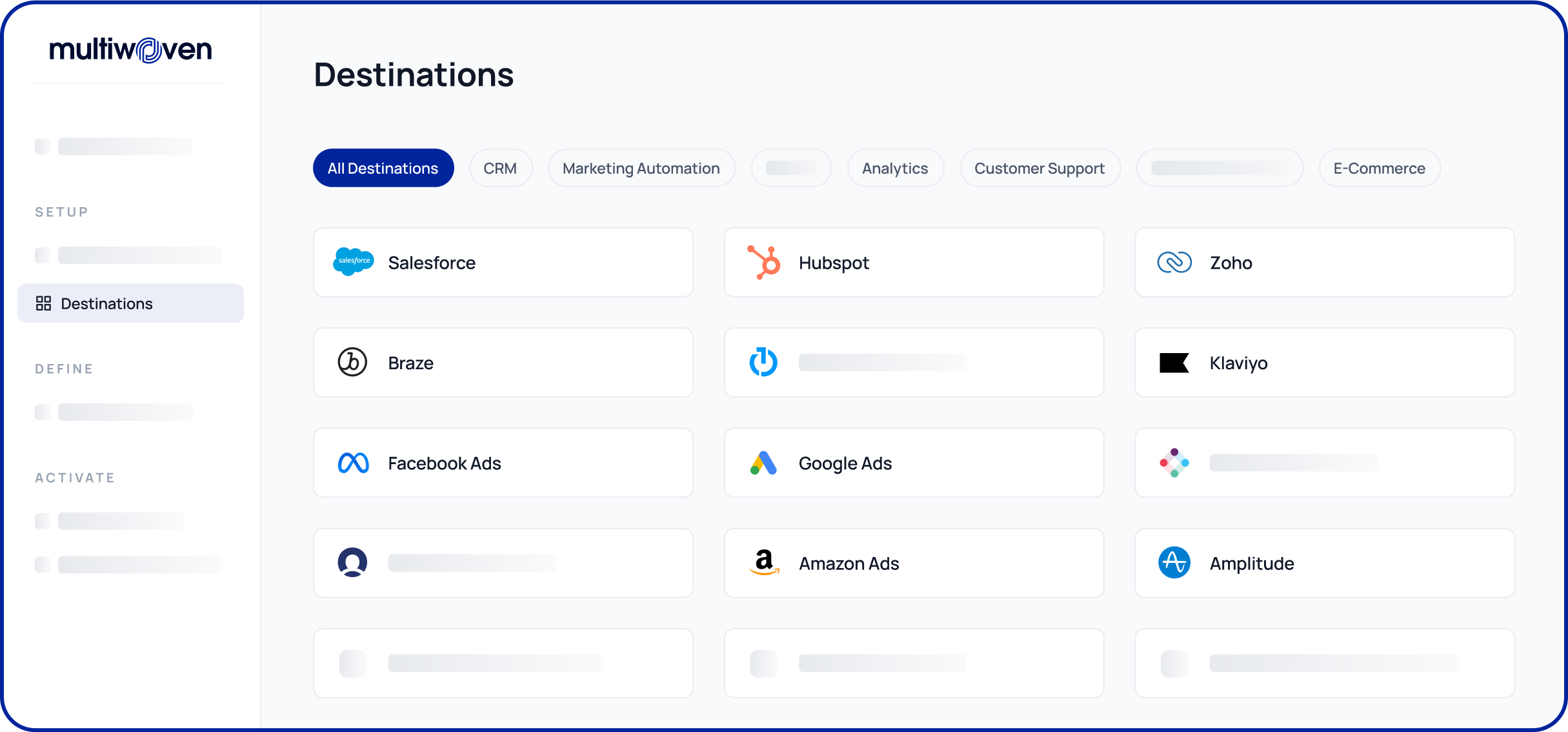
Example Image

Table of Contents

Getting Started

Multiwoven is a monorepo that consists of three main services:

  • server - The backend service that acts as a control plane for managing data sources, models, and syncs.

  • ui - The frontend react application that provides a user interface to manage data sources, destinations, and confgure syncs.

  • integrations - A Ruby Gem that provides a framework to build connectors to support a wide range of data sources and destinations.

Local Setup

To get started with Multiwoven, you can deploy the entire stack using Docker Compose.

  1. Clone the repository:
git clone [email protected]:Multiwoven/multiwoven.git
  1. Go inside multiwoven folder:
cd multiwoven
  1. Initialize .env file:
mv .env.example .env
  1. Copy .env file to ui folder:
cp .env ui/.env
  1. Setup git hooks:
./git-hooks/setup-hooks.sh
  1. Start the services:
docker-compose build && docker-compose up

UI can be accessed at the PORT 8000 :

http://localhost:8000

For more details, check out the local deployment guide in the documentation.

Self-hosted Options

Multiwoven can be deployed in a variety of environments, from fully managed cloud services to self-hosted solutions. Refer to the deployment guides below to deploy Multiwoven on your preferred cloud provider.

Provider Documentation
Docker Deployment Guide
Helm Charts Deployment Guide
AWS EC2 Deployment Guide
AWS ECS Coming soon.
AWS EKS (Kubernetes) Coming soon.
Azure VMs Deployment Guide
Azure AKS (Kubernetes) Deployment Guide
Google Cloud GKE (Kubernetes) Coming soon.
Google Cloud Compute Engine Deployment Guide
Digital Ocean Droplets Coming soon.
Digital Ocean Kubernetes Coming soon.
OpenShift Coming soon.

Connectors

๐Ÿ”ฅ Multiwoven is rapidly expanding its list of connectors to support a wide range of data sources and destinations. Head over to the Integrations directory to explore the available connectors. If you don't see the connector you need, please open an issue to request it.

Sources

Destinations

CRM

readme truncated โ€” read the full docs on github

Frequently asked questions

Is multiwoven free to use?

multiwoven is open source under the AGPL-3.0 licence. There is no licence fee and no seat count โ€” you can self-host it or, where the project offers one, pay a vendor for a managed version instead.

What does multiwoven do?

๐Ÿ”ฅ๐Ÿ”ฅ๐Ÿ”ฅ Open source Reverse ETL - alternative to hightouch and census.

What is multiwoven written in?

multiwoven is primarily written in Ruby. Its source is publicly available at https://github.com/Multiwoven/multiwoven, and it has 1,673 GitHub stars.






