What it is
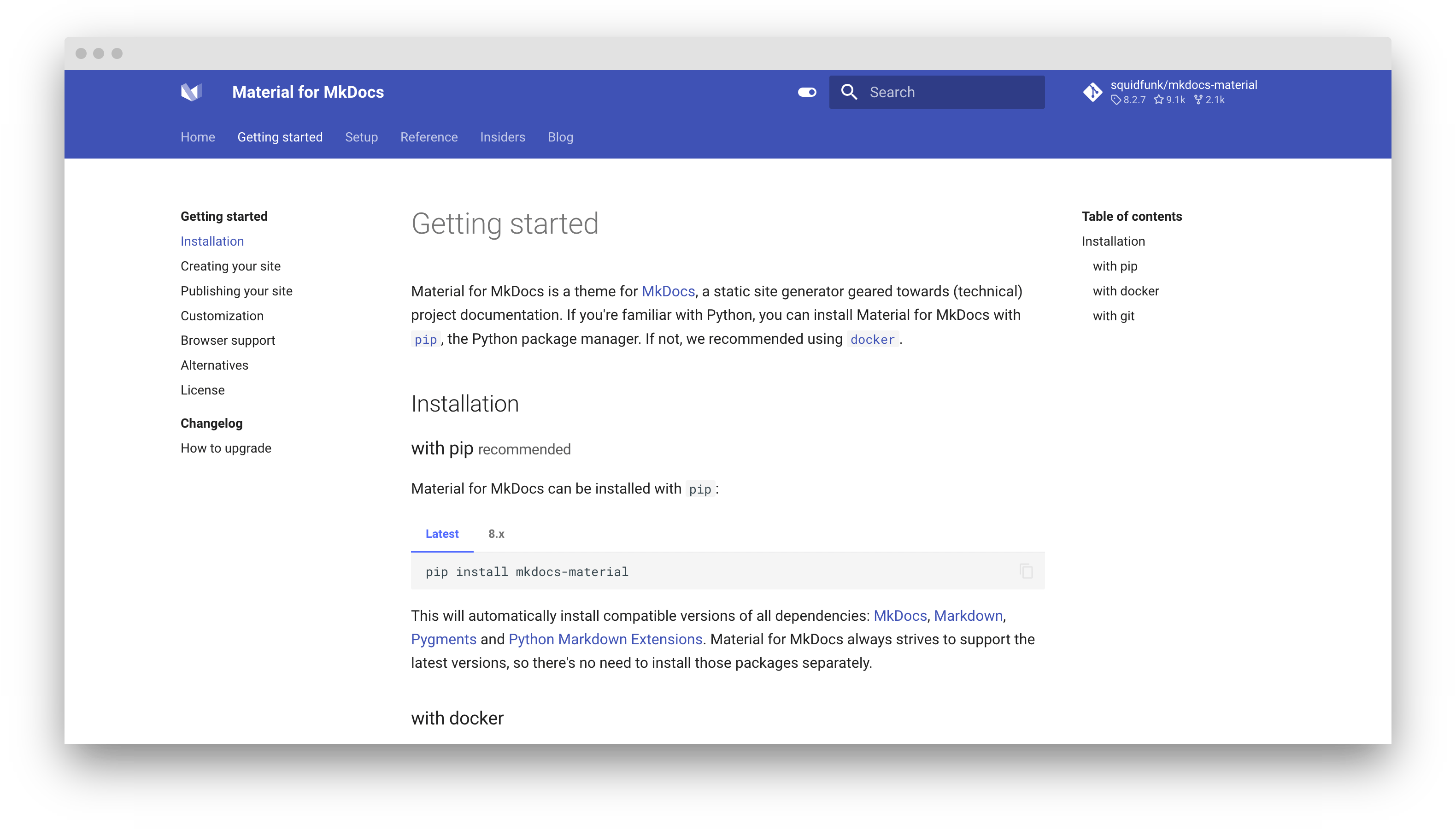
Material for MkDocs is a documentation framework built on top of MkDocs, the static site generator for project documentation. It lives in the Python ecosystem and is distributed as a theme plus an accompanying set of plugins, so authors write documentation in Markdown and MkDocs builds it into a static site that the theme renders. The project is licensed under MIT, has existed for eleven years, and is maintained as an open-source project with more than 27,000 stars and over 4,000 forks on GitHub.
The concrete problem it solves is the gap between writing documentation and publishing something professional. Without a framework, teams either hand-build HTML, CSS and JavaScript, or they hand the backbone of their product knowledge to a third-party platform. Material for MkDocs removes both costs: it lets authors focus on content, produces the site automatically, and keeps the complete sources and outputs in the owner's hands. The project states that its theme is trusted by more than 50,000 individuals and organizations, including both industry users and open-source projects.
Key capabilities
- Markdown authoring: documentation is written in Markdown, with no need to know HTML, CSS or JavaScript.
- Built-in search: the generated site is searchable.
- Responsive layout: the theme adapts automatically to desktop, tablet and mobile screens.
- More than 60 languages supported.
- Customization: colors, fonts, language, icons, logo and more are changed through configuration lines.
- Extensibility: an ecosystem of plugins and options alters appearance and behavior.
- Small footprint and fast rendering, aimed at strong performance and search engine rankings.
- Static output, with the sources and the built site owned by the project rather than a hosted platform.
Who uses it and how
- Open-source projects publishing reference documentation for libraries, frameworks and tools, including FastAPI, Electron, Apache Iceberg and Crystal.
- Companies producing public engineering and product documentation, including Atlassian, AWS, Google, Microsoft, Netflix, Red Hat, Salesforce and Siemens.
- Research and academic organizations, such as ArXiv, CERN and Harvard, which publish documentation sites from Markdown sources.
- Teams that want to keep documentation inside their own repositories and hosting, with the theme applied at build time through the MkDocs configuration file.
Getting started
Install with pip using pip install mkdocs-material, then set theme: name: material in the project's mkdocs.yml. Detailed installation instructions, configuration options and a live demo are published at squidfunk.github.io/mkdocs-material.
When to use it — and when not to
It is a strong fit when a team wants documentation sources and outputs under its own control rather than inside a third-party publishing platform, and when the team already works in Python or is willing to adopt MkDocs. A self-hoster must still run the ordinary MkDocs build and deployment pipeline, including a static host or CI job, and any pieces added through plugins. The facts do not describe a hosted offering, so the tool is not a substitute for a fully managed documentation service.