
Locally Uncensored
The all-in-one local AI studio for your desktop. Chat, images, video and a coding agent in one app. Install it, pick a model, go.
Free, open source, Windows and Linux. Everything runs on your own machine. No Docker, no terminal, no config files.






Download · Three steps · What is in the box · How it compares · Models · FAQ
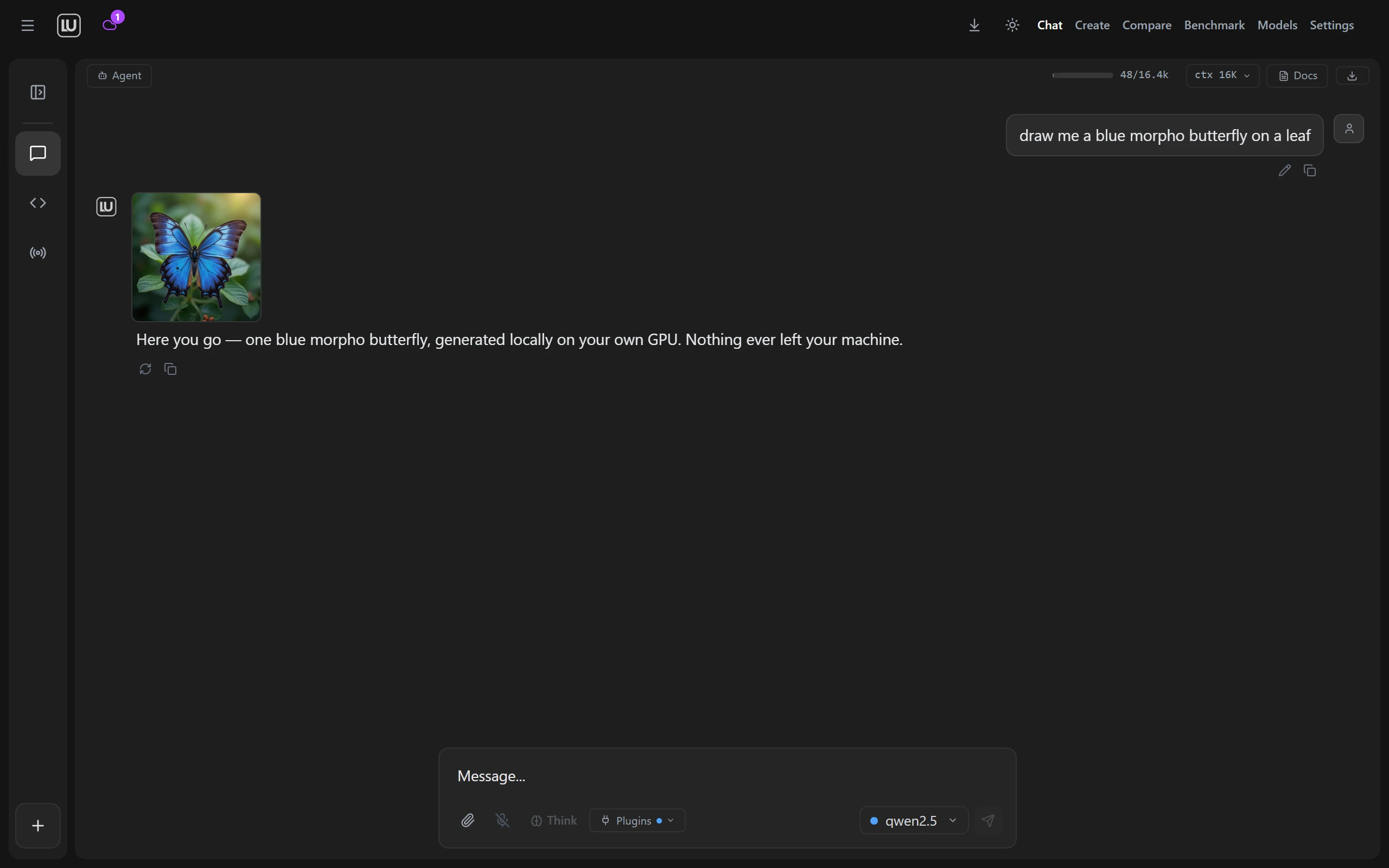
| Chat that draws your images | Images and video in the same window |
|---|---|
 |
 |
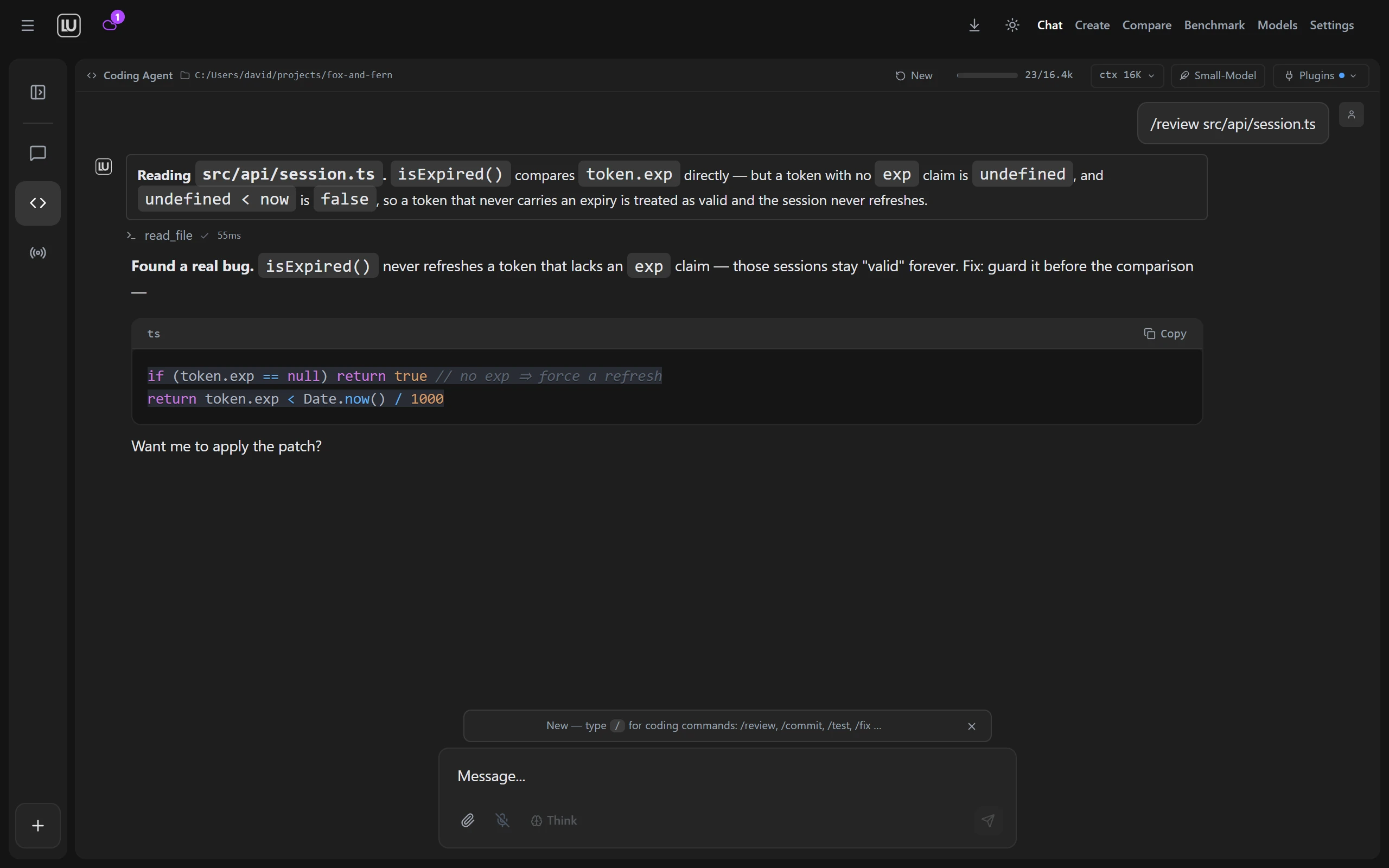
| The coding agent shows the diff first | Agent mode does the legwork |
 |
 |
Download
Take the latest build from Releases.
| Platform | File | Status |
|---|---|---|
| Windows 10 and 11 | .exe (NSIS, recommended) or .msi |
Tested every release, signed auto update channel |
| Linux | .deb, .rpm or .AppImage |
Built on every release |
| macOS | none yet | Builds from source with npm run tauri build |
Some antivirus engines flag unsigned NSIS installers that download other binaries, which is a false positive. The installer is built by GitHub Actions from the public source on master, and the update channel is signed against a public minisign key, so you can verify both: see SECURITY.md.
Current release: v2.6.9 (September 2026). Every change since 1.0.0 is in CHANGELOG.md.
Three steps
- Install. Run the installer like any other program. On first launch a wizard looks for an AI engine that is already running on your machine, and installs one for you with a single click if there is none. It does the same for ComfyUI, which draws the images and video.
- Pick a model. The model manager marks which models fit your hardware and downloads them in one click. It works with the engine you already have (Ollama, LM Studio and others) and can link models those tools already store, without copying them.
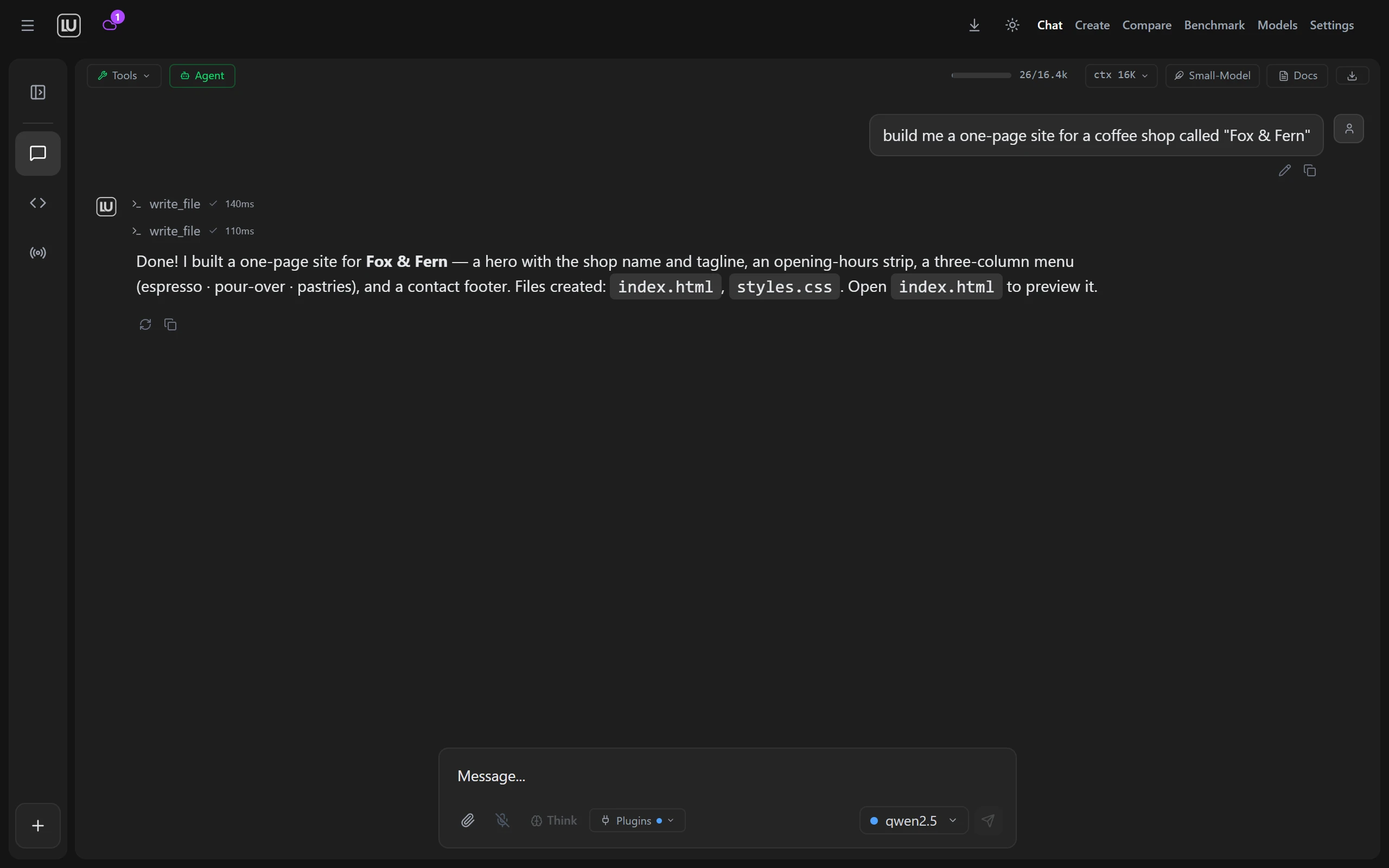
- Create. Chat, Create, Code and Agent are tabs in one window. Type in one, switch to the next, keep the same models.
Walkthrough with screenshots: Getting started guide. New to local AI: the five minute beginner guide.
Build from source, or contribute
git clone https://github.com/PurpleDoubleD/locally-uncensored.git
cd locally-uncensored
npm install
npm run dev          # browser dev mode
npm run tauri build  # desktop binary
setup.bat on Windows and setup.sh on Linux and macOS bootstrap Node, Git and Ollama for dev mode. See the contributing guide.
What is in the box
Chat. Models that answer directly, without refusals, next to the mainstream ones in the same menu. Thinking is shown as it happens, with an effort control on the models that offer one. Upload an image and ask about it, chat with your own documents through a local index, talk instead of typing and have answers read back, keep a memory across conversations, switch personas, and import your ChatGPT, Claude or Gemini export so the old threads come with you. A long conversation folds its older turns into a summary instead of running out of room.
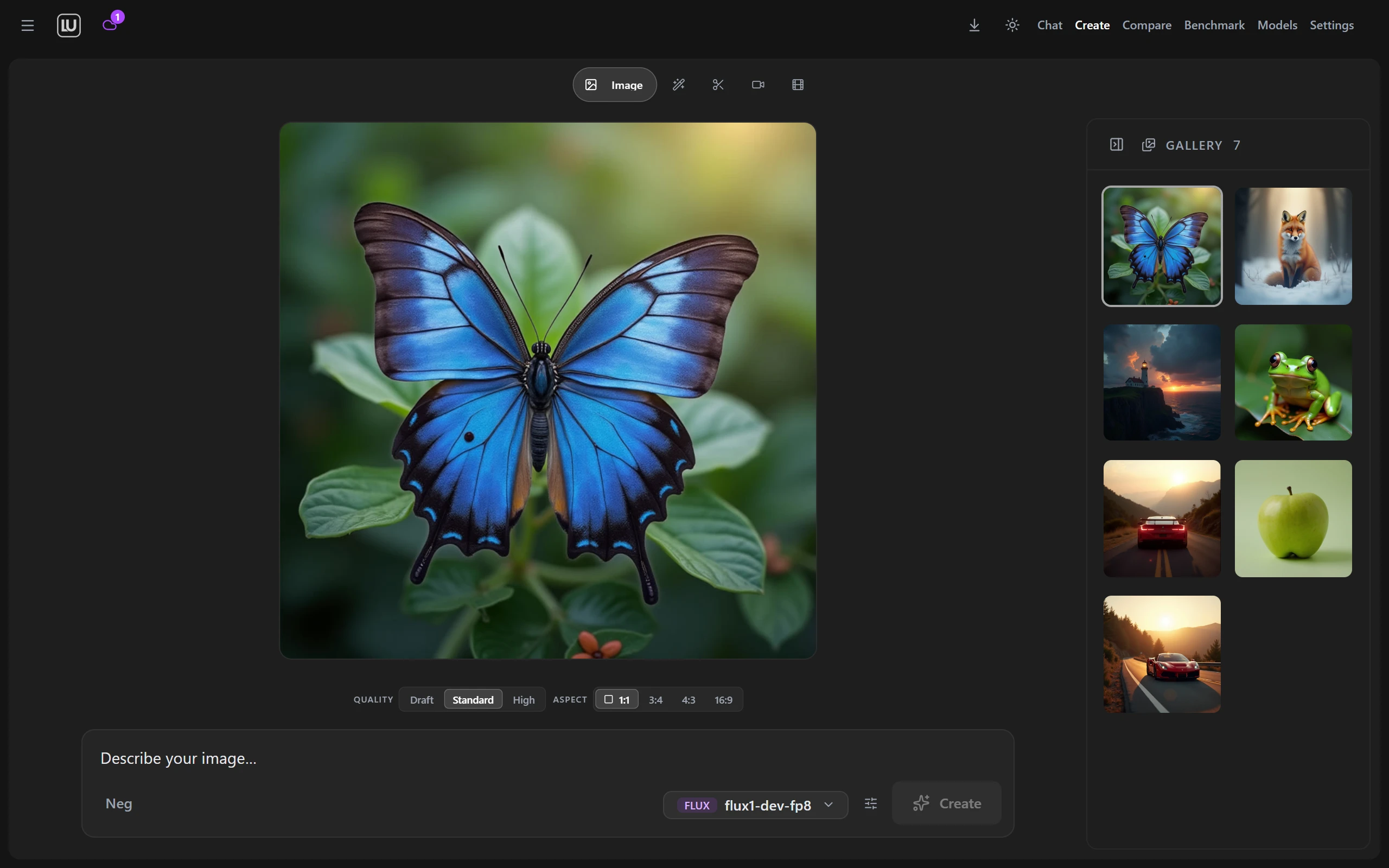
Create. Images and video on your own GPU through a ComfyUI the app installs, starts, repairs and updates for you. No node graphs. The lanes are text to image, edit and image to image with a mask for inpainting, remove background, video, animate an image, extend a clip, motion control, talking character, music, and Character Studio, which trains a character on your own card and drops it into your local LoRA folder. A LoRA picker with a stack and strength sliders reads the folder live, and everything you make lands in the gallery. Upscale and Erase Object are the two lanes that run in the cloud only. How it works.
Code. A coding agent that builds a map of the repo, edits only the lines you asked for, shows the diff before it applies anything, runs your tests and reads the failures, and carries typed git tools and per project rules in a .lurules file. Ask, Plan and Bypass modes per conversation, a file explorer with preview, and a workspace per project. A Local API in Settings puts every local model on one OpenAI compatible address behind a token, so your other coding tools can use the same machine.
Agent. Web search and fetch, reading and writing files, a shell, code execution, screenshots, image and video generation, and your own MCP servers on top. Long jobs go to background agents that work while you carry on, and a panel shows what is running. Every tool call passes a permission gate you control, and a read only run stays read only.
Everywhere. Reach the app from your phone over your LAN or through a Cloudflare tunnel, paired by QR code and a passcode, off until you turn it on, with connected devices listed. Compare two models side by side, benchmark them on your own hardware for speed, cost and correctness, and take updates over a signed channel. Phone details.
Optional: LU Labs Cloud
Some models are larger than any desktop card. Flip the Cloud switch in the same app and those run on hosted GPUs instead, with the heavy Create lanes alongside them. The same account works in the browser at lu-labs.ai, on a plan or on credit packs that do not expire. The local app stays free either way, and switching back to local costs nothing: plans and prices.
How it compares
| Locally Uncensored | Open WebUI | LM Studio | Jan | SillyTavern | |
|---|---|---|---|---|---|
| Chat | Yes | Yes | Yes | Yes | Yes |
| Image generation | Yes | No | No | No | Partial |
| Video generation | Yes | No | No | No | No |
| Image to image and image to video | Yes | No | No | No | No |
| Coding agent | Yes | No | No | No | No |
| Agent with tools and MCP | Yes | No | No | No | No |
| Works out of the box | Yes | No | Yes | Yes | No |
| Remote access from your phone | Yes | Partial | No | No | Partial |
| Compare and benchmark | Yes | No | No | No | No |
| Answers directly, without refusals | Yes | No | No | No | Partial |
| Voice in and out | Yes | Partial | No | No | Partial |
| Document chat | Yes | Yes | No | No | No |
| Runs without Docker | Yes | No | Yes | Yes | Yes |
| Open source | Yes | Yes | No | Yes | Yes |
Deep dives: vs LM Studio · vs Jan · vs Open WebUI · vs GPT4All · vs Msty · vs KoboldCpp · vs SillyTavern · LM Studio alternatives · Best local AI apps 2026
Models that run well
The model manager holds the full catalog and marks what fits your machine. These are the ones worth starting with.
Text
| Model | Download | Notes | |-------|----------