Liam is an open-source TypeScript tool that automatically generates beautiful, interactive ER diagrams from an existing database schema, built for developers and teams who need to read, document, and share the structure of a database without drawing diagrams by hand.
What it is
Liam ERD is a documentation and data-visualization tool that reads a database schema and turns it into an entity-relationship diagram. It lives in the Node.js and TypeScript ecosystem, and its topic list ties it to database schema work around PostgreSQL, Prisma, and ORMs generally. The project is licensed under Apache License Version 2.0, carries 5,116 stars and 239 forks on GitHub, and ships both a hosted site at liambx.com and a command-line interface published as @liam-hq/cli.
The concrete problem it solves is reverse engineering. Rather than maintaining diagram documentation by hand and letting it drift away from the schema, Liam ERD takes the schema file or database definition that already exists and renders it as a diagram. Its stated approach is zero configuration: provide the schema, and the diagram follows. That removes the whole class of work where a team keeps a separate, stale picture of its tables next to the real schema.
Key capabilities
- Generates interactive ER diagrams with panning, zooming, and filtering, so large schemas stay navigable rather than becoming a wall of boxes.
- Performs reverse engineering of existing schemas, turning a current database structure into a readable diagram instead of a hand-authored one.
- Handles large projects, with the README stating it easily handles 100+ tables.
- Supports public repositories through a URL trick: inserting
liambx.com/erd/p/ before the schema file path, as in https://liambx.com/erd/p/github.com/user/repo/blob/master/db/schema.rb.
- Supports private repositories through an interactive setup command,
npx @liam-hq/cli init.
- Ships as open source under Apache-2.0, with third-party package licences listed in
docs/packages-license.md.
- Offers a hosted option at liambx.com alongside the CLI, plus a documented roadmap tracked in a GitHub project view.
Who uses it and how
- Developers working in public repositories who want a diagram without any install, by rewriting the schema file URL with the
/erd/p/ prefix.
- Teams with private schemas who run
npx @liam-hq/cli init to configure the tool locally against their own codebase.
- Projects on PostgreSQL, Prisma, or another ORM, where the schema is the source of truth and the diagram is derived from it.
- Documentation and knowledge-base work, where the generated diagram becomes reference material for people onboarding to an unfamiliar data model.
- Large codebases with 100 or more tables, where the interactive view matters more than a static image.
Getting started
For a public repository, insert liambx.com/erd/p/ into the schema file's URL. For a private repository, run the interactive setup with npx @liam-hq/cli init, or use the hosted site at liambx.com.
How it compares
The facts provided name no competing or paid products that Liam ERD replaces, and no comparable diagram tools are listed among its topics. On the evidence available, it stands alone in this registry.
When to use it — and when not to
Liam ERD fits teams that already keep a schema in a repository and want a diagram generated from it, especially at public-repo scale where the URL-prefix route needs no setup at all. It is a poorer fit for anyone who needs a diagram format the project does not produce, or who wants a fully self-contained offline tool with detailed operational documentation, since the README excerpt covers only quick start, licensing, and pointers to the website, roadmap, and contribution guides. The provider facts give no release history, so there is no basis for judging release cadence or long-term maintenance from this page alone.
project readme (upstream, from github) — read inline


Automatically generates beautiful and easy-to-read ER diagrams from your database.





Website •
Documentation •
Roadmap
What's Liam ERD?
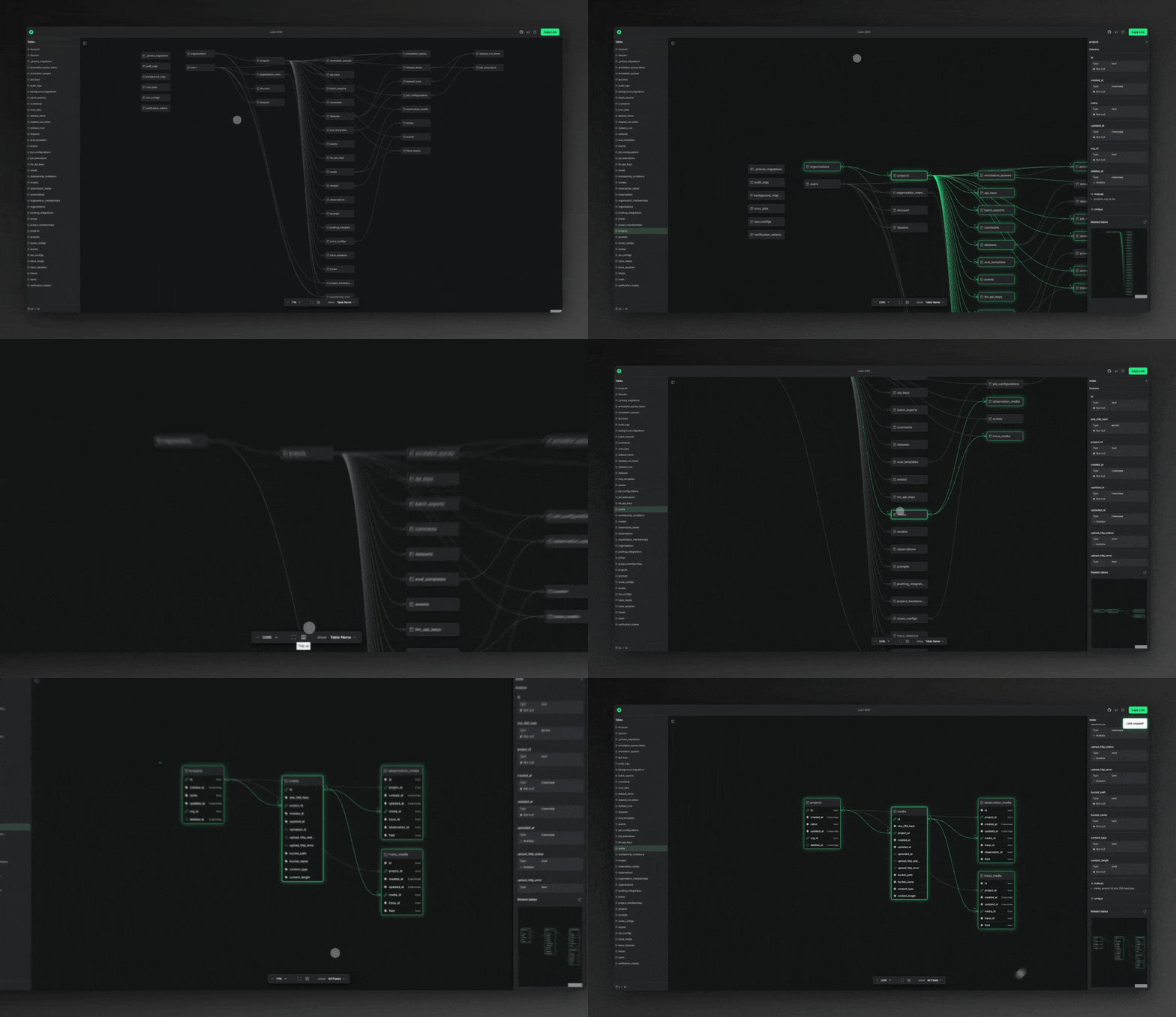
Liam ERD generates beautiful, interactive ER diagrams from your database. Whether you're working on public or private repositories, Liam ERD helps you visualize complex schemas with ease.
- Beautiful UI & Interactive: A clean design and intuitive features (like panning, zooming, and filtering) make it easy to understand even the most complex databases.
- Simple Reverse Engineering: Seamlessly turn your existing database schemas into clear, readable diagrams.
- Effortless Setup: Get started with zero configuration—just provide your schema, and you're good to go.
- High Performance: Optimized for both small and large projects, easily handling 100+ tables.
- Fully Open-Source: Contribute to the project and shape Liam ERD to fit your needs.
Quick Start
For Public Repositories
Insert liambx.com/erd/p/ into your schema file's URL:
# Original: https://github.com/user/repo/blob/master/db/schema.rb
# Modified: https://liambx.com/erd/p/github.com/user/repo/blob/master/db/schema.rb
                  👾^^^^^^^^^^^^^^^^👾
For Private Repositories
Run the interactive setup:
npx @liam-hq/cli init
 If you find this project helpful, please give it a star! ⭐
Your support helps us reach a wider audience and continue development.
Documentation
Check out the full documentation on the website.
Roadmap
See what we're working on and what's coming next on our roadmap.
Contributing
Refer to our contribution guidelines and Code of Conduct for contributors.
Contributors

Star History
License
Liam ERD is licensed under the Apache License Version 2.0.
Licenses for third-party packages can be found in docs/packages-license.md.