kubero is a free, open source orchestration & scheduling project written in TypeScript and released under GPL-3.0. It has 4,419 GitHub stars, 213 forks and 128 open issues, and was last pushed 8 days ago. On this registry it ranks #33 of 64 tracked projects in Orchestration & Scheduling, with 5 head-to-head comparisons available. It gained 2 stars over the last 3 tracked days.

What is kubero?

What it is

Kubero is a self-hosted Platform as a Service for the Kubernetes ecosystem. It is written in TypeScript and released under the GPL-3.0 license. It gives developers a web-based control layer for deploying applications on Kubernetes without specialized platform knowledge. It follows twelve-factor principles and can run services from existing container images or source code.

The concrete problem Kubero solves is the gap between application deployment and Kubernetes administration. Instead of requiring users to write Helm charts, manage manifests, or operate separate pipelines, Kubero provides an application-centered workflow. It can deploy containers, manage staging environments, connect add-ons including databases and message queues, and expose logs, metrics, and a web console through one interface. This suits teams wanting a Heroku-like experience while retaining control over their Kubernetes infrastructure.

Key capabilities

  • Kubero deploys Docker containers on Kubernetes without Helm charts and supports source-based builds.
  • It includes more than 160 application templates for popular services such as WordPress and Grafana.
  • The platform provides CI/CD pipelines with up to four staging environments per application and automatic redeployments on branch or tag pushes.
  • GitOps review apps are built, started, and cleaned up when pull requests are opened or closed.
  • Add-ons such as PostgreSQL, Redis, MySQL, MongoDB, RabbitMQ, CouchDB, and Haraka Mail Server can be deployed alongside applications.
  • Users can monitor metrics and logs, use a web console, and receive Discord, Slack, or webhook notifications.
  • Kubero supports GitHub and OAuth2 single sign-on, basic authentication, scheduled tasks, vulnerability scans, and multi-tenancy.

Who uses it and how

  • Development teams use Kubero as an internal developer platform, letting application owners deploy services without Kubernetes specialization.
  • Product teams use review-app workflows to create temporary environments for pull requests and remove them when those requests close.
  • Operations teams use the API and CLI to connect Kubero to CI/CD workflows, while the web UI provides logs, metrics, restarts, and console access.
  • Multi-tenant organizations use Kubero to separate teams or customers, authenticate users through GitHub or OAuth2, and deploy databases or message queues alongside workloads.

Getting started

Kubero is installed into an existing Kubernetes cluster by running its UI and operator containers; a demo instance is available at https://demo.kubero.dev.

When to use it — and when not to

Kubero fits teams that want a self-hosted, Kubernetes-native alternative to Heroku, Netlify, Coolify, Vercel, Dokku, or Portainer and can operate the underlying cluster. It stores all data in Kubernetes etcd without an extra database, simplifying setup but placing backup, upgrade, and recovery responsibility on the self-hoster. It may be less suitable for users who cannot operate Kubernetes, require a separate application database, or prefer a tool that does not depend on a Kubernetes instance.

project readme (upstream, from github) — read inline


License GitHub release (latest by date) Discord GitHub (Pre-)Release Date Demo

中文翻译

日本語訳

Kubero [pronounced: Kube Hero] is a self-hosted PaaS (Platform as a Service) that allows any developer to deploy their application on Kubernetes without specialized knowledge. Kubero follows the principles of 12-factor apps. It is possible to run apps based on existing containers or from source code.
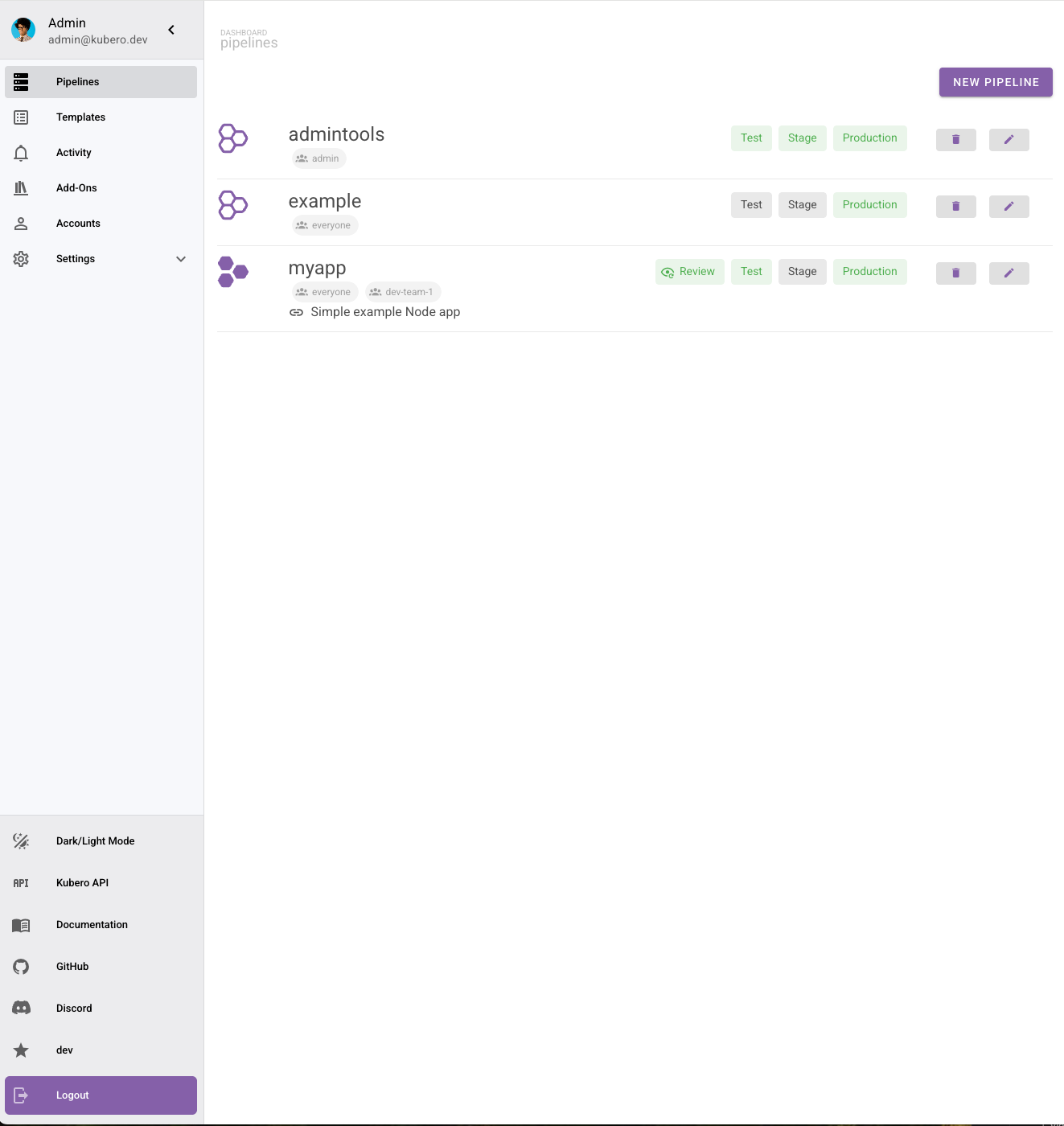
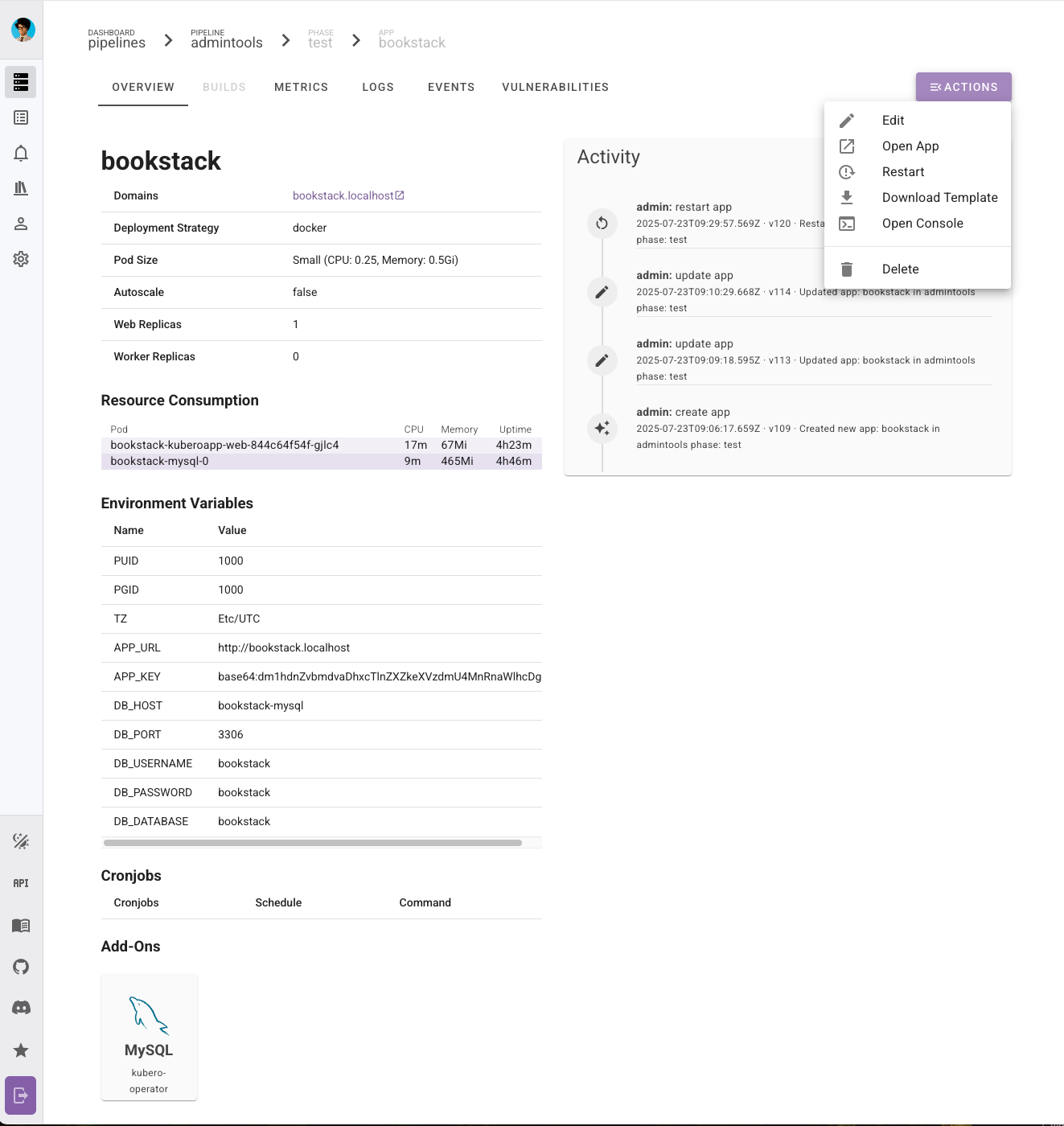
Create App Screenshot 1 Create App Screenshot 2 Create App Screenshot 4 Create App Screenshot 3 Create App Screenshot 3 Create App Screenshot 3

More Screenshots and a full video on YouTube

Features (DEMO)

  • Docker Deployments
    Deploy Docker containers on Kubernetes without needing Helm charts.
  • App Templates (+160)
    Deploy popular applications like WordPress and Grafana with ready-to-use templates.
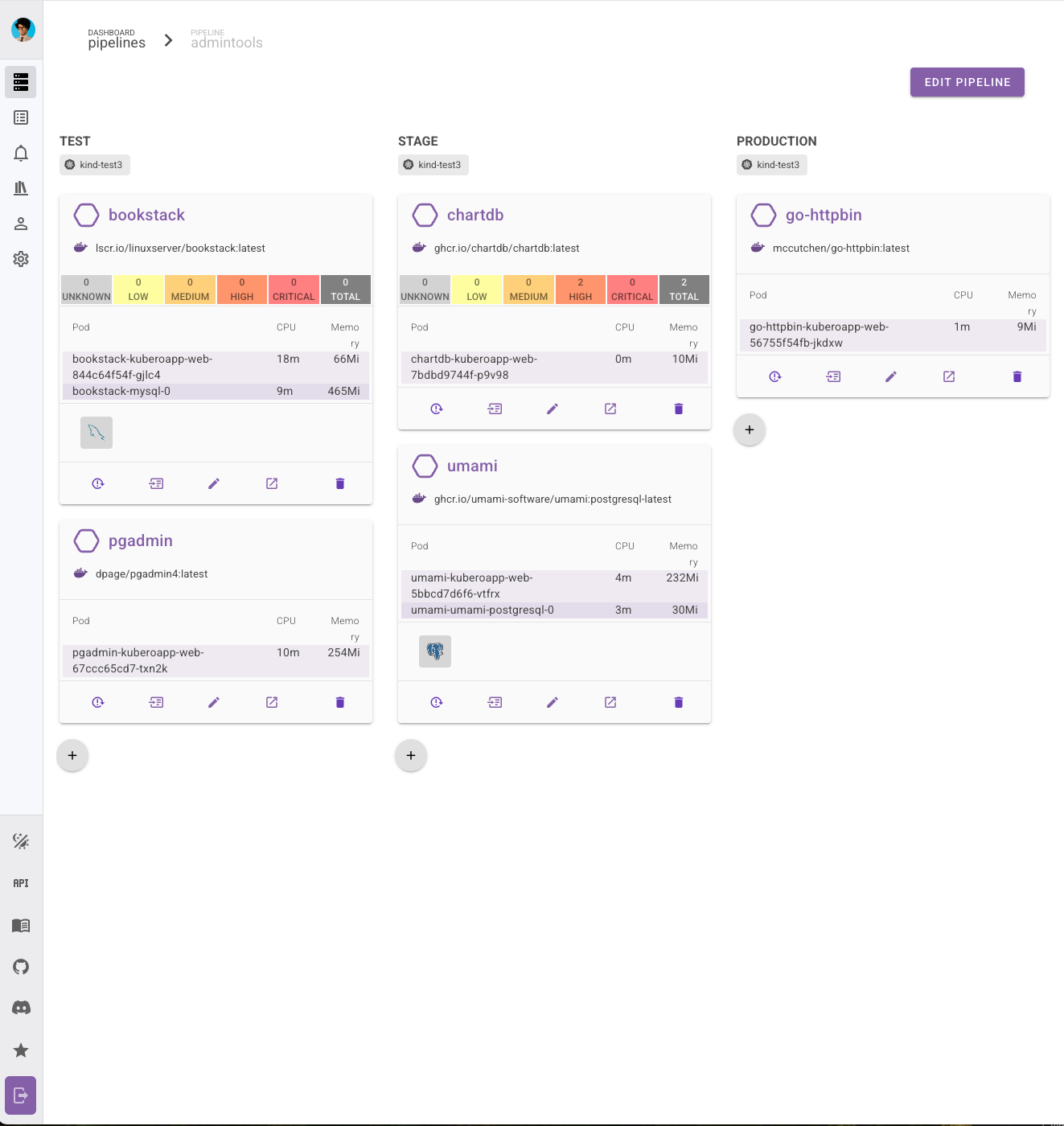
  • CI/CD Pipelines
    Create unlimited pipelines with up to 4 separate staging environments for all your applications.
  • GitOps Review Apps
    Automatically build, start, and clean up review apps when opening or closing pull requests.
  • Automatic Redeployments
    Trigger app redeployments on pushes to branches or tags.
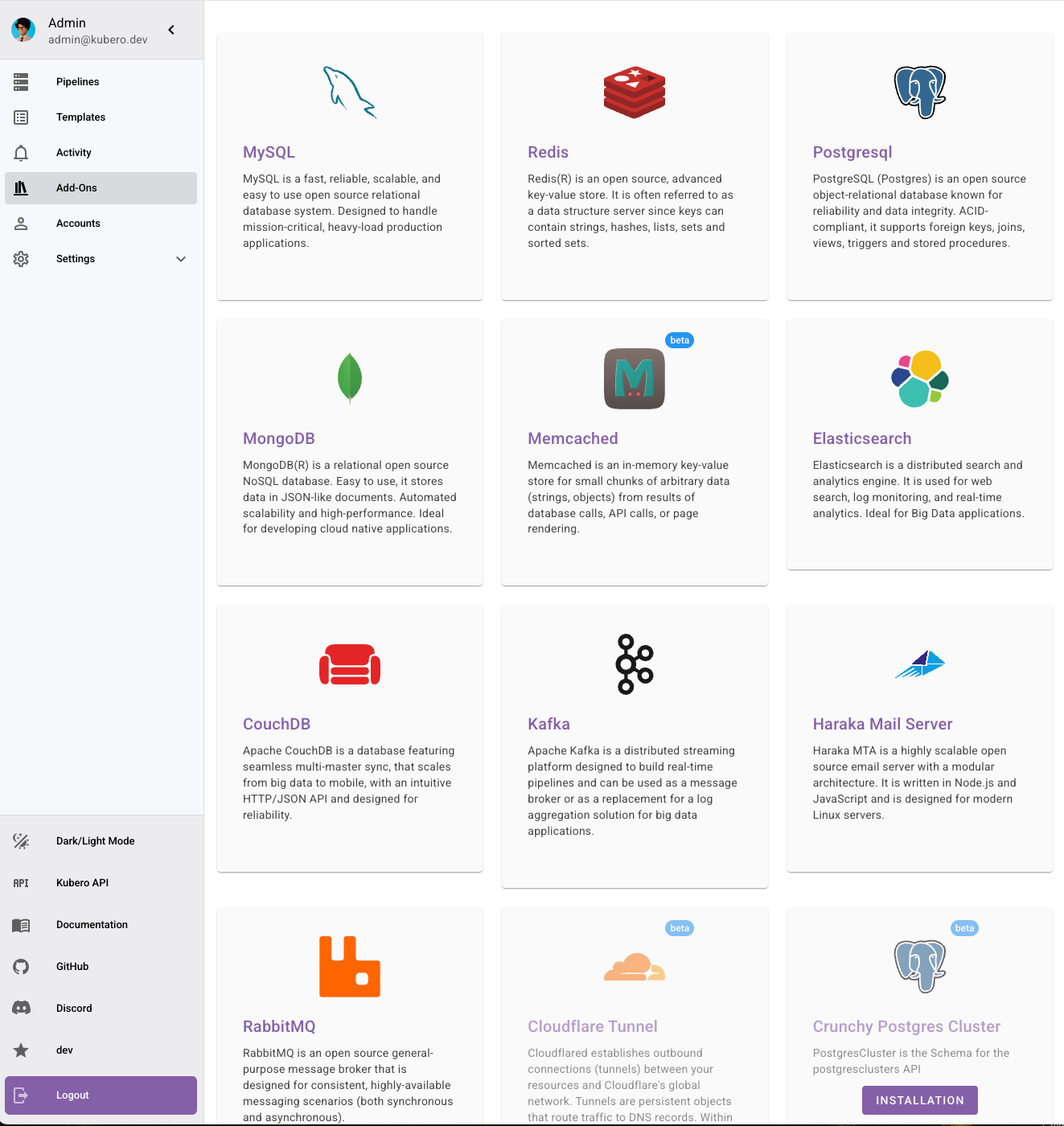
  • Add-ons Integration
    Seamlessly deploy add-ons such as PostgreSQL and Redis alongside your applications.
  • API & CLI
    Integrate seamlessly with existing tools and CI/CD workflows.
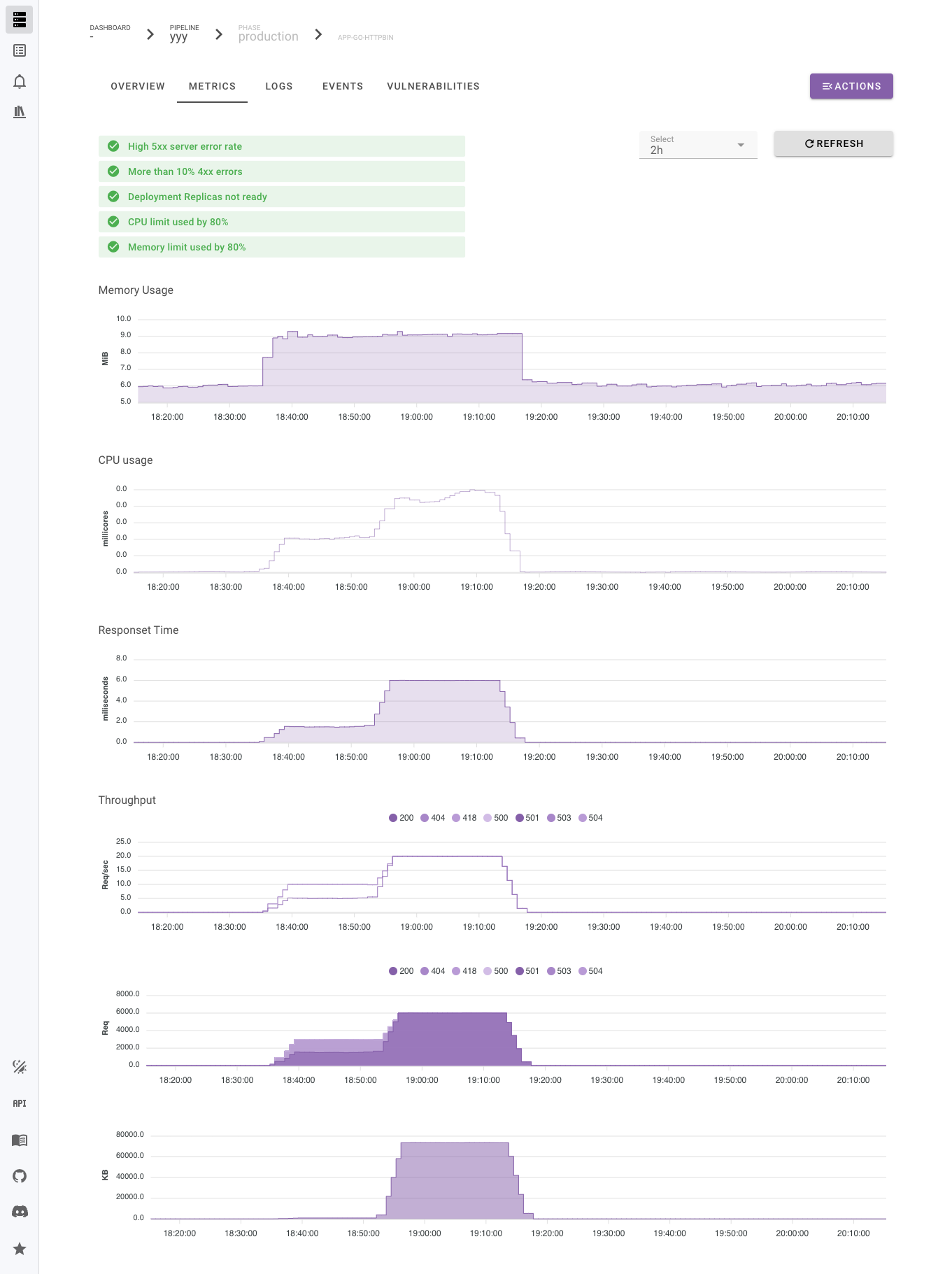
  • Metrics & Monitoring
    Access integrated metrics to monitor application health.
  • Notifications
    Get build and deployment updates via Discord, Slack, or Webhooks.
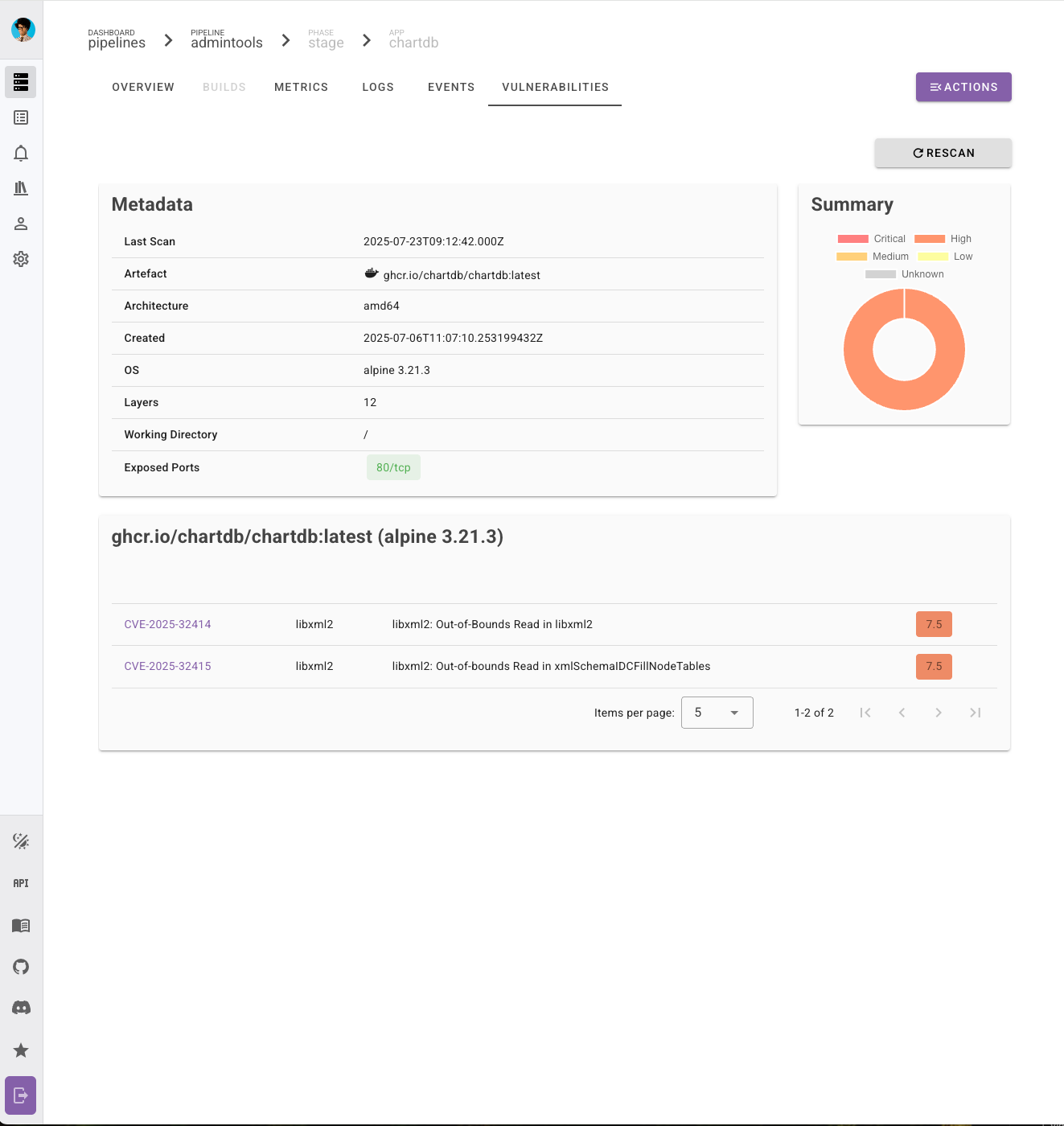
  • Vulnerability Scans
    Perform scheduled or triggered scans for running applications.
  • Application Logs
    View logs directly from the web UI for easy monitoring.
  • Safe Restarts
    Restart applications safely and easily through the web UI.
  • Web Console
    Use the built-in container web console for direct access.
  • Scheduled Tasks
    Easily create and manage cronjobs.
  • Multi-Tenancy
    Support for managing multiple tenants.
  • Single Sign-On (SSO)
    Authenticate securely with GitHub and OAuth2.
  • Basic Auth
    Configure Basic Auth for your applications with ease.

Basic Concept

Kubero is Kubernetes native and runs with two containers on any Kubernetes instance (kubero-ui and Operator). All data is stored on your Kubernetes etcd without an extra database.

kubero  concept overview

Add-ons

Addon Maintainer Built in*
MySQL groundhog2k
PostgreSQL groundhog2k
Redis groundhog2k
MongoDB groundhog2k
RabbitMQ groundhog2k
CouchDB Apache
Haraka Mail Server Kubero
MySQL Bitnami ⚠️ (deprecated)
PostgreSQL Bitnami ⚠️ (deprecated)
Redis Bitnami ⚠️ (deprecated)
MongoDB Bitnami ⚠️ (deprecated)
Elasticsearch Bitnami ⚠️ (deprecated)
Kafka Bitnami ⚠️ (deprecated)
Memcache Bitnami ⚠️ (deprecated)
<img src="client/public/img/addons/RabbitMQ.svg"

readme truncated — read the full docs on github

Frequently asked questions

Is kubero free to use?

kubero is open source under the GPL-3.0 licence. There is no licence fee and no seat count — you can self-host it or, where the project offers one, pay a vendor for a managed version instead.

What does kubero do?

A free and self-hosted PaaS alternative to Heroku / Netlify / Coolify / Vercel / Dokku / Portainer running on Kubernetes

What is kubero written in?

kubero is primarily written in TypeScript. Its source is publicly available at https://github.com/kubero-dev/kubero, and it has 4,419 GitHub stars.