
keploy is a free, open source miscellaneous project written in Go and released under Apache-2.0. It has 18,463 GitHub stars, 2,357 forks and 725 open issues, and was last pushed 10 hours ago. On this registry it ranks #6 of 25 tracked projects in Miscellaneous, with 5 head-to-head comparisons available. It gained 12 stars over the last 6 tracked days.

keploy — null

What is keploy?

What it is

Keploy is an open-source Go project in the API and integration testing ecosystem. It is a developer-centric API and integration testing tool that creates safe, isolated production sandboxes for API, integration, and end-to-end testing. The project records API calls, database queries, and streaming events, then replays them as tests and data mocks. It captures traffic at the network layer with eBPF, so the README says it is code-less and language-agnostic.

The concrete problem it addresses is the cost and fragility of hand-written API and integration tests, especially when tests depend on databases, queues, external APIs, and distributed flows. Instead of adding SDKs or changing code, Keploy converts observed traffic into reusable tests and mocks. It aims to let teams replay complex flows without re-provisioning infrastructure, reducing dependence on live external services.

Key capabilities

  • Keploy records API calls, database queries, and streaming events, then replays them as tests and mocks without code changes or SDKs.
  • It supports infra virtualization beyond HTTP mocks by recording Postgres, MySQL, MongoDB, Kafka, RabbitMQ, and external APIs for deterministic replay.
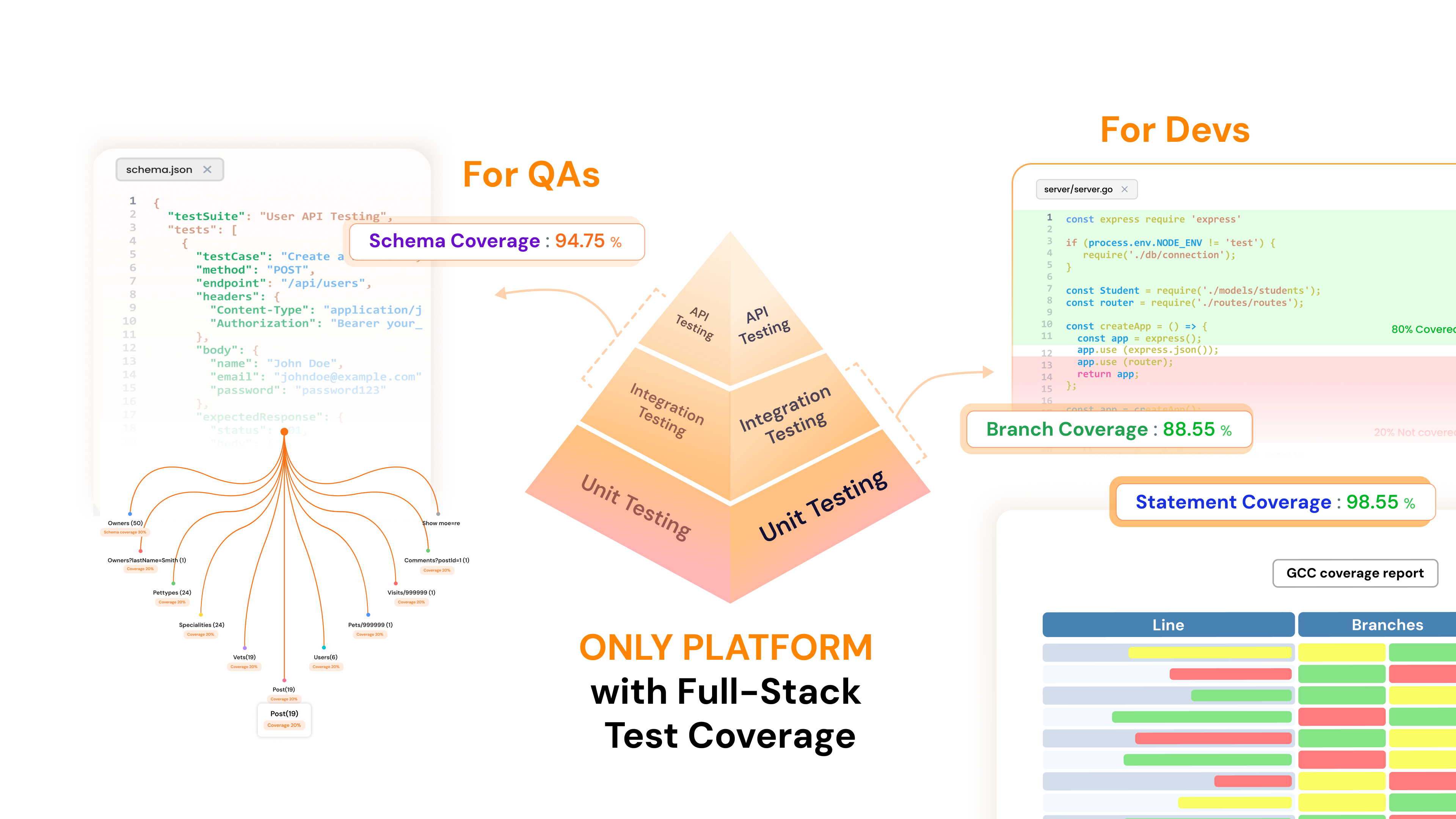
  • It calculates statement and branch coverage, API schema coverage, and business use-case coverage.
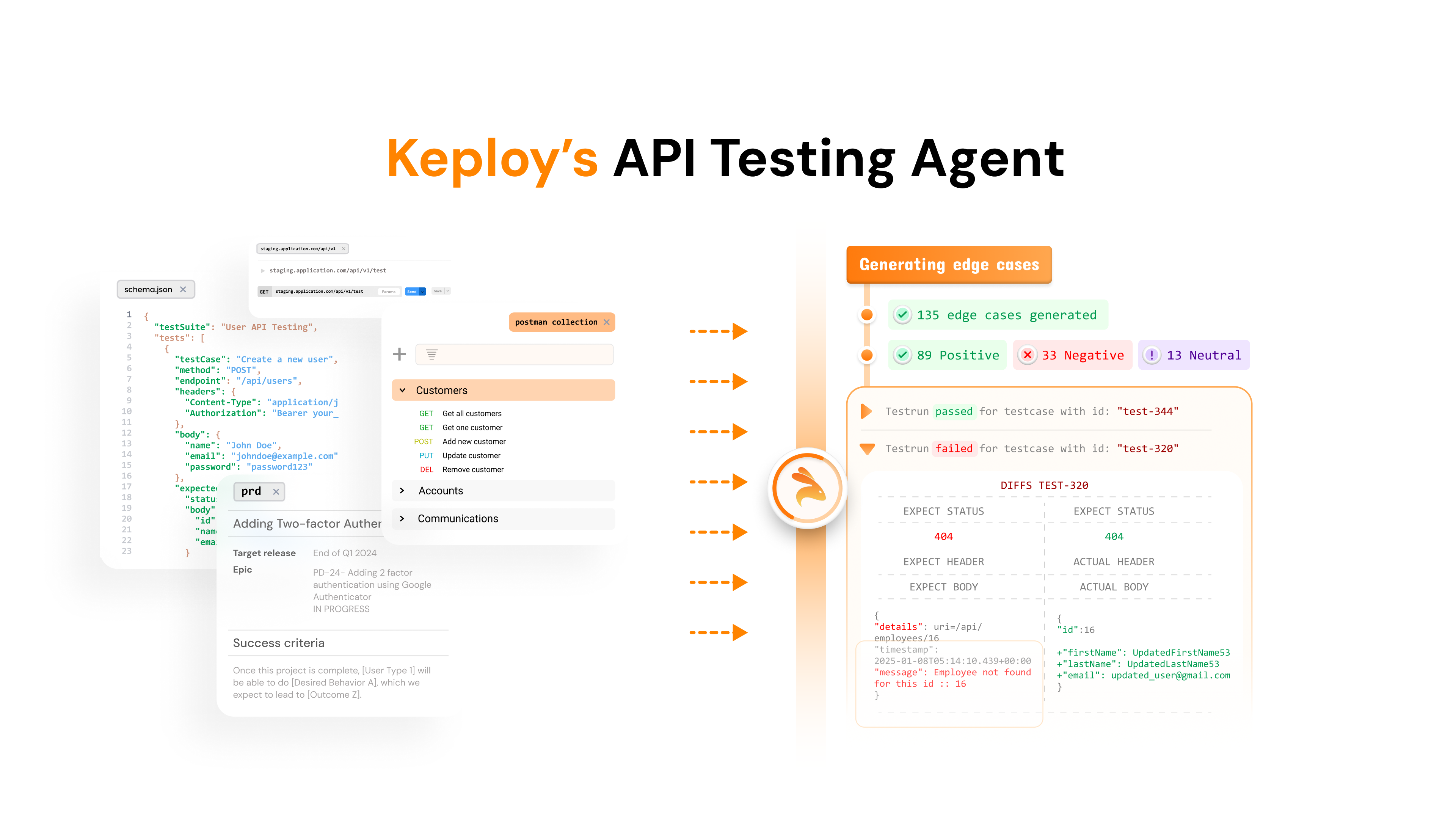
  • It uses recordings and Swagger or OpenAPI schemas to find boundary values, missing or extra fields, wrong types, out-of-order sequences, retries, and timeouts.
  • It can run locally, in CI/CD pipelines such as Jenkins or GitHub Actions, and across Kubernetes clusters, using generated mocks as server tests.
  • It provides reporting, a console for recorded tests and mocks, time freezing, and a mock registry for versioning mocks.

Who uses it and how

  • Developers run an existing application under the keploy record command to capture real API and integration flows as tests and mocks.
  • QA teams replay recorded flows in CI pipelines to test API and integration behavior without live external dependencies.
  • Platform teams can exercise distributed application flows by using the mocks and tests across Kubernetes clusters.
  • Teams can reuse generated mocks through a mock registry and inspect or debug them in the console.

Getting started

Install the Keploy agent with the curl script shown in the README, then start recording with the keploy record command and run replayed tests with the keploy test command.

When to use it — and when not to

Keploy is useful when a team can run the application under its command and the host supports eBPF network capture, because that is how it records flows without SDKs. It is less suitable when a project cannot use eBPF or needs only explicit HTTP stubs and code-level test scaffolding. The provided metadata lists 0 contributors, 725 open issues, and a repository age of 0 years, so teams should evaluate support burden before adopting it.

project readme (upstream, from github) — read inline

Keploy Logo

keploy%2Fkeploy | Trendshift

⚡️ API tests faster than unit tests, from user traffic ⚡️

🌟 The must-have tool for developers in the AI-Gen era for 90% test coverage 🌟


Slack LinkedIn YouTube X

Keploy CNCF Landscape GitHub Stars Help us reach 20k stars!

Keploy is a developer‑centric API and integration testing tool that auto‑generates tests and data‑mocks faster than unit tests.

It records API calls, database queries, and streaming events — then replays them as tests. Under the hood, Keploy uses eBPF to capture traffic at the network layer, but for you it’s completely code‑less and language‑agnostic.
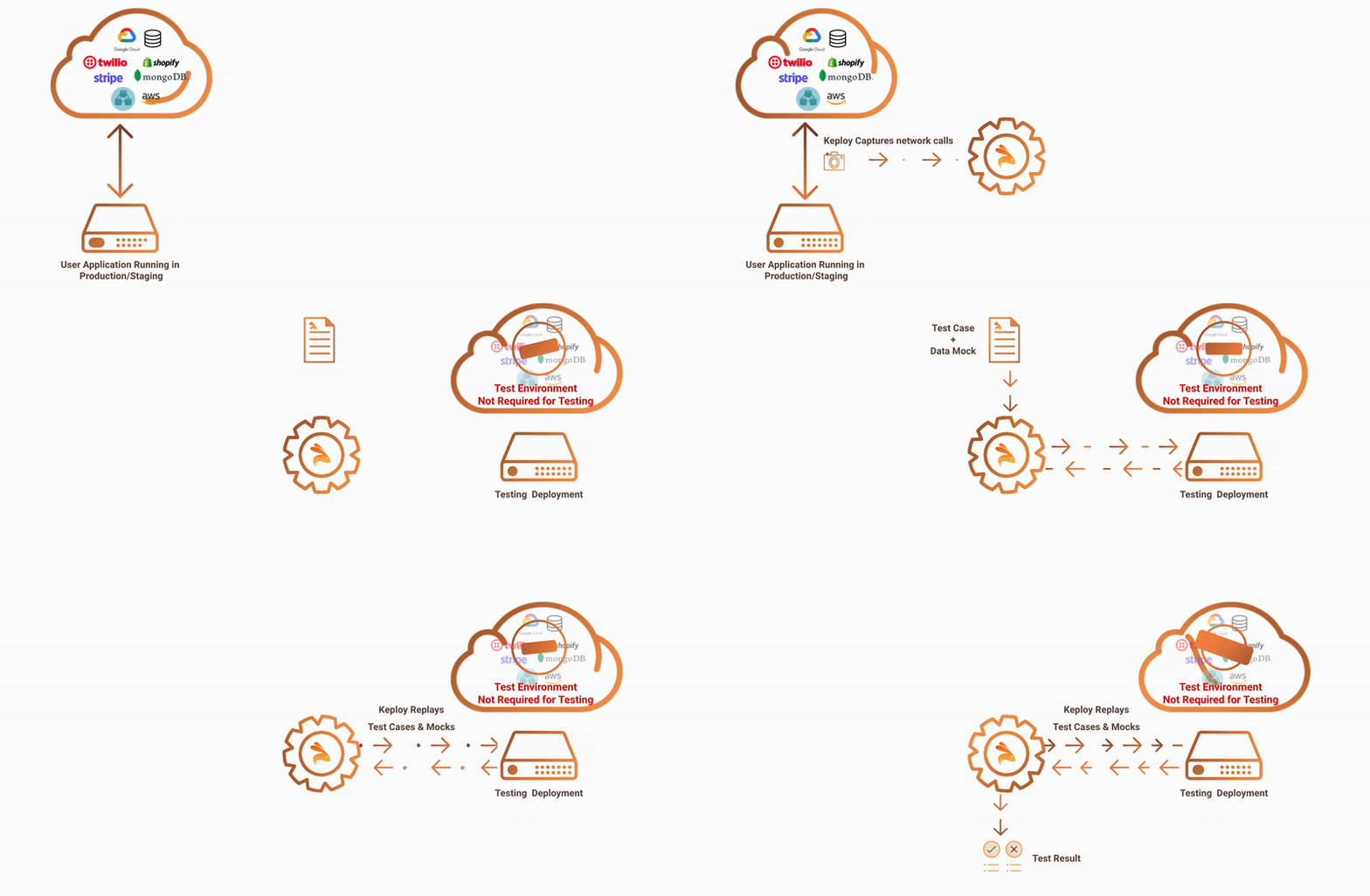
Convert API calls to API tests test cases and Data Mocks using AI

🐰 Fun fact: Keploy uses itself for testing! Check out our swanky coverage badge: Coverage Status  


Key Highlights

🎯 No code changes

Just run your app with keploy record. Real API + integration flows are automatically captured as tests and mocks. (Keploy uses eBPF under the hood to capture traffic, so you don’t need to add any SDKs or modify code.)

📹 Record and Replay complex Flows

Keploy can record and replay complex, distributed API flows as mocks and stubs. It's like having a very light-weight time machine for your tests—saving you tons of time!

👉 Read the docs on record-replay
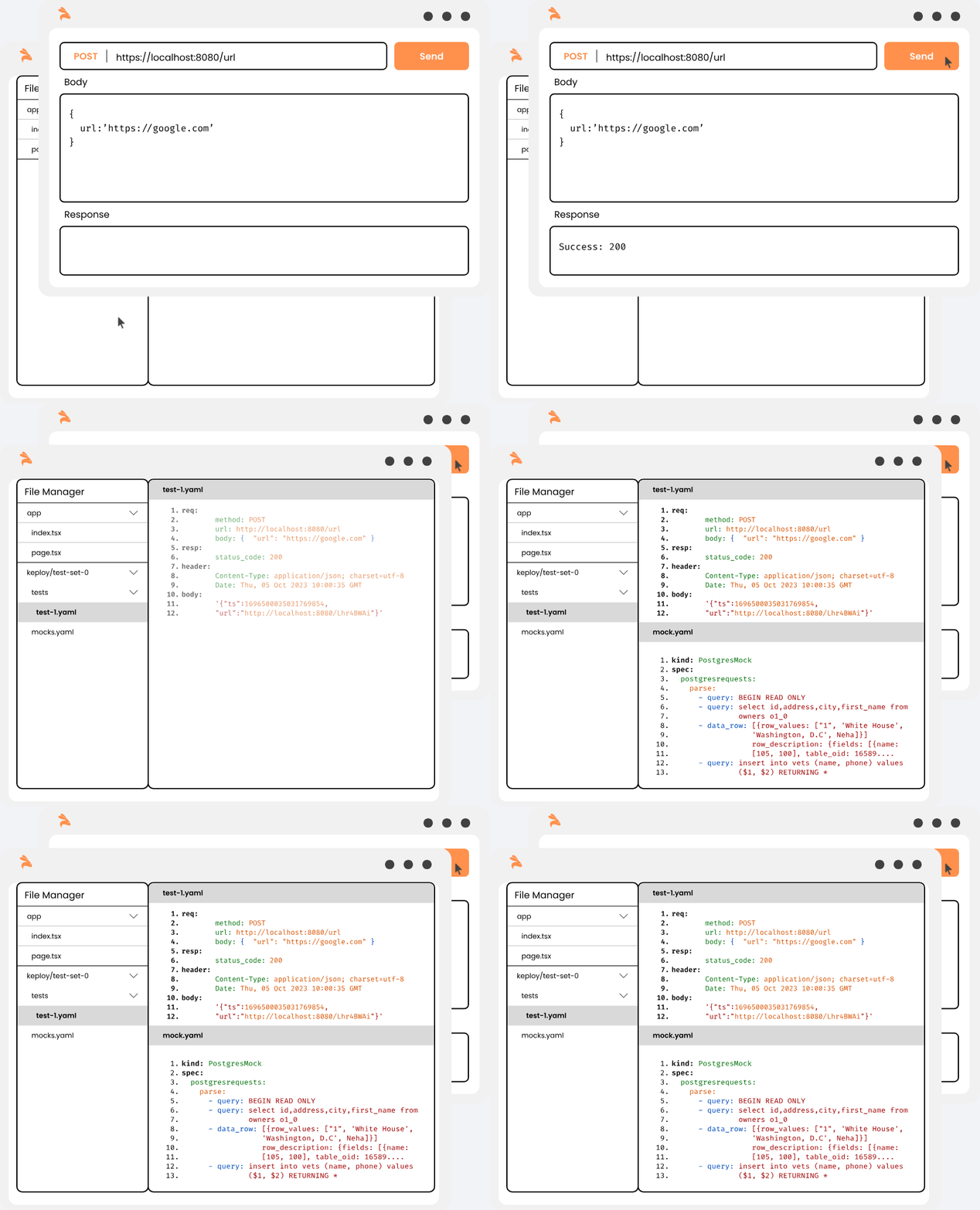
Convert API calls to test cases

🐇 Complete Infra‑Virtualization (beyond HTTP mocks)

Unlike tools that only mock HTTP endpoints, Keploy records databases (Postgres, MySQL, MongoDB), streaming/queues (Kafka, RabbitMQ), external APIs, and more.

It replays them deterministically so you can run tests without re‑provisioning infra.

👉 Read the docs on infra virtualisation
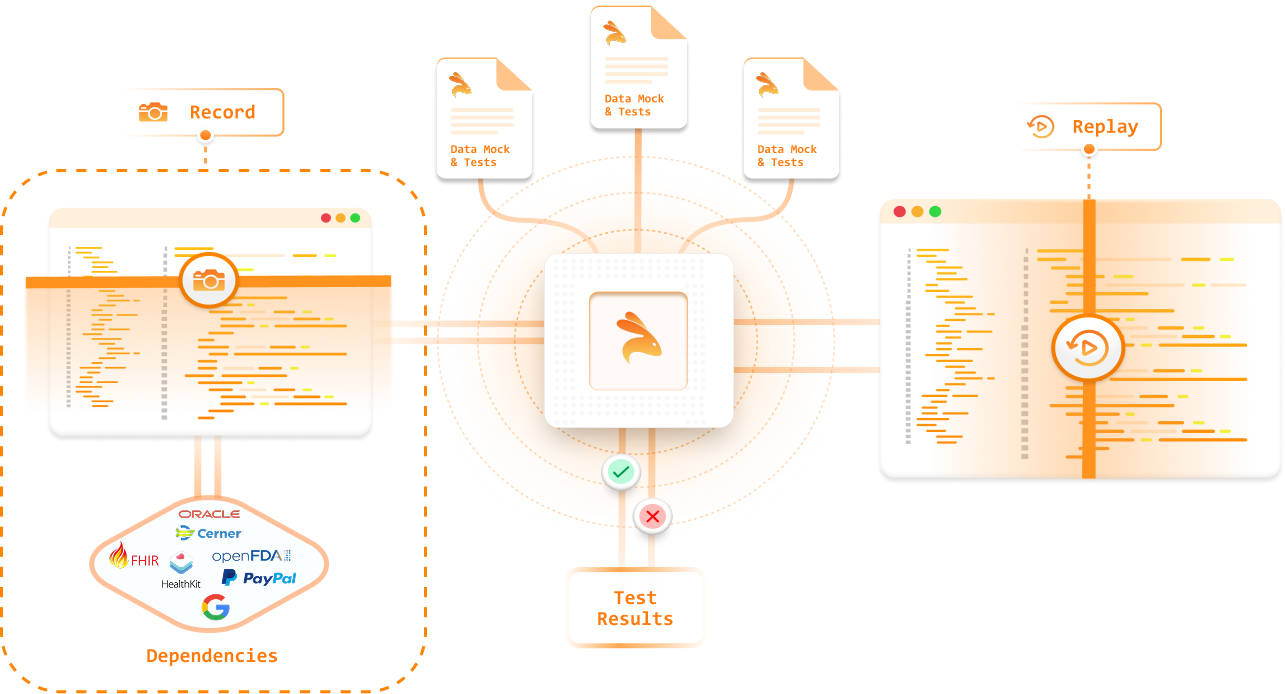
Convert API calls to test cases

🧪 Combined Test Coverage

If you’re a developer, you probably care about statement and branch coverage — Keploy calculates that for you.

If you’re a QA, you focus more on API schema and business use‑case coverage — Keploy calculates that too. This way coverage isn’t subjective anymore.
👉 Read the docs on coverage

ai test gen for api statement schema and branch coverage

🤖 Expand API Coverage using AI

Keploy uses existing recordings, Swagger/OpenAPI Schema to find: boundary values, missing/extra fields, wrong types, out‑of‑order sequences, retries/timeouts.

This helps expand API Schema, Statement, and Branch Coverage.
👉 Read the docs on coverage

ai test gen for api statement schema and branch coverage

Other Capabilities

  • 🌐 CI/CD Integration: Run tests with mocks anywhere you like—locally on the CLI, in your CI pipeline (Jenkins, Github Actions..) , or even across a Kubernetes cluster. Read more

  • 🎭 Multi-Purpose Mocks: You can also use Keploy-generated Mocks, as server Tests!

  • 📊 Reporting: Unified reports for API, integration, unit, and e2e coverage with insights directly in your CI or PRs.

  • 🖥️ Console: A developer-friendly console to view, manage, and debug recorded tests and mocks.

  • ⏱️ Time Freezing: Deterministically replay tests by freezing system time during execution. Read more

  • 📚 Mock Registry: Centralized registry to manage, reuse, and version mocks across teams and environments. Read more


Quick Start

1. Install Keploy Agent

curl --silent -O -L https://keploy.io/install.sh && source install.sh

2. Record Test Cases

Start your app under Keploy to convert real API calls into tests and mocks.

keploy record -c "CMD_TO_RUN_APP"

Example for Python:

keploy record -c "python main.py"

3. Run Tests

Run tests offline without external dependencies.

keploy test -c "CMD_TO_RUN_APP" --delay 10

Resources

- 📘 Installation

- 🏁 QuickStarts


Languages & Frameworks (Any stack)

Because Keploy intercepts at the network layer (eBPF), it works with any language, framework, or runtime—no SDK required.

Note: Some of the dependencies are not open-source by nature because their protocols and parsings are not open-sourced. It's not supported in Keploy enterprise.

readme truncated — read the full docs on github

Frequently asked questions

Is keploy free to use?

keploy is open source under the Apache-2.0 licence. There is no licence fee and no seat count — you can self-host it or, where the project offers one, pay a vendor for a managed version instead.

What does keploy do?

Open-source platform for creating safe, isolated production sandboxes for API, integration, and E2E testing.

What is keploy written in?

keploy is primarily written in Go. Its source is publicly available at https://github.com/keploy/keploy, and it has 18,463 GitHub stars.
